
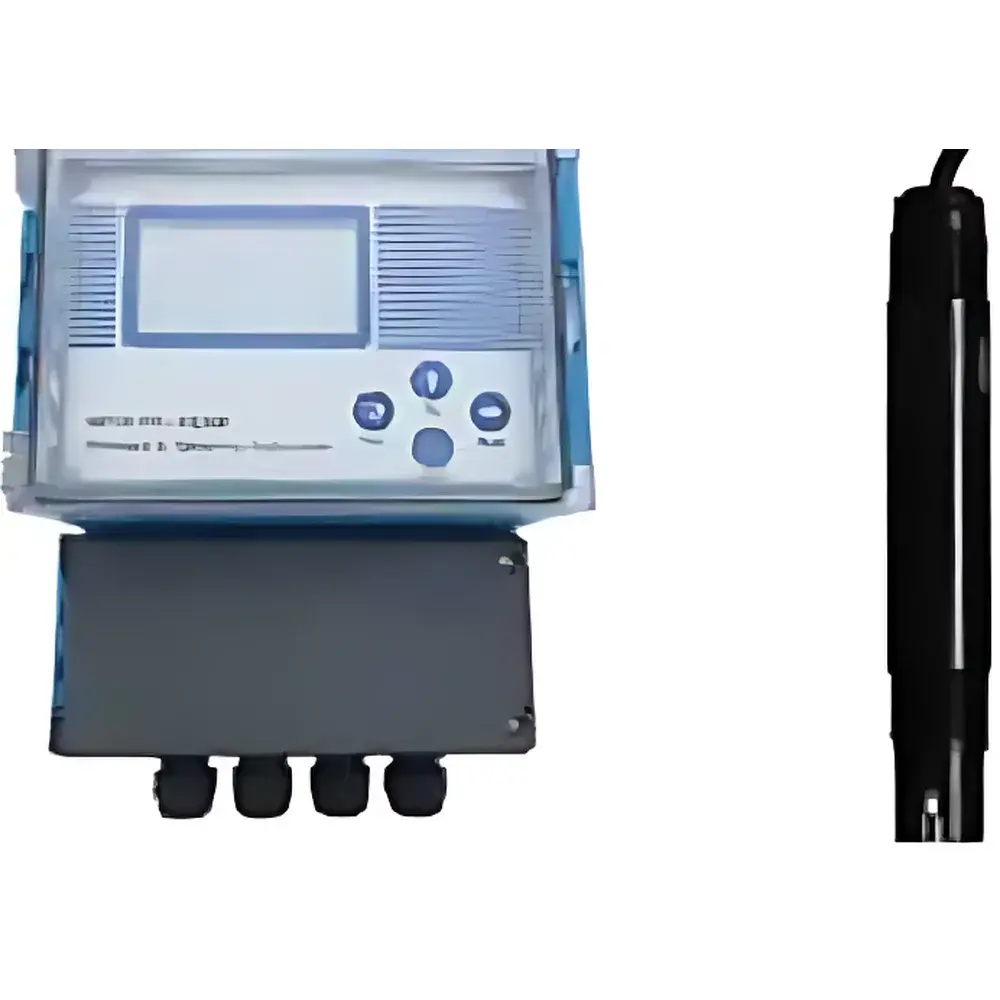
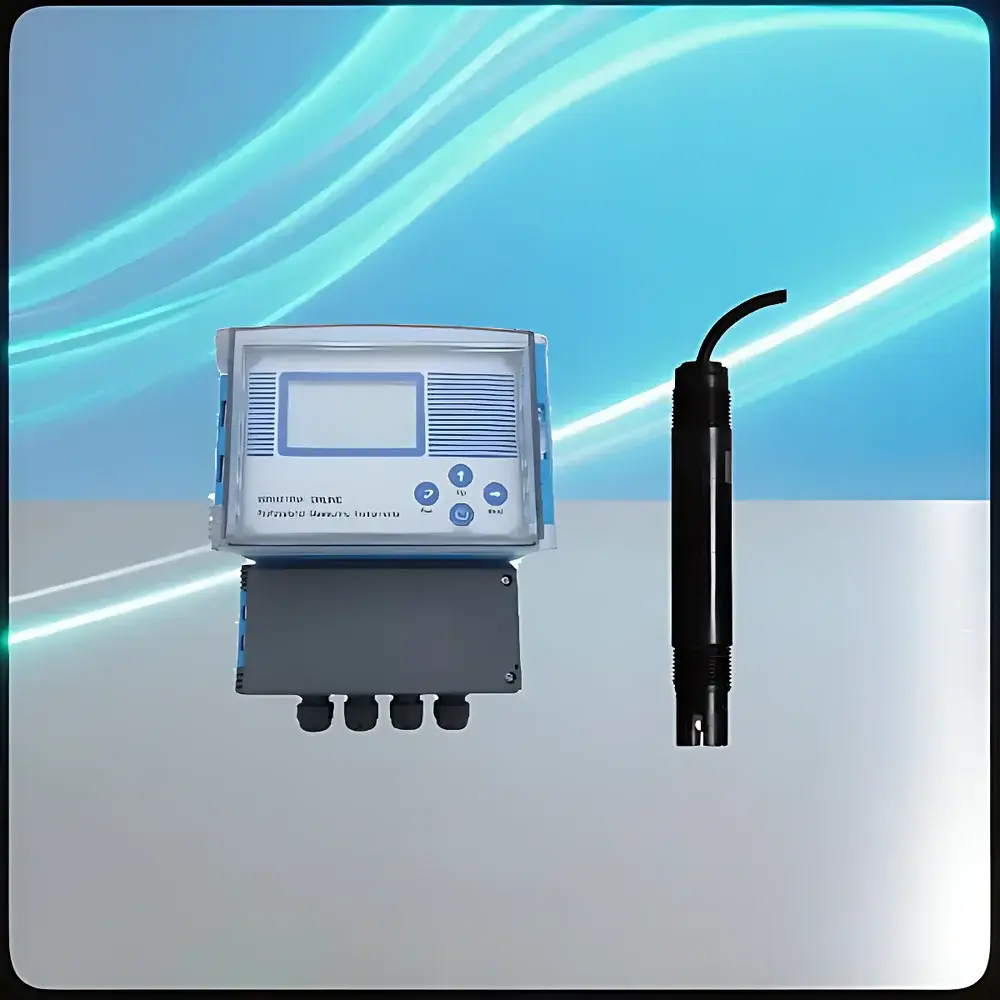
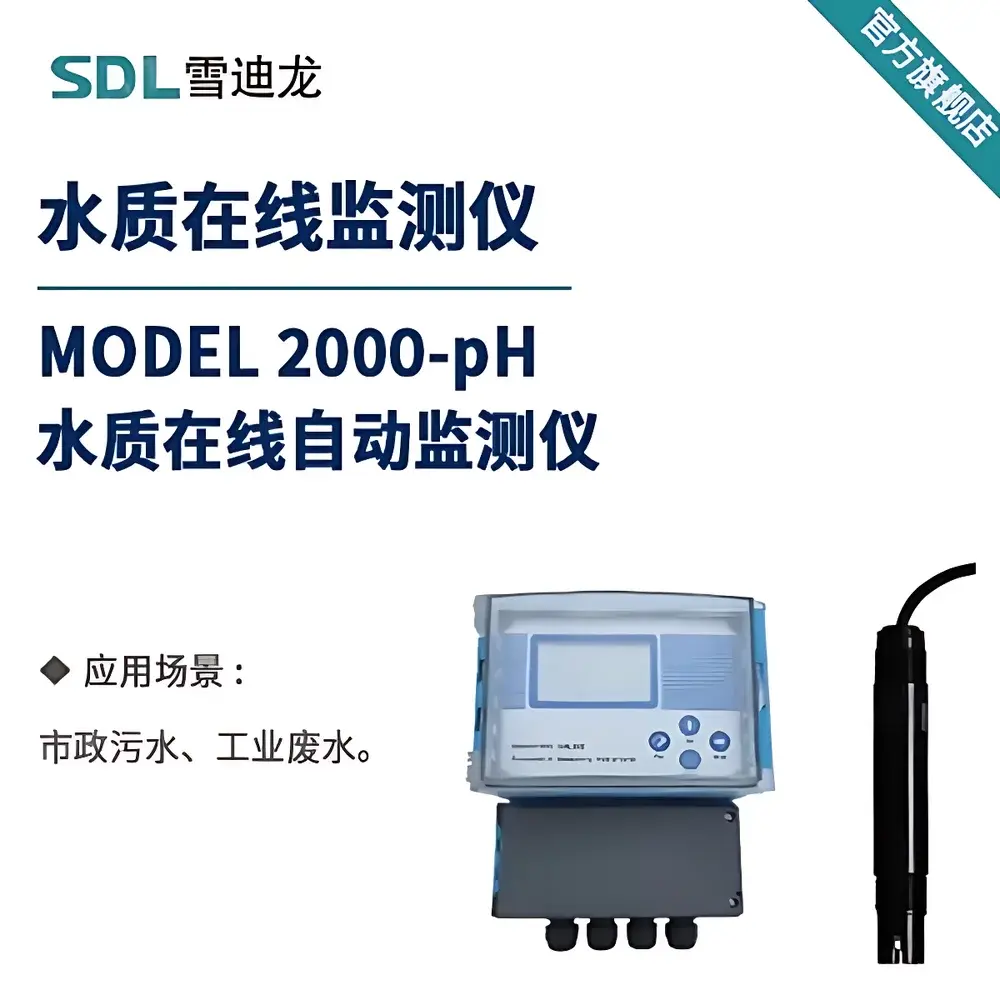
SDL MODEL 2000-pH Online Water Quality Analyzer
| Brand | SDL |
|---|---|
| Origin | Beijing, China |
| Manufacturer Type | Original Equipment Manufacturer (OEM) |
| Country of Origin | China |
| Model | MODEL 2000-pH |
| Instrument Type | Online Water Quality Analyzer |
| Measured Parameter | pH |
| Temperature Compensation | Automatic (NTC or Pt100 input) |
| Electrode Type | Integrated Ag/AgCl reference with polymer-filled junction |
| Output Signals | Dual-channel analog output (4–20 mA for pH and temperature) |
| Power Supply | 24 VDC or 220 VAC optional |
| Enclosure Rating | IP65 |
| Compliance | Designed to meet IEC 61000-6-2/6-3 EMC standards |
Overview
The SDL MODEL 2000-pH is an industrial-grade online water quality analyzer engineered for continuous, real-time monitoring of pH in municipal wastewater treatment plants, industrial effluent streams, and process water systems. It operates on the potentiometric principle—measuring the electrochemical potential difference between a glass pH sensing electrode and a stable Ag/AgCl reference electrode immersed in the sample medium. This voltage differential, governed by the Nernst equation, is converted into a calibrated pH value with high linearity across the full operational range (typically 0–14 pH units). The instrument features a robust, field-deployable architecture with integrated temperature compensation via built-in NTC or Pt100 sensor inputs, ensuring accuracy under variable thermal conditions commonly encountered in open-channel flows, aeration basins, and discharge points.
Key Features
- Stable polymer-junction reference system eliminates liquid electrolyte replenishment and minimizes junction clogging in suspended-solids-rich matrices such as activated sludge or cooling tower water.
- Dual-output capability: simultaneous analog transmission of both pH and temperature values over isolated 4–20 mA current loops, enabling direct integration with PLCs, SCADA systems, and DCS platforms without external signal conditioning.
- Composite electrode design integrates pH-sensitive glass membrane and Ag/AgCl reference into a single rugged probe body, reducing calibration drift and extending service intervals between maintenance cycles.
- Auto-temperature compensation algorithm applies real-time correction using either embedded or external temperature sensor data, conforming to ISO 7888 and ASTM D1293 methodology requirements.
- IP65-rated housing ensures reliable operation in humid, corrosive, or outdoor environments typical of wastewater lift stations and chemical dosing skids.
- Modular electronics architecture supports future firmware upgrades and optional digital communication protocols including Modbus RTU (RS-485) upon request.
Sample Compatibility & Compliance
The MODEL 2000-pH is validated for use in aqueous matrices with conductivity ≥50 µS/cm and total suspended solids (TSS) ≤500 mg/L. It complies with electromagnetic compatibility standards IEC 61000-6-2 (immunity) and IEC 61000-6-3 (emissions), and its measurement methodology aligns with internationally recognized water quality testing standards—including ISO 5667-22 (water sampling — Part 22: Guidance on determination of pH), ASTM D1293 (Standard Test Methods for pH of Water), and EN ISO 10523. While not certified for pharmaceutical-grade compliance (e.g., USP or FDA 21 CFR Part 11), the device supports audit-ready data logging when interfaced with compliant SCADA infrastructure meeting GLP/GMP traceability requirements.
Software & Data Management
The analyzer does not include embedded graphical software but provides standardized analog outputs compatible with third-party supervisory control systems. When connected to a central data acquisition unit or cloud-based platform (e.g., Siemens Desigo, Honeywell Experion, or custom MQTT-enabled edge gateways), it enables time-stamped trend logging, alarm thresholding (e.g., pH 9.0), and automated report generation. Optional configuration utilities—accessible via USB or RS-232 serial interface—allow calibration point entry, slope/mV offset verification, and diagnostic status review (e.g., electrode impedance, temperature sensor integrity).
Applications
- Continuous pH monitoring at influent and effluent points in municipal wastewater treatment facilities.
- Neutralization control in industrial pretreatment systems handling acid or alkali waste streams from metal finishing, textile dyeing, or semiconductor fabrication.
- Process optimization in bioreactors and anaerobic digesters where pH stability directly impacts microbial activity and methane yield.
- Regulatory compliance reporting for NPDES permit holders requiring documented pH records at discharge outfalls.
- Early-warning detection of upstream chemical spills or process upsets in combined sewer overflow (CSO) networks.
FAQ
What is the recommended calibration frequency for the MODEL 2000-pH in continuous operation?
Calibration should be performed at least once every 7 days under normal operating conditions; more frequent calibration (e.g., daily) is advised when measuring highly variable or fouling-prone samples.
Can the instrument measure pH in seawater or high-salinity brines?
It is not optimized for salinities exceeding 35 g/L due to liquid junction potential shifts; dedicated marine-grade electrodes with double-junction or KCl gel fill are recommended for such applications.
Does the MODEL 2000-pH support digital communication protocols beyond analog output?
Standard configuration includes only 4–20 mA analog outputs; Modbus RTU (RS-485) is available as a factory-configurable option upon order specification.
Is the electrode suitable for submersion in abrasive or high-TSS wastewater?
Yes—the polymer junction and reinforced glass bulb are designed for extended deployment in grit-laden environments; however, periodic mechanical cleaning (e.g., air purge or ultrasonic cleaning) is recommended to maintain response time.
How is temperature compensation implemented?
The unit accepts either internal NTC thermistor readings or external Pt100 input, applying a second-order polynomial correction per ISO 7888 Annex B to ensure ±0.1 pH accuracy across 0–50 °C operating range.
Related Products







