
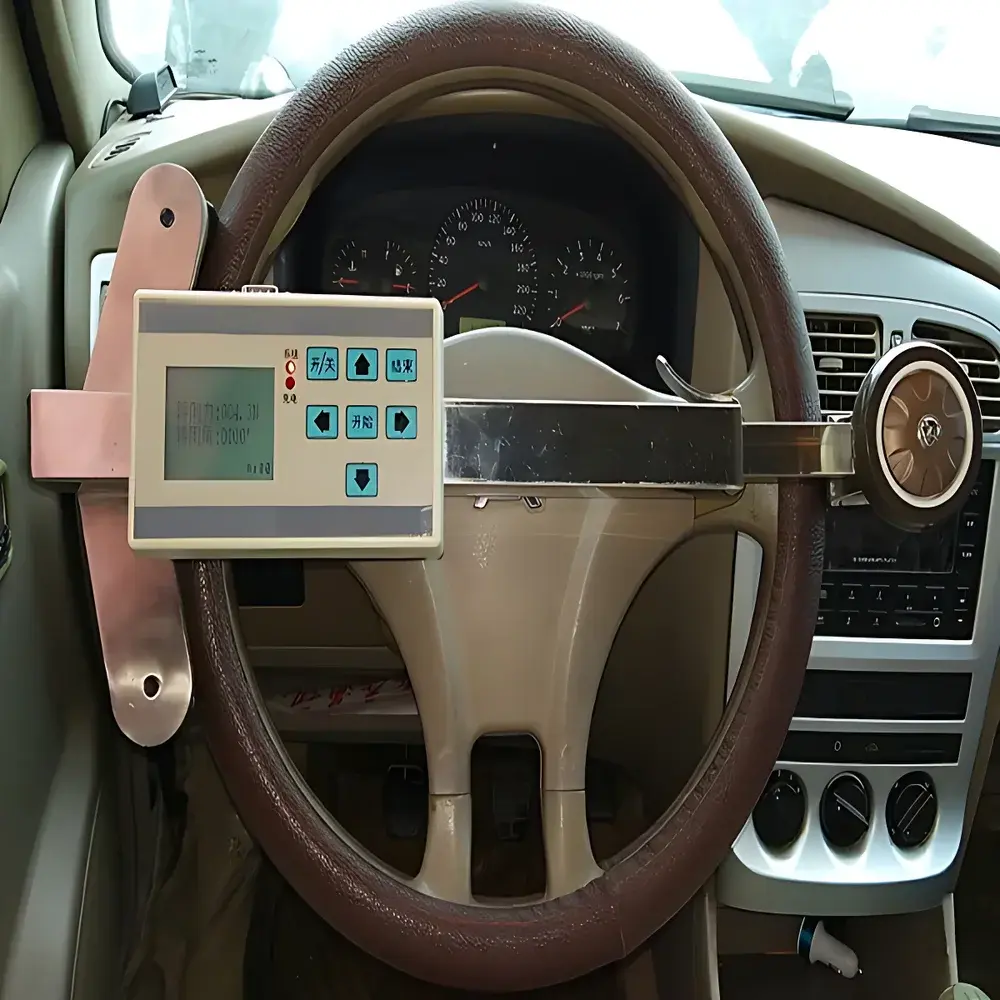
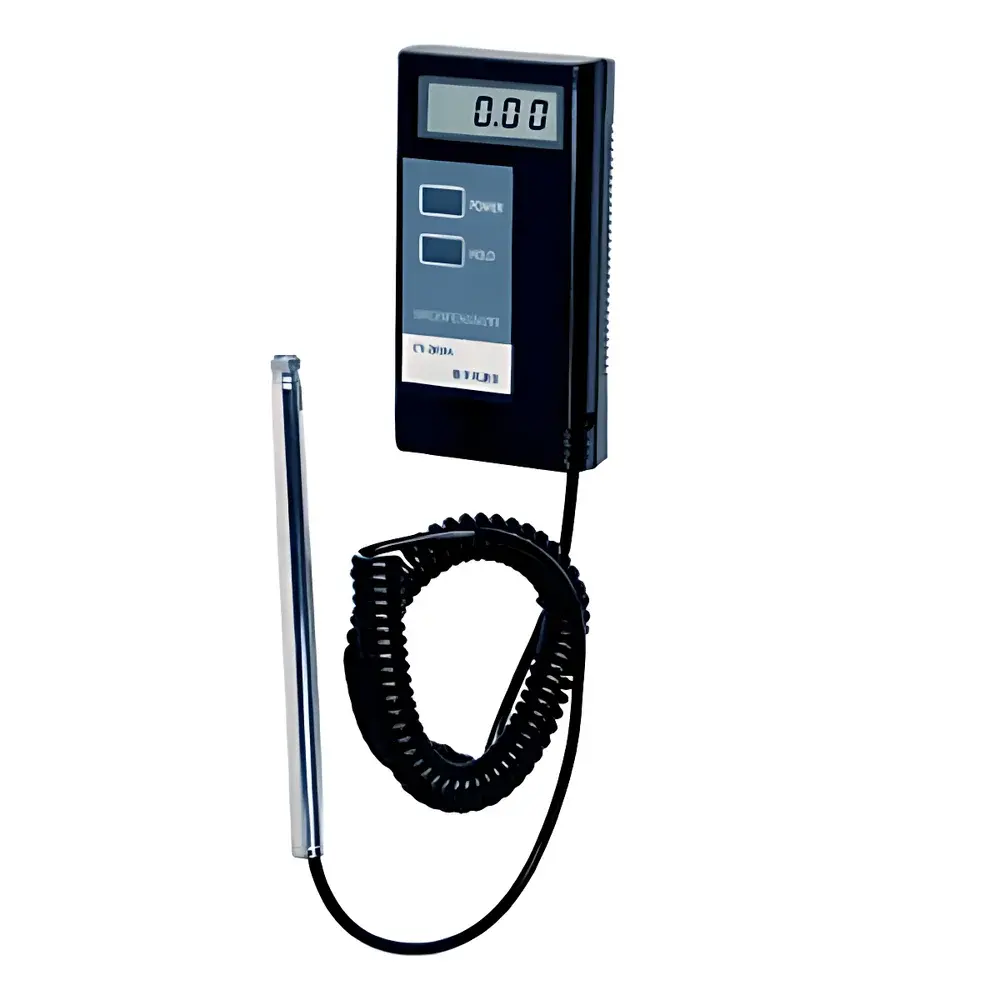
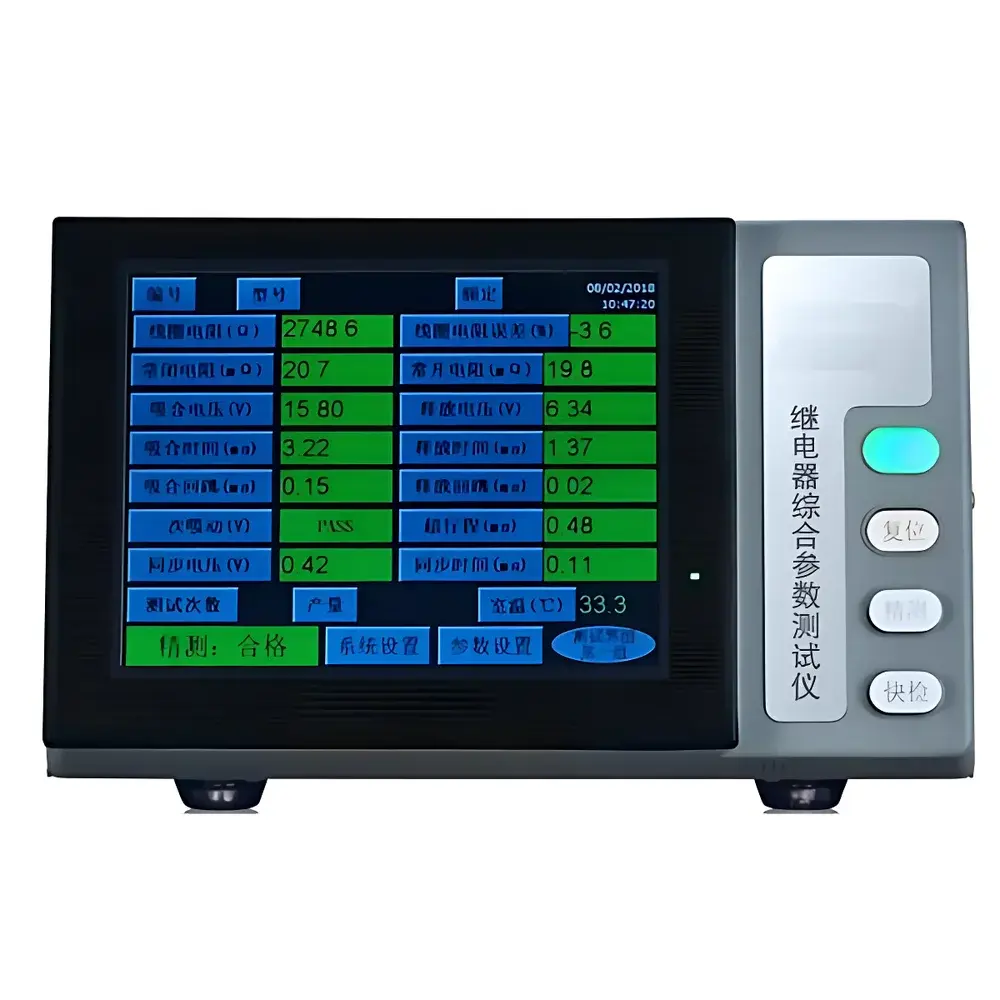
HengaoDe HAD-X2D Steering Parameter Tester for Automotive Steering Wheel Torque and Tractor Steering Angle Measurement
| Brand | HengaoDe |
|---|---|
| Origin | Beijing, China |
| Manufacturer Type | Authorized Distributor |
| Product Origin | Domestic (China) |
| Model | HAD-X2D |
| Price | USD 1 (Reference Only) |
| Steering Force Range | 0 to ±300 N |
| Force Resolution | 0.1 N |
| Force Accuracy | ±1% F.S. |
| Force Repeatability | ±1% |
| Steering Angle Range | 0 to ±1080° |
| Angle Resolution | 1° |
| Angle Accuracy | ±3° |
| Angle Repeatability | 3° |
| Power Supply | Built-in 8.4 V DC Rechargeable Li-ion Battery |
| Operating Temperature | −10 °C to +55 °C |
| Relative Humidity | ≤80% RH (non-condensing) |
| Compatible Steering Wheel Diameter | Φ360–Φ660 mm |
| Weight | 3 kg |
| Package Dimensions | 460 × 180 × 300 mm |
Overview
The HengaoDe HAD-X2D Steering Parameter Tester is an engineered field-portable instrumentation system designed for quantitative evaluation of steering dynamics in wheeled vehicles—including passenger cars, agricultural tractors, construction machinery, and off-road utility vehicles. It operates on a dual-sensor principle: a high-precision lever-type force transducer directly integrated with the steering handwheel measures torque applied during static and dynamic maneuvers, while a fully embedded electronic angular sensor—based on solid-state MEMS gyroscope and incremental encoder fusion—tracks absolute rotational displacement without external alignment or antenna setup. The instrument captures critical ISO 7400-1 and SAE J2807-compliant parameters including free-play angle (steering dead zone), on-center steering effort, peak hold torque during turn-in, and static breakaway force at zero velocity. Its microcontroller-based data acquisition architecture features 16-bit ADC resolution, real-time digital filtering, and non-volatile memory retention—ensuring traceable, audit-ready measurements even after power interruption. Designed for compliance with GLP-aligned laboratory workflows, the HAD-X2D supports repeatable test protocols under ambient environmental conditions typical of vehicle assembly lines, service bays, and academic transport engineering labs.
Key Features
- Integrated dual-parameter measurement: simultaneous capture of steering torque (±300 N) and angular displacement (±1080°) with synchronized timestamping
- Self-contained mechanical interface: stainless-steel quick-mount bracket with auto-locking clamping mechanism ensures rapid, tool-free attachment to steering wheels ranging from Φ360 mm to Φ660 mm
- Embedded sensor architecture: no external cabling or calibration fixtures required; angle sensing via contactless MEMS inertial measurement unit (IMU), force sensing via calibrated cantilever beam transducer co-located with handwheel hub
- Real-time display and data management: 128×64 dot-matrix LCD with intuitive Chinese/English bilingual menu navigation; peak-hold function, live numeric readout, and automatic zero-tracking compensation
- Robust power and environmental design: rechargeable 8.4 V Li-ion battery (≥8 h continuous operation); operational range from −10 °C to +55 °C; IP52-rated enclosure against dust and light splashing
- Data integrity assurance: EEPROM-backed storage retains up to 999 test records with date/time stamp; RS-232 serial interface enables direct connection to PCs for CSV export and long-term trending analysis
Sample Compatibility & Compliance
The HAD-X2D is validated for use across Class I–III wheeled vehicle platforms per UN Regulation No. 79 (Steering Equipment) and GB/T 17467–2019 (Chinese National Standard for Steering System Testing). It accommodates both manual and power-assisted steering systems, supporting standardized test sequences such as ISO 13849-1 functional safety verification of steering assist cut-off response, and SAE J1455 steady-state cornering effort profiling. The device meets electromagnetic compatibility requirements per EN 61326-1:2013 (industrial environment), and its mechanical mounting hardware conforms to ISO 5353:2018 seat reference point positioning guidelines. All measurement uncertainties are traceable to national metrology institutes through factory calibration certificates issued with each unit (NIST-traceable torque and angular standards applied).
Software & Data Management
While the HAD-X2D operates autonomously via its onboard firmware, its RS-232 interface supports integration into broader quality management ecosystems. Raw ASCII-formatted data streams include header metadata (test ID, operator code, UTC timestamp), followed by time-stamped rows of [Angle_deg, Torque_N, Status_Flag]. Third-party software—including LabVIEW-based custom DAQ modules and Excel VBA macros—can parse outputs for statistical process control (SPC) charting, Cp/Cpk calculation, and deviation mapping against OEM specification limits. For regulated environments (e.g., Tier-1 automotive suppliers operating under IATF 16949), the instrument’s built-in data logging satisfies clause 8.5.1.2 (Control of production and service provision) when paired with documented calibration schedules and change-control logs. Though not FDA 21 CFR Part 11–certified out-of-the-box, its deterministic data flow and immutable record structure enable validation for GMP-aligned R&D use cases.
Applications
- Production line final inspection: verification of steering column assembly torque-angle hysteresis curves prior to vehicle rollout
- Aftermarket component validation: comparative testing of replacement power steering pumps, gearboxes, and EPS control units
- Agricultural equipment certification: compliance testing of tractor steering responsiveness per OECD Code 4 and ISO 22867
- Academic research: kinematic modeling of driver-vehicle interaction using recorded torque-angle phase lag data
- Regulatory audit support: generation of evidentiary datasets for type approval submissions to CNCA (China National Certification Centre) and ECE WP.29
- Maintenance diagnostics: identification of excessive play in tie rods, rack-and-pinion wear, or hydraulic valve stiction via free-play quantification
FAQ
Does the HAD-X2D require periodic recalibration?
Yes. Recommended recalibration interval is every 12 months or after 5,000 measurement cycles, using certified torque and angular standards traceable to CMA (China Metrology Accreditation) or equivalent national bodies.
Can it measure steering effort during vehicle motion?
No. The HAD-X2D is designed for quasi-static and low-speed (<5 km/h) bench or stationary-vehicle testing. Dynamic road-load simulation requires complementary chassis dynamometer integration.
Is the mounting bracket compatible with airbag-equipped steering wheels?
Yes—provided the airbag module remains unmodified and the bracket is installed strictly per OEM service manuals to avoid inadvertent deployment risk.
What file formats are supported for data export?
ASCII text only (CSV-compatible structure). No proprietary binary formats; no encryption or DRM restrictions.
Does it comply with ISO 17025 laboratory accreditation requirements?
The instrument itself is not accredited, but its measurement capability—when operated within defined environmental and procedural controls—supports ISO/IEC 17025:2017 Clause 6.4.1 (Equipment verification) when used in accredited laboratories.





