
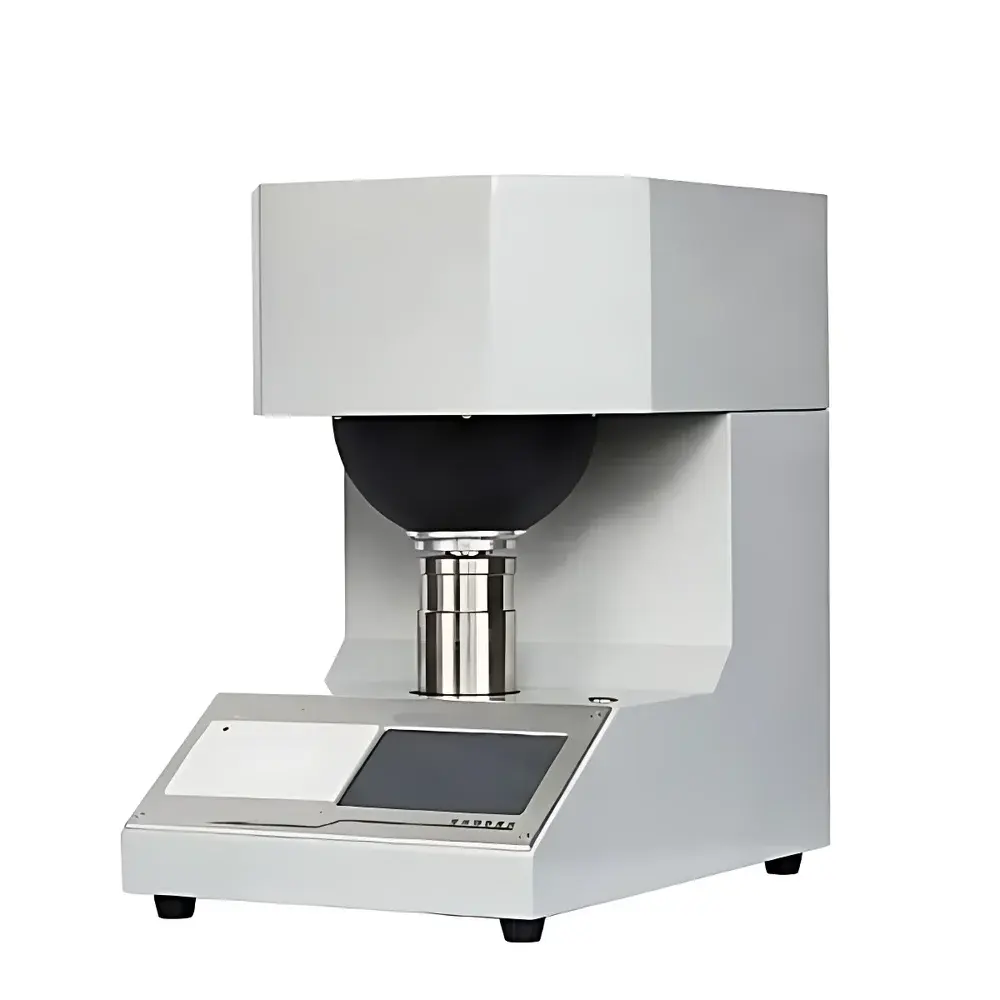
HengaoDe HAD-TACM Automated Colorimeter & Whiteness Meter for Pulp, Paper, and Powdered Materials
| Brand | HengaoDe |
|---|---|
| Origin | Beijing, China |
| Manufacturer Type | Authorized Distributor |
| Country of Origin | China |
| Model | HAD-TACM |
| Power Supply | AC 100–240 V, 50/60 Hz, 50 W |
| Operating Environment | 10–35 °C, ≤85% RH |
| Display | 5-inch color TFT touchscreen (480×272 pixels) |
| Light Source | Simulated D65 illuminant |
| Integrating Sphere Diameter | 150 mm |
| Sample Port Size | ≥φ30 mm, thickness ≤40 mm |
| Chromaticity Resolution | 0.0001, others: 0.01 |
| Zero Drift | ≤0.1 |
| Measurement Error | ≤0.5 |
| Repeatability Error | ≤0.02 (10 consecutive measurements at 10 s intervals) |
| Specular Reflection Error | ≤0.1 |
| Interface | RS232 |
| Dimensions | 385×280×410 mm |
| Net Weight | 12.5 kg |
Overview
The HengaoDe HAD-TACM Automated Colorimeter & Whiteness Meter is a precision optical instrument engineered for quantitative colorimetric and whiteness analysis of planar and powdered industrial materials. It operates on the principle of diffuse reflectance spectroscopy using a calibrated D65-simulated light source and a 150 mm integrating sphere, ensuring compliance with CIE standard observer conditions (10° field of view, CIE 1964 supplementary standard observer). The system measures spectral reflectance across the visible range to compute multiple standardized whiteness indices—including ISO Brightness (R₄₅₇), Fluorescent Whitening Agent (FWA)-corrected whiteness, Ganz whiteness (W₁₀ and TW₁₀), Hunter Lab and Hunter whiteness, yellowness index (YI), ink absorption value, opacity, transparency, and derived optical coefficients (scattering and absorption). Designed for routine QC/QA in regulated manufacturing environments, it supports traceable, repeatable measurements aligned with ISO 2470, ISO 2471, and a comprehensive suite of Chinese national standards (GB/T 7973, GB/T 7974, GB/T 8940.2, etc.).
Key Features
- ARM-based embedded processor architecture enabling rapid spectral data acquisition, real-time calculation, and sub-second measurement cycles
- Motorized optical path and auto-zero calibration sequence minimizing operator dependency and inter-user variability
- Integrated thermal-stabilized D65 light source with <0.1% intensity drift over 4 hours, eliminating manual lamp recalibration
- Non-volatile memory storing up to 10 reference samples—either physical tile references or digitally archived spectral data—with battery-backed retention for audit-trail integrity
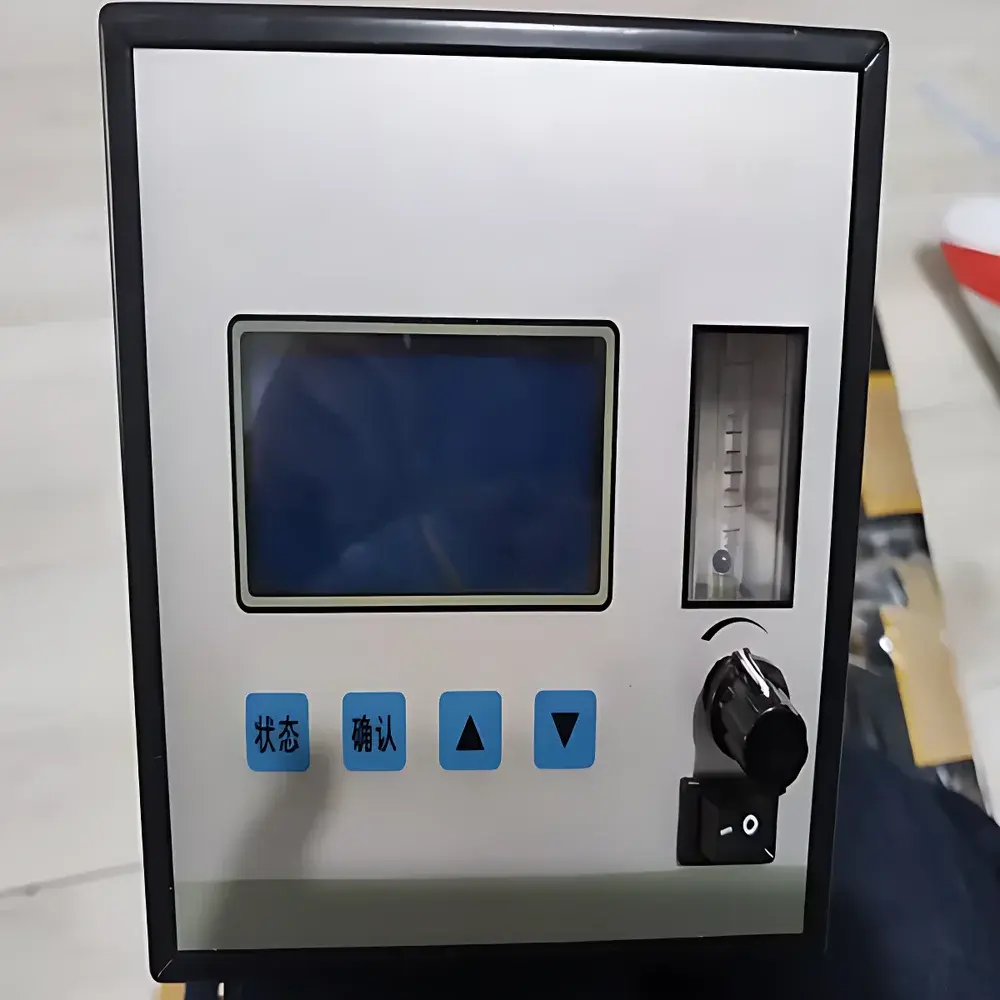
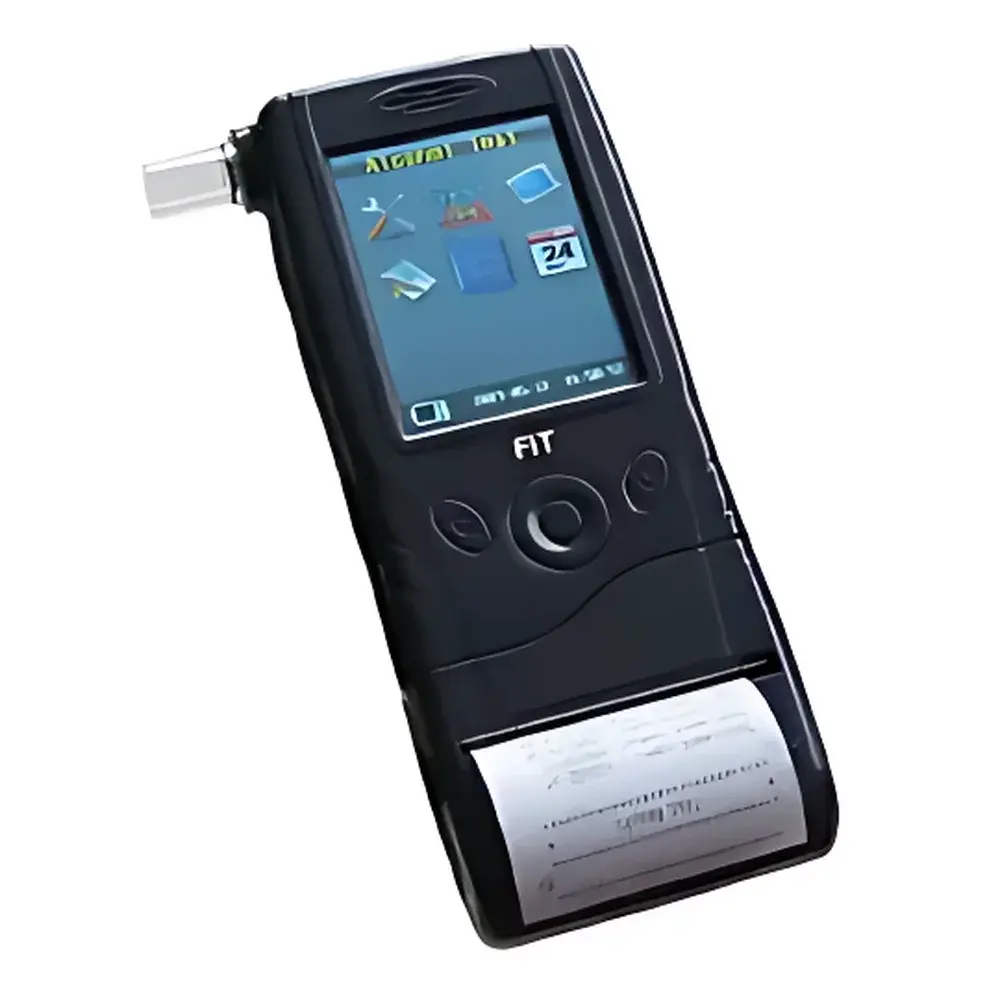
- 5-inch high-resolution color touchscreen with intuitive icon-driven interface; no external PC required for basic operation
- Thermal printer module (included) for immediate hard-copy reporting with timestamp, sample ID, and full parameter set
- RS232 serial interface compliant with Modbus RTU protocol for integration into LIMS or MES systems
Sample Compatibility & Compliance
The HAD-TACM accommodates rigid planar specimens (paper, board, ceramic tiles, plastics) with minimum surface diameter ≥30 mm and thickness ≤40 mm, as well as free-flowing powders (talc, calcium carbonate, starch, cement, silica) when compacted in standardized holders. Its optical geometry adheres to the 0°/d (normal illumination/diffuse collection) configuration specified in ISO 2470-1 for paper brightness and ISO 2471 for opacity. All reported indices—including ISO R₄₅₇, CIE W₁₀/TW₁₀, and Hunter whiteness—are calculated per published algorithms in GB/T 7974, GB/T 8940.2, and ASTM E313. The instrument meets mechanical and electrical safety requirements per GB 4793.1 and electromagnetic compatibility (EMC) per GB/T 18268.21, supporting GLP-compliant documentation workflows when paired with optional PC software.
Software & Data Management
While standalone operation is fully functional via the onboard interface, optional Windows-compatible software (sold separately) enables advanced data governance: user-level access control, electronic signature support, audit trail generation (per FDA 21 CFR Part 11 requirements), batch report compilation, statistical process control (SPC) charting, and export to CSV, PDF, or XML formats. Calibration history—including date, operator ID, reference standard ID, and deviation logs—is automatically embedded in each measurement record. Firmware updates are delivered via USB flash drive with cryptographic signature verification to ensure integrity.
Applications
This instrument serves critical quality control functions across multiple sectors: pulp and paper mills (monitoring brightness consistency across bleaching stages), mineral processing (talc, kaolin, and precipitated calcium carbonate whiteness grading), building materials (ceramic tile and cement whiteness certification), food-grade starch and flour producers (color uniformity validation), and regulatory testing laboratories performing GB/T 13025 (salt), GB/T 5950 (building lime), and GB/T 10339 (paper optical properties) conformance assessments. Its dual capability to quantify both inherent color (CIE Lab) and fluorescence-enhanced whiteness makes it indispensable for evaluating FWA-dosed products without separate instrumentation.
FAQ
Does the HAD-TACM comply with ISO 2470 for ISO brightness measurement?
Yes—the optical design, D65 simulation, and R₄₅₇ bandpass filtering meet all geometric and spectral requirements defined in ISO 2470-1:2009.
Can the instrument measure samples containing optical brightening agents (OBAs)?
Yes—it includes dedicated fluorescent whitening correction algorithms that isolate and quantify OBA contribution per GB/T 7975 and ISO 11475.
Is calibration traceable to national standards?
Calibration is performed using NIST-traceable ceramic white standards (certified reflectance >98.5% at 457 nm) and verified annually against accredited metrology labs.
What maintenance is required beyond routine cleaning?
No consumables or periodic lamp replacement—the LED-based D65 source has a rated lifetime of >10,000 hours; only annual verification with reference tiles is recommended.
Can measurement data be exported for statistical analysis?
Yes—via RS232 to third-party SPC software or the optional HengaoDe DataLink Suite, which supports Cp/Cpk calculation, trend analysis, and automated non-conformance alerts.






