
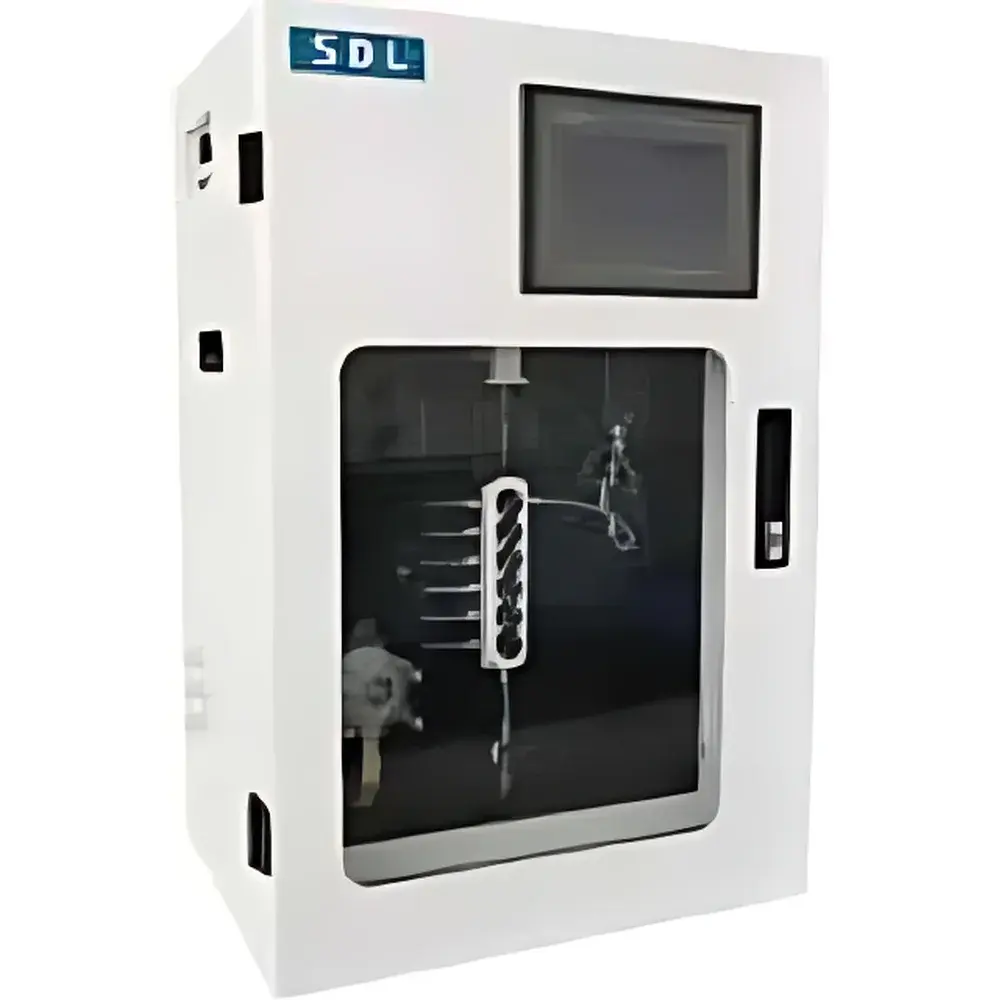
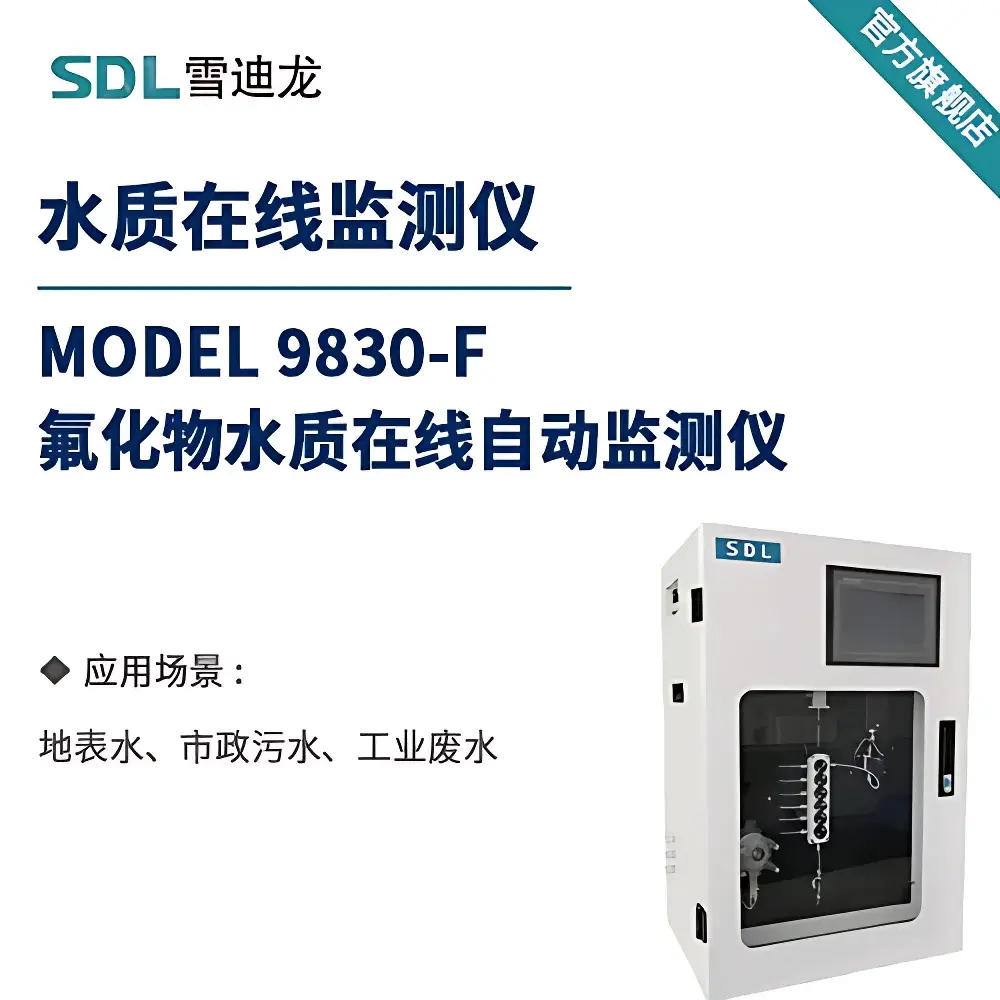
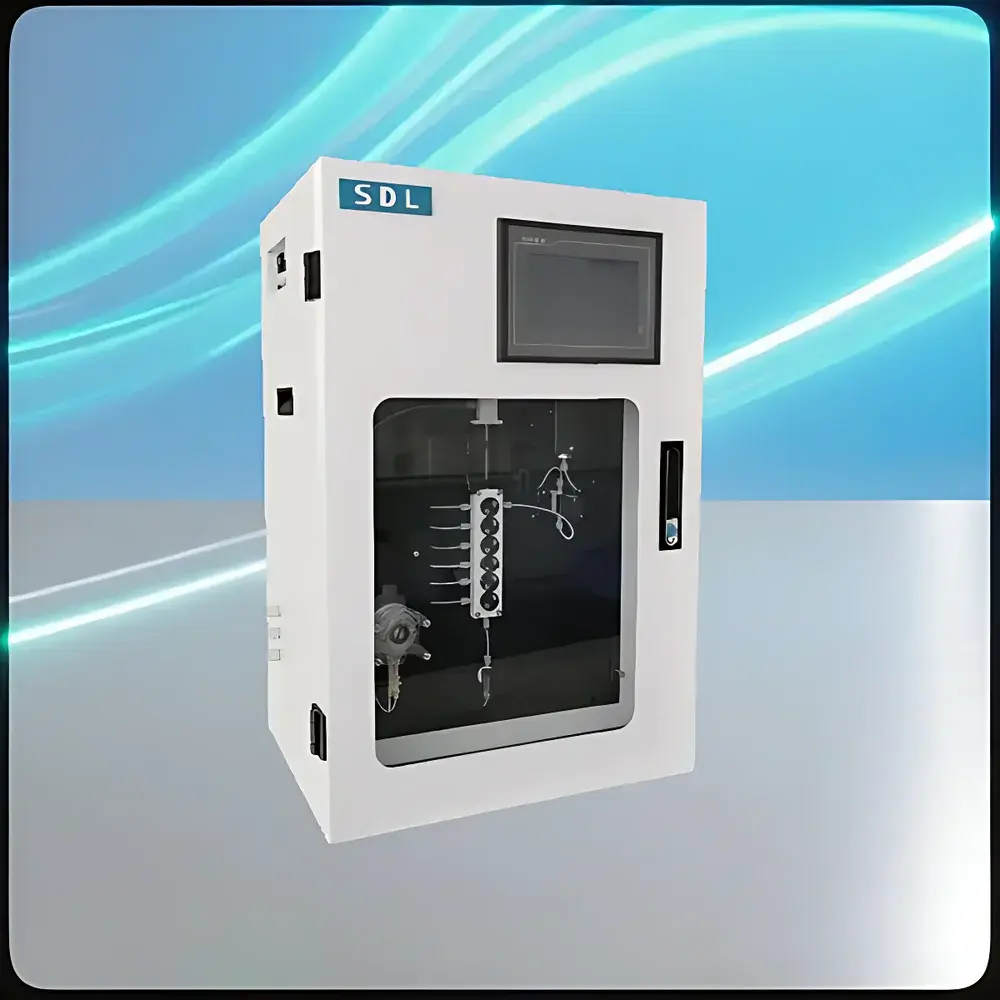
SDL MODEL 9830-F Fluoride Online Automatic Water Quality Monitoring System
| Brand | SDL |
|---|---|
| Origin | Beijing, China |
| Manufacturer Type | Original Equipment Manufacturer (OEM) |
| Country of Origin | China |
| Model | MODEL 9830-F |
| Price Range | USD 7,000 – 14,000 (indicative only |
Overview
The SDL MODEL 9830-F Fluoride Online Automatic Water Quality Monitoring System is a dedicated, continuous-monitoring instrument engineered for the real-time quantification of fluoride ion (F⁻) concentration in aqueous environmental matrices. It operates on the principle of potentiometric measurement using a solid-state or crystalline membrane fluoride-selective electrode (FSE), coupled with a stable reference electrode and temperature compensation circuitry. This electrochemical detection method delivers high selectivity for fluoride over common anionic interferents—including chloride, sulfate, and nitrate—when operated within optimized pH and ionic strength conditions (typically pH 5.0–7.0, maintained via integrated buffer addition). Designed for unattended, long-term deployment, the system integrates sample conditioning, reagent dosing, electrode measurement, calibration validation, and data logging into a single compact platform. It meets the functional requirements for continuous emission monitoring (CEM) and environmental compliance reporting under national and regional water quality regulatory frameworks.
Key Features
- Self-diagnostic architecture with real-time status reporting for sensor drift, electrode response time, and fluidic path integrity—reducing false alarms and enabling predictive maintenance.
- Automated multi-point calibration and zero-check routines using certified standard solutions (e.g., 0.1 mg/L and 1.0 mg/L NaF), configurable via local HMI or remote command.
- Integrated automatic electrode cleaning module utilizing pulsed air-jet or low-pressure water rinse to mitigate biofilm accumulation and surface fouling—critical for wastewater and surface water applications.
- Remote bidirectional control (remote control & remote feedback) compliant with Modbus RTU/TCP and optional OPC UA protocols—enabling full integration into SCADA, DCS, or centralized environmental data management systems.
- Programmable sampling logic supporting fixed-interval (e.g., every 30 min), event-triggered (e.g., flow-rate threshold), or demand-initiated acquisition modes.
- Proprietary corrosion-resistant multi-position selection valve constructed from PTFE-lined ceramic and PVDF wetted materials—ensuring >200,000 cycle durability in aggressive industrial effluent environments.
- Onboard non-volatile memory storing ≥30,000 timestamped measurement records with metadata (raw mV signal, temperature, calibration status, fault flags).
Sample Compatibility & Compliance
The MODEL 9830-F is validated for use with raw surface water, secondary-treated municipal wastewater, and pre-treated industrial discharges (e.g., semiconductor rinse water, aluminum anodizing effluent). Sample turbidity must remain below 100 NTU; suspended solids are removed via integrated 5-µm filtration prior to electrode contact. The system supports automatic pH adjustment using dilute acetate or TISAB-based buffers to maintain optimal F⁻ activity measurement conditions. While not certified to ISO 10304-1 or ASTM D1179 as a standalone analytical method, its operational protocol aligns with EPA Method 300.0 (Ion Chromatography) and USGS NWIS QA/QC guidelines for continuous fluoride monitoring. Data integrity complies with GLP principles through audit-trail-enabled firmware (user login, parameter change history, calibration logs).
Software & Data Management
The embedded firmware provides a web-accessible interface (HTTPS) for configuration, diagnostics, and live data visualization. Historical datasets export directly to CSV or Excel-compatible formats via USB 2.0 port—no proprietary software required. Optional cloud connectivity (via LTE or Ethernet) enables secure TLS-encrypted transmission to third-party platforms such as AWS IoT Core or Azure IoT Hub. All exported files include ISO 8601 timestamps, instrument ID, and measurement uncertainty estimates derived from electrode slope stability and calibration residuals. Firmware updates are delivered via signed binary packages with SHA-256 verification to ensure traceability and cybersecurity compliance.
Applications
- Regulatory compliance monitoring at municipal wastewater treatment plant (WWTP) discharge points per local fluoride limits (e.g., ≤1.5 mg/L in China’s GB 3838-2002 Class IV waters).
- Process control in fluoridated drinking water distribution systems, where rapid detection of over- or under-dosing prevents public health risk.
- Effluent monitoring for electronics manufacturing facilities, where hydrofluoric acid (HF) etching processes generate variable F⁻ loads requiring real-time feedback control.
- Long-term trend analysis in river basins impacted by phosphate fertilizer production or coal-fired power plant ash pond leachate.
- Early-warning systems for groundwater contamination near landfill sites or fluorspar mining operations.
FAQ
What is the typical measurement range and detection limit of the MODEL 9830-F?
The system is calibrated for operation between 0.02 mg/L and 10.0 mg/L F⁻, with a method detection limit (MDL) of 0.015 mg/L under field-validated conditions.
Does the system require daily manual intervention?
No—fully autonomous operation is supported for up to 30 days with standard reagent packs and routine calibration intervals; service intervals extend to 90 days with preventive maintenance planning.
Can the MODEL 9830-F be integrated with existing PLC-based infrastructure?
Yes—native Modbus RTU support allows direct connection to Allen-Bradley, Siemens, or Mitsubishi PLCs without gateway hardware.
Is the fluoride electrode replaceable in the field?
Yes—the FSE and reference electrode are modular components with tool-less quick-release fittings and factory pre-calibration certificates.
How does the system handle high-chloride samples, such as seawater-influenced estuaries?
A TISAB II-type ionic strength adjuster is dosed automatically to mask chloride interference and stabilize total ionic strength—validated up to 5,000 mg/L Cl⁻.







