
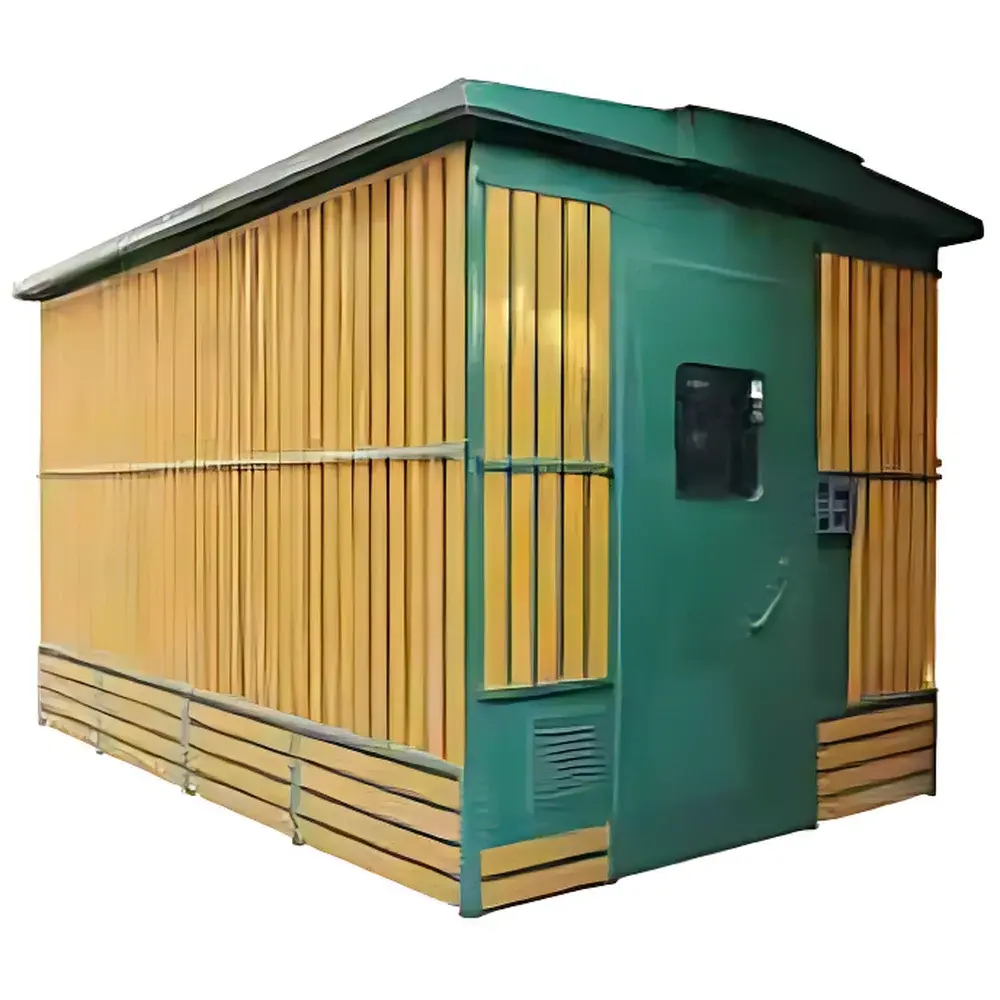
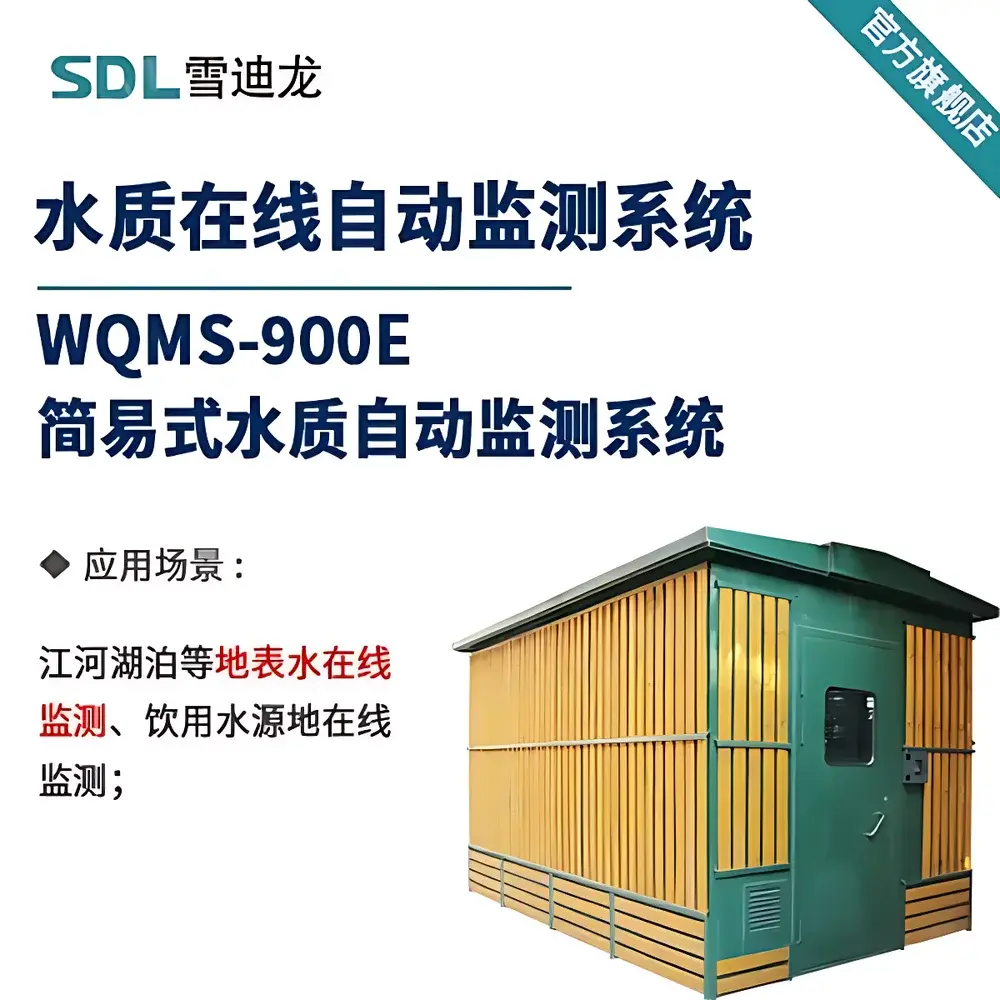
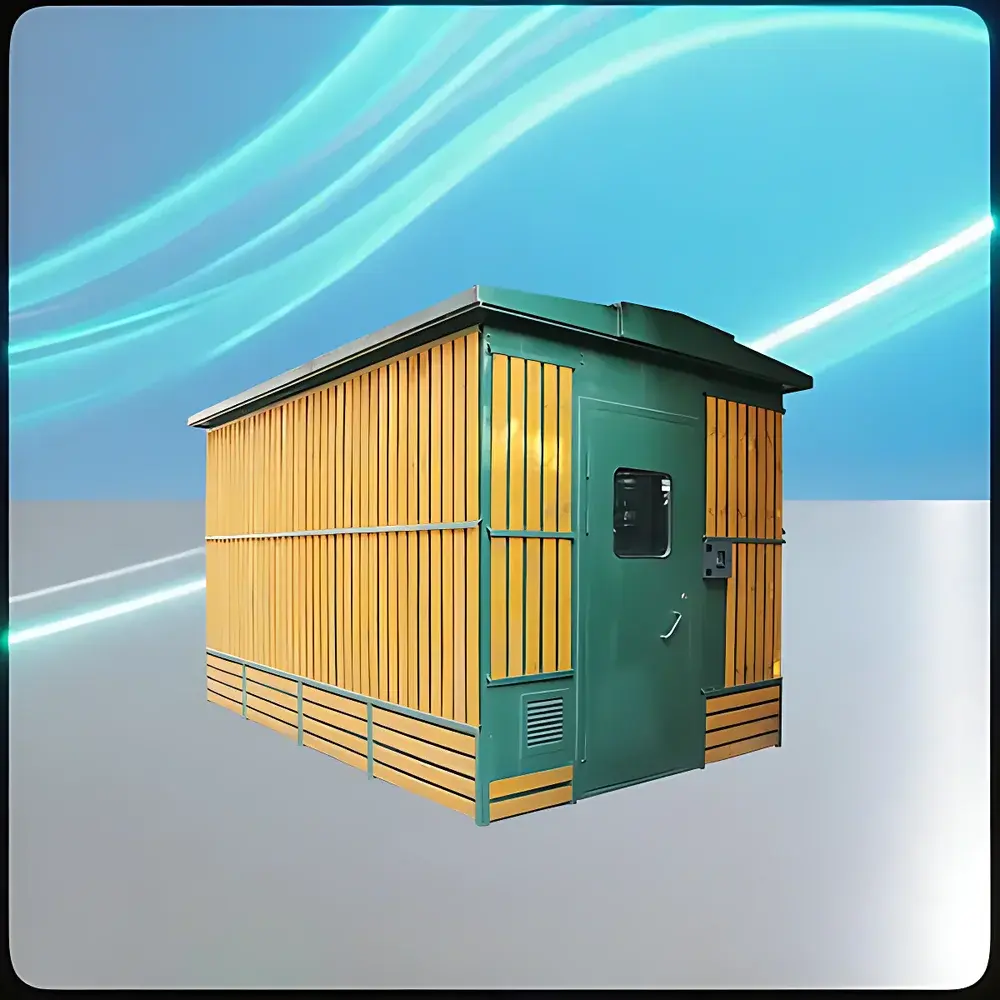
SDL WQMS-900E Compact Online Automatic Water Quality Monitoring System
| Brand | SDL (Snowy Dragon) |
|---|---|
| Model | WQMS-900E |
| Origin | Beijing, China |
| Manufacturer Type | Direct Manufacturer |
| Country of Origin | China |
| Price Range | USD 70,000 – 140,000 (FOB China) |
Overview
The SDL WQMS-900E Compact Online Automatic Water Quality Monitoring System is an integrated, modular environmental monitoring platform engineered for continuous, unattended measurement of critical physical, chemical, and biological water quality parameters in surface water bodies. Designed to support national water governance frameworks—including river chief systems and high-density water quality monitoring grids—the system implements a hybrid architecture combining low-footprint deployment with full-station functional equivalence. It operates on the principle of multi-sensor fusion: electrochemical sensors (pH, dissolved oxygen, conductivity), optical absorption (CODMn, ammonia nitrogen, total phosphorus, total nitrogen), turbidimetric detection (turbidity), thermistor-based temperature sensing, and optional fluorometric excitation (chlorophyll-a, phycocyanin for cyanobacteria density). Hydrological parameters—including water level, flow velocity, and volumetric flow rate—are acquired via ultrasonic or pressure transducer-based instrumentation, enabling synchronized water quantity–quality correlation analysis essential for integrated water resource management.
Key Features
- Compact footprint (<2.5 m² installed area) with weatherproof, corrosion-resistant enclosure suitable for remote or space-constrained deployment (e.g., bridge piers, small embankments, urban canals)
- Modular sensor architecture with standardized RS-485/Modbus RTU and analog 4–20 mA interfaces—enabling seamless integration of third-party hydrological or contaminant-specific analyzers (“X” parameter expansion)
- Automated sample handling subsystem: programmable peristaltic pumping, filtration, air-backflushing of intake lines, and chemical-free ultrasonic probe cleaning to minimize biofouling and maintenance frequency
- Integrated power conditioning: built-in surge protection (IEC 61000-4-5 Level 3 compliant), voltage stabilization (±2% regulation), and optional solar-battery hybrid power management for off-grid operation
- EMI-hardened electronics design with shielded cabling, grounded chassis, and galvanically isolated signal paths—validated under industrial electromagnetic environments per EN 61326-1
- Self-diagnostics engine with real-time sensor health monitoring, calibration drift alerts, and fault-code logging traceable to ISO/IEC 17025-compliant maintenance records
Sample Compatibility & Compliance
The WQMS-900E is validated for continuous operation in natural freshwater matrices including rivers, lakes, reservoirs, and drinking water source areas—with turbidity up to 1000 NTU and suspended solids ≤ 500 mg/L. All wetted components comply with NSF/ANSI Standard 61 for potable water contact. Sensor modules meet relevant Chinese environmental monitoring standards (HJ/T 96–2003, HJ/T 100–2003, HJ/T 101–2003) and are functionally aligned with international equivalents: ASTM D1293 (pH), ASTM D888 (dissolved oxygen), ISO 7888 (conductivity), and ISO 7027 (turbidity). The system supports audit-ready data integrity through time-stamped, digitally signed measurement logs compatible with GLP/GMP documentation workflows and FDA 21 CFR Part 11 electronic record requirements when paired with certified SCADA software.
Software & Data Management
Data acquisition and remote supervision are managed via SDL’s proprietary WQ-Cloud™ platform—a web-based, role-based interface supporting TLS 1.2 encrypted communication, MQTT/HTTP(S) protocol flexibility, and OPC UA server integration. The system generates timestamped, QC-flagged datasets at user-defined intervals (1 min to 24 h), with automatic backup to local SD card and redundant cloud storage. Calibration history, maintenance logs, and instrument diagnostic reports are stored with immutable timestamps and digital signatures. API access enables direct ingestion into national water information platforms (e.g., China’s National Surface Water Quality Monitoring System) or enterprise GIS and decision-support dashboards. Firmware updates are delivered over-the-air with SHA-256 hash verification and rollback capability.
Applications
- Real-time surveillance of surface water quality across river basin administrative boundaries under river/lake chief accountability systems
- Early warning of eutrophication events through concurrent chlorophyll-a, total phosphorus, total nitrogen, and cyanobacterial density tracking in lakes and reservoirs
- Drinking water source protection zones—continuous compliance monitoring against GB 3838–2002 Class II/III criteria
- Urban watershed management: stormwater runoff characterization via rapid-response pH, conductivity, and turbidity anomaly detection
- Hydrological–water quality coupling analysis for ecological flow assessment, sediment transport modeling, and pollution load apportionment studies
FAQ
What is the typical installation timeline from order to operational status?
Standard deployment—including site survey, civil works coordination, sensor commissioning, and network integration—requires 10–14 working days under favorable conditions.
Does the system support remote calibration verification without on-site technician intervention?
Yes: automated zero/span checks using internal reference solutions and dual-point verification routines are configurable via WQ-Cloud™; results are auto-logged with metadata for regulatory review.
Can the WQMS-900E operate reliably during seasonal flooding or ice formation?
The system is rated IP66 and designed for ambient temperatures from −20 °C to +50 °C; optional heated housing and anti-icing probe sleeves are available for sub-zero deployments.
Is data export compliant with national environmental data reporting formats (e.g., China MEP XML schema)?
Yes: native export modules generate validated XML files conforming to HJ 212–2017 transmission protocols and support custom mapping to regional data lake schemas.
How is cybersecurity implemented for remote access and firmware updates?
All remote connections require multi-factor authentication; firmware binaries are cryptographically signed and verified pre-installation; firewall rules and VLAN segmentation are enforced at the gateway level per IEC 62443-3-3 guidelines.
Related Products







