
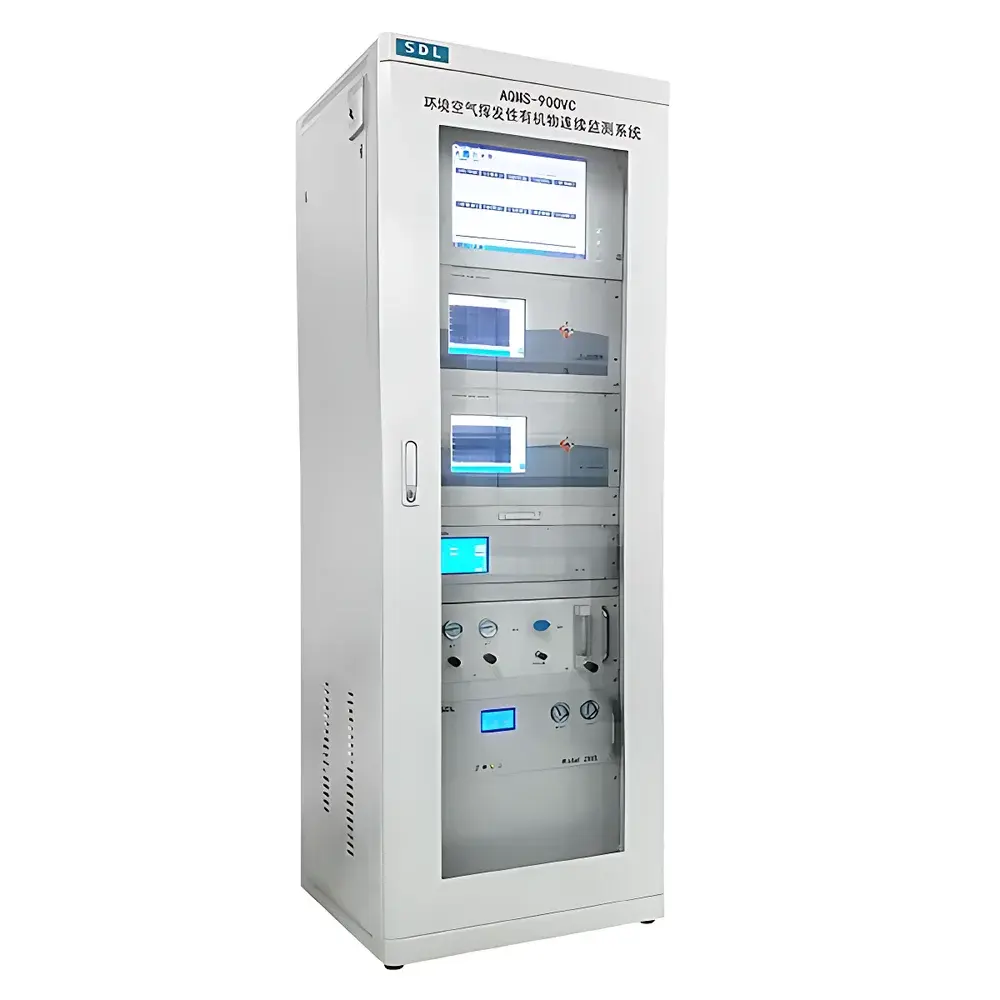
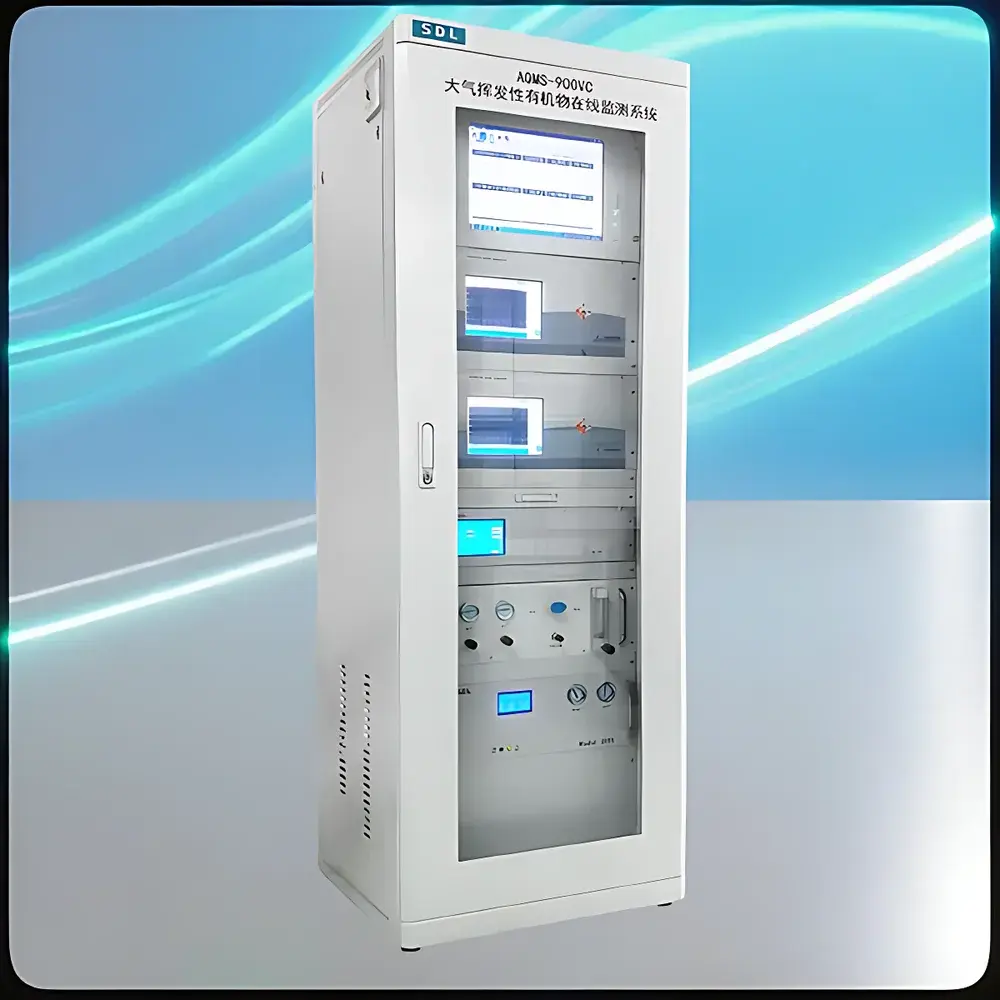
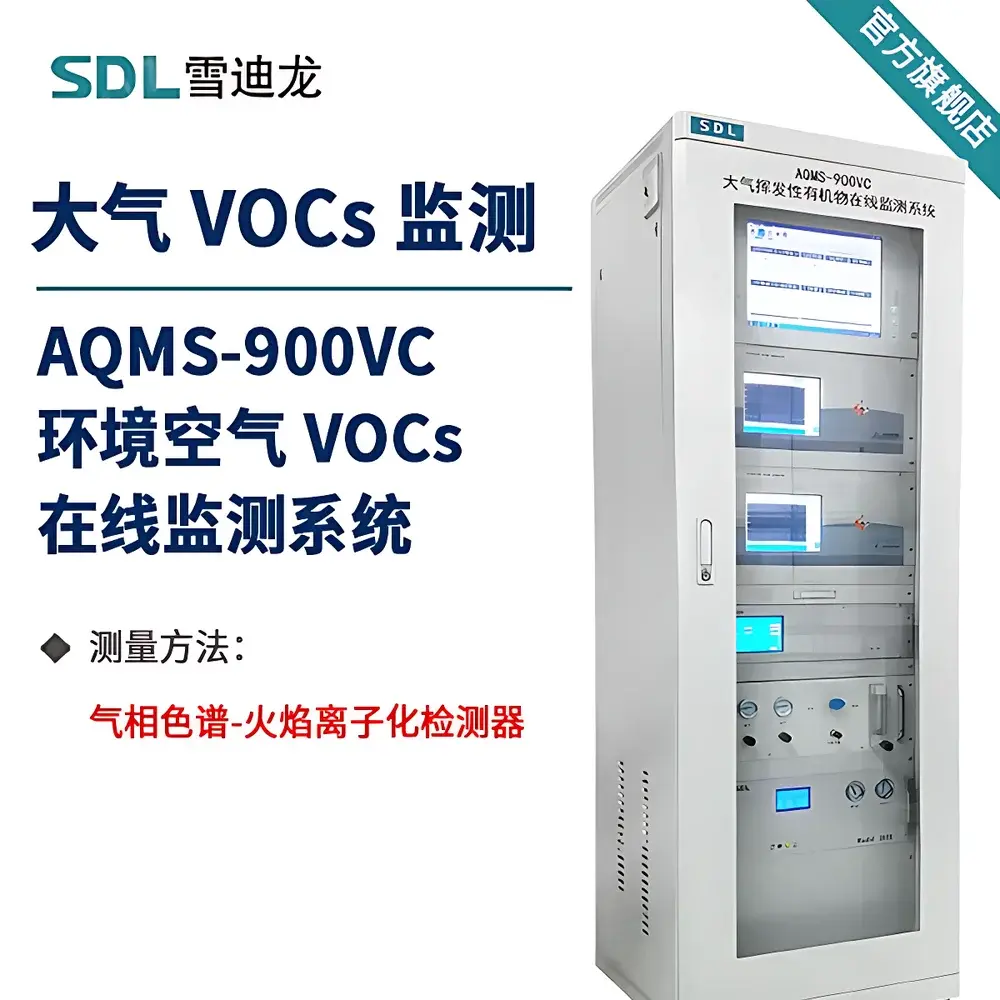
SDL AQMS-900VC Continuous Ambient VOC Monitoring System with Dual-Column GC-FID
| Brand | SDL |
|---|---|
| Origin | Beijing, China |
| Manufacturer Type | Original Equipment Manufacturer (OEM) |
| Product Origin | Domestic (China) |
| Model | AQMS-900VC |
| Detection Principle | Gas Chromatography with Flame Ionization Detection (GC-FID) |
| Instrument Type | Online Real-Time Analyzer |
| Sampling Method | Probe-Based Direct Air Intake |
| Accuracy | ±5% absolute error (per certified reference gas calibration) |
| Compliance Certifications | CCEP (China Environmental Protection Product Certification), Certified by China National Environmental Monitoring Center (CNEMC) Quality Supervision & Inspection Center |
Overview
The SDL AQMS-900VC is a fully automated, continuous ambient volatile organic compounds (VOCs) monitoring system engineered for regulatory-grade, unattended operation in urban air quality networks and industrial emission-sensitive zones. It implements dual-channel gas chromatography coupled with flame ionization detection (GC-FID), a reference method endorsed by ISO 16017-1 and EPA TO-17 for speciated VOC quantification. Unlike single-column systems, the AQMS-900VC integrates two independent GC modules—low-carbon (C₂–C₆) and high-carbon (C₆–C₁₂)—each optimized for retention time resolution, peak symmetry, and thermal stability across seasonal ambient temperature fluctuations (−20 °C to +45 °C). The system operates on a fixed-cycle analysis protocol (typically 30–60 min per full 57-component PAMS suite), delivering time-synchronized concentration data for ozone precursor species including ethane, propane, benzene, toluene, xylenes, and C₉–C₁₀ alkylbenzenes.
Key Features
- Dual-column GC architecture: Independent low-temperature trap (−30 °C) for C₂–C₆ hydrocarbons and ambient-temperature adsorbent trap for C₆–C₁₂ compounds, minimizing co-elution and enhancing chromatographic separation fidelity.
- FID detector with auto-ignition logic: Integrated hydrogen supply management ensures reliable flame re-ignition after power interruption; hydrogen solenoid valve closes instantly upon flame-out detection, meeting IEC 60079-0 intrinsic safety prerequisites for field deployment.
- Probe-based sampling train: Heated stainless-steel probe (120 °C) with particulate filter and moisture removal membrane prevents condensation and aerosol interference upstream of the analytical column.
- Self-diagnostic firmware: Real-time monitoring of carrier gas pressure, detector baseline stability, column oven ramp profiles, and trap desorption efficiency—with configurable alarm thresholds and event logging compliant with ISO/IEC 17025 traceability requirements.
- Modular hardware design: Field-replaceable GC columns, FID nozzles, and trap cartridges enable maintenance without system downtime or external calibration recalibration.
Sample Compatibility & Compliance
The AQMS-900VC is validated for direct analysis of ambient air matrices without pre-concentration dilution or catalytic conversion. It meets the compositional scope of the U.S. EPA Photochemical Assessment Monitoring Stations (PAMS) program (57 target VOCs) and aligns with China’s HJ 1010–2018 standard for ambient air VOCs online monitoring. All calibration protocols follow NIST-traceable standards (e.g., NSI-01, NSI-02), and multi-point linear verification is performed biweekly per CNEMC QA/QC guidelines. The system supports GLP-compliant audit trails—including operator login, method versioning, calibration history, and raw chromatogram archiving—with optional 21 CFR Part 11 electronic signature module for regulated laboratories.
Software & Data Management
The embedded Linux-based control software (v3.2+) provides remote configuration via TLS-secured web interface and supports Modbus TCP, OPC UA, and MQTT protocols for integration into SCADA or central environmental data platforms (e.g., China’s National Urban Air Quality Monitoring Platform). Raw chromatograms are stored in ANDI/NetCDF format; quantitative reports include retention time alignment flags, internal standard recovery ratios (>85%), and uncertainty estimates derived from replicate injections (n=3). Data export complies with ISO 14064-1 greenhouse gas inventory reporting structures where applicable.
Applications
- Urban background and traffic-impacted air quality monitoring networks requiring speciated VOC time-series for ozone formation potential modeling (e.g., MIR, POCP indices).
- Industrial fence-line monitoring at petrochemical parks, coating manufacturing facilities, and solvent-using operations under China’s GB 37822–2019 emission standards.
- Photochemical smog research campaigns: Long-term deployment in mobile labs or fixed supersites for diurnal VOC reactivity profiling and source apportionment via PMF or CMB receptor modeling.
- Regulatory compliance verification: Continuous demonstration of adherence to local VOC emission caps, especially for non-methane hydrocarbon (NMHC) and aromatic compound limits.
FAQ
Does the AQMS-900VC support remote diagnostics and firmware updates?
Yes—via secure HTTPS interface with role-based access control; over-the-air updates require signed package verification and rollback capability.
What is the minimum detectable concentration (MDC) for benzene under typical operating conditions?
MDC is method-dependent and calibrated per site-specific humidity and flow rate; typical values range from 0.05–0.15 ppbv using 30-min integrated sampling and NIST SRM 1860A reference gas.
Is the system compatible with third-party data acquisition servers such as Siemens Desigo or Honeywell Experion?
Yes—OPC UA server implementation enables native integration; pre-configured drivers available for major DCS/SCADA vendors.
How frequently must the FID nozzle be cleaned or replaced?
Under clean ambient conditions, nozzle inspection is recommended every 90 days; replacement interval extends to 6 months when operated with ultra-high-purity hydrogen (99.999%) and filtered carrier gas.
Can the system operate autonomously during extended power outages?
With optional UPS (≥2 kVA, 30-min runtime), the AQMS-900VC maintains trap cooling, retains chromatographic method parameters, and resumes analysis from last completed cycle upon power restoration.







