
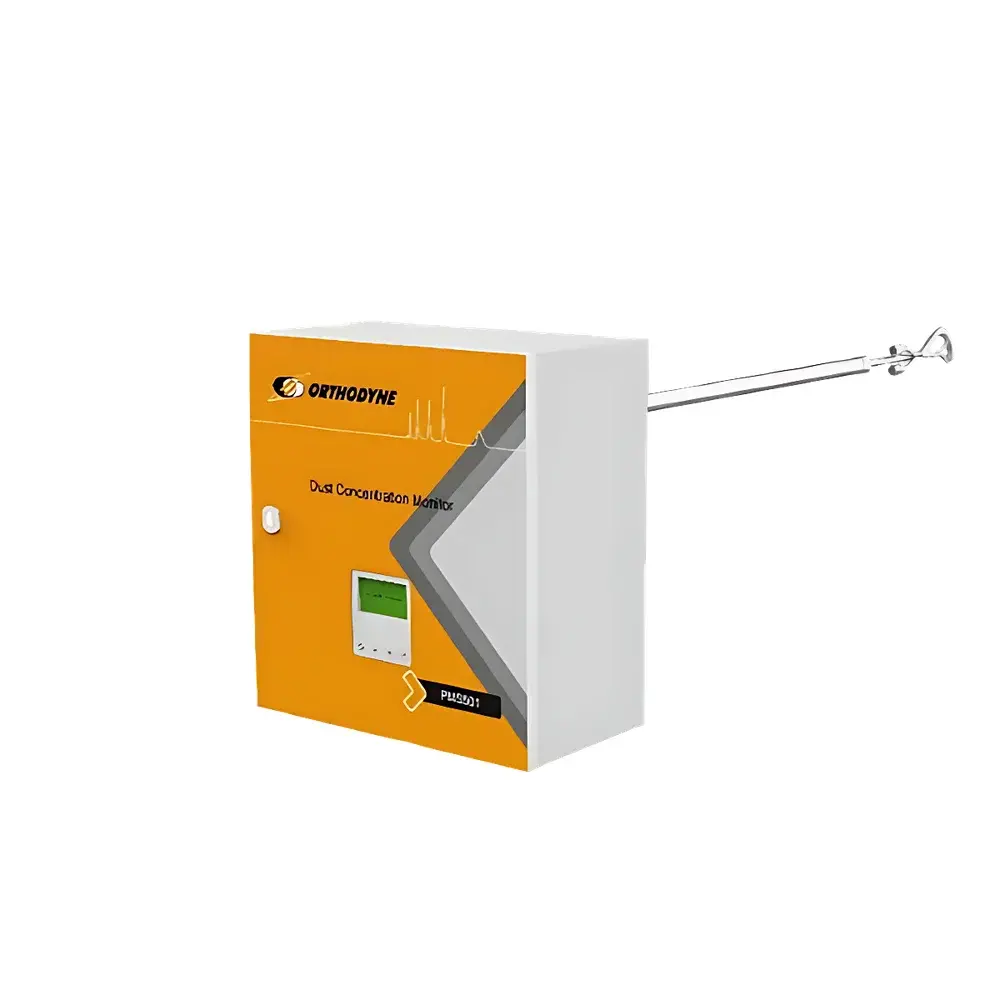
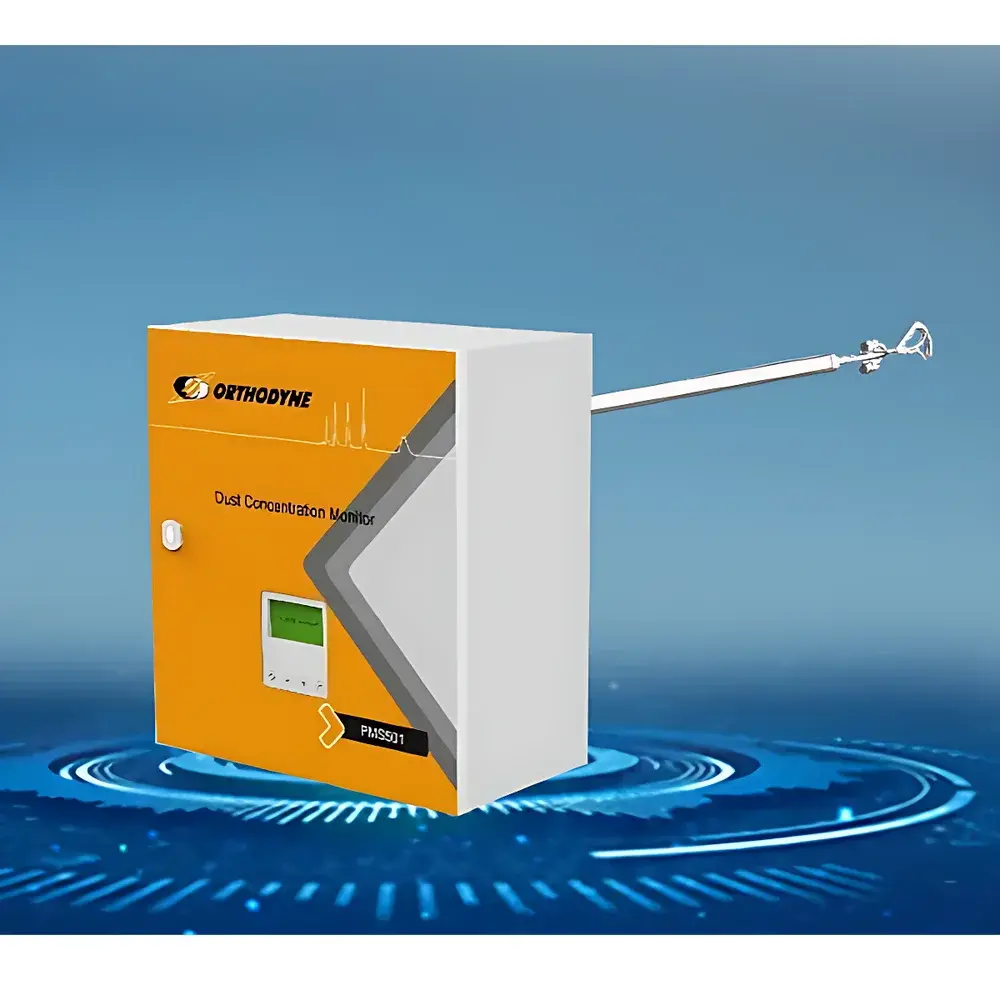
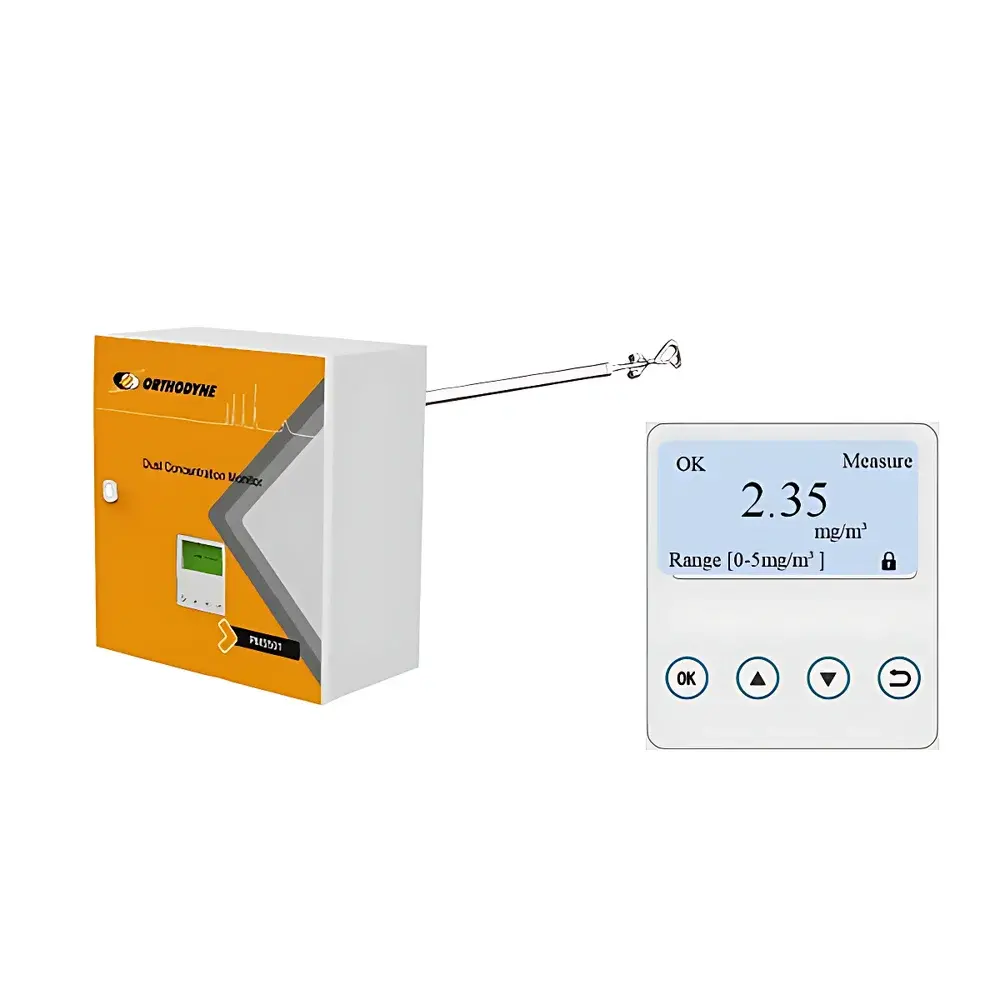
SDL PMS 501 In-situ Laser Forward Scattering Particulate Matter Monitor for Flue Gas
| Brand | SDL |
|---|---|
| Origin | Beijing, China |
| Manufacturer Type | Original Equipment Manufacturer (OEM) |
| Country of Origin | China |
| Model | PMS 501 |
| Price Range | USD 123,000 – 138,000 (FOB Beijing) |
| Measurement Principle | Laser Forward Scattering |
| Safety Rating | Ex d IIB T4 Gb certified explosion-proof enclosure |
| Measurement Range | 0–15 mg/m³ and 0–45 mg/m³ dual-range mode |
| Resolution | 0.1 mg/m³ |
Overview
The SDL PMS 501 is an in-situ, high-stability particulate matter (PM) monitor engineered for continuous emission monitoring systems (CEMS) in flue gas streams. It operates on the physical principle of laser forward scattering—where a collimated near-infrared laser beam interacts with suspended particles in the stack gas, and the intensity of scattered light at a defined forward angle (typically 15°–30°) is quantitatively correlated to mass concentration via calibrated Mie scattering theory. Unlike extractive systems requiring sample conditioning, the PMS 501 performs real-time, non-intrusive measurement directly within the duct or stack, eliminating transport losses, condensation artifacts, and sampling bias. Its optical path is fully housed in a thermally stabilized, heated probe assembly, enabling reliable operation under saturated humidity conditions (>95% RH) and temperatures up to 200 °C—critical for post-wet-FGD and wet ESP applications where water droplet interference commonly compromises optical accuracy.
Key Features
- In-situ probe design with integrated high-temperature optical head (rated to 200 °C), eliminating need for sample extraction, dilution, or filtration.
- Laser forward scattering optics with temperature-compensated photodetector array, delivering stable signal-to-noise ratio across low-concentration ranges (sub-1 mg/m³ detection capability).
- Patented heated gas path module maintaining >150 °C wall temperature throughout the optical cavity—preventing dew formation and minimizing hygroscopic particle growth artifacts.
- Automatic isokinetic sampling control via integrated pitot tube and dynamic flow feedback, ensuring representative velocity-matched sampling per ISO 16940 and EPA Method 5 requirements.
- Self-calibrating zero and span functionality using built-in motorized shutter and reference scatter source—enabling traceable calibration without manual intervention or external hardware.
- Explosion-proof housing compliant with IEC 60079-1 (Ex d IIB T4 Gb), certified for Zone 1 hazardous areas adjacent to coal-fired boiler stacks and waste incineration ducts.
Sample Compatibility & Compliance
The PMS 501 is validated for use in flue gases containing fly ash, limestone slurry carryover, heavy metal aerosols, and submicron organic condensates typical of coal combustion, municipal solid waste incineration, and biomass co-firing. It meets key regulatory and technical specifications including: EN 15267-3 (QAL1 certification framework), ISO 25597 (performance requirements for in-situ PM monitors), and China’s HJ 76-2017 and HJ 836-2017 standards for CEMS. Its measurement uncertainty (<±10% RSD at 2 mg/m³) satisfies EU BREF LCP and US EPA Performance Specification 11 (PS-11) criteria for low-range PM CEMS. The system architecture supports full audit trail logging required under GLP and ISO/IEC 17025 environments.
Software & Data Management
The embedded firmware provides dual-mode operation: standalone local display (7-inch capacitive touchscreen with intuitive HMI) and networked integration via Modbus TCP/IP or Profibus DP. Data output includes real-time PM concentration (mg/m³), optical density, temperature, pressure, flow velocity, and diagnostic flags—all timestamped with UTC synchronization. Firmware supports automated data validation per QA/QC protocols, including drift check intervals, zero/span verification logs, and fault code reporting aligned with EPA 40 CFR Part 60 Appendix B PS-11 reporting templates. Optional cloud gateway enables secure TLS 1.2 transmission to SCADA or environmental data management platforms (EDMP), with configurable retention policies and role-based access control compliant with ISO 27001 security frameworks.
Applications
- Continuous monitoring at desulfurization (FGD) outlet ducts in coal-fired power plants, particularly where ultra-low emission (ULE) targets demand sub-5 mg/m³ accuracy.
- Post-wet electrostatic precipitator (ESP) and wet scrubber stacks in waste-to-energy facilities, where high moisture and chloride-laden aerosols challenge conventional beta attenuation or TEOM methods.
- Process control feedback loops for baghouse pulse cleaning optimization and filter integrity verification in industrial kilns and cement clinker lines.
- Regulatory compliance reporting for national emission permit systems (e.g., China’s National Emission Trading System, NETS) and EU ETS monitoring plans.
- Long-term trend analysis of particulate slip during load-following operations and transient combustion events.
FAQ
Does the PMS 501 require periodic optical cleaning or manual alignment?
No—its optical window employs active thermal purging and hydrophobic nano-coating; automatic self-diagnostic routines verify optical path integrity every 24 hours.
Can it be integrated with existing CEMS analyzers from third-party vendors?
Yes—Modbus RTU/TCP and 4–20 mA analog outputs ensure seamless interoperability with Siemens Desigo, ABB Ability, Emerson DeltaV, and Honeywell Experion DCS platforms.
Is factory calibration traceable to NIST or CNAS standards?
All production units undergo QAL1-compliant calibration at SDL’s CNAS-accredited (ISO/IEC 17025) metrology lab using gravimetric reference standards traceable to NIM (National Institute of Metrology, China).
What maintenance interval is recommended for field deployment?
Scheduled maintenance is biannual: inspection of purge air filters, verification of heater function, and verification of isokinetic probe alignment—no optical recalibration required within 12 months under normal operating conditions.
Related Products







