
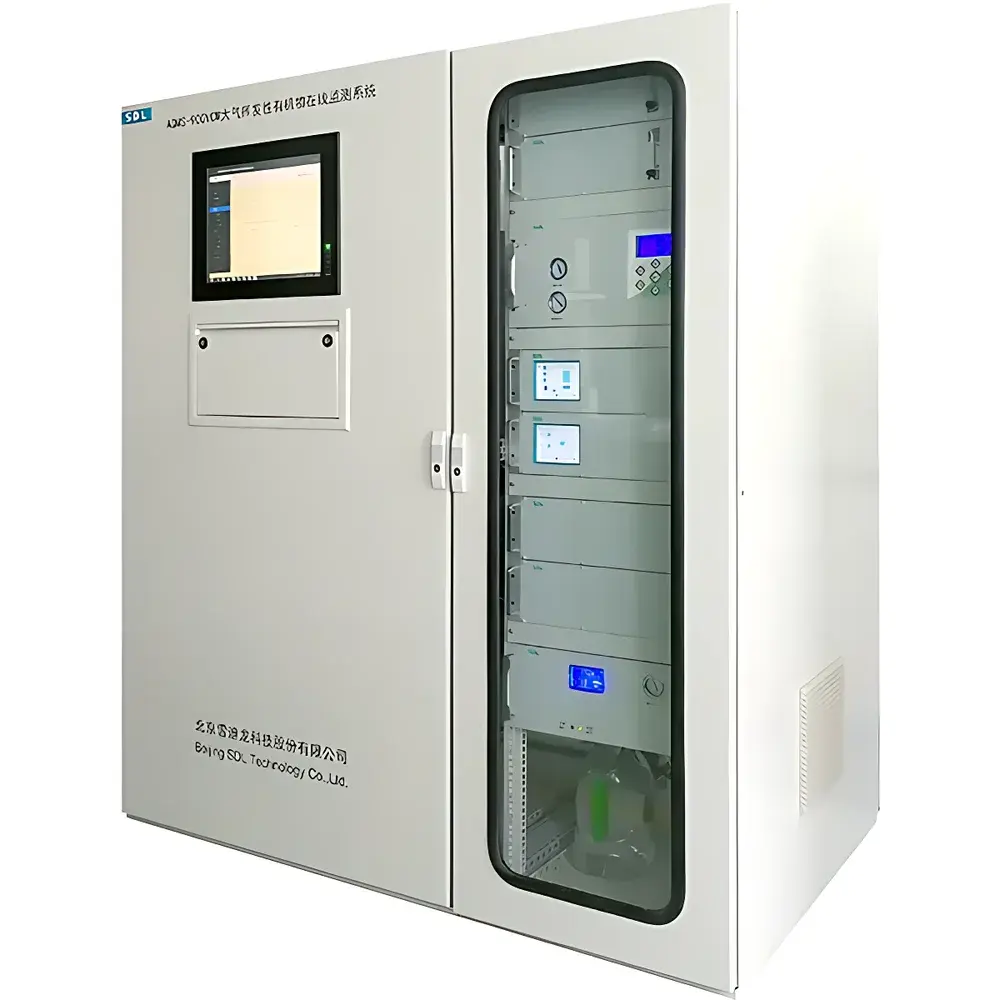
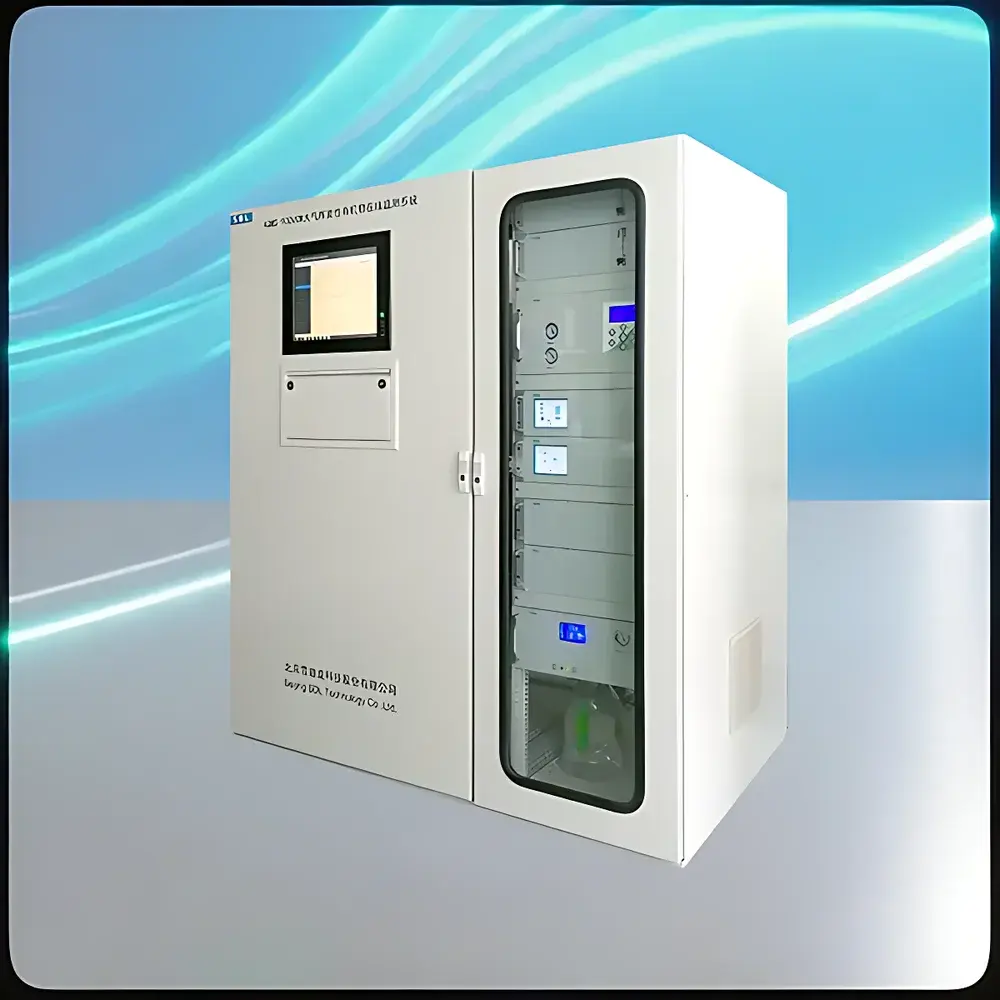
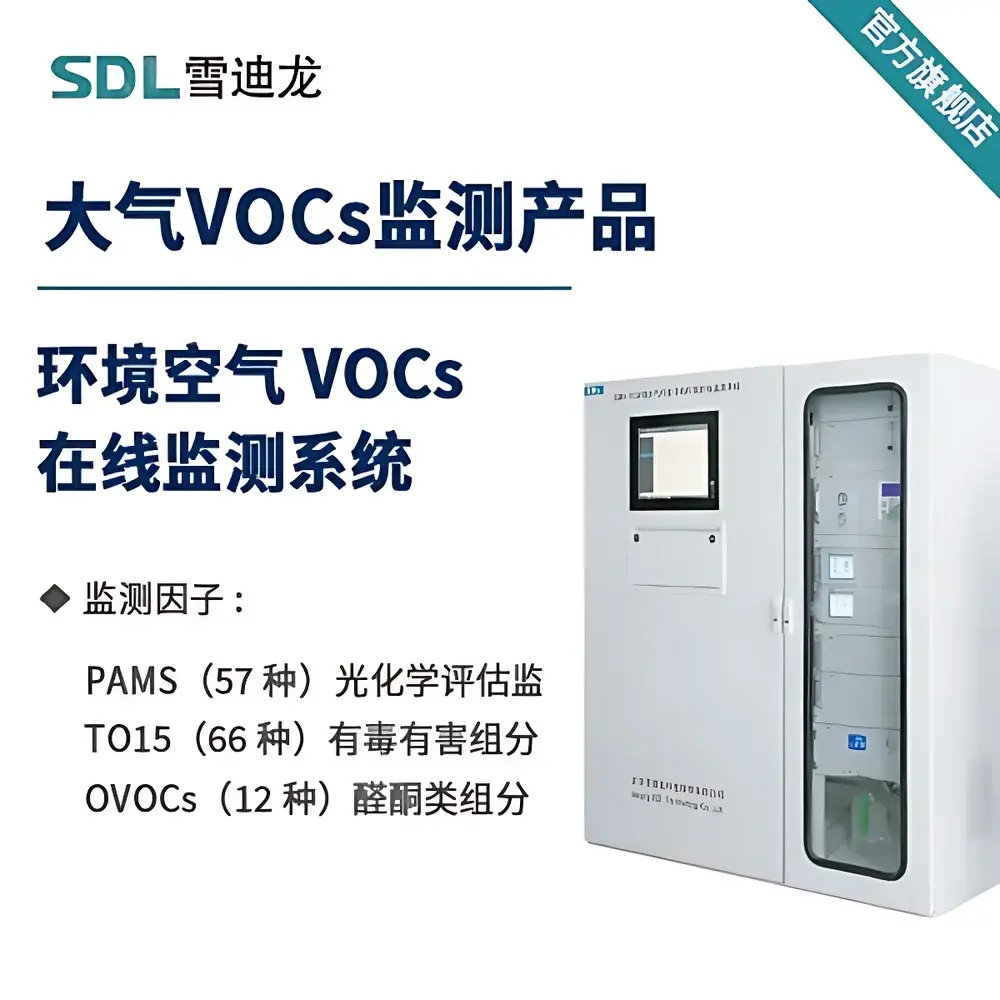
SDL AQMS-900VCM Continuous Ambient VOC Monitoring System with GC-MS Detection
| Brand | SDL |
|---|---|
| Origin | Beijing, China |
| Manufacturer Type | Direct Manufacturer |
| Product Category | Domestic |
| Model | AQMS-900VCM |
| Detection Principle | Gas Chromatography-Mass Spectrometry (GC-MS) |
| Instrument Type | Online Analytical System |
| Typical Configuration | Multi-Component VOC Monitor |
| Sampling Method | Pump-Aspirated |
| Detection Range | Full Speciation Coverage |
| Method Detection Limit | ≤0.1 nmol/mol for 116 Target VOCs |
| Accuracy | ≤10% RSD |
| Response Time | ≤1 h (User-Adjustable) |
Overview
The SDL AQMS-900VCM Continuous Ambient VOC Monitoring System is an engineered online analytical platform designed for unattended, real-time quantification of volatile organic compounds (VOCs) in ambient air. It integrates dual-column gas chromatography with quadrupole mass spectrometry (GC-MS) to deliver speciated measurements across three regulatory compound groups: PAMS (57 priority aromatic and aliphatic hydrocarbons), TO-15 (66 toxic air pollutants including halogenated and oxygenated species), and OVOCs (12 carbonyl compounds such as formaldehyde and acetaldehyde). The system operates on a sequential enrichment–desorption–separation–detection workflow, compliant with HJ 1010–2018 (“Technical Requirements and Test Methods for Continuous Ambient Air VOC Monitoring Systems Using GC”) and the Ministry of Ecology and Environment’s 2019 Monitoring Scheme for VOCs in Prefecture-Level Cities (Letter No. [2019]11). Its architecture supports long-term stability under variable environmental conditions, with continuous operation capability exceeding 30 days without manual intervention.
Key Features
- Low-temperature cryogenic water removal: Integrated chilled trap eliminates moisture prior to cryo-focusing, minimizing interference from humidity-induced peak broadening or column degradation.
- Semiconductor-cooled cryo-enrichment unit: Enables precise temperature control during analyte trapping (−40 °C to −10 °C) and rapid, programmable thermal desorption (≥30 °C/s ramp rate) for high-fidelity transfer to the GC column.
- Dual-capillary GC column configuration: Parallel separation pathways enhance chromatographic resolution and reduce co-elution risk for structurally similar VOCs, especially critical for isomeric aldehydes and C2–C5 alkylbenzenes.
- Automated multi-level dilution calibration module: Supports up to four certified standard gas cylinders; performs dynamic dilution (1:10 to 1:1000), internal standard spiking, and bracketing calibration sequences—fully traceable to NIST-traceable standards.
- Onboard data validation engine: Real-time QC flagging based on retention time stability (±0.05 min), mass spectral library match score (≥70%), and response linearity (R² ≥ 0.995 over calibration range).
Sample Compatibility & Compliance
The AQMS-900VCM is validated for ambient air matrices across urban, suburban, and industrial boundary layer sampling sites. It meets the performance criteria defined in HJ 1010–2018 for precision (≤15% RSD over 7-day operation), method detection limits (MDLs ≤ 0.1 nmol/mol for all 116 target compounds), and zero/span drift (≤5% over 24 h). System documentation includes CCEP certification (China Environmental Protection Product Certification) and third-party verification reports issued by the National Center for Environmental Monitoring Instrument Quality Supervision and Inspection. While not pre-certified to EPA TO-15 or ISO 16017-1, its GC-MS methodology and calibration protocols are fully compatible with those frameworks for cross-jurisdictional data acceptance.
Software & Data Management
The embedded monitoring software (v3.2+) provides ISO/IEC 17025-aligned audit trails, user role-based access control (admin/operator/auditor), and electronic signature support per FDA 21 CFR Part 11 requirements. All raw chromatograms, spectral libraries (NIST MS Search + custom VOC library), calibration logs, and maintenance records are stored in encrypted SQLite databases with optional cloud synchronization via TLS 1.2–secured API endpoints. Data export formats include netCDF-4 (CF-compliant), CSV (with metadata headers), and XML for integration into national air quality data platforms (e.g., CNEMC’s national VOC database).
Applications
- Regulatory ambient air quality monitoring networks requiring speciated VOC data for ozone and secondary organic aerosol (SOA) precursor analysis.
- Photochemical assessment campaigns aligned with PAMS and TO-15 compound lists for source apportionment modeling (e.g., PMF, CMB).
- Industrial fence-line monitoring near petrochemical facilities, paint manufacturing, and solvent-using operations.
- Research-grade field studies investigating VOC reactivity, diurnal cycles, and atmospheric oxidation pathways.
- Validation of satellite-based VOC retrievals (e.g., TROPOMI formaldehyde columns) through ground-truth measurement campaigns.
FAQ
What VOC compound lists does the AQMS-900VCM cover?
It quantifies all 57 PAMS compounds, 66 TO-15 target analytes, and 12 OVOCs—including benzene, toluene, ethylbenzene, xylenes (BTEX), chlorinated methanes, and C1–C4 carbonyls—as defined in HJ 1010–2018.
Is the system suitable for unheated outdoor installations?
Yes—the enclosure meets IP55 rating and operates continuously within −20 °C to +45 °C ambient temperatures; internal climate control maintains GC oven and detector thermal stability.
How is calibration traceability maintained?
All calibrations use NIST-traceable standard gases (certified by CNAS-accredited labs); dilution ratios are verified gravimetrically, and calibration certificates are auto-generated and archived with each run.
Can the system interface with existing SCADA or EMS platforms?
Yes—via Modbus TCP, OPC UA, or HTTP RESTful API; output variables include individual compound concentrations (nmol/mol), total VOC (ppbC), and system health metrics (trap temperature, GC pressure, MS vacuum status).
What maintenance intervals are recommended?
Quarterly GC column conditioning, biannual MS tuning and detector cleaning, and annual full system performance verification per HJ 1010–2018 Annex D protocols.







