
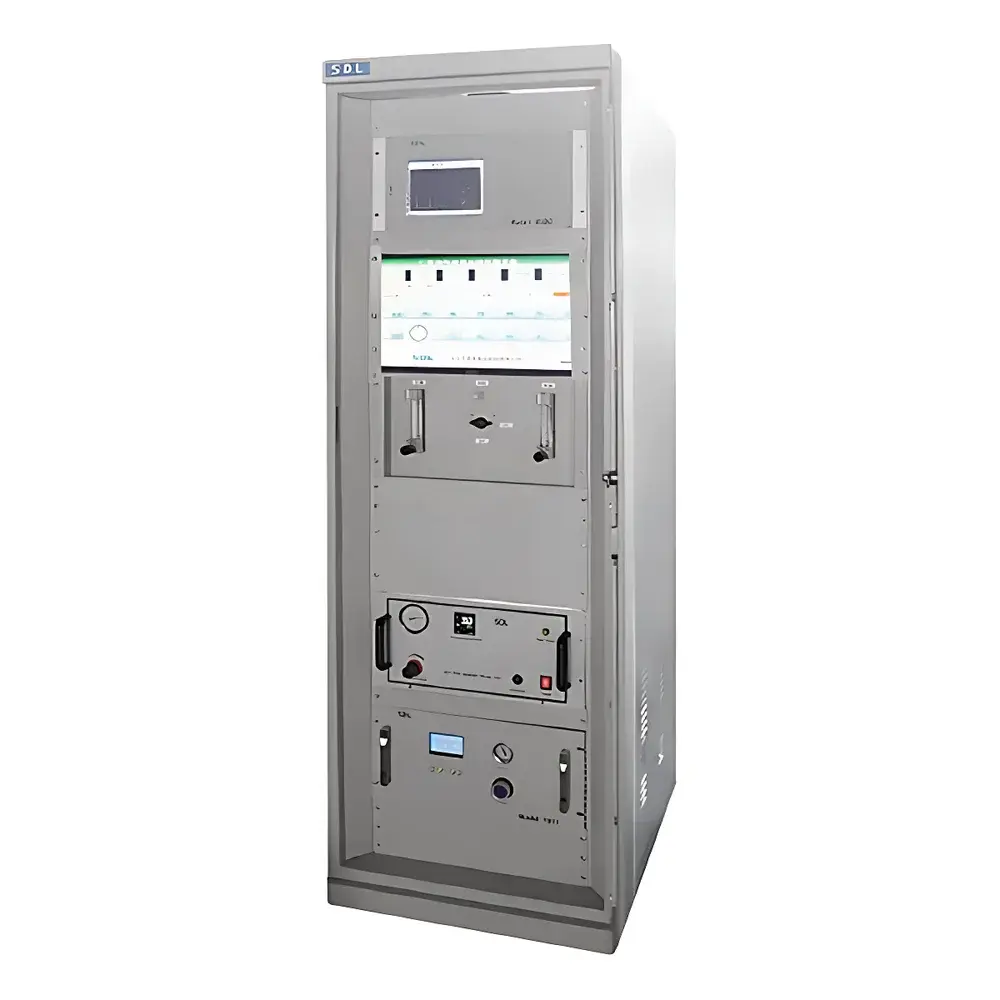
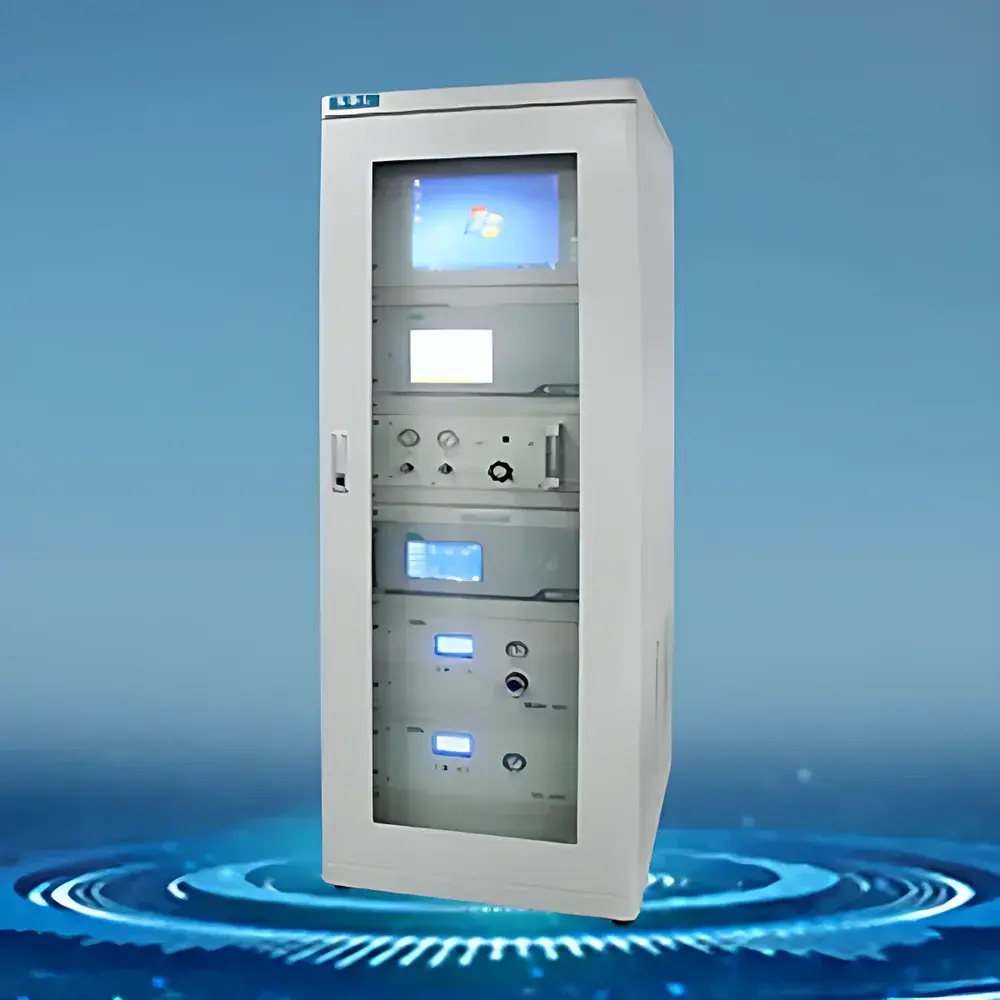
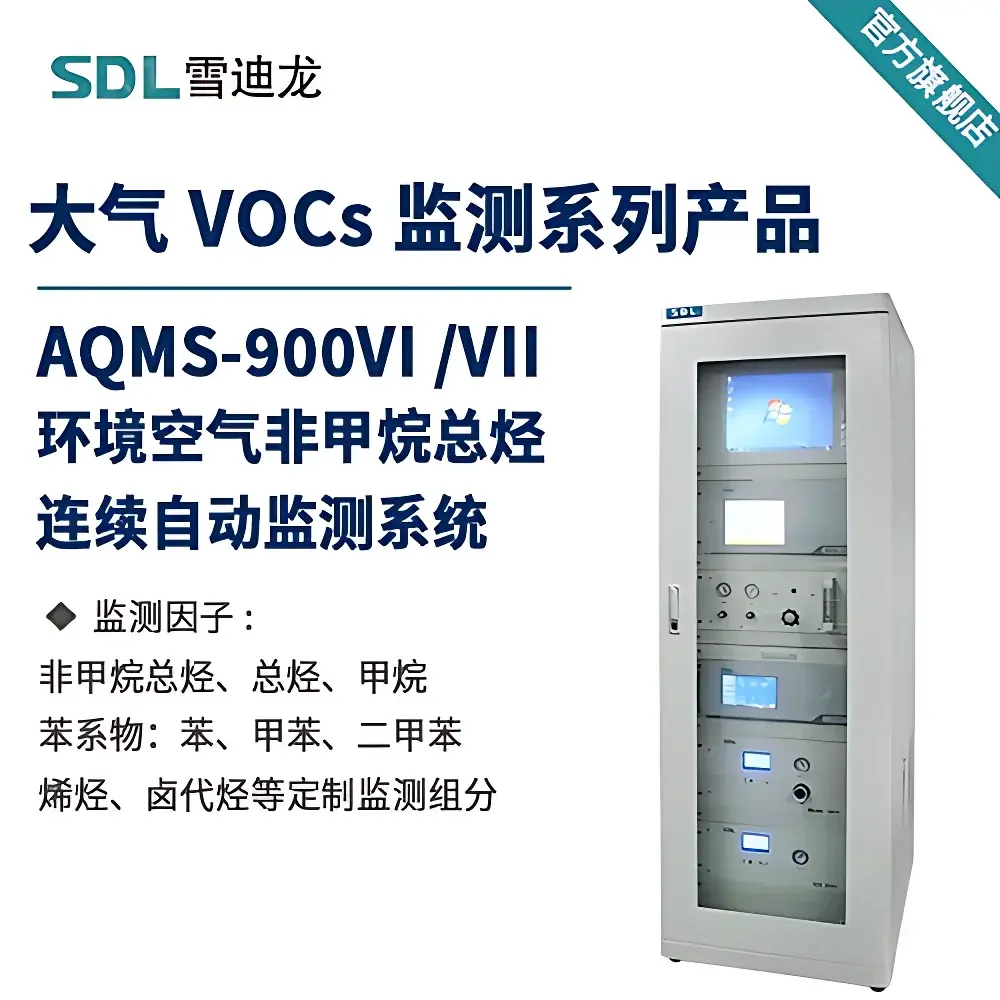
SDL AQMS-900VII Online Ambient Air Non-Methane Hydrocarbons (NMHC) Monitoring System
| Brand | SDL |
|---|---|
| Origin | Beijing, China |
| Manufacturer | SDL Environmental Technology Co., Ltd. |
| Instrument Type | Online Continuous Emission Monitoring System (CEMS) |
| Detection Principle | Gas Chromatography with Flame Ionization Detection (GC-FID) |
| Measured Parameters | Methane (CH₄), Non-Methane Total Hydrocarbons (NMTH), Total Hydrocarbons (TH) |
| Measurement Ranges | 0–10 / 0–50 / 0–100 / 0–500 / 0–1000 ppm (user-selectable) |
| Detection Limit | 20 ppb (as carbon) |
| Compliance Certifications | CCEP, CPA, CMA-accredited test report, Ex-certified for hazardous areas |
Overview
The SDL AQMS-900VII is an online ambient air monitoring system engineered for continuous, regulatory-compliant quantification of non-methane total hydrocarbons (NMTH), methane (CH₄), and total hydrocarbons (TH) in outdoor atmospheric environments. It implements dual analytical pathways—direct measurement and subtraction method—both aligned with the technical specifications outlined in China’s *Technical Regulation for Continuous Automatic Monitoring of Non-Methane Total Hydrocarbons in Ambient Air (Trial)* (HJ 1019–2019). The core analytical architecture integrates a custom-developed industrial gas chromatograph (Model 6000) with a high-stability flame ionization detector (FID), leveraging chromatographic separation principles to resolve volatile organic compounds (VOCs) including benzene, toluene, xylene (BTX), and halogenated hydrocarbons. Unlike catalytic oxidation-based NMHC analyzers, the AQMS-900VII avoids interference from oxygen, nitrogen, water vapor, or CO₂ through selective cryogenic pre-concentration prior to GC separation—ensuring metrological integrity and trace-level sensitivity.
Key Features
- Two operational modes: Direct NMTH measurement via cryo-trap enrichment, and CH₄-subtraction method using parallel methane-specific GC column analysis—enabling method validation and cross-verification per regulatory audit requirements.
- Integrated low-temperature pre-concentrator (–30 °C) coupled with rapid thermal desorption (≥250 °C) significantly enhances detection sensitivity for aromatic and halogenated VOCs, reducing method detection limits below 20 ppb (as carbon).
- FID subsystem incorporates auto-ignition logic: Upon power-up or recovery from outage, the system autonomously initiates hydrogen/air flow control, ignites the flame, verifies stable ion current, and resumes scheduled analysis without manual intervention.
- Fail-safe flame management: Real-time FID flame status monitoring triggers immediate closure of the hydrogen solenoid valve and audible/visual alarm if flame extinction is detected—preventing unburned H₂ accumulation in hazardous-area installations.
- Automated multi-point quality control: Programmable introduction of certified calibration gases (e.g., 10 ppb, 100 ppb, 1 ppm CH₄/NMTH standards) at user-defined intervals for drift correction, linearity verification, and system performance validation.
- Configurable measurement ranges (0–10 to 0–1000 ppm) support diverse site requirements—from background urban air monitoring to industrial fence-line surveillance—with automatic range switching and linear dynamic response across full span.
Sample Compatibility & Compliance
The AQMS-900VII is designed for unattended operation in ambient air sampling networks, accommodating sample gas flows of 0.5–2.0 L/min with integrated particulate filtration (≤0.3 µm), moisture removal (dew point ≤ –20 °C), and pressure regulation (±0.02 bar stability). Its hardware and firmware architecture meets electromagnetic compatibility (EMC) Class B requirements for outdoor deployment and carries intrinsic safety certification (Ex d IIB T4 Gb) for Zone 1 hazardous locations. Regulatory conformance includes formal approval under China’s Environmental Protection Product Certification (CCEP), mandatory Metrological Instrument Type Approval (CPA), and third-party testing per CNAS-accredited laboratories (CMA-marked reports). While not explicitly validated against ASTM D6348 or ISO 11847, its GC-FID methodology aligns with internationally accepted principles for hydrocarbon speciation and total VOC quantification in ambient air.
Software & Data Management
The embedded Linux-based control software provides real-time chromatogram visualization, peak integration (with customizable retention time windows), and automated calculation of NMTH = TH – CH₄. All raw chromatographic data, calibration logs, alarm events, and QC results are timestamped and stored locally on industrial-grade SSD (≥32 GB) with configurable remote backup via FTP/SFTP. Audit trails comply with GLP-aligned data integrity requirements: every parameter change, calibration event, or maintenance action is logged with operator ID, timestamp, and pre-/post-values. Optional OPC UA and Modbus TCP interfaces enable seamless integration into central SCADA or EMS platforms; data output conforms to HJ 212–2017 communication protocol for Chinese environmental monitoring networks.
Applications
- Ambient air quality monitoring stations (AAQMS) operated by provincial and municipal ecological environment bureaus.
- Fence-line monitoring at petrochemical complexes, refineries, and solvent-using manufacturing facilities subject to VOC emission permits.
- Urban background and traffic-impacted site studies requiring long-term NMTH trend analysis and source apportionment support.
- Validation and intercomparison campaigns involving reference-grade GC-FID systems in national air quality assessment programs.
- Research applications requiring speciated VOC data (BTX, chlorinated hydrocarbons) alongside NMTH totals for atmospheric chemistry modeling.
FAQ
Does the AQMS-900VII meet U.S. EPA or EU reference method requirements?
The system is designed and certified for compliance with Chinese national standards (HJ 1019–2019, HJ 212–2017). While its GC-FID methodology is technically comparable to EPA Method 25A and EN 12619, formal equivalency determination requires site-specific validation per local regulatory authority protocols.
Can the system operate unattended for extended periods?
Yes—designed for 30-day continuous operation between maintenance cycles, supported by auto-calibration, flame supervision, and fault diagnostics. Scheduled consumables (FID jet, GC columns, traps) have documented service lifetimes under typical ambient air conditions.
Is remote diagnostics and software update capability available?
Remote access via secure SSH or VPN is supported for troubleshooting and firmware updates; all remote sessions are authenticated and logged per cybersecurity best practices for industrial control systems.
What sample conditioning options are available for high-humidity or particulate-laden air?
Standard configuration includes heated sample line (60 °C), cyclonic particulate filter, and Nafion™-based permeation dryer. Optional chilled mirror dew point controller and stainless-steel coalescing filters are available for extreme conditions.
How is data integrity ensured during power interruptions?
Non-volatile memory preserves all active chromatograms and system states; upon recovery, the controller performs self-diagnostic checks, reinitializes GC oven/FID parameters, and resumes the last scheduled sequence without data loss.
Related Products







