
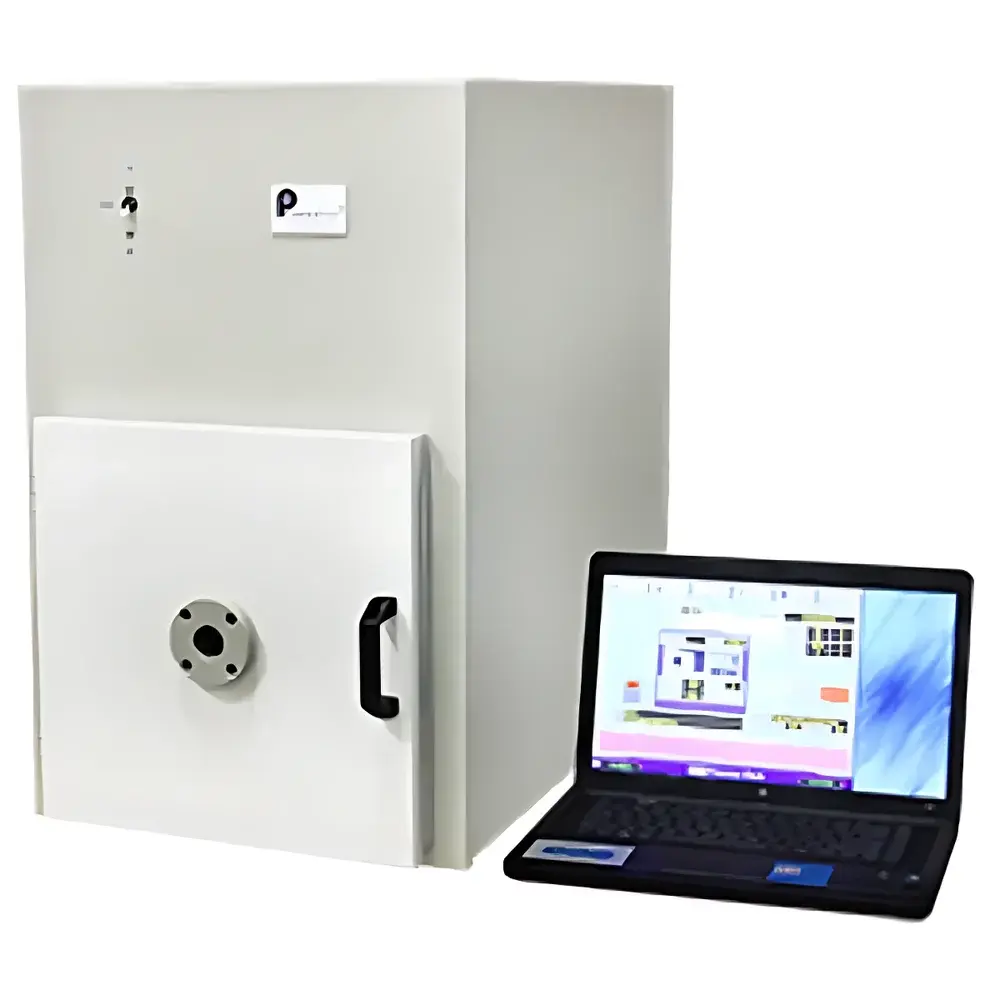
Plasma Etch PE-100 Multi-Functional Plasma Surface Treater
| Brand | XEI |
|---|---|
| Origin | USA |
| Manufacturer Type | Authorized Distributor |
| Country of Origin | Imported |
| Model | PE-100 |
| Instrument Type | Imported Plasma Surface Treater |
Overview
The Plasma Etch PE-100 Multi-Functional Plasma Surface Treater is a benchtop, low-pressure radio-frequency (RF) plasma system engineered for precision surface modification, organic contaminant removal, and activation of polymer, metal, ceramic, and composite substrates. Designed and manufactured in the United States by Plasma Etch, Inc.—a pioneer in industrial and laboratory plasma technology since 1980—the PE-100 operates on a 13.56 MHz RF generator with impedance-matched coupling to ensure stable plasma ignition and uniform discharge across diverse sample geometries. Its core function relies on reactive species generation (e.g., atomic oxygen, nitrogen radicals, and ionized argon) within a vacuum chamber, enabling controlled physical sputtering and chemical etching without thermal damage or substrate warping. The system is widely deployed in academic research labs, semiconductor R&D facilities, MEMS fabrication cleanrooms, and materials science departments requiring repeatable, non-destructive surface conditioning prior to bonding, coating, or adhesion testing.
Key Features
- Compact benchtop design with integrated vacuum pump, RF power supply, and digital pressure control—no external utilities required beyond standard 110 V AC power.
- Stainless-steel vacuum chamber (Ø100 mm × 120 mm height) rated for ≤50 mTorr base pressure, compatible with O2, Ar, N2, CF4, and air-based plasma chemistries.
- Digitally adjustable RF power output (0–100 W) with real-time feedback loop for process stability and reproducibility.
- Proprietary temperature management system minimizes localized heating during extended treatments, preserving heat-sensitive substrates such as PET, PDMS, and photoresists.
- Electrostatic shielding architecture prevents arcing and ensures uniform plasma distribution—even over irregular or high-aspect-ratio samples—enhancing treatment homogeneity and eliminating edge effects.
- Front-access loading port with quick-release clamp and viton O-ring seal enables rapid sample exchange and full chamber visibility during operation.
Sample Compatibility & Compliance
The PE-100 accommodates substrates up to 75 mm in diameter and 25 mm in thickness, including wafers, PCBs, optical lenses, microfluidic chips, biomedical implants, and 3D-printed polymer parts. It supports both batch processing (up to 10 standard microscope slides) and single-sample configurations. All internal wetted surfaces are electropolished stainless steel; no aluminum or anodized components are used—ensuring compatibility with aggressive chemistries and minimizing metallic contamination. The system conforms to UL 61010-1 and CE safety standards. While not certified for GMP manufacturing environments, its operational parameters—including vacuum integrity logs, RF power history, and cycle timestamps—support GLP-compliant documentation when integrated with external lab information management systems (LIMS). Process validation protocols may be developed in alignment with ASTM F2067 (Standard Practice for Plasma Cleaning of Surfaces) and ISO 15730 (Plasma Surface Treatment of Plastics for Adhesion).
Software & Data Management
The PE-100 operates via front-panel membrane keypad with LCD display showing real-time vacuum level (mTorr), RF power (W), treatment time (s), and elapsed cycle count. Optional RS-232 or USB-to-serial interface enables remote parameter control and data logging using third-party software (e.g., LabVIEW, Python-based automation scripts). All operational events—including start/stop timestamps, power ramp profiles, and pressure stabilization duration—are timestamped and exportable as CSV files. For regulated environments, audit-trail functionality can be implemented through external data acquisition platforms compliant with FDA 21 CFR Part 11 requirements when paired with appropriate electronic signature and user access controls.
Applications
- Pre-bond cleaning of silicon wafers, glass substrates, and metal foils to enhance epoxy, anodic, or eutectic bonding strength.
- Surface activation of polymeric medical devices (e.g., catheters, tubing, sensor housings) to improve hydrophilicity and protein adsorption uniformity.
- Removal of photoresist residues, lubricants, and mold release agents from precision optics and MEMS components.
- Enhancement of ink adhesion on flexible packaging films and printed electronics substrates.
- Controlled surface roughening of PTFE and polyimide for improved metallization yield in flexible circuit fabrication.
- Decontamination of electron microscopy stubs and TEM grids prior to carbon coating or sputter deposition.
FAQ
What gases are compatible with the PE-100?
Oxygen, argon, nitrogen, air, and CF4 are routinely used; gas selection depends on application—oxygen for organic removal, argon for physical sputtering, and nitrogen for amine functionalization.
Can the PE-100 handle conductive and insulating samples simultaneously?
Yes—the electrostatic shielding design prevents charge buildup on insulators while maintaining consistent plasma coupling across mixed-material loads.
Is vacuum pump oil change required regularly?
The included dual-stage rotary vane pump uses ISO VG 100 mineral oil; recommended oil replacement interval is every 500 operating hours or annually, whichever occurs first.
Does the system support automated multi-step recipes?
Not natively—the PE-100 is manually operated per cycle; however, external programmable logic controllers (PLCs) or PC-based sequencers can orchestrate sequential gas switches, power ramps, and timed steps via serial command protocol.
What maintenance is recommended for long-term reliability?
Quarterly inspection of O-rings, RF electrode cleanliness, and vacuum hose integrity; annual calibration of pressure gauge and RF power meter using traceable standards.



