
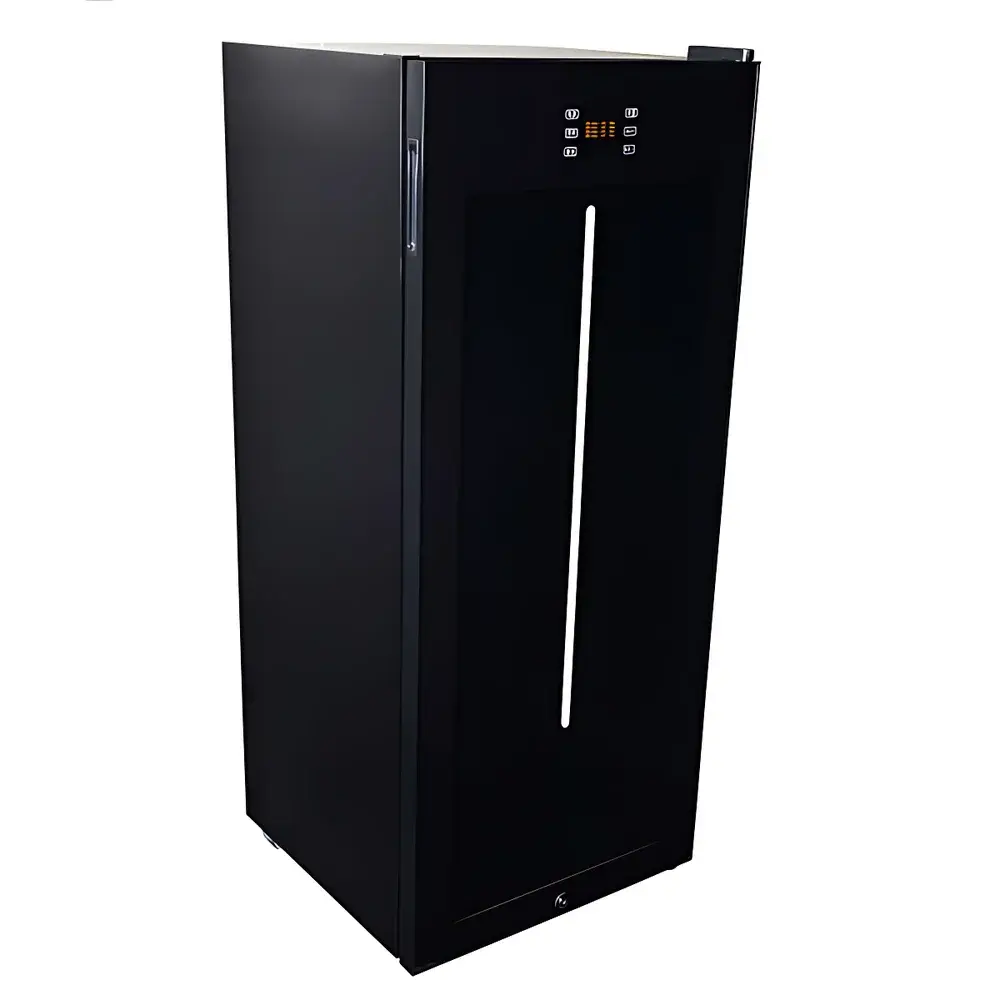
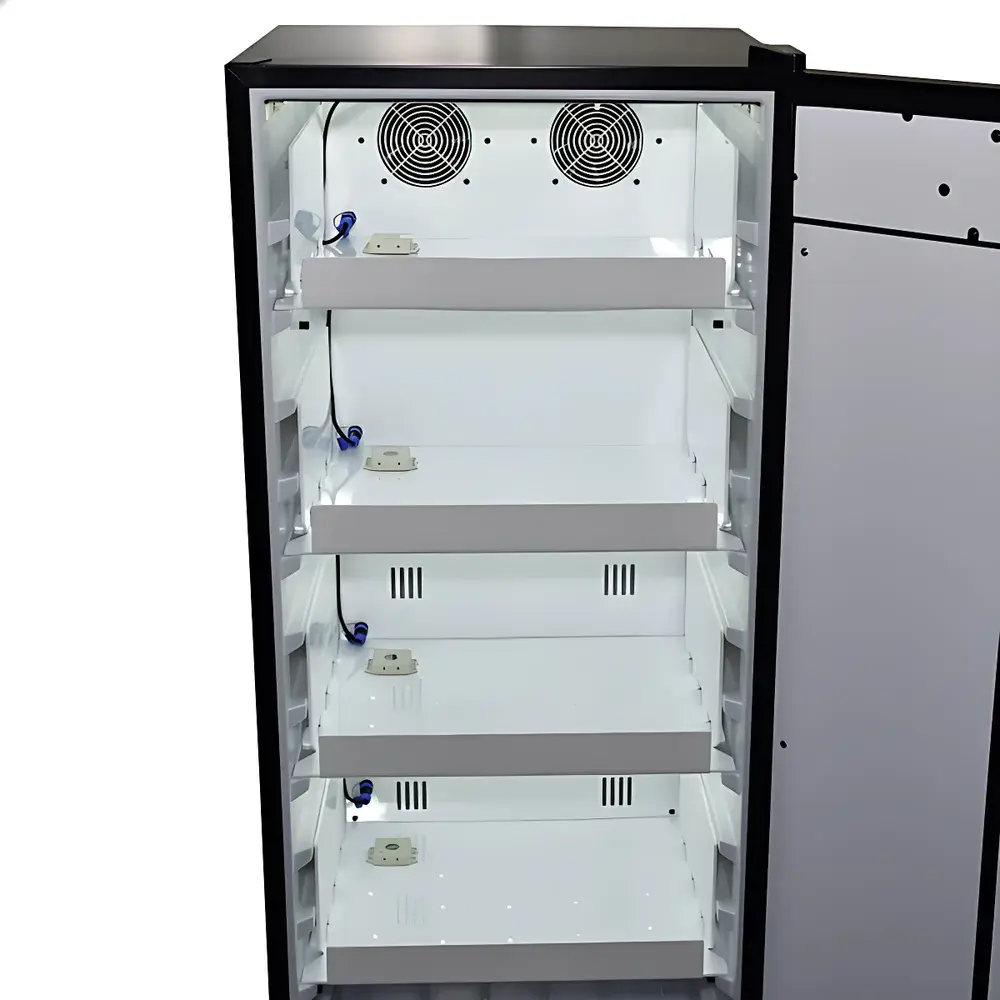
STARiTECH LS-4000UVL Photostability Testing Chamber
| Brand | STARiTECH |
|---|---|
| Origin | Beijing, China |
| Model | LS-4000UVL |
| Chamber Volume | 250 L (4-tier) |
| Illuminance Range | 0–7000 lx (visible) |
| UV Irradiance Range | 0–250 µW/cm² |
| Temperature Control Range | 2°C to ambient |
| Chamber Dimensions (per tier) | 500 × 400 × 160 mm |
| Max Power Consumption | 230 W |
| Input Voltage | 180–240 VAC, 50–60 Hz |
| Overall Dimensions | 660 × 600 × 1400 mm |
| Net Weight | 78 kg |
| Light Source Lifetime | >20,000 h |
| Display | Capacitive OLED touchscreen |
| Data Output | External real-time thermal printer |
| Security | Mechanical safety lock |
| Compliance | ChP, ICH Q1B, ICH Q5C |
Overview
The STARiTECH LS-4000UVL Photostability Testing Chamber is a purpose-built environmental simulation system engineered for regulatory-compliant photostability assessment of pharmaceuticals, biologics, cosmetics, and advanced materials. It operates on the fundamental principle of controlled irradiation exposure—simultaneously delivering quantifiable visible light (320–750 nm) and near-UV radiation (320–400 nm)—to accelerate photochemical degradation pathways under standardized conditions. Designed in strict alignment with ICH Q1B (Photostability Testing of New Drug Substances and Products) and the Chinese Pharmacopoeia (ChP) General Chapter 9001, the LS-4000UVL enables reproducible qualification of light-induced degradation products, color changes, potency loss, and physical instability. Its 250 L total capacity—distributed across four independently addressable tiers—supports parallel testing of multiple formulations, reference standards, and packaging configurations while maintaining spatial uniformity of irradiance and thermal environment per ICH Q1B Annex 1 requirements.
Key Features
- Four-tier vertical chamber architecture with independent irradiance and temperature control per tier, enabling comparative studies (e.g., unpackaged vs. packaged samples, different excipients, or primary container types).
- Dual-band optical system: calibrated visible light source (0–7000 lx, traceable to NIST-traceable lux meters) and adjustable UV-A output (0–250 µW/cm² at sample level, measured at 365 nm peak), both monitored in real time via integrated photodiode sensors.
- Precision temperature regulation from 2°C above ambient to ambient (no active cooling), ensuring thermal stability during prolonged exposure without condensation or thermal drift—critical for hygroscopic or low-melting-point APIs.
- Capacitive OLED touchscreen interface with multilingual UI (English default), intuitive parameter programming, and event-driven logging (start/stop, setpoint changes, door openings).
- Mechanical interlock system prevents inadvertent chamber access during active irradiation cycles, supporting laboratory safety protocols and GLP-aligned operational discipline.
- External real-time thermal printer provides auditable hard-copy records of irradiance, temperature, elapsed time, and alarm events—fully compliant with ALCOA+ data integrity principles.
- Long-life LED-based light sources (>20,000 h rated lifetime, L70) minimize maintenance downtime and irradiance calibration frequency versus traditional fluorescent or xenon arc systems.
Sample Compatibility & Compliance
The LS-4000UVL accommodates standard USP/Ph. Eur.-compliant sample holders—including open Petri dishes, amber vials, blister cards, and secondary packaging units—within its 500 × 400 × 160 mm per-tier workspace. Each tier features uniform irradiance distribution (±5% across central 80% area per ICH Q1B methodology) and minimal thermal gradient (<±1.0°C). The system supports full validation documentation packages (IQ/OQ/PQ templates available upon request) and meets essential regulatory expectations for photostability equipment: adherence to ICH Q1B Step 1–3 exposure protocols; compatibility with ICH Q5C (Quality of Biotechnological Products: Stability Testing of Biotechnological/Biological Products); and alignment with FDA Guidance for Industry: Photosensitivity Testing and Labeling (2021). While not intrinsically 21 CFR Part 11–compliant (lacking electronic signature and audit trail software modules), its analog data output and mechanical lock satisfy baseline GMP Annex 11 and WHO TRS 986 Annex 6 requirements for non-automated stability infrastructure.
Software & Data Management
The LS-4000UVL operates as a standalone hardware platform with embedded firmware—no PC dependency required for routine operation. All operational parameters, sensor readings, and event logs are stored internally (non-volatile memory, 30-day buffer) and simultaneously mirrored to the external thermal printer. For laboratories requiring digital archiving, optional RS-485 or USB-to-serial interfaces enable integration with validated LIMS or ELN systems via Modbus RTU protocol. Raw irradiance and temperature time-series data export as CSV files supports post-hoc analysis in MATLAB, JMP, or Python-based stability modeling (e.g., Arrhenius-photolytic hybrid models). Firmware updates are performed via secure USB key—version-controlled and documented per ISO 13485 change management procedures.
Applications
- ICH Q1B Step 1 forced degradation: identification of photolabile functional groups and primary degradation pathways in small-molecule APIs.
- Comparative photostability screening of lyophilized vs. liquid formulations, suspension vs. solution dosage forms, and coated vs. uncoated tablets.
- Light barrier efficacy evaluation of primary packaging (e.g., HDPE vs. COP vials, aluminum foil blisters, UV-filtering films).
- Regulatory submission support for ANDAs, MAAs, and BLA dossiers requiring photostability data per regional pharmacopoeial mandates.
- Stability-indicating method development: generation of stressed photodegradants for HPLC/MS characterization and reference standard synthesis.
- Non-pharma applications: UV aging of polymer coatings, pigment fade testing in cosmetics, and photodegradation kinetics of OLED encapsulation materials.
FAQ
Does the LS-4000UVL provide spectral irradiance data (e.g., W/m²/nm) for individual wavelengths?
No—the system delivers broadband UV-A (320–400 nm) and visible (320–750 nm) irradiance as integrated metrics (µW/cm² and lx, respectively). Spectral power distribution (SPD) characterization is performed during factory calibration but is not user-accessible in real time.
Can humidity be controlled within the chamber?
No—humidity is not regulated. The LS-4000UVL is designed exclusively for photostability under dry, ambient-humidity conditions per ICH Q1B. For combined light/humidity stress, integration with external climatic chambers is recommended.
Is third-party calibration certification included with purchase?
Yes—a NIST-traceable irradiance and temperature calibration certificate (valid for 12 months) is supplied with each unit, including uncertainty budgets per ISO/IEC 17025.
What maintenance is required beyond lamp replacement?
Annual verification of sensor linearity, door seal integrity, and thermal uniformity mapping is advised. LED sources require no periodic replacement within typical 5-year lab service life.
Can test protocols be password-protected to prevent unauthorized modification?
Yes—user-level access control (operator, supervisor, administrator) is enforced via PIN authentication; protocol editing and system configuration require supervisor-level credentials.




