
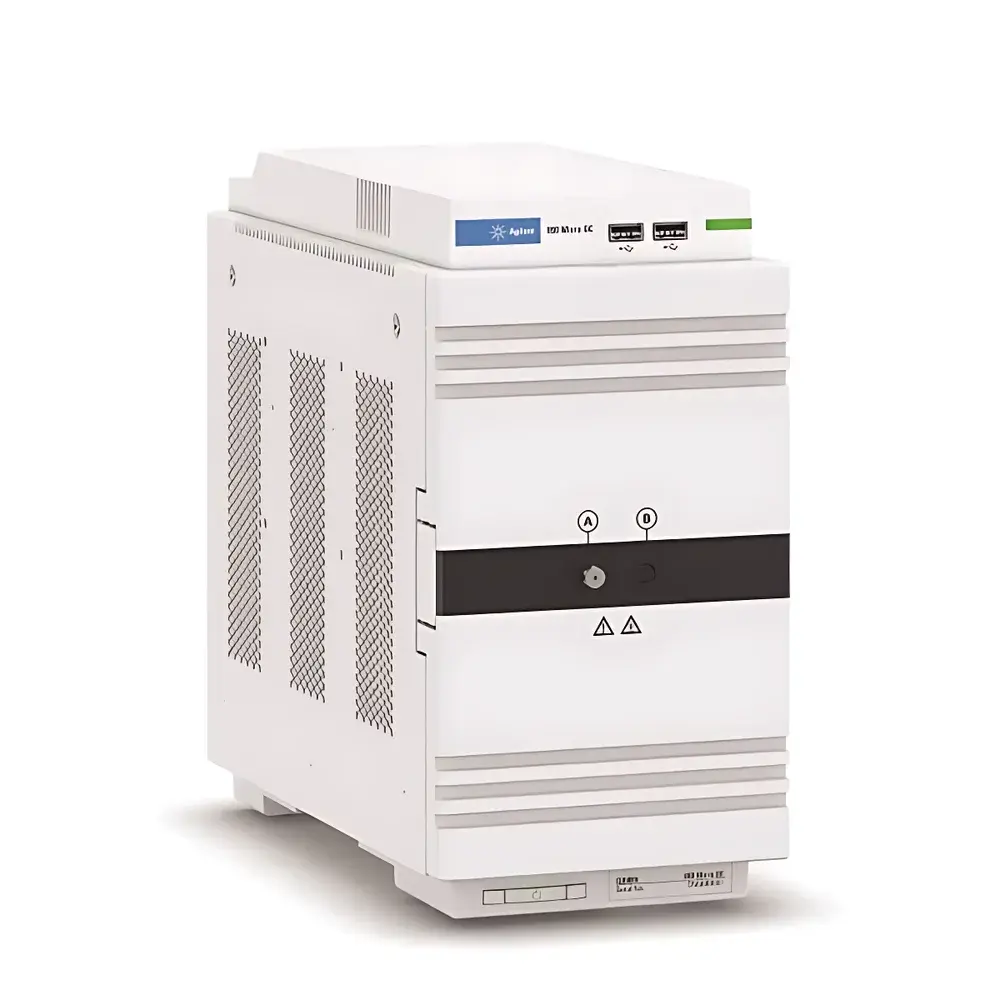
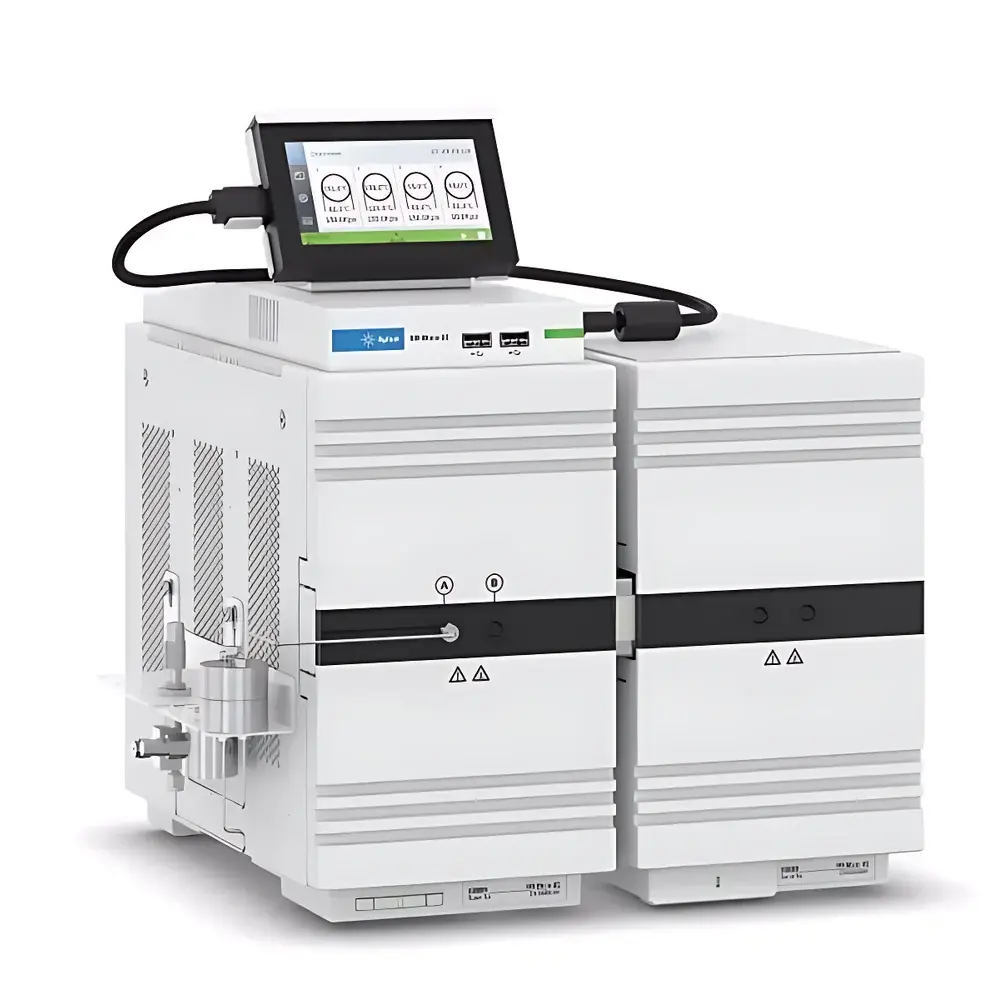
Agilent 990 Micro Gas Chromatograph
| Brand | Agilent Technologies |
|---|---|
| Origin | USA |
| Manufacturer Type | Authorized Distributor |
| Origin Category | Imported |
| Model | 990 |
| Pricing | Upon Request |
Overview
The Agilent 990 Micro Gas Chromatograph is a field-deployable, benchtop-compatible analytical instrument engineered for high-resolution separation and quantitative detection of volatile and semi-volatile organic compounds in gaseous matrices. Based on capillary gas chromatography with micro-machined thermal conductivity detection (µTCD), the system delivers laboratory-grade data integrity in a footprint less than 1/5 that of conventional GC platforms. Its core architecture leverages miniaturized column ovens, low-volume pneumatic manifolds, and solid-state temperature control to achieve rapid thermal equilibration—enabling analysis start-up in under 3 minutes and full method execution in as little as 60–180 seconds per sample. Designed for operation across three deployment modes—laboratory-bench, mobile-rig-mounted, and permanent process-integrated—the 990 maintains consistent retention time stability (RSD < 0.15% over 24 h) and detector linearity (0.1–10,000 ppm) without recalibration between locations.
Key Features
- Four independent, fully configurable GC channels—each with dedicated column oven, carrier gas flow control, and µTCD detector—enabling parallel multi-component analysis or redundancy-critical monitoring.
- Micro-electromechanical systems (MEMS)-based thermal conductivity detectors with inert, passivated flow paths compatible with reactive species including H2S, NH3, and Cl2, supporting reliable sub-ppm detection limits.
- Modular column selection: Over 20 pre-optimized capillary columns available—including PLOT Al2O3/KCl, Molsieve 5A, DB-1, DB-ALC1, and CP-Sil 5 CB—covering C1–C12 hydrocarbons, permanent gases, sulfur compounds, and oxygenates.
- Carrier gas flexibility: Compatible with He, H2, N2, and Ar; hydrogen carrier enables optimal efficiency (van Deemter minimum at ~40 cm/s) and 3× faster analysis vs. helium without compromising resolution.
- Energy-efficient operation: Consumes ≤10% of the electrical power and carrier gas volume required by standard lab GCs—typical power draw: 85 W (standby), 140 W (peak); carrier gas consumption: 1–3 mL/min per channel.
- Integrated backflush capability: Programmable valve sequencing directs non-eluting heavy ends away from the column, extending column lifetime and reducing cycle time by up to 40% in complex matrix applications.
Sample Compatibility & Compliance
The Agilent 990 accepts direct gas-phase samples via septumless injection valves, heated sample loops (up to 200 °C), or optional gas-tight syringes and pressure-regulated sample cylinders. It complies with ISO 6974-2 (natural gas composition), ASTM D1945/D1946 (gaseous fuels), GPA 2261 (pipeline gas quality), and USP (residual solvents). All firmware and data acquisition modules support 21 CFR Part 11-compliant audit trails, electronic signatures, and secure user role management—fully validated for GLP and GMP environments. The inert stainless-steel and SilcoNert®-coated fluidic path ensures trace-level recovery of sulfur- and nitrogen-containing compounds, meeting EPA Method TO-15 and ASTM D5504 requirements for ambient air and stack emission monitoring.
Software & Data Management
Controlled via Agilent MicroGC Navigator software (Windows-based), the system supports method development, real-time chromatogram visualization, automated peak integration, and customizable report generation (PDF, CSV, XML). Data files are stored in vendor-neutral .cdf format compliant with ASTM E1792 and ISO/IEC 17025 traceability requirements. Remote operation is enabled through Ethernet/IP or optional cellular modem integration; historical datasets sync automatically to networked LIMS or cloud-hosted data lakes using TLS 1.2–encrypted RESTful APIs. Firmware updates include FIPS 140-2 validated cryptographic modules for secure data-at-rest encryption.
Applications
- Natural Gas & Upstream Operations: Real-time compositional analysis (C1–C6+, CO2, N2, H2S) for calorific value calculation per ISO 6976; mud logging gas detection during drilling; flare gas composition verification.
- Refining & Petrochemicals: C4–C5 speciation in FCC off-gas; hydrogen purity assessment (H2O, CO, CO2, CH4 impurities to <1 ppm); light hydrocarbon distribution in naphtha cut analysis.
- Renewable Energy: Impurity profiling in PEM fuel cell feedstock H2; off-gas analysis of Li-ion battery thermal runaway events; biogas upgrading validation (CH4/CO2/H2S ratios).
- Environmental Monitoring: BTEX quantification in ambient air per EPA TO-15; SO2 and H2S emissions tracking from geothermal plants; landfill gas composition trending for energy recovery optimization.
FAQ
What carrier gases are supported, and how does gas choice affect performance?
Helium, hydrogen, nitrogen, and argon are all supported. Hydrogen offers the highest efficiency and shortest run times; helium provides optimal balance of resolution and safety; nitrogen is suitable for cost-sensitive routine screening.
Can the 990 be integrated into an existing SCADA or DCS system?
Yes—via Modbus TCP, OPC UA, or 4–20 mA analog outputs (optional). All communication protocols are certified for hazardous area Class I Div 1/Zone 1 deployments when configured with appropriate enclosures.
Is method transfer possible between laboratory and field units?
Absolutely. Channel modules are mechanically and electronically identical across lab, mobile, and process versions—ensuring full method portability and inter-unit data comparability without revalidation.
What maintenance intervals are recommended for routine operation?
Detector filament replacement every 18–24 months under continuous use; column bake-out weekly; carrier gas filter replacement quarterly; full system calibration check every 6 months per ISO/IEC 17025 guidelines.
Does the system support unattended operation for extended periods?
Yes—equipped with auto-sampler compatibility (up to 48 vials), scheduled run sequences, and alarm-triggered shutdown logic; validated for 30-day unattended operation in remote wellhead monitoring applications.





