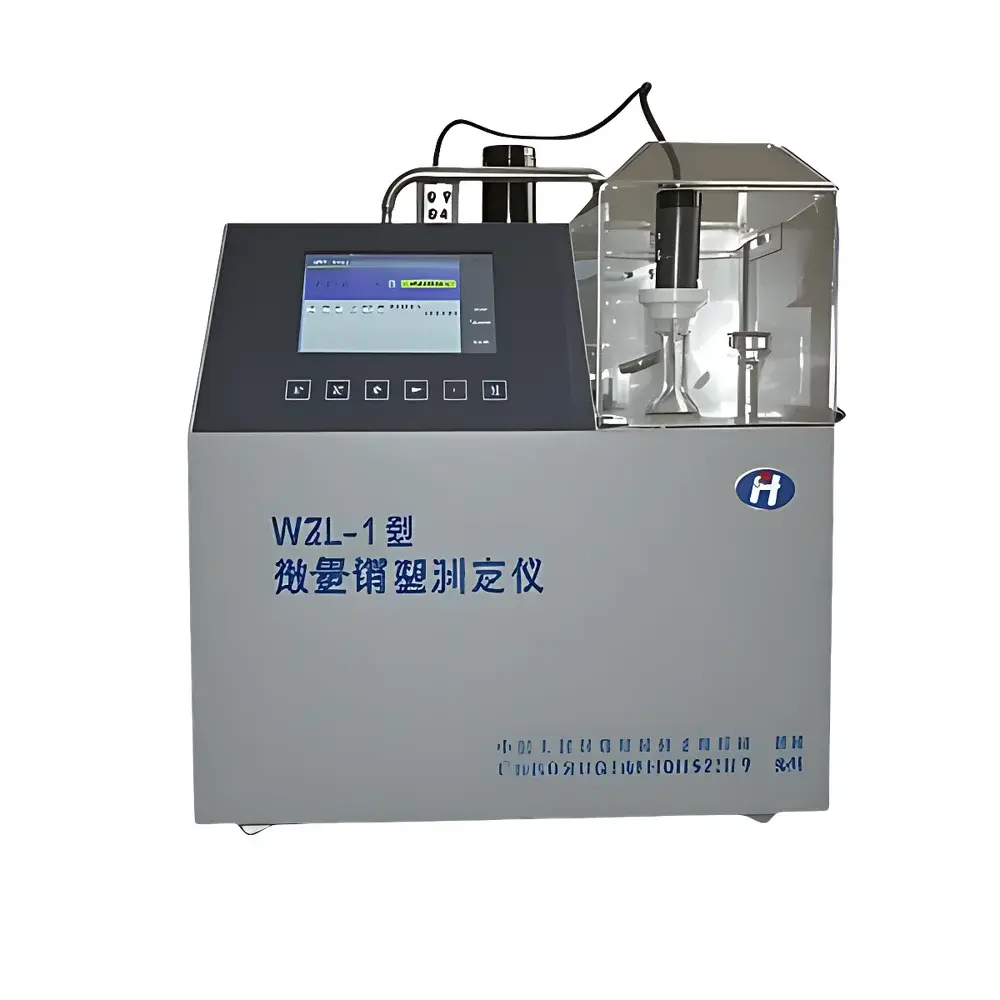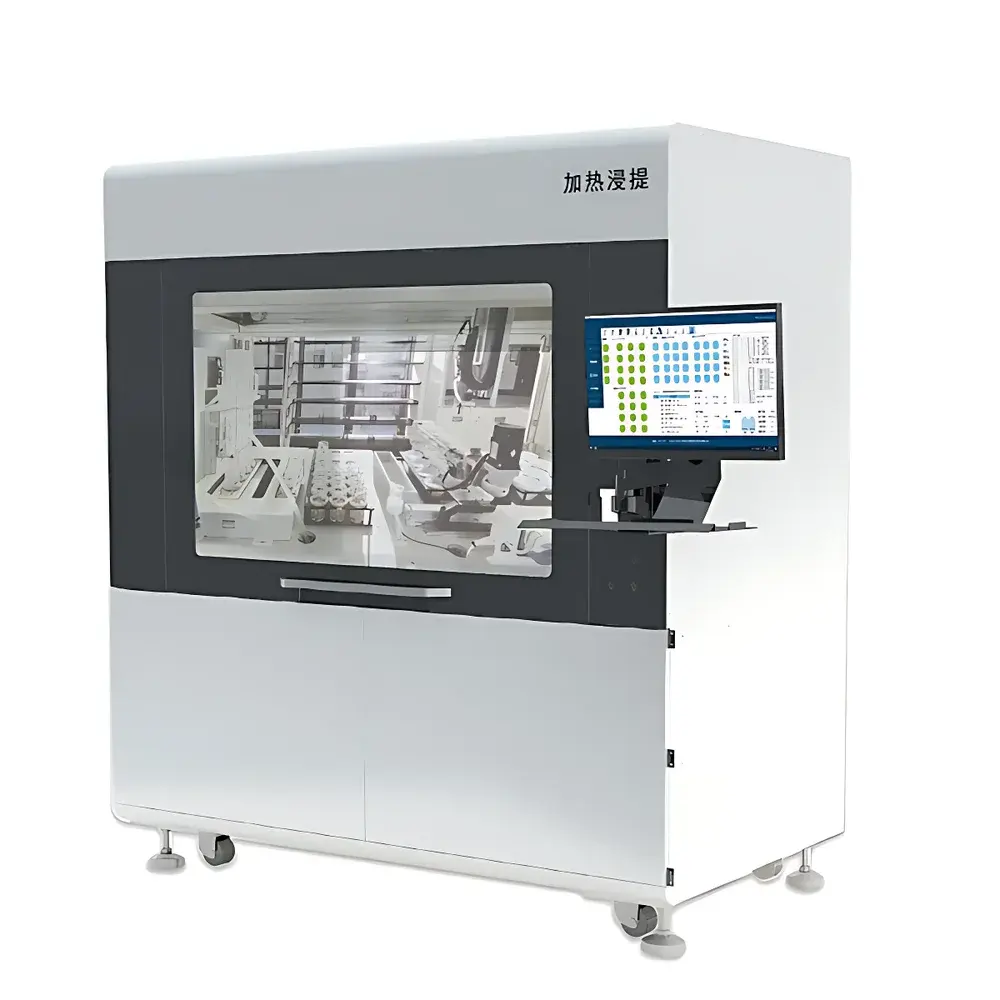
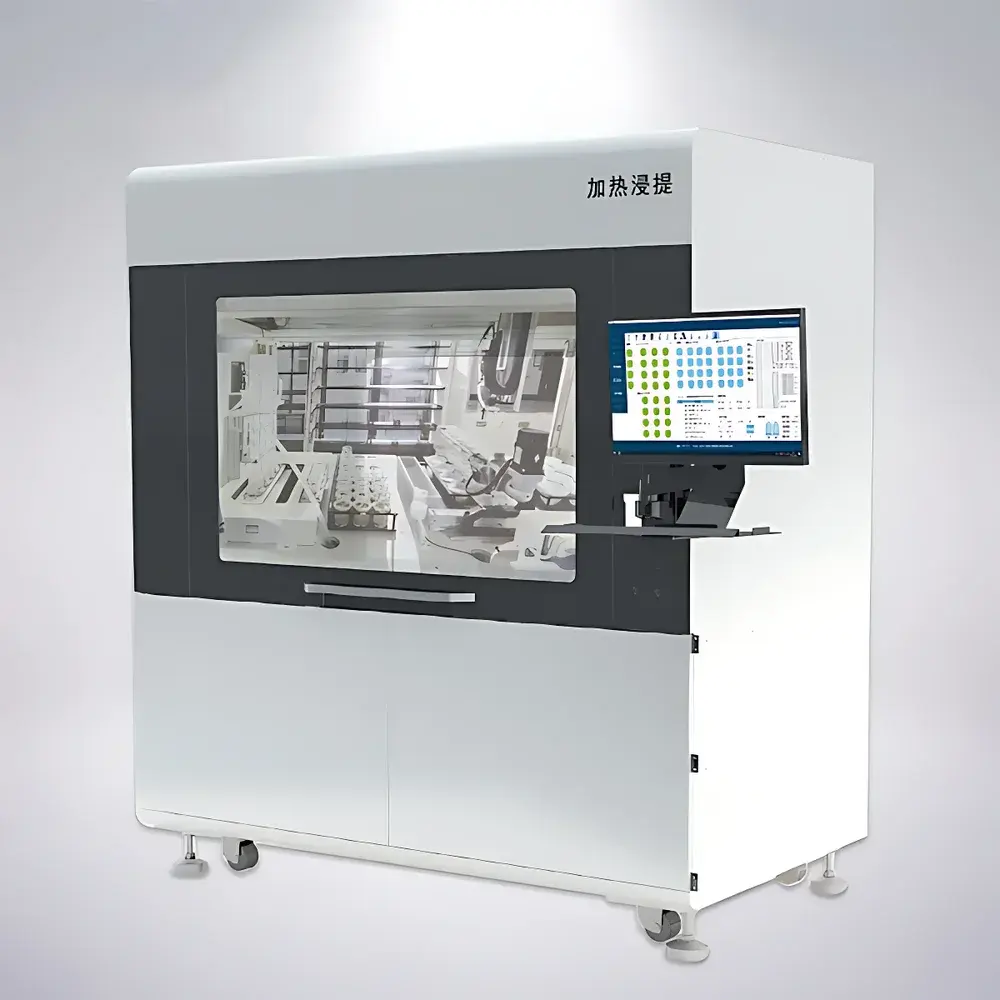
Drick DRK-10 Black-Light Laboratory Automated Heating Extraction Platform
| Brand | Drick |
|---|---|
| Origin | Shandong, China |
| Manufacturer Type | Direct Manufacturer |
| Country of Origin | China |
| Model | DRK-10 Black-Light Laboratory |
| Pricing | Available Upon Request |
| Compliance | NY/T 1121.8–2006, NY/T 889–2004 |
| Sample Capacity | 24 positions |
| Throughput | 24 samples per 4.5 h (for slowly available K) or 2.5 h (for available B) |
| Graphite Block Temperature Range | 5–240 °C |
| Temperature Control Accuracy | ±0.2 °C |
| Dimensions (L×W×H) | 1700 mm × 960 mm × 1850 mm |
Overview
The Drick DRK-10 Black-Light Laboratory Automated Heating Extraction Platform is an integrated, walk-away sample preparation system engineered for standardized, reproducible extraction of agronomic soil analytes—specifically slowly available potassium (SAK) and available boron (AB)—in accordance with Chinese agricultural standard methodologies. It operates on a sequential solid-liquid extraction principle under controlled thermal conditions, utilizing programmable graphite block heating, reflux condensation, timed liquid dispensing, automated filtration, and post-extraction rinsing. Unlike manual or semi-automated hotplate-based workflows, the DRK-10 eliminates inter-operator variability by executing all physical handling steps—including vial positioning, reagent addition, heating ramping, reflux duration, filtrate collection, and vessel cleaning—without human intervention. Its architecture supports unattended overnight operation, enabling laboratories to align sample throughput with analytical instrument scheduling while maintaining strict adherence to protocol-defined temperature profiles, contact times, and solvent volumes.
Key Features
- Full-process automation: Integrated robotic arm for precise vial transport between stations (sample loading, reagent addition, heating zone, condenser, filtration module, rinse station, and final output)
- High-stability graphite heating block with PID-controlled temperature regulation (5–240 °C, ±0.2 °C accuracy), ensuring uniform thermal distribution across all 24 sample positions
- Dual-mode reflux condensation system with adjustable coolant flow and real-time vapor detection to prevent boil-over and ensure quantitative recovery
- Programmable liquid handling module supporting accurate volumetric delivery (±1% CV) of HNO₃, HCl, or other extraction reagents per protocol
- Gravity-driven filtration with disposable polypropylene filter cartridges (0.45 µm pore size) and automatic filter ejection to minimize carryover risk
- Modular design compliant with ISO/IEC 17025 laboratory infrastructure requirements; CE-marked electrical safety and thermal containment systems
Sample Compatibility & Compliance
The DRK-10 is validated for use with air-dried, sieved (<2 mm) soil samples in standard 50 mL polypropylene or borosilicate glass digestion tubes. It meets the procedural specifications outlined in NY/T 1121.8–2006 (Determination of slowly available potassium in soils) and NY/T 889–2004 (Determination of available boron in soils). All motion sequences, thermal ramps, dwell times, and fluid transfers are fully configurable via embedded firmware to support method adaptation—e.g., for modified extraction protocols requiring alternate acid concentrations or extended reflux durations. The platform’s mechanical repeatability (RSD <0.8% for cycle time, <1.2% for delivered volume) satisfies GLP documentation requirements for traceable, auditable sample preparation. No modifications to core hardware are required for compliance with CNAS-accredited testing scopes.
Software & Data Management
The DRK-10 runs on a Linux-based embedded controller with a 10.1″ capacitive touchscreen HMI. Method files (.drm format) store complete stepwise instructions—including temperature setpoints, hold times, pump actuation sequences, and sensor thresholds—and support version control and digital signature logging. Audit trails record timestamped events for every actuator activation, temperature reading, door status change, and error condition, retaining data locally for ≥180 days. Native API integration enables bidirectional communication with LIMS platforms via HL7 or ASTM E1384-compliant protocols; sample IDs scanned at loading are automatically propagated to result files exported as CSV or XML. Optional 21 CFR Part 11 compliance package includes electronic signatures, role-based access control (admin/operator/auditor), and immutable log archiving to network storage.
Applications
- Routine analysis of slowly available potassium in long-term fertility monitoring programs
- High-volume screening of available boron for micronutrient deficiency assessment in cereal and horticultural crops
- Method validation studies comparing extraction efficiency across soil types (clay loam, sandy loam, organic-rich histosols)
- Reference material certification workflows requiring >100 replicate extractions under identical thermal-hydraulic conditions
- Multi-laboratory collaborative trials where inter-lab precision depends on elimination of manual procedural drift
FAQ
What soil matrices have been verified for use with the DRK-10?
The system has been validated for mineral soils (pH 4.5–8.2, organic matter ≤15%), including vertisols, alfisols, and ultisols. Organic soils (e.g., peats) require customized filtration parameters and are supported under application-specific configuration.
Can the DRK-10 be integrated with ICP-OES or AAS instrumentation?
Yes—filtrate collection vessels conform to standard autosampler tray dimensions (e.g., 16 mm × 100 mm tubes), and optional barcode labeling ensures direct sample-to-instrument handoff without manual relabeling.
Is remote monitoring supported?
Real-time status (temperature, cycle phase, error flags) is accessible via HTTPS-enabled web interface; SNMP traps and email alerts can be configured for critical fault conditions.
What maintenance intervals are recommended?
Graphite block calibration verification every 6 months; condenser coil descaling quarterly; robotic arm belt tension check biannually—all logged automatically in the maintenance scheduler.
Does the system support method development beyond NY/T standards?
Yes—open scripting interface (Python 3.9 runtime) allows users to define custom thermal profiles, multi-step reagent additions, and conditional logic based on real-time sensor feedback (e.g., temperature overshoot compensation).