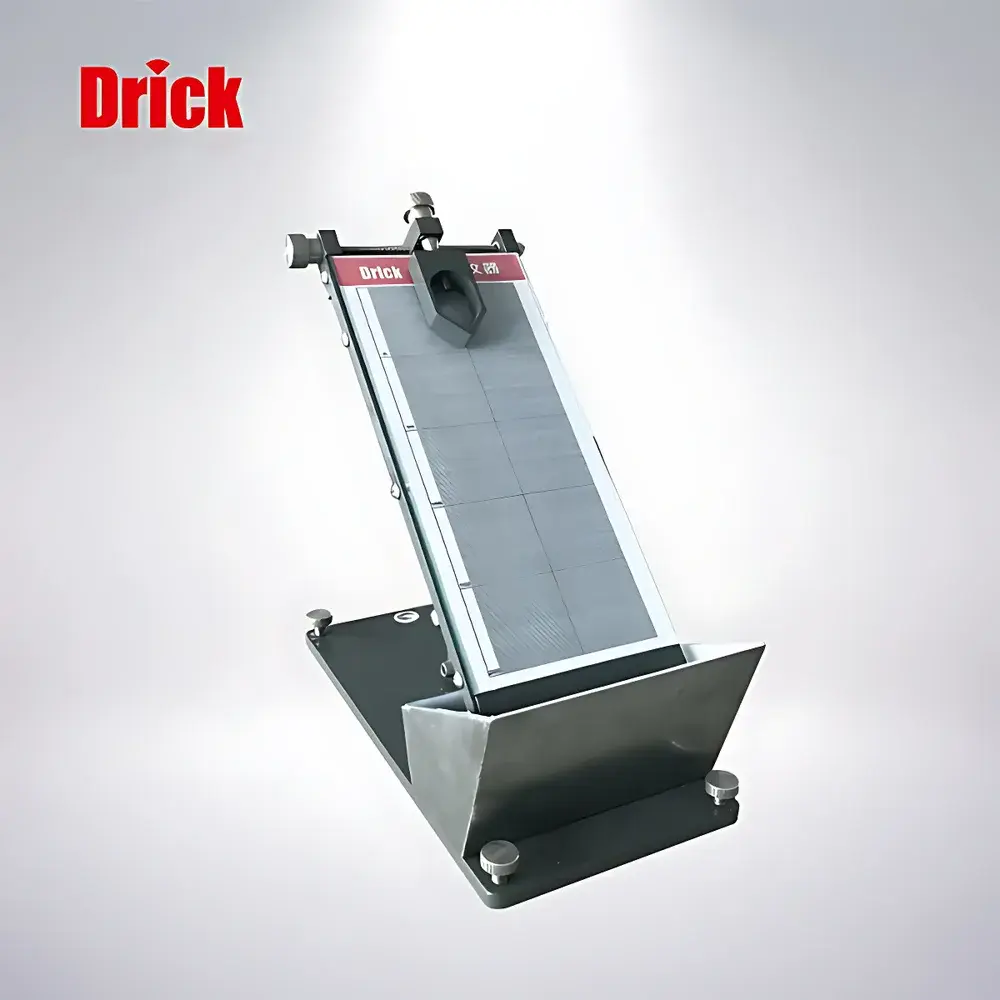
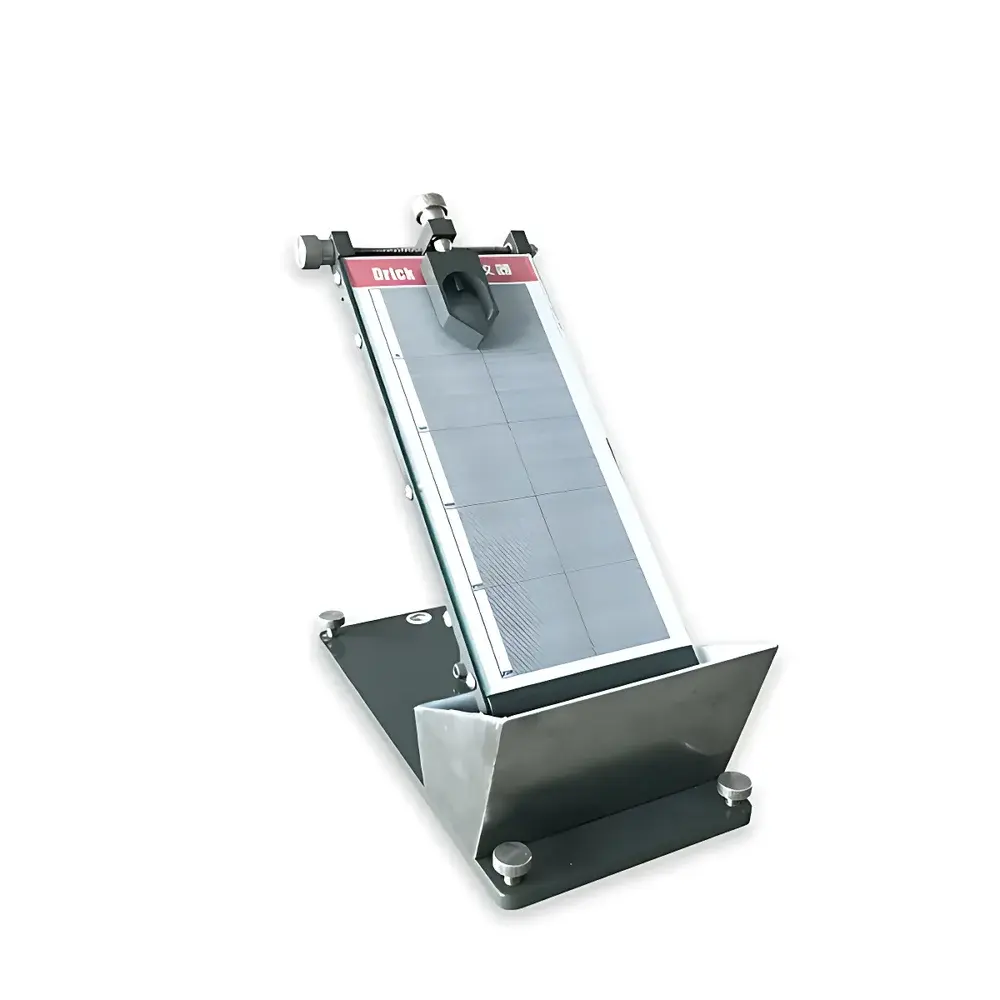
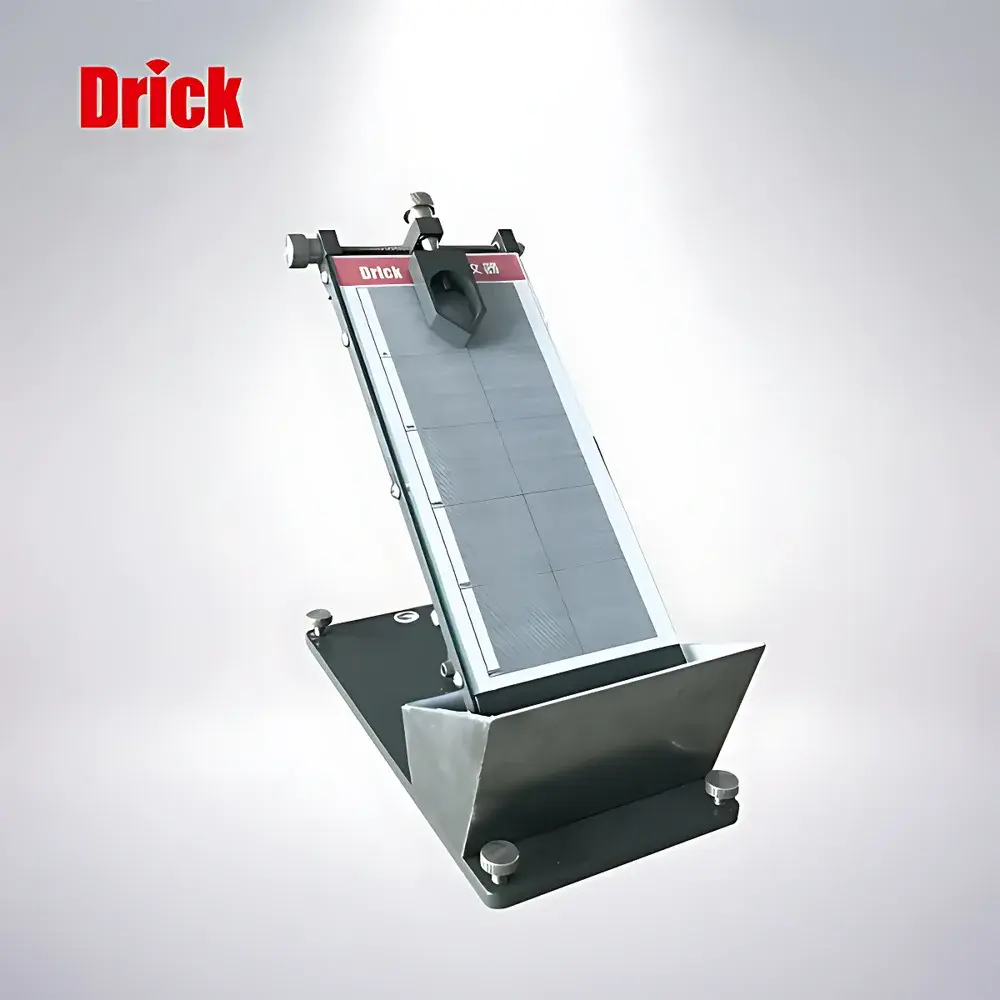
Drick DRK129 Inclined-Plane Ball Tack Tester
| Brand | Drick |
|---|---|
| Origin | Shandong, China |
| Manufacturer Type | Direct Manufacturer |
| Country of Origin | China |
| Model | DRK129 |
| Adjustable Incline Angle | 0–60° |
| Table Width | 120 mm |
| Test Zone Width | 80 mm |
| Standard Steel Balls | 1/32″ to 1″ (0.794 mm to 25.4 mm) |
| Dimensions (L×W×H) | 320 mm × 140 mm × 180 mm |
| Net Weight | ~8 kg |
| Compliance | GB/T 4852 |
Overview
The Drick DRK129 Inclined-Plane Ball Tack Tester is a precision-engineered instrument designed for quantitative assessment of initial tack—the instantaneous adhesive attraction between a pressure-sensitive adhesive (PSA) surface and a standardized steel ball under controlled, low-contact-force conditions. Based on the classical inclined-plane滚球 method (defined in GB/T 4852), the instrument measures the maximum diameter of a steel ball that remains adhered to the test specimen after rolling down a calibrated incline. This principle relies on the balance between gravitational force component along the slope and the adhesive energy at the PSA–ball interface during transient contact. The DRK129 delivers repeatable, operator-independent results essential for QC laboratories in packaging, medical device manufacturing, and adhesive R&D environments where rapid screening of early-stage adhesion performance is critical.
Key Features
- Continuously adjustable incline angle from 0° to 60°, enabling precise control over applied shear stress during ball release—critical for differentiating subtle tack gradients across low-, medium-, and high-tack formulations.
- Optimized test zone geometry: 80 mm effective width within a 120 mm table surface ensures consistent ball trajectory alignment and minimizes edge effects.
- Full set of traceable stainless-steel test balls conforming to GB/T 4852 dimensional tolerances (1/32″ to 1″, i.e., 0.794 mm to 25.4 mm nominal diameters), supplied with calibration documentation.
- Robust aluminum alloy frame with anti-slip base and integrated leveling feet for vibration-damped operation on standard lab benches.
- Modular design facilitates cleaning, ball storage (included compact ball box), and quick setup—no tools required for angle adjustment or specimen mounting.
Sample Compatibility & Compliance
The DRK129 supports flat, flexible substrates up to 120 mm wide and ≥0.05 mm thick, including acrylic- and rubber-based PSAs, silicone-coated release liners, medical-grade acrylic tapes, protective films, transdermal patches, and label facestocks. Specimens are mounted using double-sided tape or clamping fixtures (user-supplied) to ensure full planar contact without curling or air entrapment. The instrument fully complies with GB/T 4852–2002 “Test Method for Initial Tack of Pressure-Sensitive Adhesives—Inclined Plane Method”, and its mechanical configuration aligns with the geometric and material requirements specified in ASTM D3121 (Standard Test Method for Ball Tack) for comparative testing under equivalent conditions. While not certified to ISO 29651 (adhesive tack measurement), its operational parameters are compatible with laboratory internal method validation per GLP guidelines.
Software & Data Management
The DRK129 operates as a manual, hardware-only system—intentionally omitting digital controllers or embedded software to eliminate electronic drift, firmware dependencies, and calibration traceability complications common in automated tack testers. All measurements are recorded manually into laboratory notebooks or LIMS-compatible spreadsheets. This architecture ensures long-term stability, reduces maintenance overhead, and satisfies audit requirements for instruments used in FDA-regulated environments where simplicity and transparency of measurement chain are prioritized (e.g., 21 CFR Part 11 Annex 11-aligned validation protocols). Users may integrate the DRK129 into structured SOPs with defined ball selection logic (e.g., ASTM D3121 Stepwise Procedure) and dual-operator verification workflows.
Applications
- Quality control of roll-fed labeling materials prior to die-cutting and application.
- Batch-to-batch consistency evaluation of medical adhesive formulations for wearable sensors and ECG electrodes.
- R&D screening of hot-melt and solvent-based PSA coatings during pilot-scale coating trials.
- Comparative analysis of aging effects on tack retention after accelerated UV or humidity exposure.
- Supplier qualification testing for protective films used in electronics assembly and automotive trim bonding.
FAQ
What standards does the DRK129 comply with?
It is engineered and verified against GB/T 4852–2002. Its physical configuration also permits implementation of ASTM D3121 test procedures with appropriate ball sizing and angle selection.
Is calibration certification included?
The instrument ships with dimensional verification report for the incline mechanism and angular scale; steel balls are supplied with nominal diameter tolerance documentation per GB/T 4852 Annex A.
Can the DRK129 be used for non-flat specimens?
No—it requires rigidly mounted, planar samples. Curved, textured, or highly porous substrates fall outside its validated scope.
What environmental conditions are recommended?
Testing should be conducted in a temperature-controlled environment (23 ± 2°C) and 50 ± 5% RH, per GB/T 2792 and ASTM D3121 conditioning requirements.
How often should the steel balls be replaced?
Balls must be inspected before each test series for surface scratches or deformation; replacement is mandatory after 100 rolls or visible wear, as per GB/T 4852 Section 6.2.