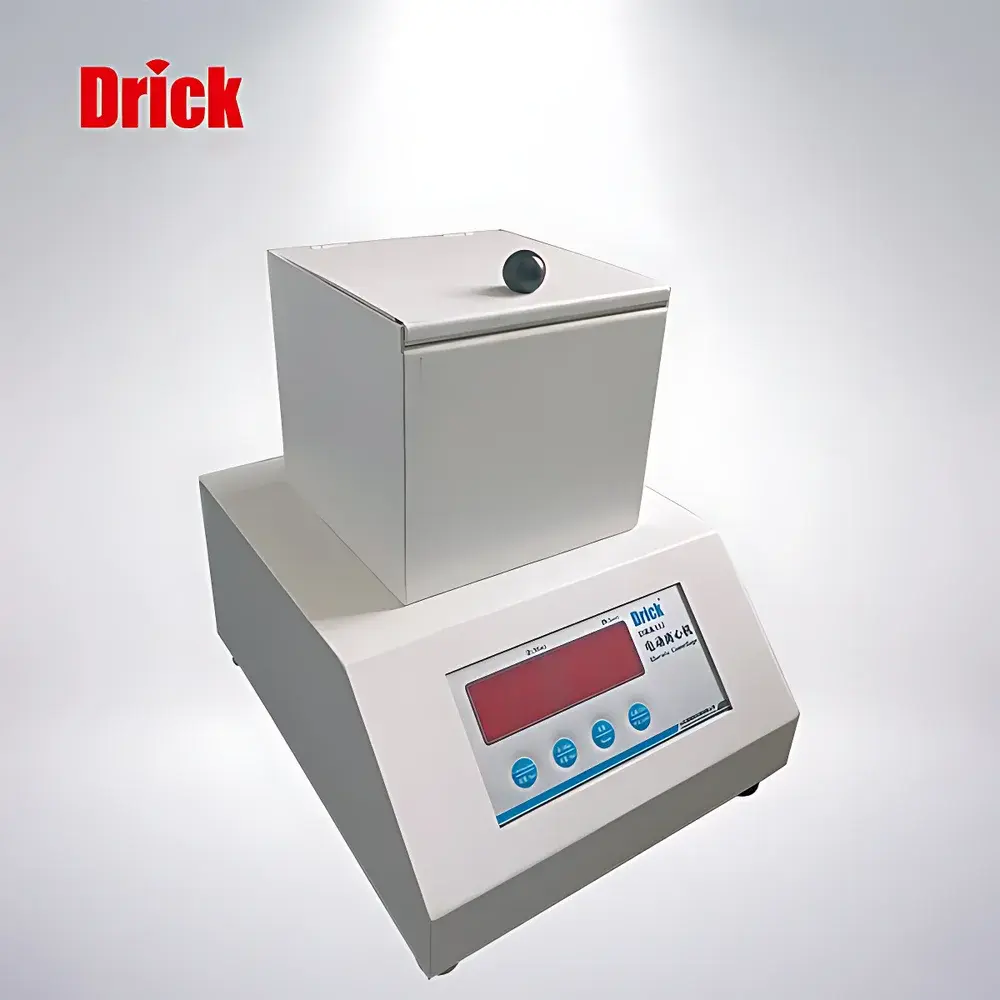
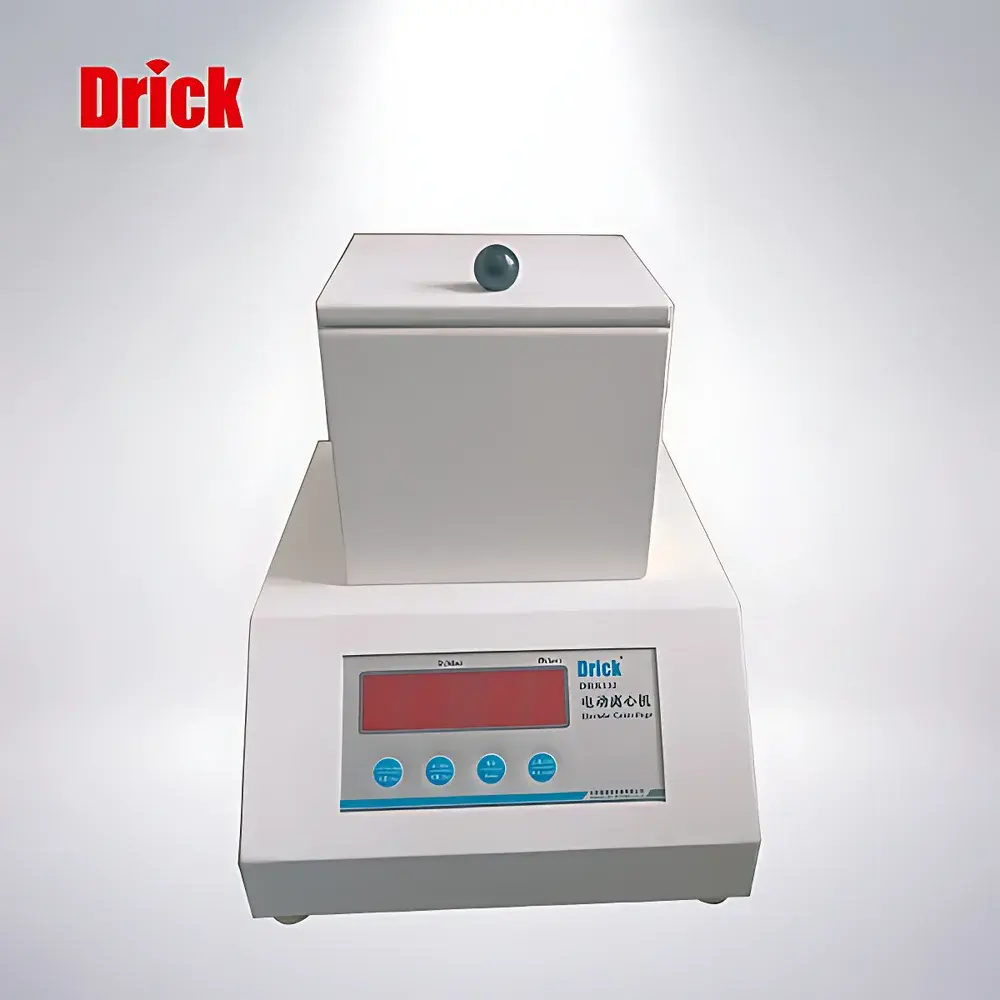
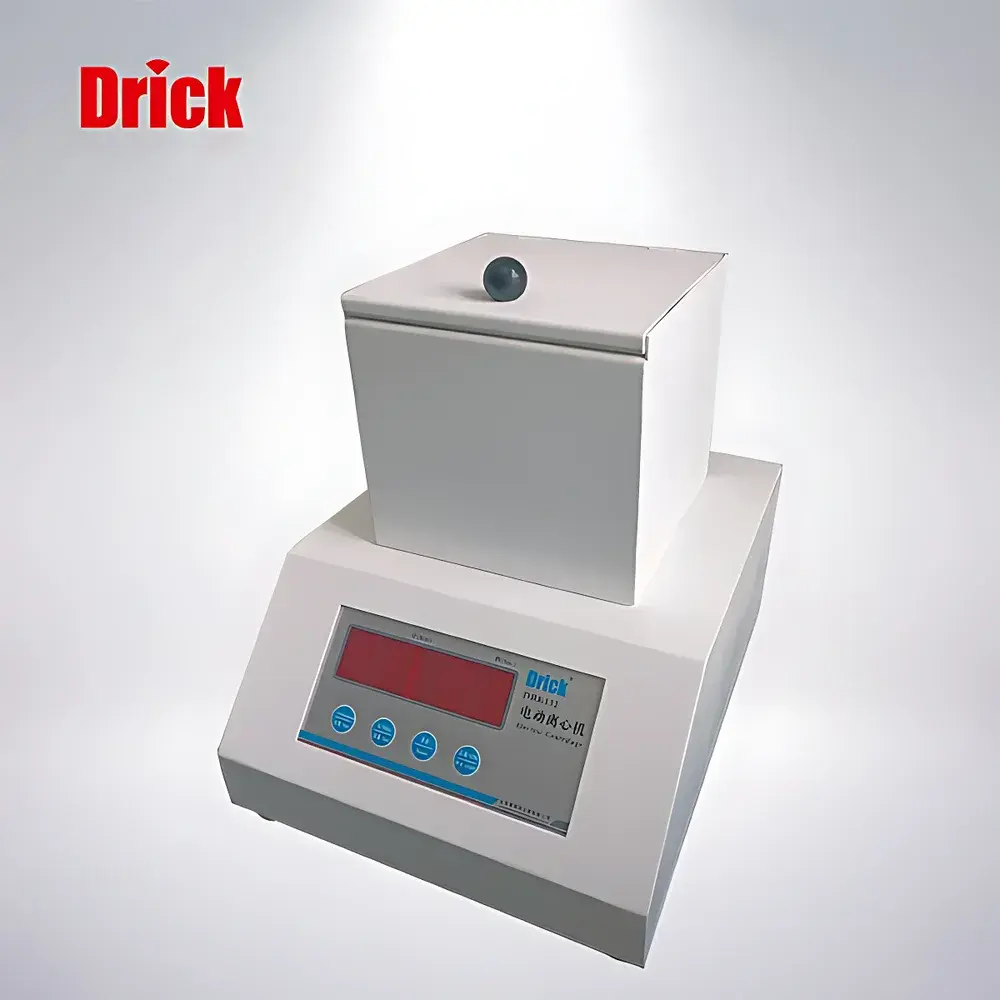
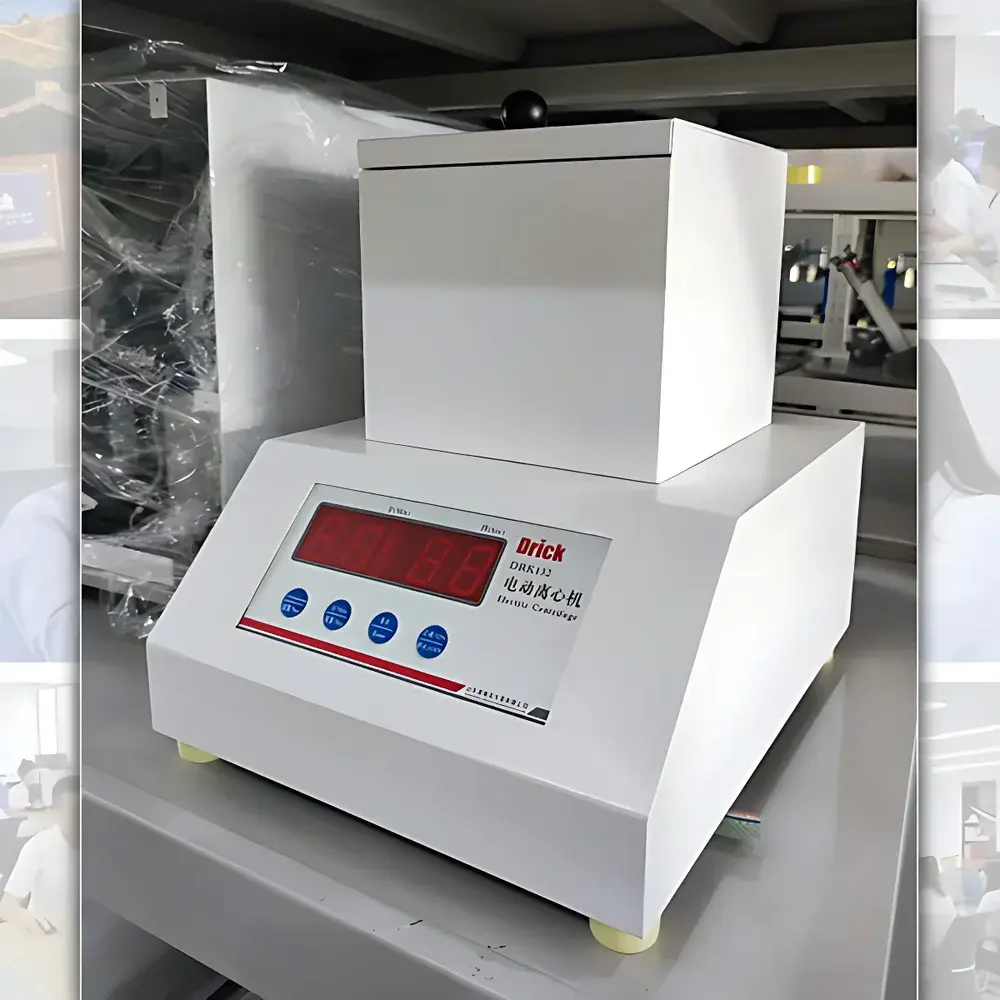
Drick DRK132 Laboratory Centrifuge for Rapid Pulp Dewatering
| Brand | Drick |
|---|---|
| Origin | Shandong, China |
| Manufacturer Type | Direct Manufacturer |
| Country of Origin | China |
| Model | DRK132 |
| Speed Options | 1400 rpm or 1800 rpm (customizable) |
| Drum Dimensions | Ø145 mm × 90 mm height |
| Overall Dimensions | Ø300 mm × 340 mm height |
| Power Supply | AC 220 V, 50 Hz |
| Application | Laboratory-scale pulp dewatering, consistency measurement, and pre-screening sample preparation in papermaking R&D |
Overview
The Drick DRK132 Laboratory Centrifuge is a purpose-built, benchtop centrifugal dewatering instrument engineered specifically for rapid, reproducible moisture removal from fiber suspensions in pulp and paper research laboratories. Operating on the principle of sedimentation-driven separation under controlled centrifugal force, the DRK132 accelerates gravitational settling to simulate and quantify dewatering behavior of pulps at defined rotational speeds—1400 rpm or 1800 rpm (custom-configurable per user specification). Its design adheres to fundamental fluid-mechanical principles governing fiber mat formation and water expulsion in low-shear, short-duration cycles. Unlike general-purpose centrifuges, the DRK132 integrates a fixed-angle, high-strength aluminum drum optimized for pulp slurry containment and uniform radial force distribution. It serves as a critical pre-analytical tool in standardized pulp testing workflows—including Canadian Standard Freeness (CSF), Schopper-Riegler (SR), and consistency determination—where precise, operator-independent dewatering is prerequisite to downstream physical or optical analysis.
Key Features
- Customizable rotational speed options: factory-set at 1400 rpm or 1800 rpm, with mechanical governor ensuring ±15 rpm stability under load
- Robust drum assembly: precision-machined anodized aluminum rotor (Ø145 mm × 90 mm depth) resistant to pulp abrasion and chemical exposure from common process additives
- Benchtop compact footprint: overall dimensions Ø300 mm × 340 mm height—designed for integration into ISO 186-compliant sampling stations and TAPPI T 205 standard test environments
- Fail-safe operational architecture: electromagnetic braking system enabling stop-time ≤ 8 seconds; integrated lid interlock prevents operation when open
- Human-centered control interface: tactile push-button start/stop, LED speed indicator, and non-reflective matte finish panel minimizing glare during extended lab use
- Electrical compliance: CE-marked power module (AC 220 V, 50 Hz) with overcurrent protection and thermal cutoff for continuous duty cycling
Sample Compatibility & Compliance
The DRK132 accommodates pulp suspensions across a broad consistency range (0.1–8.0% w/w), including hardwood/softwood kraft, mechanical, recycled, and nanocellulosic slurries. Its drum geometry supports standardized sample volumes per TAPPI T 264 (pulp washing) and ISO 4119 (consistency determination). The instrument meets essential safety and electromagnetic compatibility requirements under IEC 61010-1 (Laboratory Equipment Safety) and IEC 61326-1 (EMC for Measurement Equipment). While not certified for GMP production environments, its repeatable performance aligns with GLP documentation standards for method validation in R&D labs—particularly where audit trails for dewatering parameters are required prior to freeness or drainage rate assays.
Software & Data Management
The DRK132 operates as a standalone electromechanical device without embedded firmware or digital connectivity. All operational parameters—including run time, speed selection, and cycle count—are manually recorded by the user in laboratory notebooks or LIMS-integrated spreadsheets. This analog architecture eliminates software validation overhead while ensuring full traceability under FDA 21 CFR Part 11 Annex A guidelines for manual data entry systems. For laboratories requiring automated logging, third-party USB-connected tachometers or programmable timers may be synchronized externally to document actual rotational speed and dwell time per ASTM D646/D646M Annex A protocols.
Applications
- Pulp consistency measurement prior to SR or CSF testing (TAPPI T 227, ISO 5267-1)
- Rapid dewatering of laboratory-washed pulp samples (TAPPI T 205, ISO 4119)
- Preparation of consolidated fiber mats for tensile, burst, or opacity analysis
- Evaluation of drainage aid efficacy in retention/drainage optimization studies
- Teaching laboratories in pulp & paper engineering curricula (e.g., consistency calibration exercises, shear history simulation)
- Supporting ISO 535 (water absorption) and ISO 536 (grammage) sample conditioning steps
FAQ
Is the DRK132 compliant with TAPPI or ISO pulp testing standards?
Yes—the mechanical design and dimensional specifications conform to the physical constraints outlined in TAPPI T 264 and ISO 4119 for centrifugal dewatering devices used in consistency determination.
Can the drum speed be adjusted in real time during operation?
No—speed is fixed at time of manufacture (1400 rpm or 1800 rpm); variable-speed control is not implemented to maintain regulatory alignment with standardized test methods requiring defined g-force profiles.
What maintenance is required for long-term reliability?
Routine cleaning of the drum interior and lid seal after each use; biannual inspection of bearing play and brake pad wear; no lubrication required due to sealed induction motor design.
Does the unit include calibration documentation?
A factory-verified speed certificate (traceable to NIST-calibrated tachometer) is supplied with each unit; users are responsible for periodic verification per ISO/IEC 17025 internal calibration procedures.
Is the DRK132 suitable for hazardous or explosive atmospheres?
No—it is rated for general laboratory use only (IP20 enclosure) and lacks ATEX or IECEx certification for flammable vapor or dust environments.