
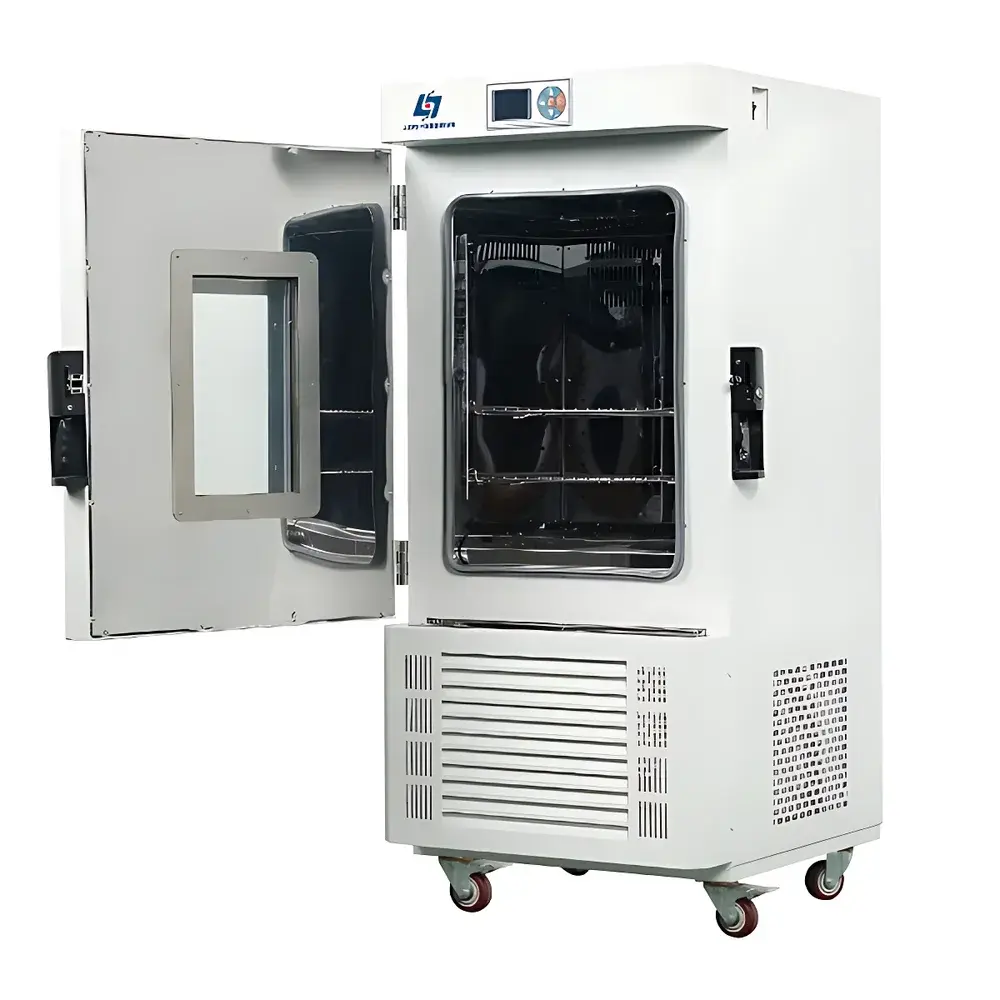
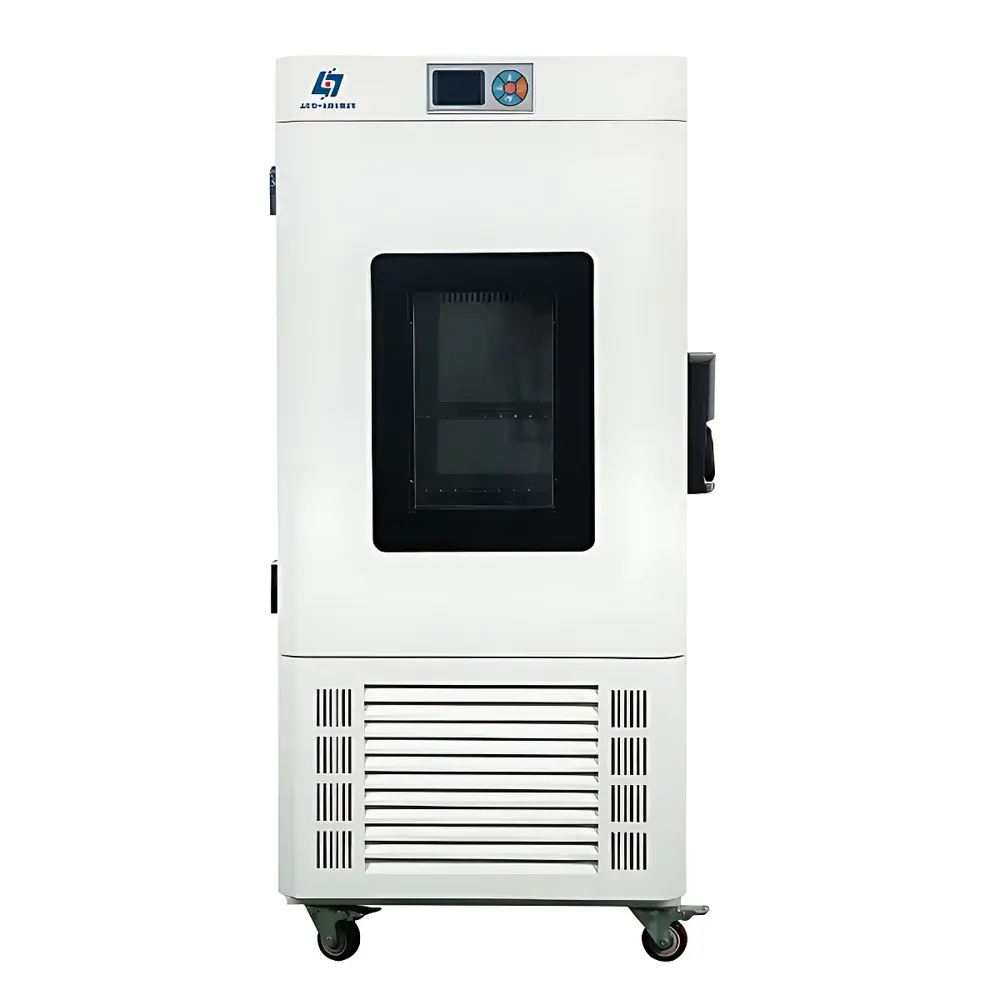
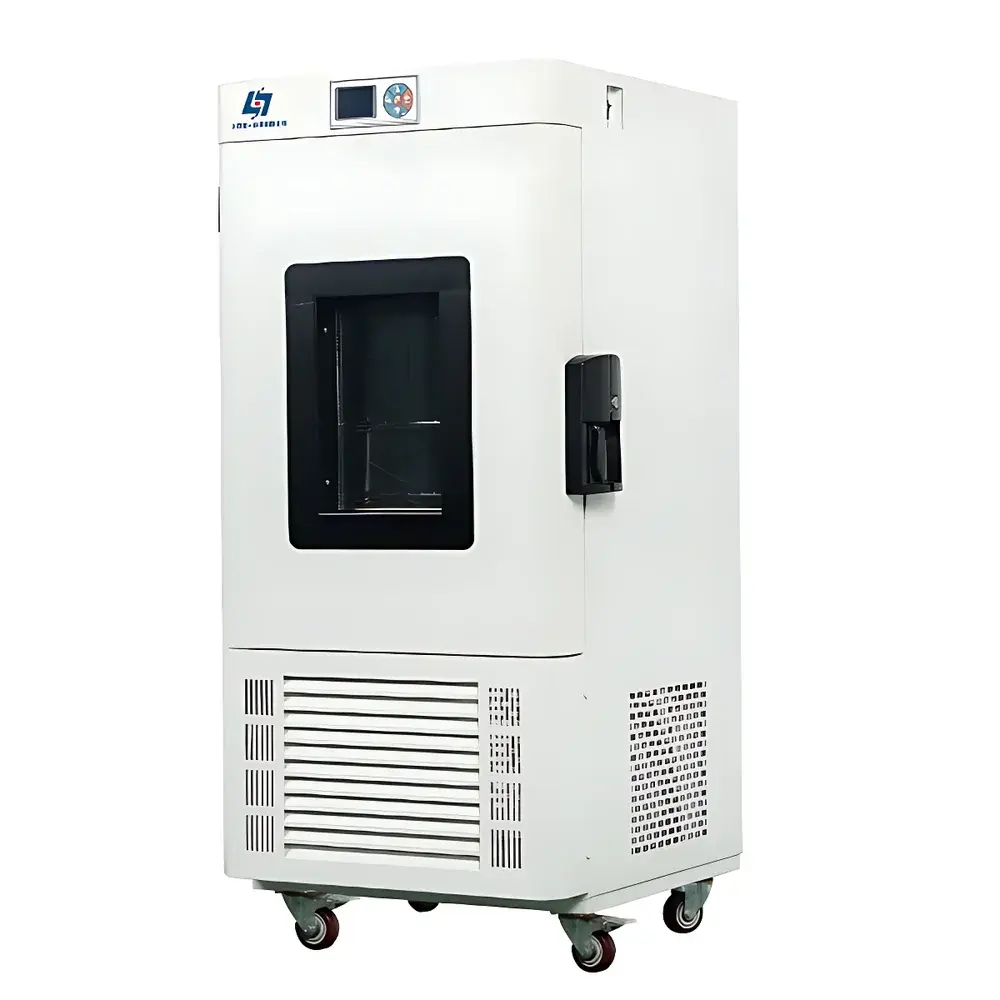
Shanghai Youyi LRH-500CL Low-Temperature Incubator & Storage Chamber
| Brand | Shanghai Youyi (SHYY) |
|---|---|
| Origin | Shanghai, China |
| Manufacturer Type | Direct Manufacturer |
| Country of Origin | China |
| Model | LRH-500CL |
| Cooling Method | Compressor-based Refrigeration |
| Temperature Range | −40 °C to +65 °C |
| Temperature Resolution | 0.1 °C |
| Temperature Uniformity | ±0.5 °C (both at high and low setpoints) |
| Capacity | 500 L |
| External Dimensions | 970 mm (W) × 1130 mm (D) × 1980 mm (H) |
Overview
The Shanghai Youyi LRH-500CL is a precision-engineered low-temperature incubator and storage chamber designed for stable thermal environments across demanding life science, clinical, and industrial applications. Operating on a dual-mode compressor refrigeration system with environmentally compliant R134a/R406a refrigerants, it delivers reliable temperature control from −40 °C to +65 °C — a range validated under ISO 17025-aligned calibration conditions (empty chamber, 20 °C ambient, 50% RH, no vibration or magnetic interference). Unlike general-purpose cold rooms or freezer cabinets, the LRH-500CL integrates active air circulation, PID-driven microprocessor regulation, and structural thermal isolation to maintain uniformity and reproducibility essential for cell culture preservation, serum stability testing, vaccine storage per WHO cold chain guidelines, and long-term biobanking of reagents and biological samples.
Key Features
- Robust construction: Cold-rolled steel exterior with electrostatic powder coating; mirror-finish stainless-steel interior chamber with radius-corner design for easy decontamination and compliance with ISO 14644-1 Class 7 cleanroom-compatible cleaning protocols.
- Optimized thermal architecture: Double-layer vacuum-insulated glass door with magnetic seal minimizes heat ingress during observation; integrated fan-assisted convection system ensures ≤±0.5 °C spatial uniformity across full 500 L working volume (verified per ASTM E2874-22 Annex A2).
- Intelligent control system: 5.7-inch LCD touchscreen interface supporting multi-parameter display (setpoint, real-time chamber temp, elapsed time, alarm status); built-in self-diagnostic startup, auto-recovery after power interruption, and programmable alarm thresholds for over/under-temperature events.
- Mobility & safety: Four-directional casters with locking mechanism and independent leveling feet enable secure positioning on laboratory flooring; optional independent over-temperature cut-off controller available (UL-listed, Class B protection per IEC 61000-4-2).
- Energy-efficient operation: High-efficiency scroll compressor paired with optimized condenser airflow and eco-refrigerant blend reduces energy consumption by up to 22% versus legacy R22-based units (tested per IEC 62301 Ed.3 standby power protocol).
Sample Compatibility & Compliance
The LRH-500CL accommodates standard laboratory consumables including stacked 500 mL serum bottles, cryovial racks (2 mL–50 mL), Petri dish stacks (up to 150 mm Ø), and sealed culture flasks (T-175, T-225). Its internal dimensions (700 × 700 × 1020 mm) support configurable shelving—three fixed-position stainless-steel trays included, expandable to 25 positions. The unit complies with key regulatory frameworks for lab equipment: electrical safety per IEC 61010-1:2010; electromagnetic compatibility per IEC 61326-1:2021; and environmental labeling per EU Regulation (EC) No 106/2008. While not FDA 21 CFR Part 11–certified out-of-box, audit-ready data logging (via optional RS485/USB interface) supports GLP/GMP traceability when integrated with validated third-party LIMS platforms.
Software & Data Management
Standard operation requires no external software; all settings are managed via the embedded HMI. Optional connectivity modules enable integration into centralized lab infrastructure: USB port supports firmware updates and CSV-formatted temperature log export (timestamped, 1-min resolution); RS485 Modbus RTU interface permits remote monitoring and alarm relay triggering via SCADA or building management systems. An optional PC-based software suite (sold separately) provides graphical trend analysis, deviation alerts, and PDF report generation compliant with ISO/IEC 17025 clause 7.7 requirements for measurement uncertainty documentation. All logged data includes operator ID field, enabling role-based access control when deployed in shared core facilities.
Applications
- Long-term storage of heat-labile biologicals: human serum, monoclonal antibodies, ELISA standards, and lyophilized enzymes at −20 °C or −40 °C.
- Controlled-temperature microbiological work: psychrophilic bacterial culturing (e.g., Pseudomonas fluorescens, Colwellia psychrerythraea) and fungal spore viability assays.
- Pharmaceutical stability testing: ICH Q1A(R3)-aligned accelerated and real-time studies at defined temperature/humidity profiles (when paired with optional humidity module).
- Materials science: low-temperature aging of polymer films, electronic component thermal cycling validation, and battery electrolyte performance assessment.
- Public health logistics: WHO-prequalified cold chain staging for vaccine distribution centers requiring −40 °C hold capability prior to ultra-low transport.
FAQ
What is the minimum achievable temperature, and how long does it take to stabilize at −40 °C?
The chamber achieves −40 °C within 180 minutes from ambient (25 °C), verified under ISO 8573-1 Class 4 compressed air–free conditions. Stabilization time may extend by ±15% depending on load mass and door-opening frequency.
Is the unit suitable for GMP-regulated environments?
Yes — when equipped with optional data logging and audit trail software, the LRH-500CL meets baseline requirements for equipment qualification (IQ/OQ) per ASTM E2500-22 and supports periodic requalification per Annex 15 of the EU GMP Guide.
Can the interior be sterilized using vaporized hydrogen peroxide (VHP)?
The stainless-steel chamber and glass door are VHP-compatible; however, prolonged exposure (>60 min at >1000 ppm) may degrade silicone door gaskets. Validation of VHP cycles must be performed per manufacturer’s chemical compatibility matrix.
Does the unit include factory calibration documentation?
Each unit ships with a NIST-traceable temperature verification certificate covering three points (−40 °C, 25 °C, 65 °C) measured using accredited dry-block calibrators (ISO/IEC 17025 accredited lab).
What maintenance intervals are recommended?
Compressor oil and refrigerant levels require inspection every 24 months; condenser coil cleaning is advised quarterly in dust-prone environments; door gasket integrity should be verified semiannually using the “dollar bill test” per ASHRAE Guideline 18-2022.



