
Drick DRK101DG(PC) Floor-Standing Universal Tensile Testing Machine for Tensile, Peel, and Tear Testing
| Key | Brand: Drick |
|---|---|
| Origin | Shandong, China |
| Manufacturer Type | Direct Manufacturer |
| Instrument Type | Electronic Universal Testing Machine |
| Model | DRK101DG(PC) |
| Max Test Load Options | 100 N, 200 N, 500 N, 1 kN, 2 kN, 5 kN, 10 kN, 20 kN |
| Force Measurement Accuracy | Better than Class 0.5 (per ISO 7500-1 / ASTM E4) |
| Test Speed Range | 0.1–500 mm/min |
| Effective Stroke | 600–900 mm (customizable) |
| Displacement Resolution | ≤ 0.001 mm |
| Data Acquisition Rate | 50 Hz |
| Power Supply | AC 220 V, 50 Hz |
| Dimensions (W×D×H) | 1100 × 785 × 2090 mm |
| Weight | 750 kg |
Overview
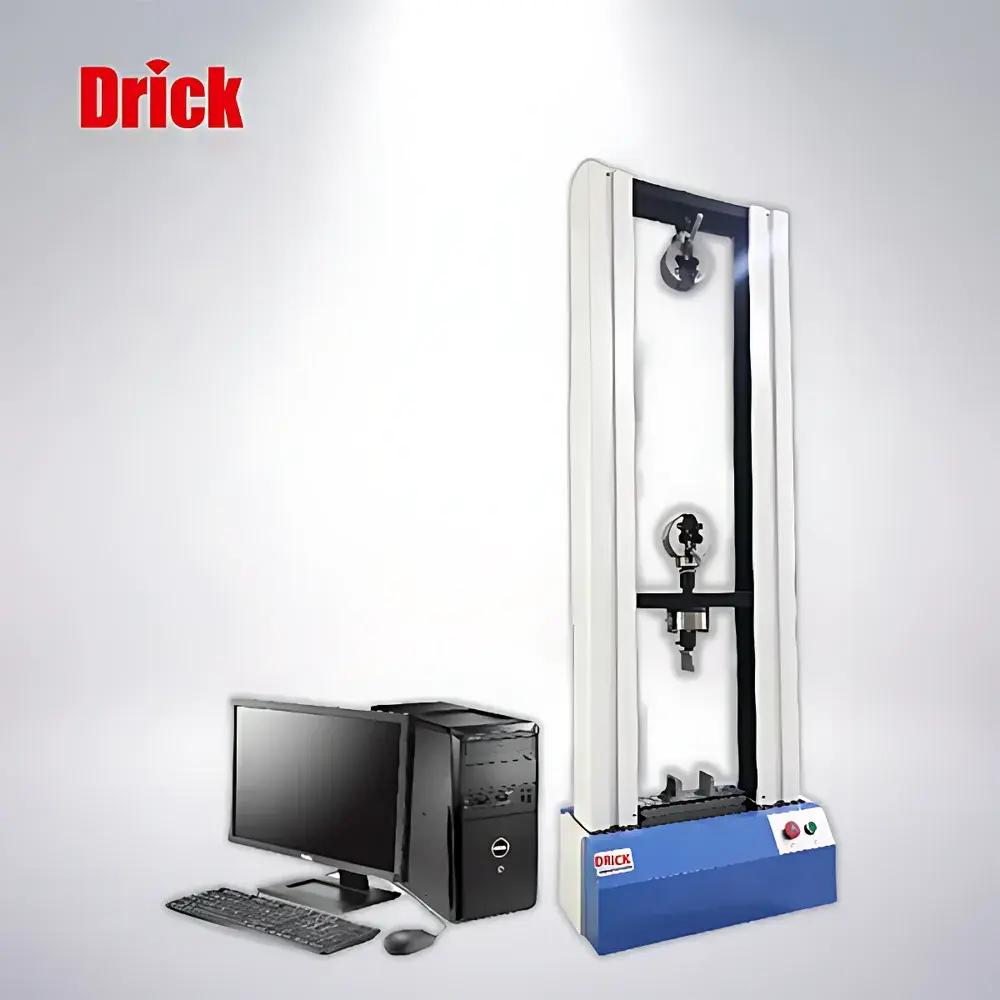
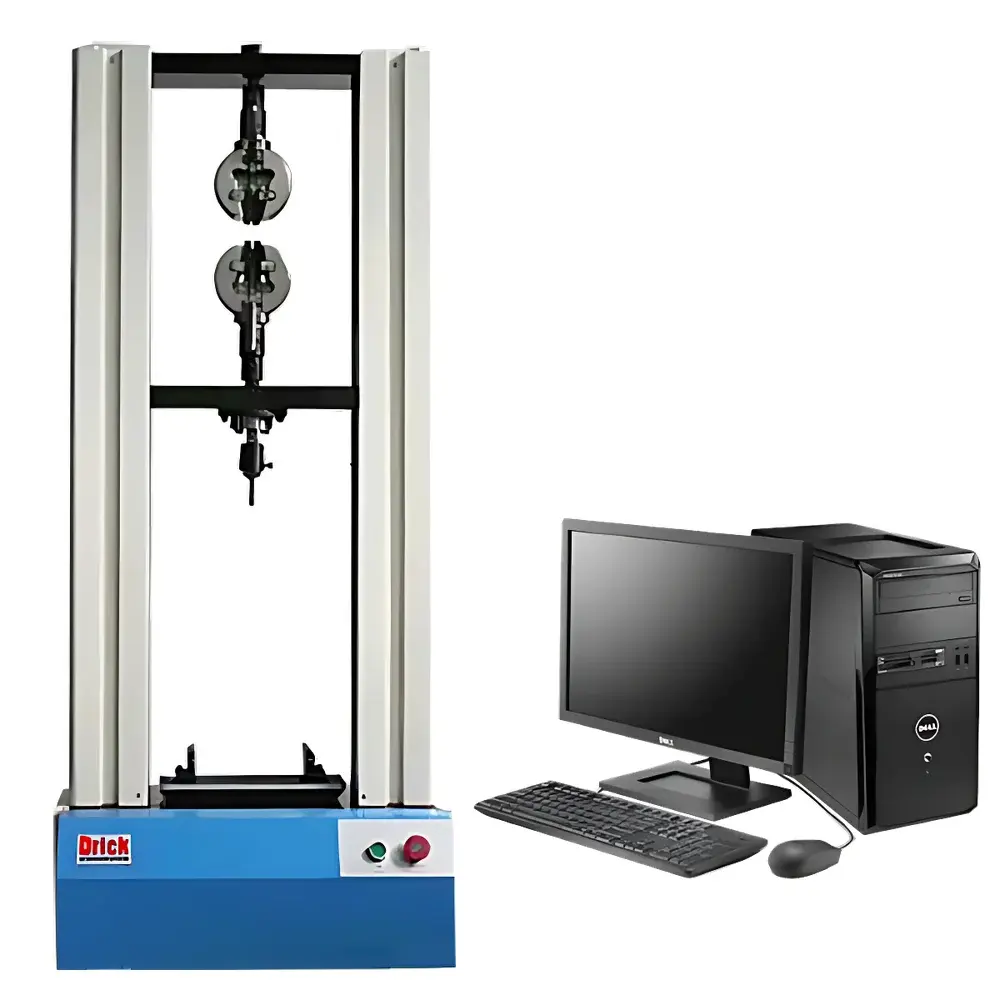
The Drick DRK101DG(PC) is a floor-standing universal tensile testing machine engineered for high-reproducibility mechanical characterization of materials across tensile, peel, tear, and flexural deformation modes. It operates on the fundamental principle of controlled uniaxial force application via a precision servo-driven electromechanical actuation system, compliant with international standards including ISO 6892-1 (tensile testing of metallic materials), ISO 11339 (peel resistance of adhesives), ISO 13934-1 (tensile properties of textiles), and ASTM D882 (tensile properties of thin plastic sheeting). The machine integrates a rigid C-frame architecture with high-stiffness load train components—including preloaded ball screws, low-backlash gearboxes, and calibrated load cells—to minimize compliance errors and ensure traceable force transmission. Its modular design supports seamless integration into quality control laboratories, R&D facilities, and production-line validation environments where regulatory documentation, audit readiness, and long-term measurement stability are critical.
Key Features
- Rigid Structural Platform: Heavy-duty welded steel frame with zinc-coated and powder-coated finish ensures corrosion resistance, dimensional stability, and vibration damping under dynamic loading conditions.
- High-Precision Force Measurement: Equipped with imported 24-bit analog-to-digital converters (ADC) offering resolution up to 1/100,000,000 full scale, coupled with class 0.5 or better load cells calibrated per ISO 376 and traceable to national metrology institutes.
- Advanced Motion Control: High-torque AC servo motor with closed-loop feedback delivers precise speed regulation (0.1–500 mm/min) and position repeatability within ±0.01 mm, enabling accurate strain-rate-dependent testing per ISO 527-1 and ASTM D638.
- Real-Time Multi-Channel Visualization: Large LCD interface displays synchronized force–time, force–displacement, and force–strain curves during test execution; supports dual-axis plotting and real-time statistical overlays (e.g., peak load, elongation at break, modulus).
- Comprehensive Safety & Automation: Built-in overload protection, automatic return-to-start positioning, programmable test sequences, data memory retention, and emergency stop circuitry conforming to IEC 61800-5-2 functional safety requirements.
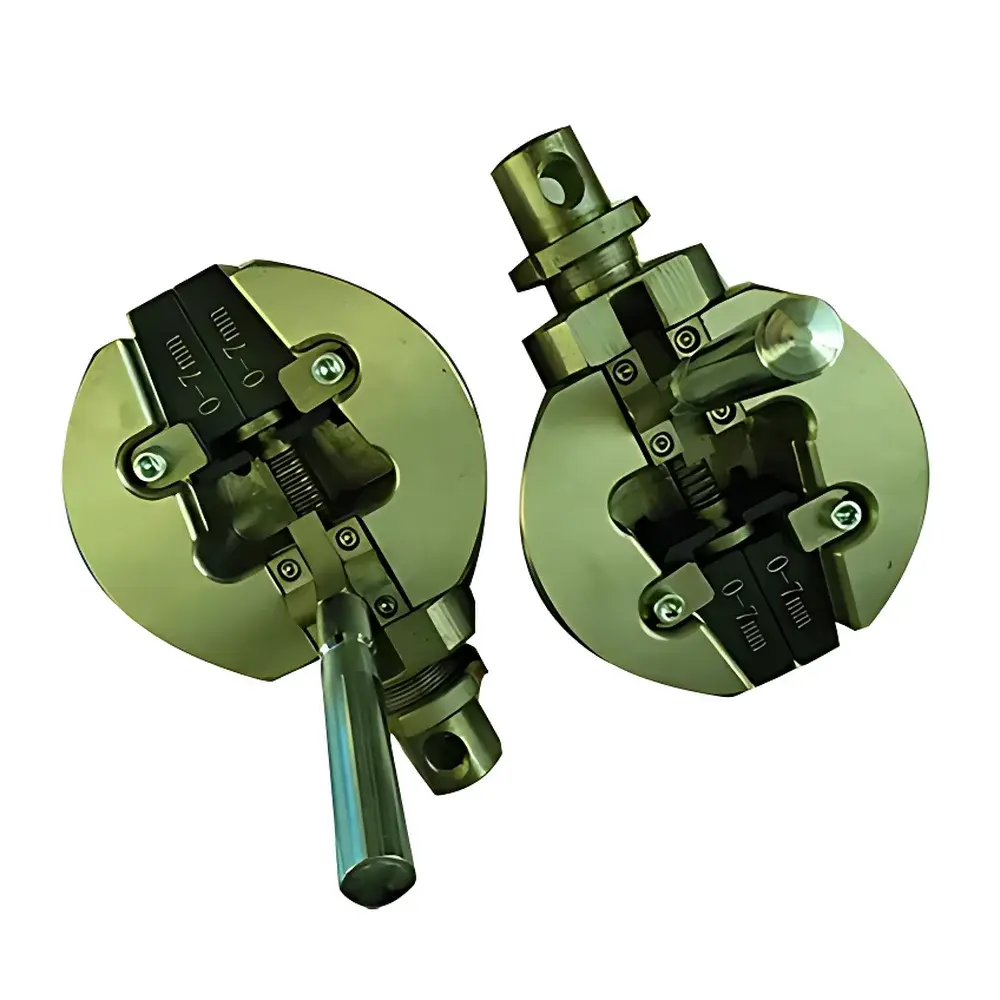
- Modular Fixture System: Standard 30 mm parallel jaw clamps included; optional configurations available for 50 mm and 100 mm widths, as well as specialized fixtures for 90°/180° peel, trouser tear, dart impact, and puncture testing per ISO 8510, ASTM D1876, and ISO 9073-4.
Sample Compatibility & Compliance
The DRK101DG(PC) accommodates specimens ranging from thin films (<0.01 mm) and adhesive tapes to rubber compounds, nonwovens, composites, and metallic foils. Its adjustable crosshead travel (600–900 mm) and wide load capacity spectrum (100 N–20 kN) support standardized specimen geometries defined in ISO 527, ASTM D882, ISO 1184, and GB/T 1040. All hardware and firmware comply with electromagnetic compatibility (EMC) directive 2014/30/EU and low-voltage directive 2014/35/EU. Software features audit-trail logging, user-level access control, electronic signature capability, and export formats compatible with FDA 21 CFR Part 11–compliant document management systems—enabling full GLP/GMP traceability in regulated pharmaceutical, medical device, and packaging industries.
Software & Data Management
The PC-based control and analysis software provides intuitive test method configuration through wizard-guided templates aligned with ISO, ASTM, and GB standards. It supports automated calculation of key mechanical parameters—including tensile strength, yield point, Young’s modulus, elongation at break, peel adhesion energy (N/mm), and tear propagation resistance (N)—with uncertainty estimation per GUM (JCGM 100:2008). Raw data is stored in open CSV and XML formats; graphical reports include customizable legends, multi-curve overlays, and statistical summaries (mean, SD, CV%, confidence intervals). Integrated thermal-printer driver enables immediate hardcopy output of test certificates with timestamp, operator ID, calibration status, and environmental condition metadata. Data export modules support LIMS integration via ODBC and HL7 protocols.
Applications
- Quality assurance of pressure-sensitive adhesives, laminated packaging films, and medical tape products per ISO 2922 and ASTM D3330.
- Mechanical evaluation of biodegradable polymers, hydrogels, and tissue-engineered scaffolds under quasi-static loading per ISO 10993-12.
- Validation of seal integrity in sterile barrier systems (e.g., pouches, trays) per ISO 11607-2 Annex B.
- Characterization of elastomeric gaskets, silicone tubing, and thermoplastic vulcanizates used in automotive and aerospace sealing applications.
- Research-grade tensile mapping of fiber-reinforced composites and nanocellulose films requiring sub-Newton resolution and micro-strain sensitivity.
FAQ
What standards does the DRK101DG(PC) support out-of-the-box?
The system includes preconfigured test methods for ISO 6892-1, ASTM D638, ISO 11339, ASTM D1876, ISO 9073-4, GB/T 1040, and GB/T 2790—with editable parameters to accommodate lab-specific deviations.
Is the software compliant with FDA 21 CFR Part 11 requirements?
Yes—audit trail logging, electronic signatures, role-based permissions, and data immutability controls are enabled by default and validated upon installation.
Can the machine be integrated into an existing MES or LIMS environment?
Absolutely—the software supports ODBC-compliant database connectivity and structured data export (CSV/XML) for seamless interoperability with enterprise laboratory systems.
What maintenance intervals are recommended for long-term accuracy?
Annual verification of force and displacement transducers against certified reference standards is advised; routine checks of ball screw lubrication and clamp alignment should occur every 250 operational hours.
Are custom fixture designs available for non-standard specimen geometries?
Drick offers engineering consultation and CNC-manufactured fixture development services, with lead times typically under four weeks for prototypes meeting ISO 14729 or ASTM F2054 specifications.



