
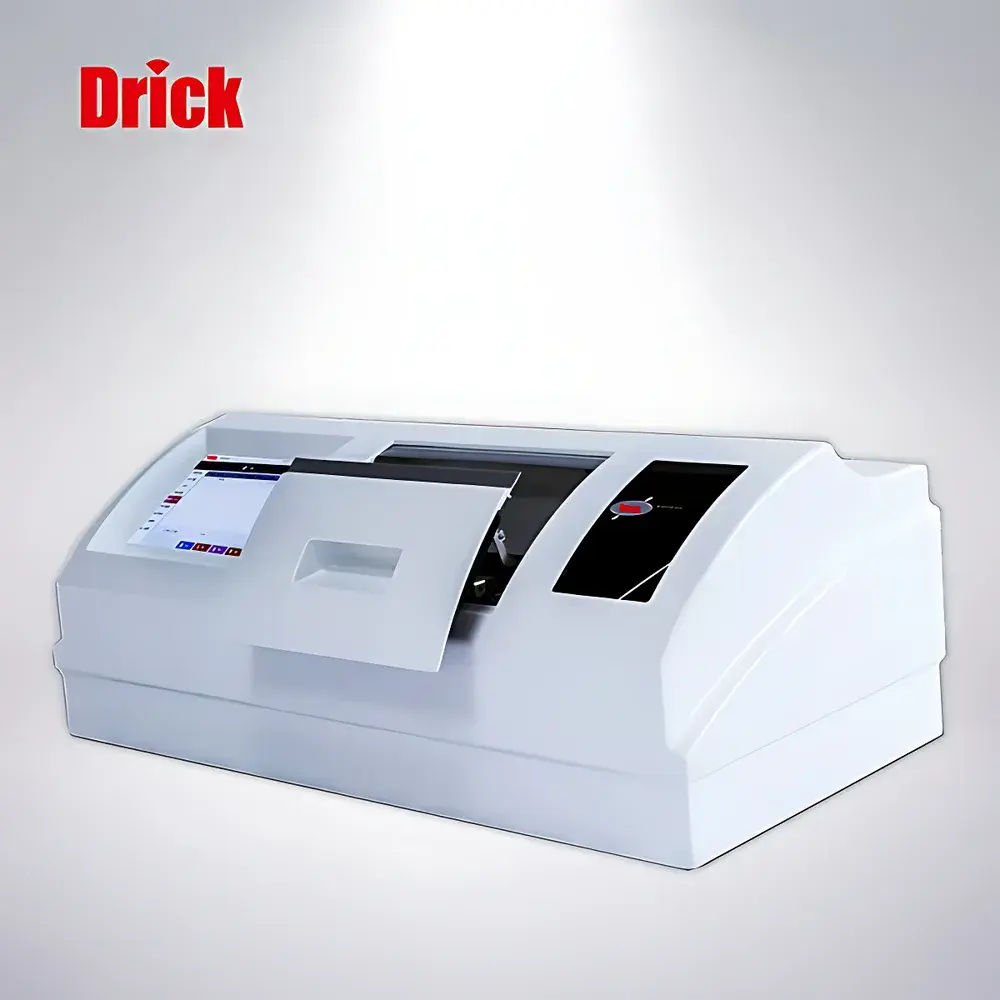
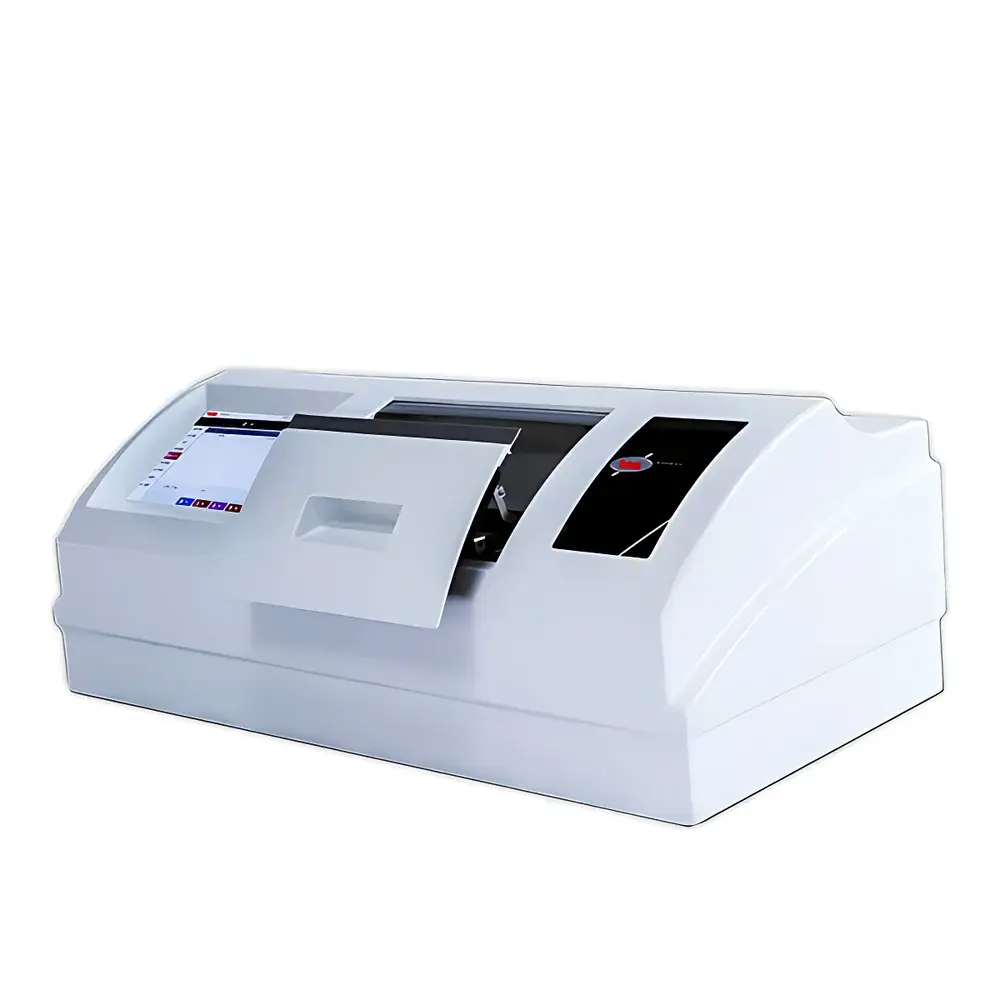
Drick DRK-Z830L Digital Enhanced Automatic Polarimeter
| Brand | Drick |
|---|---|
| Origin | Shandong, China |
| Manufacturer Type | Manufacturer |
| Product Category | Domestic |
| Model | DRK-Z830L |
| Price Range | USD 11,200 – 14,000 (FOB) |
| Instrument Type | Automatic Polarimeter |
| Temperature Control | Yes (Peltier-controlled sample chamber) |
| Display | High-contrast digital LCD |
| Light Source | Stable 589.3 nm LED (sodium D-line equivalent) |
| Measurement Range | Optical Rotation ±90° |
| Sucrose Scale (Z-scale) | ±259°Z |
| Resolution | 0.001° (rotation), 0.01°Z (sugar scale) |
| Repeatability | ≤ ±0.002° (at 20°C, standard quartz control plate) |
Overview
The Drick DRK-Z830L Digital Enhanced Automatic Polarimeter is a precision optical instrument engineered for high-reproducibility measurement of optical rotation in chiral substances—primarily used in pharmaceutical quality control, fine chemical synthesis validation, food & beverage sugar content analysis, and academic research on stereochemistry. Based on the fundamental principle of polarimetry—differential absorption of left- and right-circularly polarized light by optically active media—the DRK-Z830L employs a fixed-wavelength (589.3 nm) LED light source calibrated to match the sodium D-line spectral output, ensuring metrological consistency with international reference standards (e.g., USP , EP 2.2.7, and ISO 5725). Its Peltier-based temperature-regulated sample compartment maintains thermal stability within ±0.1°C across the 15–30°C operating range, minimizing refractive index drift and enabling temperature-dependent rotatory dispersion studies. Unlike analog or manual polarimeters, the DRK-Z830L integrates real-time angular feedback via a high-resolution rotary encoder and closed-loop servo alignment, eliminating human parallax error and delivering traceable, operator-independent results.
Key Features
- Digital enhancement architecture: Embedded microprocessor with auto-zero calibration routine and dynamic baseline correction for long-term signal stability.
- Peltier temperature control system: Integrated thermoelectric module with PID regulation and real-time sensor feedback ensures consistent thermal environment for samples in 100 mm or 200 mm path-length cells.
- LED light source (589.3 nm): Solid-state emission with >10,000-hour lifetime, no warm-up delay, and negligible spectral drift—eliminating mercury lamp hazards and maintenance downtime.
- High-precision angular detection: 0.001° resolution and ≤±0.002° repeatability verified against NIST-traceable quartz control plates (SRM 882a/b).
- Multi-scale direct readout: Simultaneous display of optical rotation (α, in degrees), specific rotation ([α]), and sucrose concentration (°Z) per ICUMSA and AOAC protocols.
- Robust mechanical design: Aluminum alloy optical bench with vibration-damped base and anti-stray-light baffle system for laboratory-grade environmental resilience.
Sample Compatibility & Compliance
The DRK-Z830L accommodates standard 100 mm and 200 mm path-length glass or quartz sample tubes (inner diameter 12–18 mm), compatible with aqueous, alcoholic, and low-viscosity organic solutions. It supports routine compliance workflows for pharmacopeial monographs including USP-NF, Ph. Eur., and JP, particularly for assays of antibiotics (e.g., chloramphenicol), amino acids (e.g., L-tryptophan), and carbohydrate derivatives. The instrument’s temperature-stabilized optics and digital zeroing protocol meet GLP documentation requirements for audit-ready operation. While not FDA 21 CFR Part 11–certified out-of-the-box, its data export functionality (CSV/Excel via USB) enables integration into validated LIMS environments when paired with appropriate procedural controls and electronic signature policies.
Software & Data Management
The DRK-Z830L operates autonomously via front-panel interface but includes optional PC connectivity via USB 2.0 for extended data handling. The bundled Windows-compatible software (v3.2+) provides batch measurement logging, statistical summary (mean, SD, RSD), calibration history tracking, and customizable report templates aligned with ISO/IEC 17025 reporting conventions. All measurements are timestamped and tagged with operator ID, sample ID, temperature, and cell path length. Raw angular data and processed values are stored in non-proprietary CSV format, facilitating third-party statistical analysis (e.g., JMP, Minitab) and regulatory submission packages.
Applications
- Pharmaceutical QC: Quantitative assay of enantiomeric purity for chiral APIs per ICH Q5C and Q6A guidelines.
- Sugar industry: Direct °Z determination of sucrose, invert sugar, and fructose syrups per ICUMSA Method GS4/8-9.
- Academic research: Kinetic monitoring of enzymatic hydrolysis (e.g., invertase, α-amylase) and racemization reactions.
- Food & flavor chemistry: Verification of natural vs. synthetic vanillin, limonene, and menthol via specific rotation profiling.
- Chemical manufacturing: In-process verification of asymmetric hydrogenation or epoxidation reaction endpoints.
FAQ
What is the wavelength accuracy of the LED source, and how is it maintained?
The 589.3 nm LED is factory-aligned using interference filter verification and exhibits <±0.3 nm spectral deviation over its operational lifetime—no recalibration required.
Can the DRK-Z830L measure samples below 15°C or above 30°C?
No. The Peltier system is rated for 15–30°C ambient stabilization; operation outside this range compromises thermal equilibrium and measurement validity.
Is the instrument compliant with ISO/IEC 17025 calibration requirements?
Yes—when used with accredited calibration services (e.g., NIST-traceable quartz plates and certified thermometers), the DRK-Z830L meets the metrological traceability criteria outlined in ISO/IEC 17025:2017 Clause 6.5.
Does the device support automatic cell recognition or barcode scanning?
No. Cell path length and sample identity must be manually entered prior to measurement; automation requires external LIMS integration via exported CSV data.
What is the maximum allowable turbidity or particulate load for valid measurement?
Samples must be optically clear with absorbance <0.3 AU at 589 nm; suspended particles or haze introduce scattering artifacts that invalidate rotation readings.




