
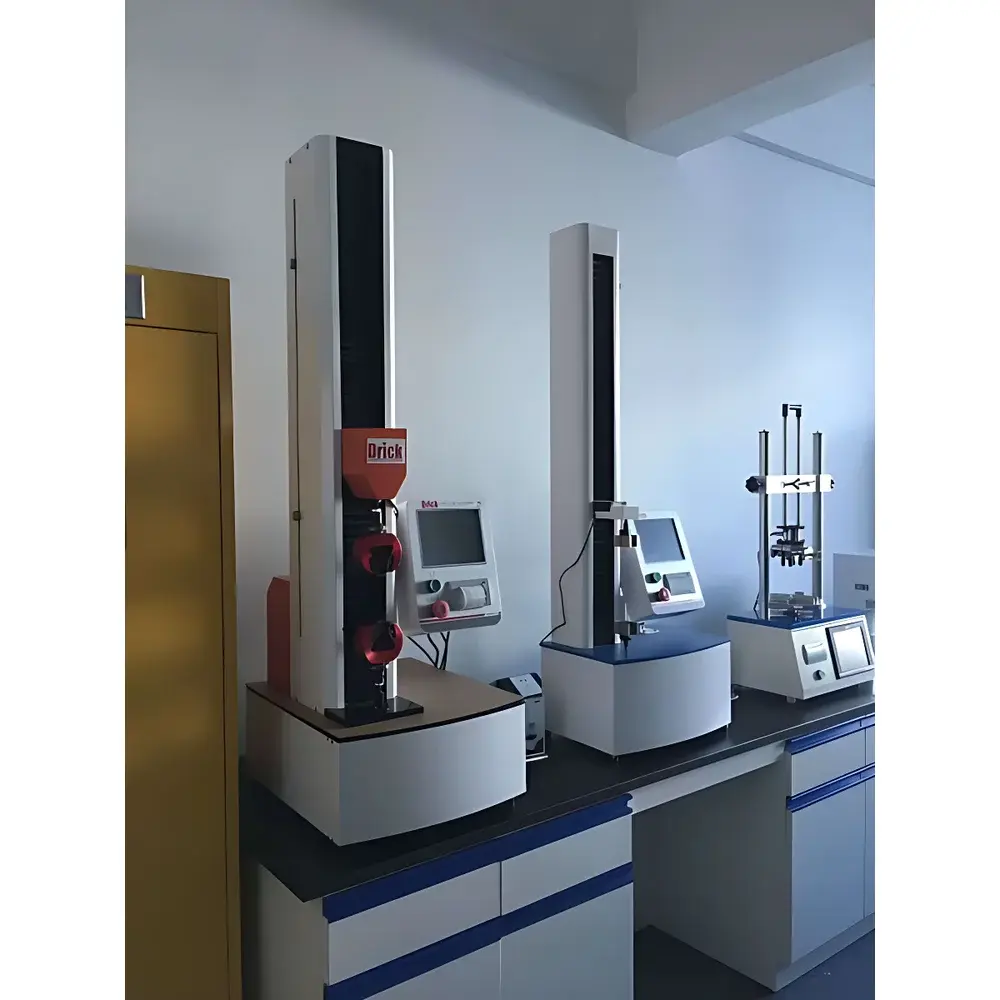
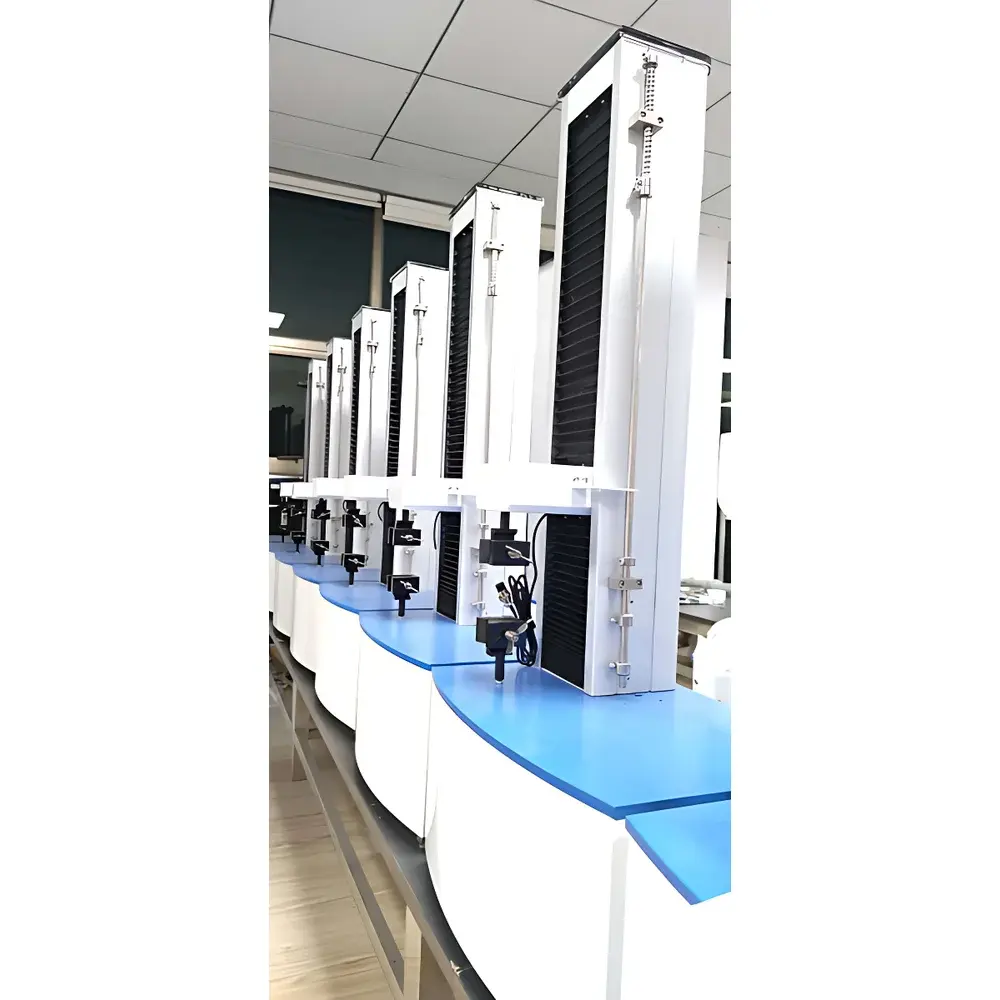
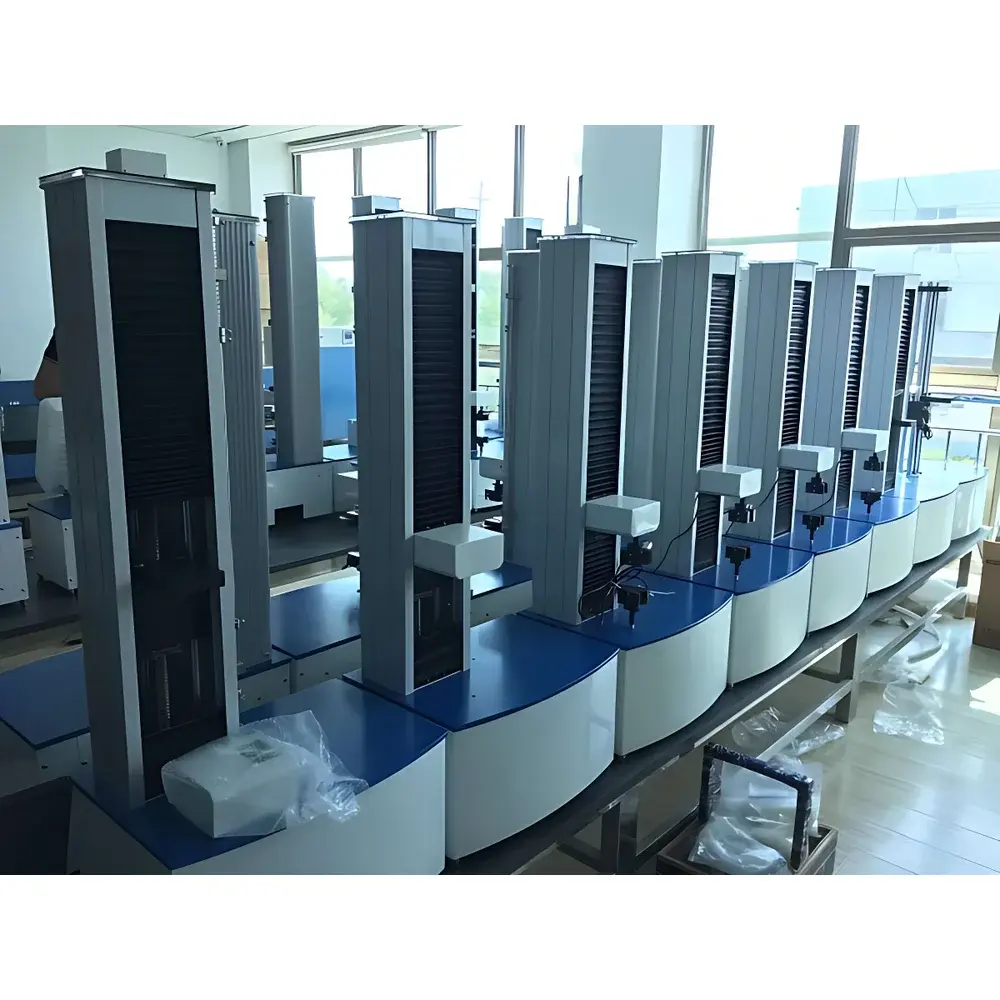
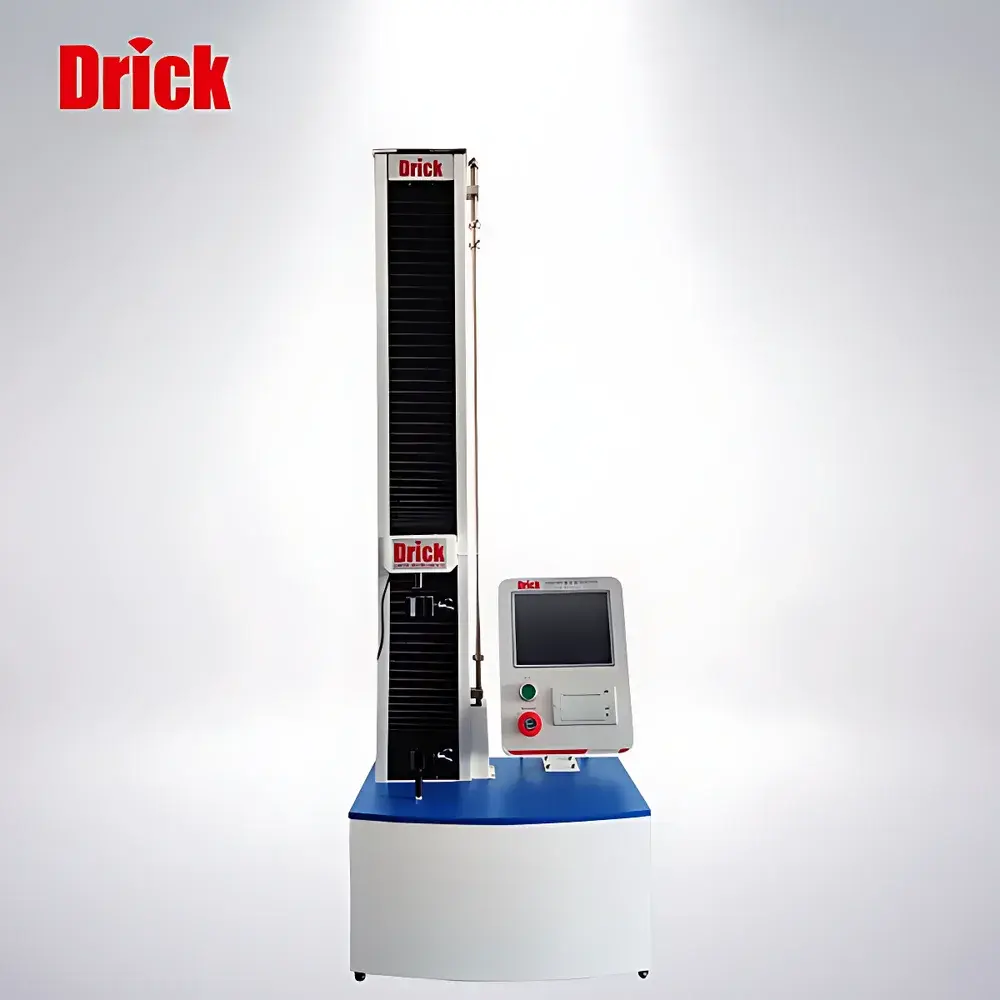
Drick DRK101A Electronic Tensile Tester for Paper and Paperboard per GB/T 12914–2008
| Key | Brand: Drick |
|---|---|
| Origin | Shandong, China |
| Manufacturer Type | Direct Manufacturer |
| Model | DRK101A |
| Max Test Force Options | 100 N / 200 N / 500 N / 1000 N / 5000 N |
| Force Measurement Range (FS) | Matched to selected max force |
| Force Accuracy | Better than Class 0.5 |
| Displacement Resolution | 0.001 mm |
| Test Speed | 1–500 mm/min (infinitely variable) |
| Standard Grip Width | 30 mm |
| Optional Grip Width | 50 mm |
| Travel Distance | 400 mm (customizable) |
| Dimensions (L×W×H) | 500 × 300 × 1150 mm |
| Weight | 73 kg |
| Power Supply | AC 220 V, 50 Hz |
Overview
The Drick DRK101A Electronic Tensile Tester is a precision-engineered mechanical testing system designed specifically for the quantitative evaluation of tensile properties in fibrous and flexible sheet materials—primarily paper, paperboard, and related packaging substrates. It operates on the principle of constant-rate extension (CRE), as defined in GB/T 12914–2008, which specifies standardized conditions for measuring tensile strength, elongation at break, tensile energy absorption (TEA), and related indices under controlled uniaxial loading. The instrument integrates a high-stiffness load frame, a microprocessor-controlled servo drive system, and a calibrated load cell with traceable calibration to national metrological standards. Its rigid mechanical architecture ensures minimal deflection during high-force testing (up to 5000 N), while the sub-micron displacement resolution (0.001 mm) supports accurate determination of small-strain behavior—including wet tensile strength of tissue-grade papers and low-modulus films.
Key Features
- Modular force capacity selection: Five standard load cell options (100 N, 200 N, 500 N, 1000 N, 5000 N) enable optimal signal-to-noise ratio across diverse material classes—from lightweight tissue to heavy-duty corrugated board.
- Class 0.5 force accuracy per JJG 139–2014 (Chinese verification regulation for universal testing machines), validated via third-party calibration certificates traceable to CNAS-accredited laboratories.
- Infinitely variable crosshead speed (1–500 mm/min) allows strict compliance with method-specific rate requirements: e.g., 20 mm/min for GB/T 12914–2008 paper testing, 300 mm/min for ASTM D882 film tensile tests.
- Manually actuated pneumatic-free grips ensure repeatable specimen alignment and eliminate hydraulic leakage risks; standard 30 mm jaw width accommodates ISO 1924-2 and TAPPI T494 specimen dimensions.
- Integrated displacement encoder with 0.001 mm resolution enables precise calculation of strain, modulus, and TEA—critical for regulatory submissions under GB/T 10342 or FDA guidance for packaging integrity.
- Robust steel frame construction (73 kg mass) minimizes vibration-induced noise during dynamic loading, supporting stable data acquisition even at maximum travel (400 mm).
Sample Compatibility & Compliance
The DRK101A is validated for use with standardized specimens conforming to multiple international and national specifications. It supports tensile testing of paper and paperboard per GB/T 12914–2008 (equivalent to ISO 1924-2), plastic films per GB/T 1040.3–2006 (ISO 527-3), pressure-sensitive adhesives per GB/T 2792–2014 (ASTM D3330), and textile fibers per GB/T 14344–2008 (ISO 2062). Optional 50 mm grips extend compatibility to wider specimens required by ASTM D882 or ISO 527-1. All test modes—including tensile strength, elongation, burst strength (via optional fixture), 180° peel, and heat seal strength—adhere to documented procedures aligned with GLP principles. Instrument design permits audit-ready operation under ISO/IEC 17025 and supports traceability through user-accessible calibration logs and electronic signature-capable reporting.
Software & Data Management
The DRK101A operates with embedded firmware and optional PC-based software compliant with data integrity requirements of 21 CFR Part 11. Raw force-displacement data are acquired at ≥100 Hz sampling rate and stored in ASCII CSV format for third-party analysis (e.g., MATLAB, OriginLab). Software modules support automatic calculation of derived parameters: tensile index (kN·m/g), breaking length (km), TEA (J/m²), and specific energy absorption (J/g). Calibration records—including date, operator ID, reference standard ID, and deviation values—are retained with time-stamped audit trails. Exported reports include instrument identification, environmental conditions (optional humidity/temperature input), specimen geometry, test speed, and statistical summaries (mean, SD, CV%) for multi-specimen batches.
Applications
- Quality control of printing papers, kraft linerboard, and sanitary tissue—particularly for wet strength assessment using conditioned specimens per GB/T 465.2.
- Evaluation of packaging film performance: tensile modulus of BOPP, PE seal strength per ASTM F88, and delamination resistance in laminates.
- Mechanical validation of medical packaging per ISO 11607–2, including peel strength of sterile barrier systems and tear resistance of Tyvek® substrates.
- R&D testing of novel cellulose-based materials (e.g., nanocellulose films, molded fiber trays) requiring high-resolution strain measurement below 1% elongation.
- Regulatory testing for food contact materials: tensile yield point of aluminum foil composites (GB/T 3198), and puncture resistance of pouch seals (QB/T 2171–2014).
FAQ
Does the DRK101A comply with ISO/IEC 17025 requirements for accredited testing laboratories?
Yes—the system supports documented calibration, uncertainty estimation, and operator training records. Its force accuracy, resolution, and repeatability meet the minimum performance criteria outlined in ISO/IEC 17025:2017 Annex A.3 for mechanical testing.
Can the instrument perform both tensile and peel tests without hardware modification?
Yes—standard configuration includes interchangeable fixtures for tensile, 180° peel, and 90° peel per GB/T 2792–2014. Custom fixtures (e.g., heat seal testers, burst testers) are available as factory-installed options.
Is software validation documentation available for GMP environments?
Upon request, Drick provides IQ/OQ protocols, software validation summaries, and 21 CFR Part 11 configuration reports—aligned with FDA guidance for computerized systems used in regulated manufacturing.
What is the recommended recalibration interval for routine QC use?
Annual calibration is recommended per JJG 139–2014; however, daily verification using certified reference load cells (supplied with instrument) is required before first test of each shift.
Does the system support automated specimen feeding or multi-specimen batch processing?
The base DRK101A is a single-specimen manual-loader. High-throughput variants with auto-feeder modules and robotic grippers are available under the DRK101A-AT series (separate model designation).



