
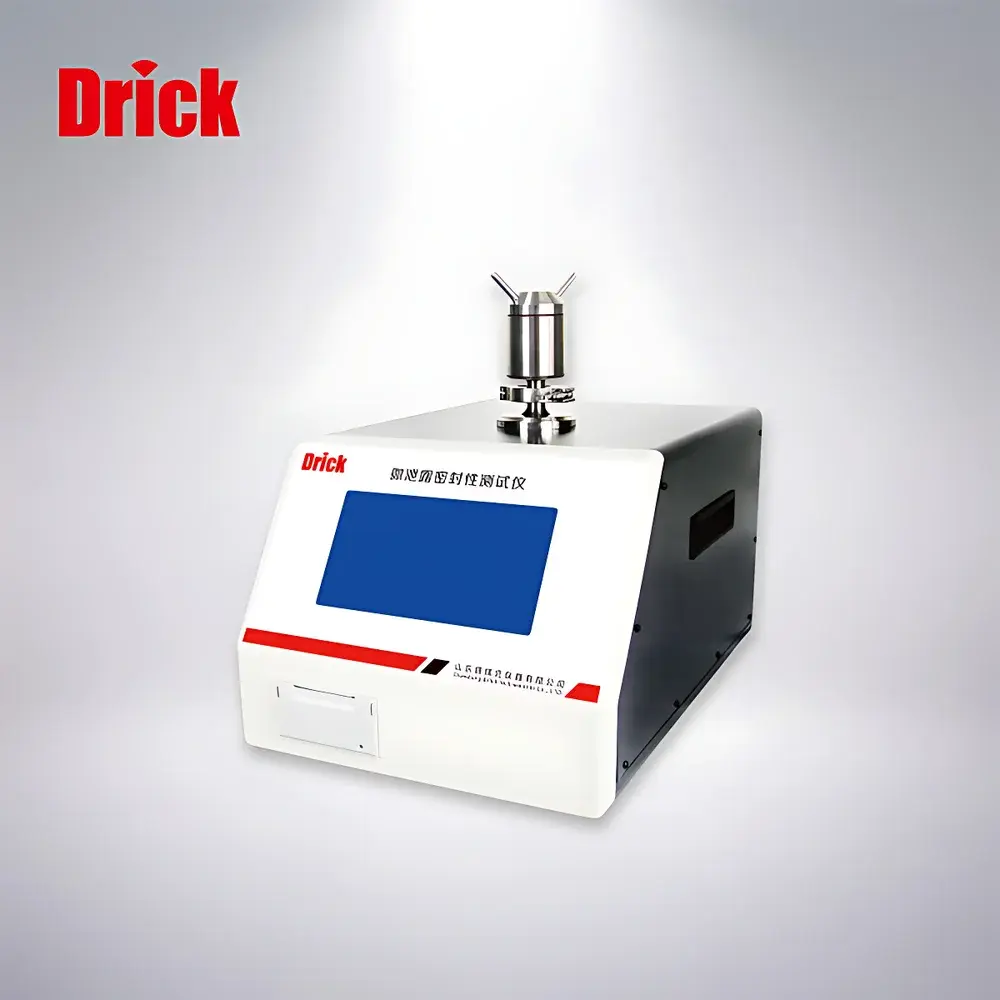
Drick DRK-L Micro-Leak Seal Integrity Tester (Vacuum Decay Method)
| Brand | Drick |
|---|---|
| Origin | Shandong, China |
| Manufacturer Type | OEM Manufacturer |
| Region of Origin | Domestic (China) |
| Model | DRK-L |
| Price | USD 35,000 (FOB) |
| Vacuum Range | 0–100 kPa |
| Detection Sensitivity | 1–3 µm |
| Test Duration | ≤30 s per sample |
| Operating Environment | 20–30 °C |
| Compliance | ASTM F2338-09, USP <1207> |
| Dimensions (L×W×H) | 550 × 330 × 320 mm |
| Weight | 20 kg |
| Control Interface | Touchscreen LCD with HMI |
| Vacuum Source | External vacuum pump |
| Data Output | Built-in thermal printer, RS232 port, non-erasable local database |
| Security | Four-tier user permission system with unique login credentials |
| Software Features | Audit trail, electronic signature support, CFR Part 11–compliant data handling, automatic statistical reporting, PDF export capability |
Overview
The Drick DRK-L Micro-Leak Seal Integrity Tester is an engineered solution for non-destructive, quantitative assessment of package seal integrity in pharmaceutical and medical device manufacturing. It operates on the vacuum decay principle—a deterministic physical method defined in ASTM F2338-09 and aligned with the regulatory framework of USP “Package Integrity Evaluation – Sterile Products.” Unlike subjective or destructive techniques (e.g., dye ingress or microbial challenge), the DRK-L measures minute pressure differentials over time using dual high-stability pressure sensors within a controlled test chamber. This enables detection of leaks as small as 1–3 µm equivalent orifice diameter without compromising sterility, product viability, or packaging functionality. The instrument is designed for routine QC/QA use in GMP-compliant environments where traceable, repeatable, and operator-independent results are mandatory for batch release decisions.
Key Features
- Dual-sensor vacuum decay architecture ensuring high signal-to-noise ratio and measurement reproducibility across repeated cycles
- Integrated human-machine interface (HMI) with capacitive touchscreen display for intuitive parameter configuration, real-time curve visualization, and pass/fail decision logic
- Four-level hierarchical access control supporting role-based permissions—administrator, supervisor, technician, and operator—with encrypted credential storage
- Comprehensive data governance: all raw pressure vs. time datasets stored in a write-once, read-many (WORM) local database; exportable in tamper-evident PDF format with embedded metadata (batch ID, operator ID, timestamp, instrument serial number)
- RS232 serial interface for secure LAN-based data transfer to LIMS or MES systems; firmware upgradable via SP (Service Protocol) for future regulatory alignment
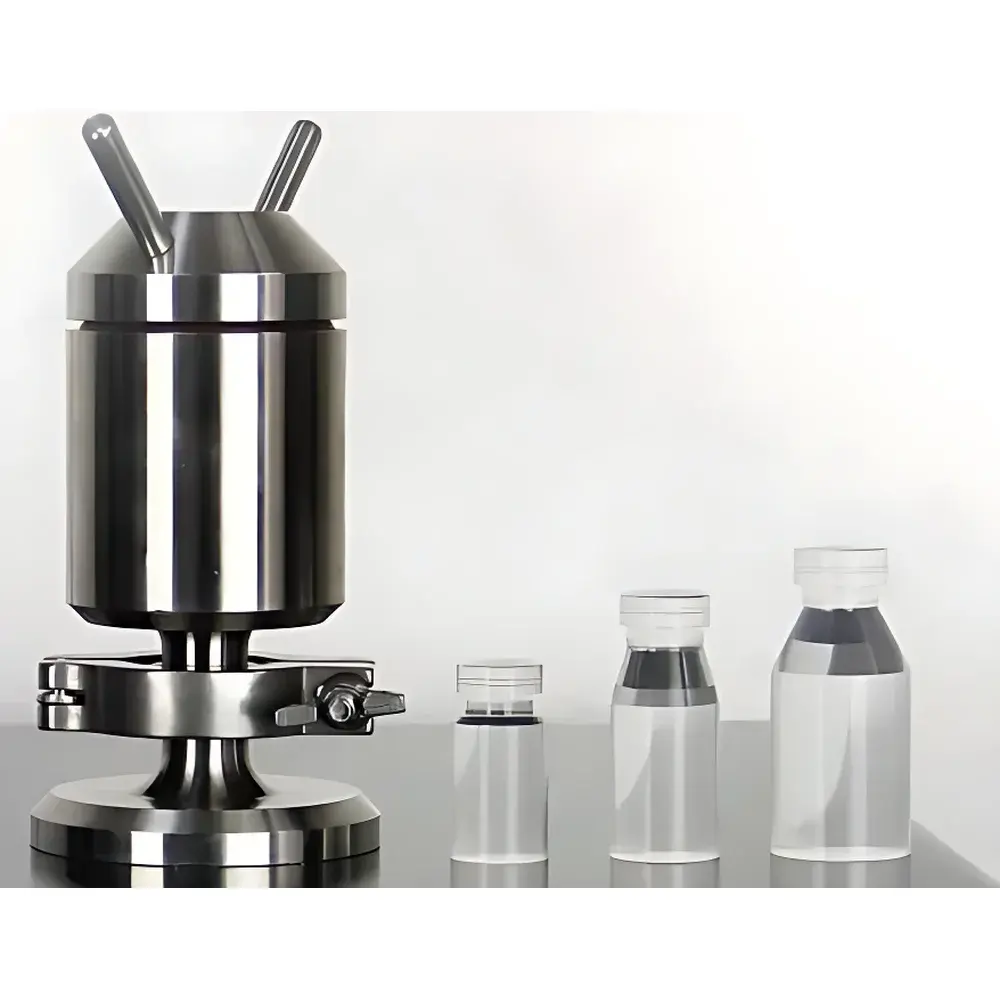
- Modular test chamber design—customizable cavity dimensions to accommodate vials (e.g., 2R–30R), ampoules, pre-filled syringes, blister cards, and pouches—enabling rapid reconfiguration without recalibration
- External vacuum pump integration ensures stable, low-noise vacuum generation compliant with ISO 8573-1 Class 2 air quality requirements when paired with appropriate filtration
Sample Compatibility & Compliance
The DRK-L is validated for sealed primary containers holding sterile liquid or lyophilized formulations. Common applications include glass and polymer-based vials (e.g., West Pharma, SCHOTT), molded or tubular ampoules, pre-filled syringes (PFS), and aluminum-laminated foil blisters. Its non-invasive methodology satisfies the “non-destructive” requirement under USP Category 1 methods and supports risk-based validation per ICH Q5C and Annex 1 (2022). All operational parameters—including dwell time, target vacuum level, and pressure decay thresholds—are configurable to meet product-specific acceptance criteria. The system maintains full traceability required for FDA 21 CFR Part 11, EU Annex 11, and PIC/S GMP audits, including electronic signatures, audit trails with immutable timestamps, and user action logging.
Software & Data Management
Firmware v3.2+ incorporates embedded data management protocols compliant with ALCOA+ principles (Attributable, Legible, Contemporaneous, Original, Accurate, Complete, Consistent, Enduring, Available). Each test generates a structured dataset comprising initial vacuum ramp profile, stabilization phase, decay slope calculation, and final binary classification (Pass/Fail). Statistical summaries—including mean decay rate, standard deviation, and batch-level compliance rate—are auto-generated per run. Data archiving supports long-term retention per 21 CFR Part 11 §11.10(e) and ISO/IEC 17025:2017 clause 7.5.3. Optional integration with third-party validation packages (e.g., IQ/OQ/PQ templates per ASTM E2500) is available upon request.
Applications
- Final container closure integrity testing (CCIT) for injectables prior to market release
- Process validation support during stopper crimping, vial sealing, or lyophilization cycle development
- Stability study monitoring—repeated testing of same-unit samples over shelf life without degradation
- Supplier qualification of packaging components (e.g., elastomeric stoppers, aluminum seals)
- Root cause analysis of leak pathways in combination products (e.g., autoinjectors, wearable delivery systems)
- Regulatory submission dossier support with documented method suitability per USP
FAQ
Is the DRK-L compliant with FDA 21 CFR Part 11?
Yes—the system implements electronic signature controls, audit trail logging, and data immutability features required for regulated submissions.
Can the instrument detect tortuous or blind leaks?
Yes—vacuum decay is sensitive to flow resistance, enabling detection of non-linear leakage paths that evade dye penetration or bubble emission tests.
What vacuum pump specifications are recommended?
A two-stage oil-free rotary vane pump with ultimate vacuum ≤5 kPa and pumping speed ≥12 L/min is recommended to ensure stable chamber evacuation within specification limits.
Does the DRK-L require annual calibration?
Per ISO/IEC 17025, pressure sensors must be calibrated annually by an accredited metrology lab; drift verification using NIST-traceable reference standards is performed before each test session.
How is method suitability demonstrated for a new product format?
Users conduct deliberate leak studies using laser-drilled reference standards (1–10 µm) and establish product-specific acceptance criteria based on statistical process control (SPC) of decay slopes.




