
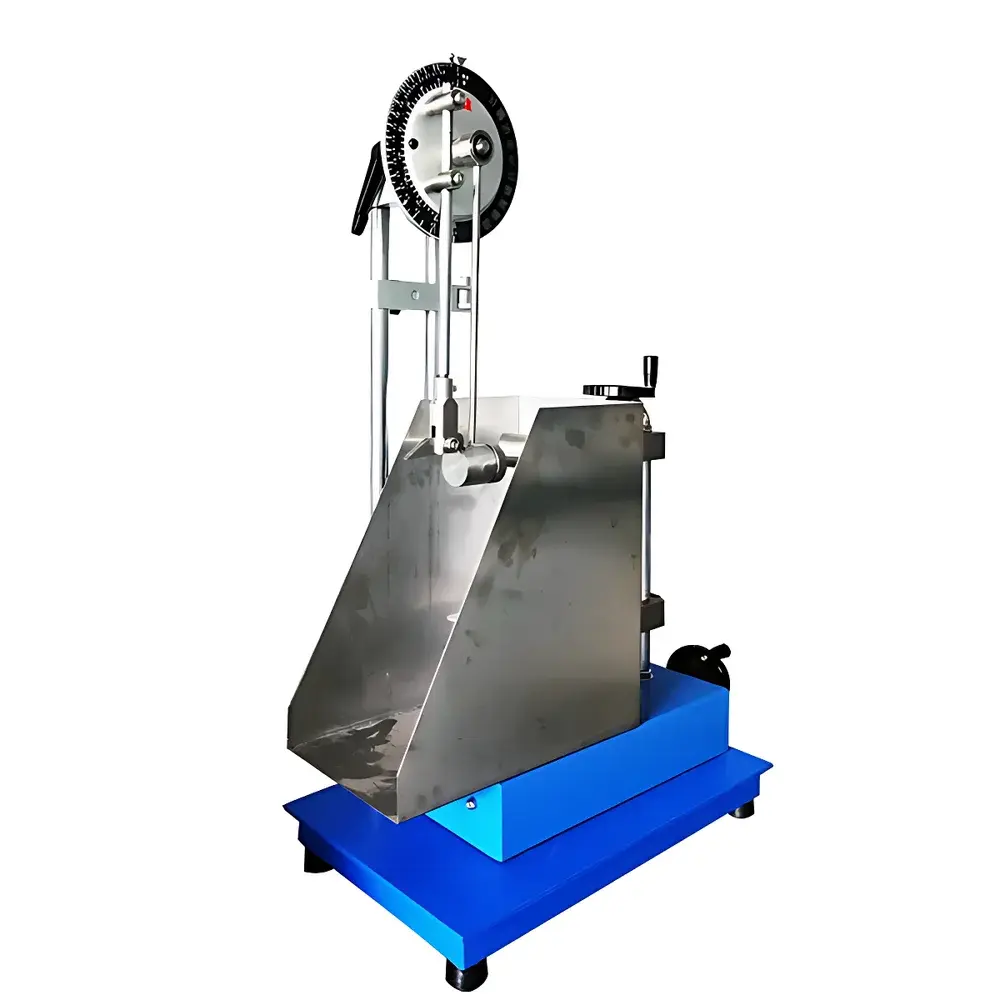
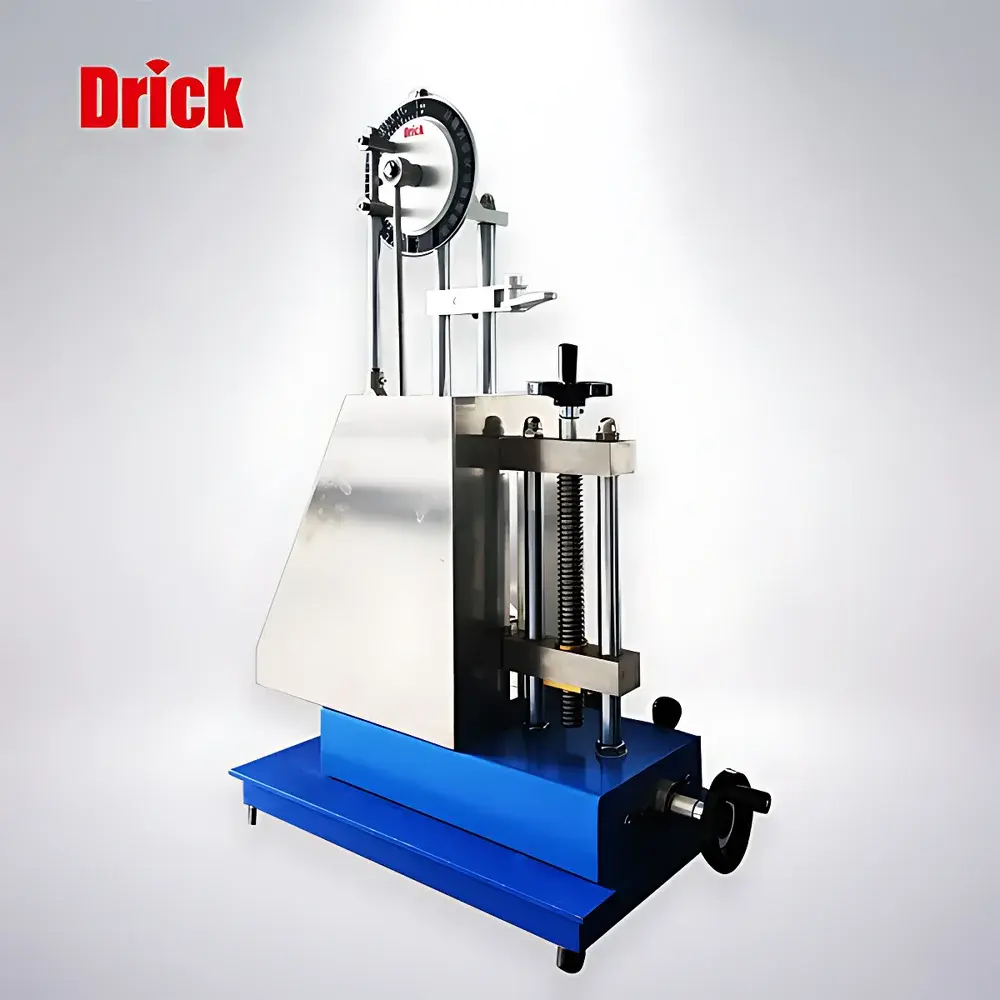
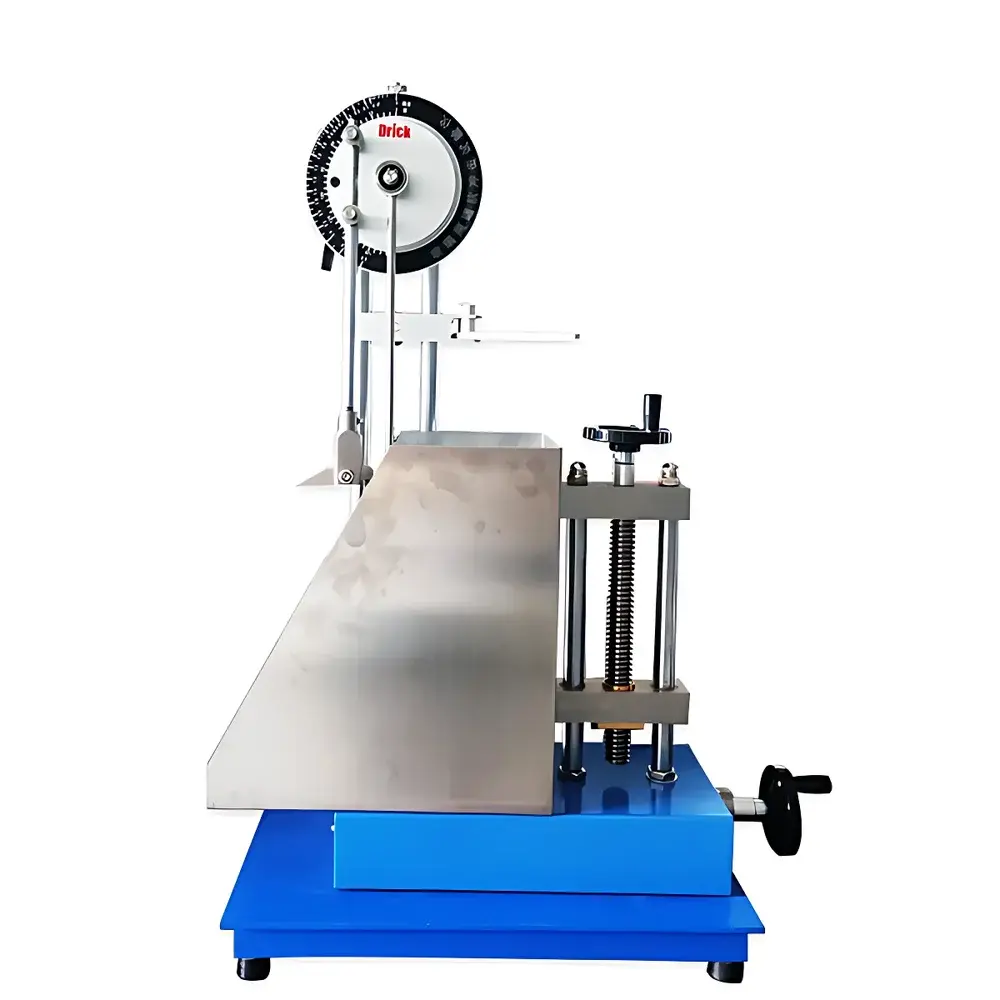
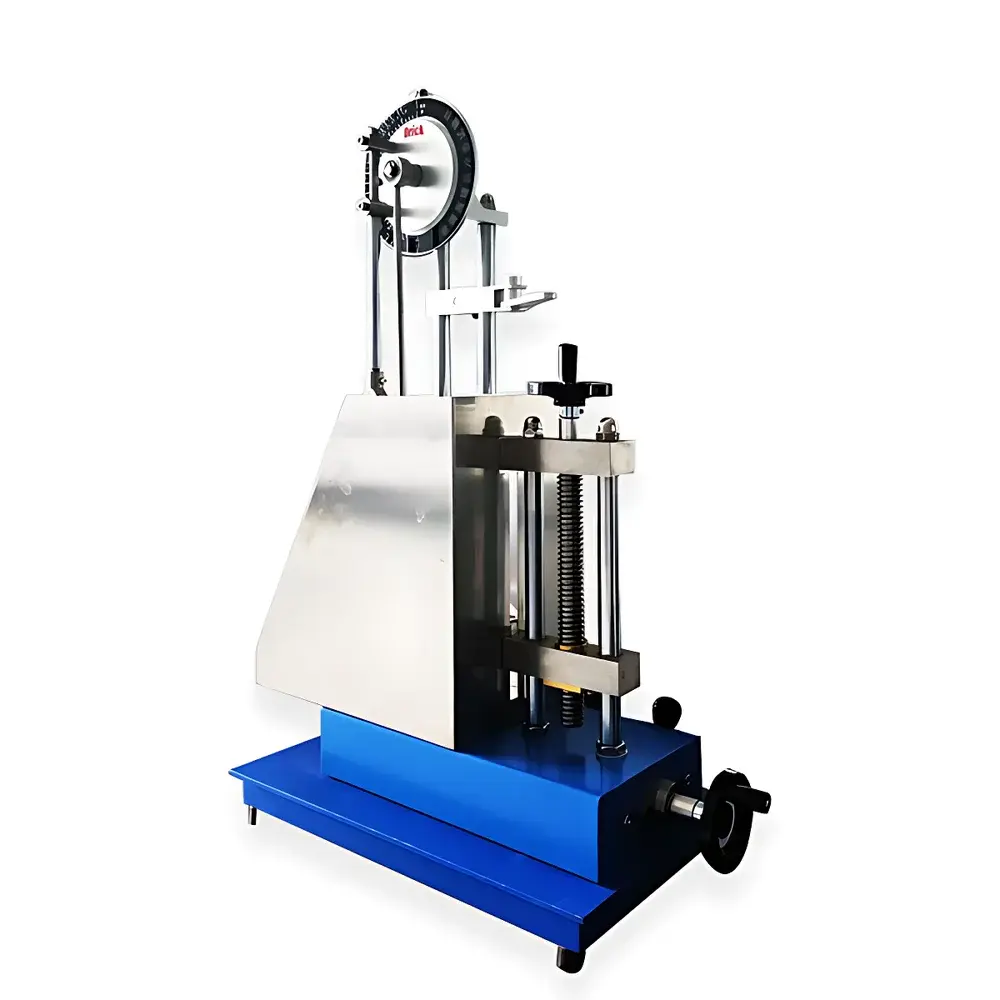
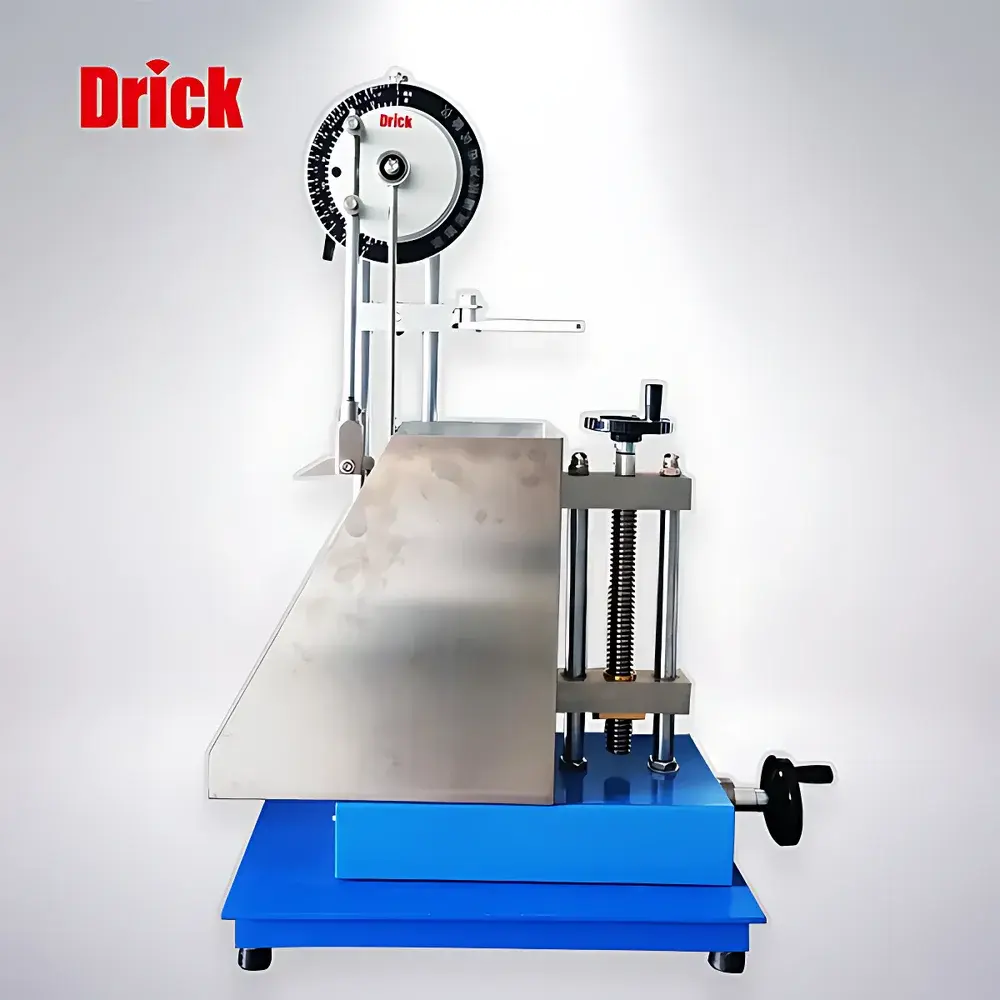
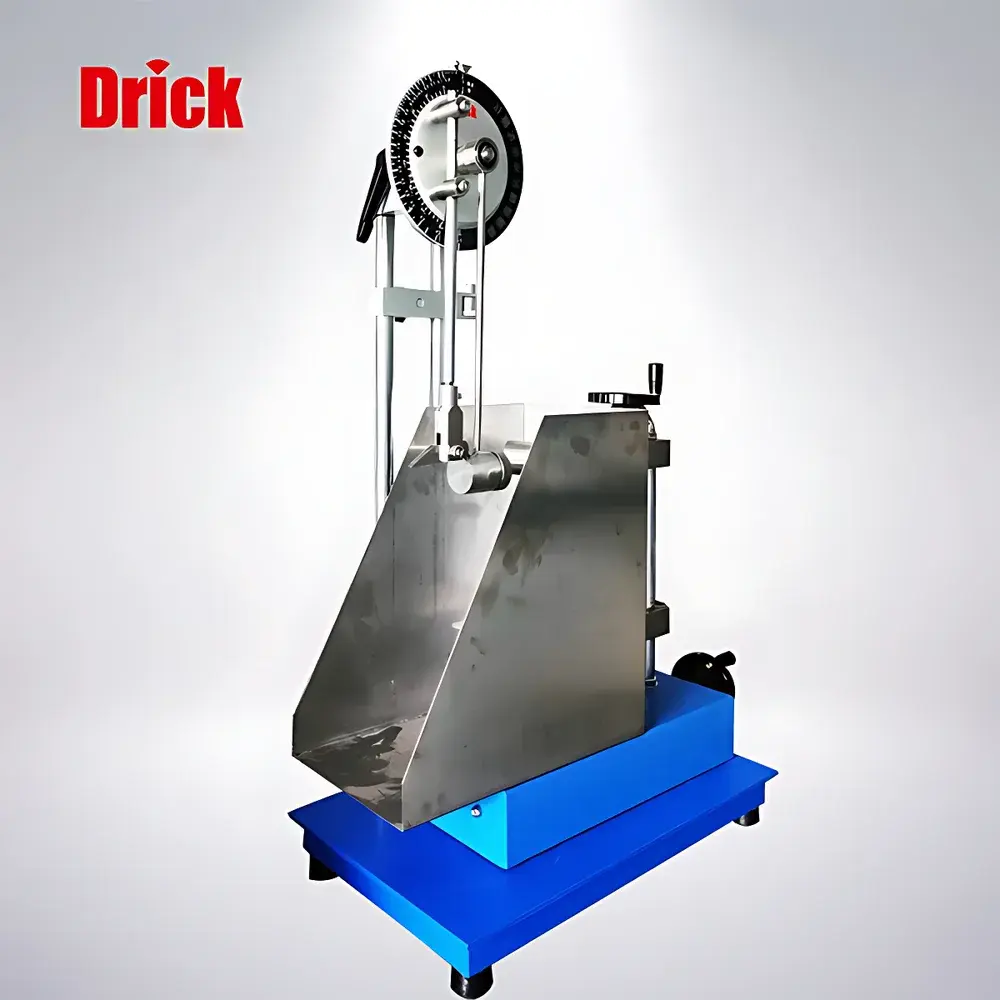
Drick DRK512 Mechanical Impact Tester for Glass Bottles
| Brand | Drick |
|---|---|
| Origin | Shandong, China |
| Manufacturer Type | Manufacturer |
| Country of Origin | China |
| Model | DRK512 |
| Impact Energy Range | 0–2.9 N·m |
| Pendulum Deflection Angle Range | 0–180° |
| Sample Diameter Range | φ20–170 mm |
| Impact Height Adjustment Range | 20–200 mm |
| Compliance Standard | GB/T 6552–2015 |
Overview
The Drick DRK512 Mechanical Impact Tester is a precision pendulum-type impact testing instrument engineered for quantitative evaluation of mechanical shock resistance in glass containers—primarily beverage bottles, pharmaceutical vials, and cosmetic jars. It operates on the principle of controlled gravitational potential energy conversion: a calibrated pendulum arm with a hardened steel impact hammer is raised to a defined angular position, releasing a reproducible impact energy onto the specimen surface. The test method conforms strictly to the physics-based pendulum impact paradigm specified in GB/T 6552–2015, which defines both pass/fail threshold testing and incremental energy escalation protocols. Unlike drop-weight or free-fall systems, the DRK512 delivers consistent, traceable impact energy (0–2.9 N·m) through angular displacement calibration (0–180°), eliminating variability from release timing or friction losses. Its rigid cast-iron base, V-groove sample support stage, and fine-height adjustment mechanism ensure repeatable positioning of the impact point at 50–80 mm above the bottle base—a critical parameter for standardized assessment of sidewall structural integrity.
Key Features
- Pendulum-based impact delivery with dual-scale readout: calibrated energy scale (0–2.9 N·m) and angular deflection scale (0–180°), enabling direct correlation between mechanical input and observed failure response.
- V-groove cradle support system accommodating cylindrical glass containers with diameters from 20 mm to 170 mm—compatible with standard PET preforms, 330 mL soda bottles, 100 mL amber pharmaceutical vials, and wide-mouth cosmetic jars.
- Three-axis mechanical adjustment: height-adjustable impact head (20–200 mm range), lateral slide base for precise specimen centering, and angular scale fine-tuning knob for sub-degree resolution in energy setting.
- Zero-reference alignment procedure: plumb-line verification ensures vertical pendulum rest position; mechanical zeroing of both energy and angle scales prior to each test cycle enhances inter-operator reproducibility.
- Controlled single-impact protocol: manual trigger release prevents double-strike artifacts; operator-guided pendulum arrest after rebound preserves specimen integrity for post-test fracture analysis.
- Tri-point circumferential impact capability: 120° rotational indexing of the sample stage enables systematic evaluation of azimuthal strength variation—essential for detecting mold seam weaknesses or annealing non-uniformity.
Sample Compatibility & Compliance
The DRK512 is validated for use with transparent and colored soda-lime, borosilicate, and flint glass containers meeting dimensional specifications outlined in GB/T 6552–2015. It supports both conformance testing (fixed-energy pass/fail determination per Section 6.2) and progressive impact testing (energy ramping per Section 6.3). While GB/T 6552–2015 is the primary reference, the instrument’s mechanical design aligns with foundational principles of ISO 7458 (Glass containers — Mechanical shock resistance — Test method) and ASTM C149–03 (Standard Test Method for Thermal Shock Resistance of Glass Containers), particularly in specimen support geometry and energy quantification methodology. No electrical safety certification (e.g., CE, UL) is claimed, as the device is purely mechanical and non-powered.
Software & Data Management
The DRK512 operates as a stand-alone mechanical tester without embedded electronics or digital data acquisition. All measurements are recorded manually into laboratory notebooks or LIMS-compatible spreadsheets. Users may integrate optional external tools—including digital protractors (±0.1° resolution), high-speed cameras (≥1,000 fps) for crack propagation analysis, or load-cell retrofits—for enhanced metrological traceability. For regulated environments (e.g., pharmaceutical packaging QA/QC), manual records must include operator ID, ambient temperature/humidity, bottle batch number, impact location coordinates, observed fracture mode (radial vs. concentric), and pass/fail designation per GB/T 6552–2015 Annex A. Audit trails comply with GLP documentation requirements when paired with controlled document templates.
Applications
- Quality assurance of glass container manufacturing lines—detecting defects arising from annealing inconsistencies, mold wear, or thermal stress gradients.
- Validation of secondary packaging designs (e.g., case packing, palletization) by correlating impact resistance with simulated transport vibration profiles.
- R&D benchmarking of alternative glass compositions (e.g., strengthened aluminosilicate) against legacy soda-lime formulations.
- Supplier qualification testing for contract fillers requiring documented mechanical robustness prior to line clearance.
- Educational demonstration of brittle fracture mechanics in materials science laboratories.
FAQ
Does the DRK512 comply with international standards beyond GB/T 6552–2015?
It is mechanically compatible with ISO 7458 and ASTM C149 principles but is not certified to those standards; validation must be performed per user-specific IQ/OQ protocols.
Can the DRK512 test plastic or metal containers?
No—it is calibrated and validated exclusively for glass specimens per GB/T 6552–2015; polymer or metallic substrates exhibit different energy absorption behavior and require alternate test methods.
Is calibration traceable to national metrology institutes?
Energy calibration is performed using certified torque wrenches and angular encoders traceable to CNAS-accredited labs; annual recalibration is recommended.
What maintenance is required to ensure long-term accuracy?
Monthly inspection of pendulum bearing play, V-groove wear, and impact hammer tip flatness; biannual lubrication of height adjustment leadscrew with ISO VG 32 mineral oil.
How many impacts can be performed per hour under routine QC conditions?
Approximately 12–15 fully documented tests per hour, assuming three impacts per bottle and manual data entry.





