
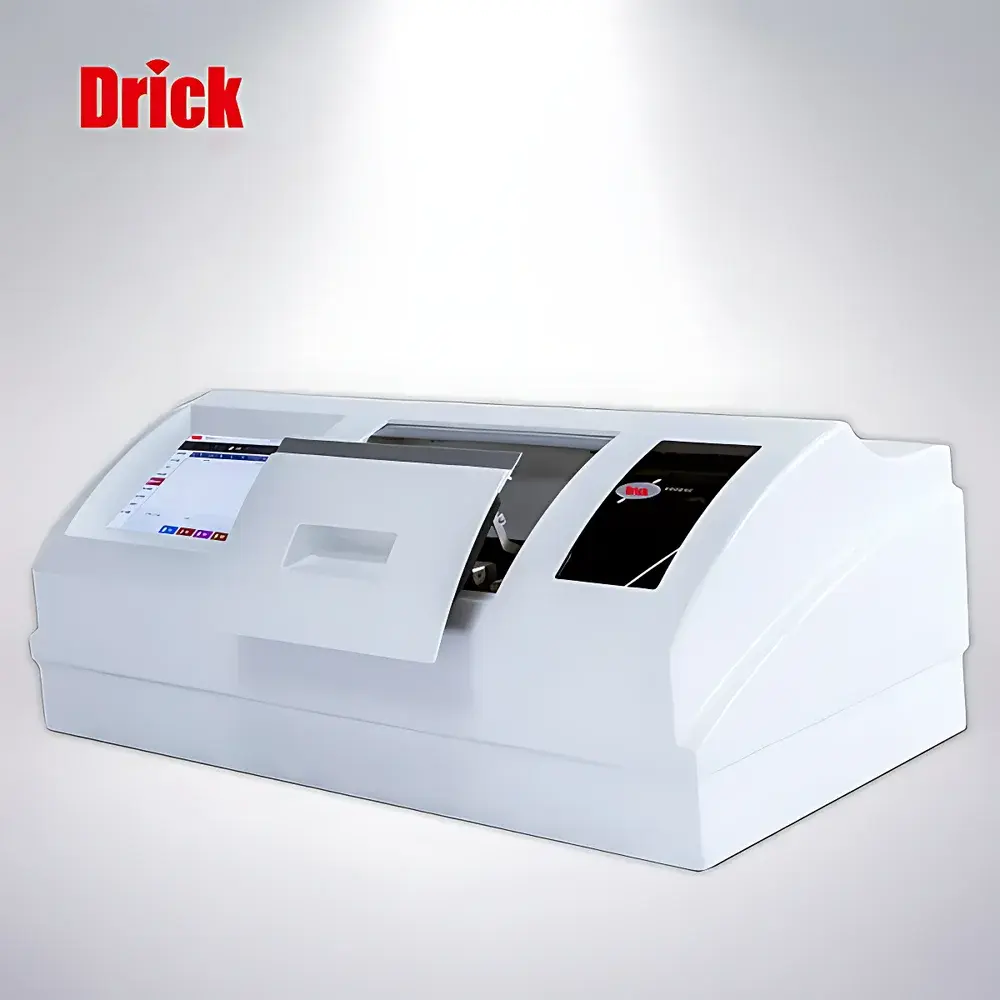
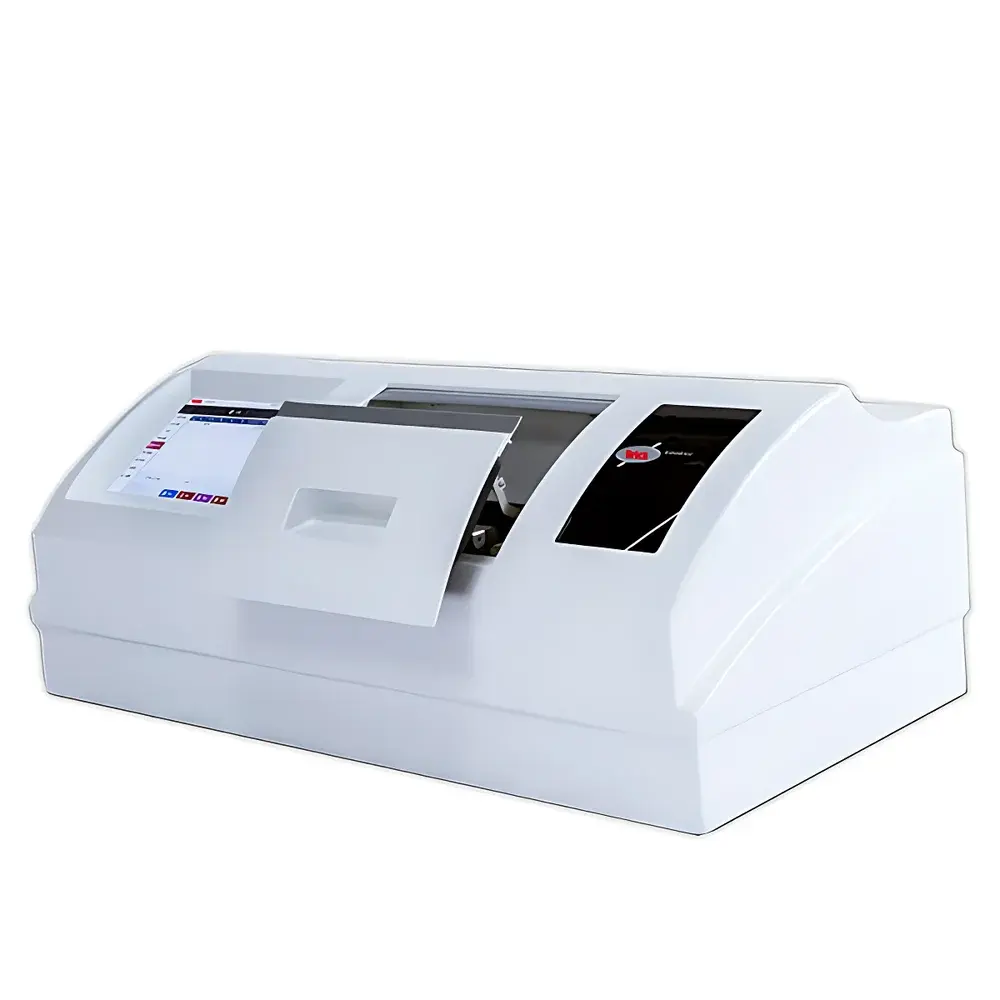
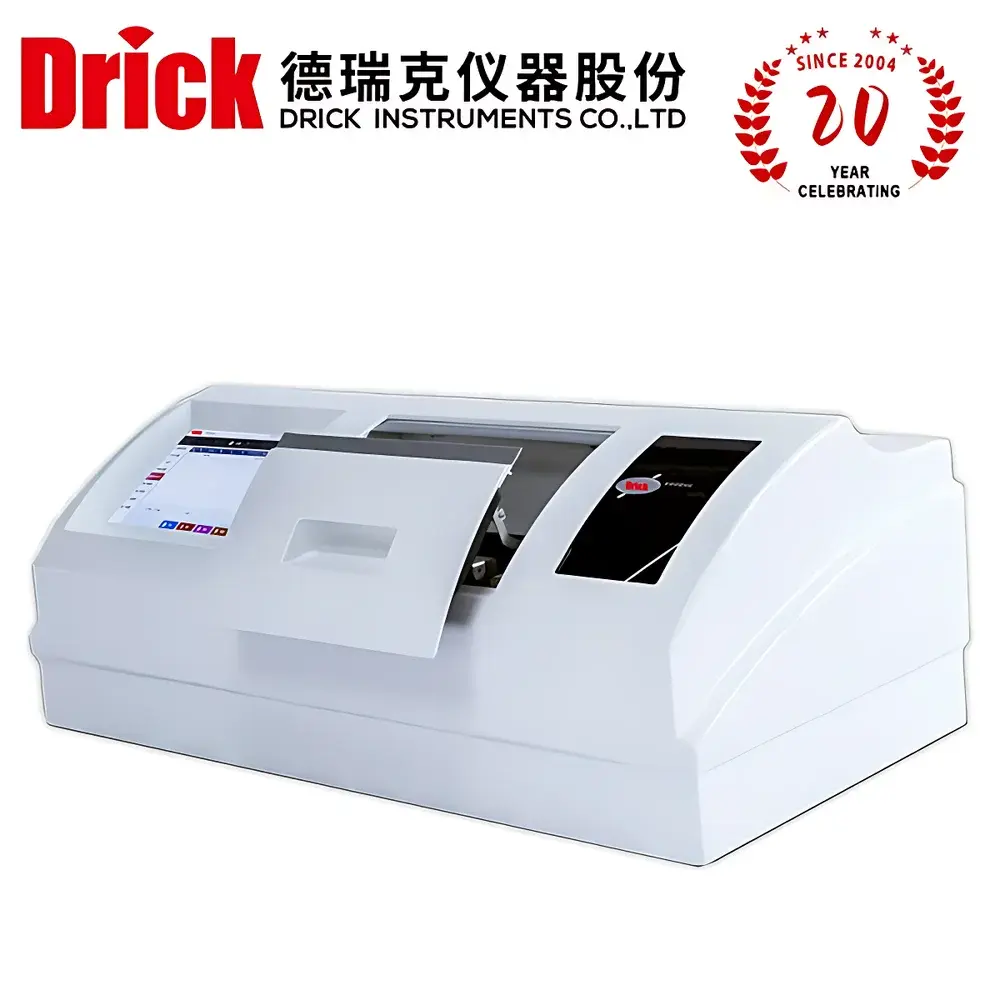
Drick DRK-Z83L Digital Enhanced Automatic Polarimeter for Substance Content and Purity Analysis
| Brand | Drick |
|---|---|
| Origin | Shandong, China |
| Manufacturer Type | Direct Manufacturer |
| Product Category | Domestic |
| Model | DRK-Z83L |
| Price Range | USD 11,200 – 14,000 (FOB Qingdao) |
| Instrument Type | Automatic Polarimeter |
| Temperature Control | Integrated Peltier-based Thermostatic System |
| Display | High-Contrast LCD with Real-Time Digital Readout |
| Light Source | Stable 589.3 nm LED (Sodium-D Line Equivalent) |
| Optical Path | Sealed, Vibration-Damped Beam Path |
| Measurement Range | Optical Rotation ±90° |
| Sucrose Scale | ±259°Z |
| Resolution | 0.001° (rotation), 0.01°Z (sugar scale) |
| Accuracy | ±0.002° (at 20°C, verified per ISO 13762) |
Overview
The Drick DRK-Z83L Digital Enhanced Automatic Polarimeter is an optomechanical instrument engineered for high-precision measurement of optical rotation — a fundamental chiroptical property arising from the differential interaction of plane-polarized light with enantiomeric molecules in solution. Based on the principle of polarimetry, the DRK-Z83L quantifies angular deviation (in degrees) of linearly polarized light after transmission through optically active samples, enabling direct determination of concentration, enantiomeric excess (ee), and purity of chiral compounds such as sugars, amino acids, pharmaceutical intermediates, and natural products. Its design conforms to core metrological requirements outlined in ISO 13762:2021 (“Optical methods — Polarimetry”) and supports routine compliance with pharmacopoeial monographs (e.g., USP , EP 2.2.7, and ChP 0401). The instrument integrates a thermally stabilized measurement cell compartment and real-time digital signal processing to minimize drift and ensure reproducibility across extended analytical sessions.
Key Features
- LED-based 589.3 nm light source with spectral stability < ±0.1 nm over 10,000 hours — eliminating lamp replacement cycles and wavelength drift associated with sodium vapor lamps.
- Peltier-controlled temperature regulation (10–40°C, ±0.1°C accuracy) with integrated thermal sensor feedback, ensuring strict adherence to pharmacopoeial test conditions (e.g., USP requires 20 ± 0.5°C for sucrose assays).
- Dual-scale digital readout: simultaneous display of optical rotation (°) and standardized sugar scale (°Z), automatically converted using the internationally accepted sucrose-specific coefficient (1°Z = 0.000133 g/mL at 20°C).
- Auto-zero calibration function with mechanical polarization nulling and electronic offset compensation, reducing operator-induced error and supporting GLP-compliant documentation workflows.
- Rigid aluminum alloy chassis with anti-vibration optical bench and sealed optical path — minimizing environmental interference from ambient light, dust, or mechanical perturbation.
- RS-232 and USB-B interfaces compliant with ASTM E1382-18 for instrument-to-PC data transfer; compatible with third-party LIMS and ELN systems via ASCII protocol.
Sample Compatibility & Compliance
The DRK-Z83L accommodates standard 100 mm, 200 mm, and custom-length sample cells (including jacketed thermostatted cells), supporting aqueous, alcoholic, and low-viscosity organic solutions. It meets essential regulatory expectations for quality control laboratories operating under GMP (ICH Q5, Q7), GLP (OECD 1998), and FDA 21 CFR Part 11 environments when paired with validated software and audit-trail-enabled data capture. While the base unit does not include embedded electronic signatures, its communication protocols support integration with compliant data management platforms that enforce user authentication, change control, and electronic record retention.
Software & Data Management
The instrument operates standalone with on-device data logging (up to 1,000 measurements with timestamp, temperature, and operator ID). Optional Drick PolarSoft v3.2 (Windows 10/11) provides advanced functionality: batch report generation (PDF/CSV), statistical process control (SPC) charts, calibration curve fitting (linear and polynomial), and export to Excel-compatible formats. All software modules comply with ALCOA+ principles (Attributable, Legible, Contemporaneous, Original, Accurate, Complete, Consistent, Enduring, Available) and support IQ/OQ documentation packages for laboratory validation.
Applications
- Pharmaceutical QC: Quantification of active pharmaceutical ingredients (APIs) including levodopa, chloramphenicol, and ibuprofen enantiomers.
- Fine chemical manufacturing: Monitoring ee during asymmetric synthesis and chiral resolution processes.
- Food & beverage testing: Sucrose content verification in syrups, honey, fruit juices, and soft drinks per AOAC 952.02 and ISO 21527-1.
- Academic research: Structural analysis of polysaccharides, peptides, and natural product isolates in stereochemical studies.
- Biotechnology: Monitoring enzymatic hydrolysis kinetics of glycosidic bonds via time-resolved rotation decay profiles.
FAQ
What is the wavelength accuracy of the LED source, and how is it maintained?
The 589.3 nm LED is factory-calibrated against NIST-traceable reference filters and exhibits long-term spectral drift < ±0.05 nm over 5 years under continuous operation.
Does the DRK-Z83L support automated cell recognition or barcode scanning?
No — cell identification is manual; however, cell constants (path length, calibration factor) can be pre-entered and recalled by user-defined ID tags in PolarSoft.
Is temperature uniformity verified across the entire cell volume?
Yes — thermal mapping per ICH Q5A Annex 3 confirms ≤0.15°C gradient across a 100 mm × 12 mm cell at 20°C steady state.
Can raw intensity data (Imax/Imin) be exported for secondary analysis?
No — only processed rotation values are output; the internal photodetector signal is not exposed via interface protocols.
What is the warm-up time required before first measurement?
Less than 15 minutes to full thermal and photometric stabilization, verified by internal self-test sequence upon power-on.




