
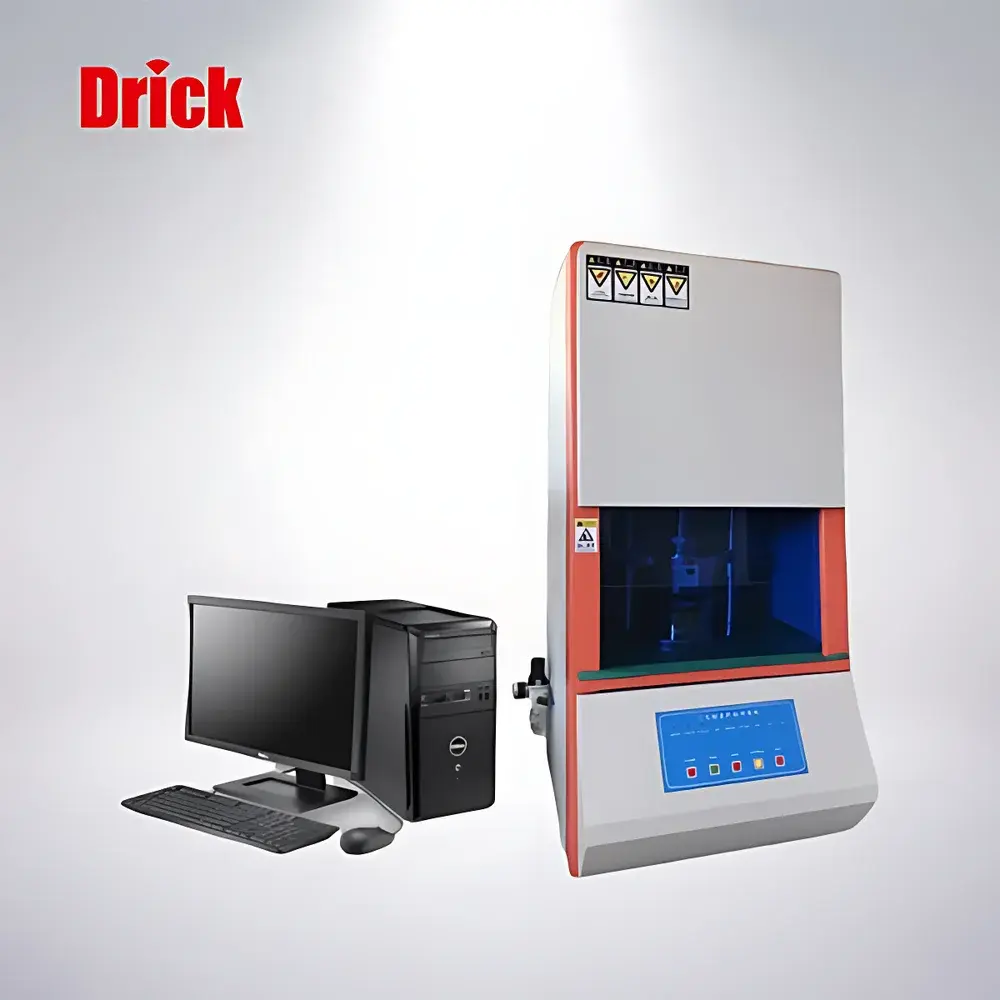
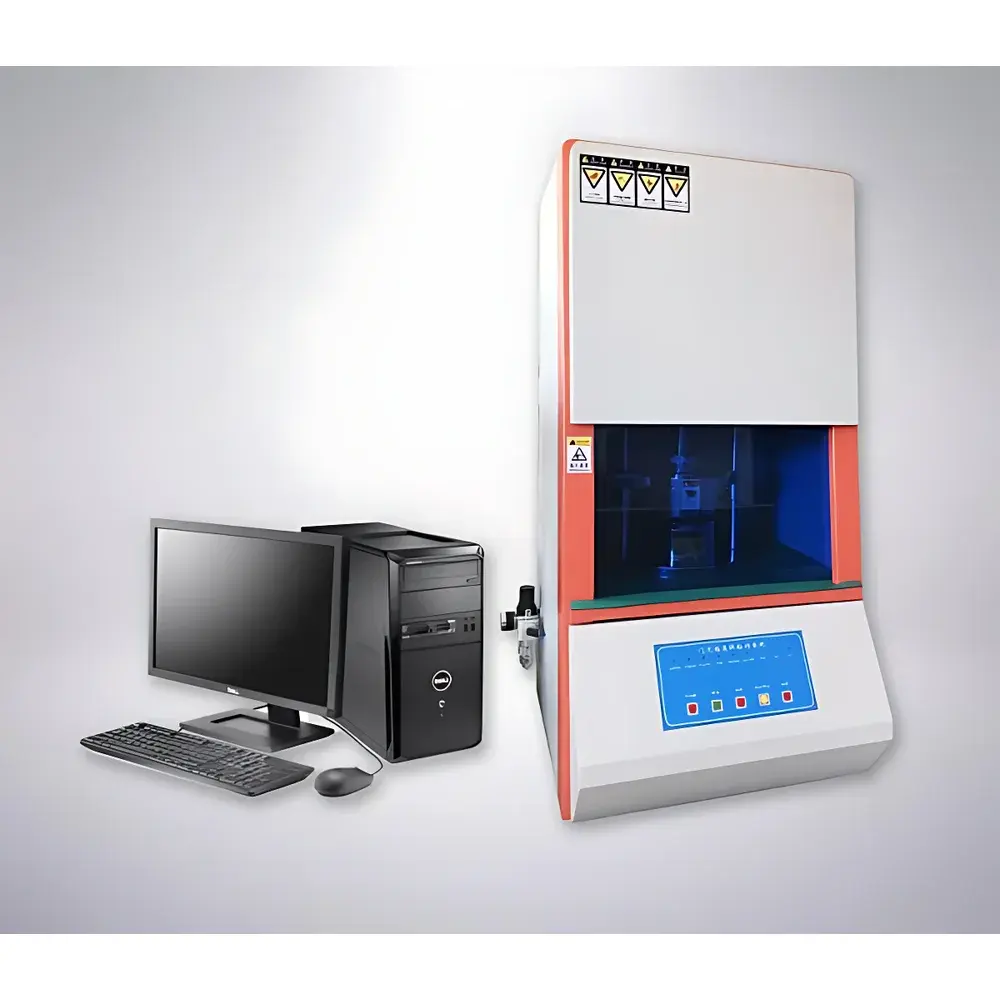
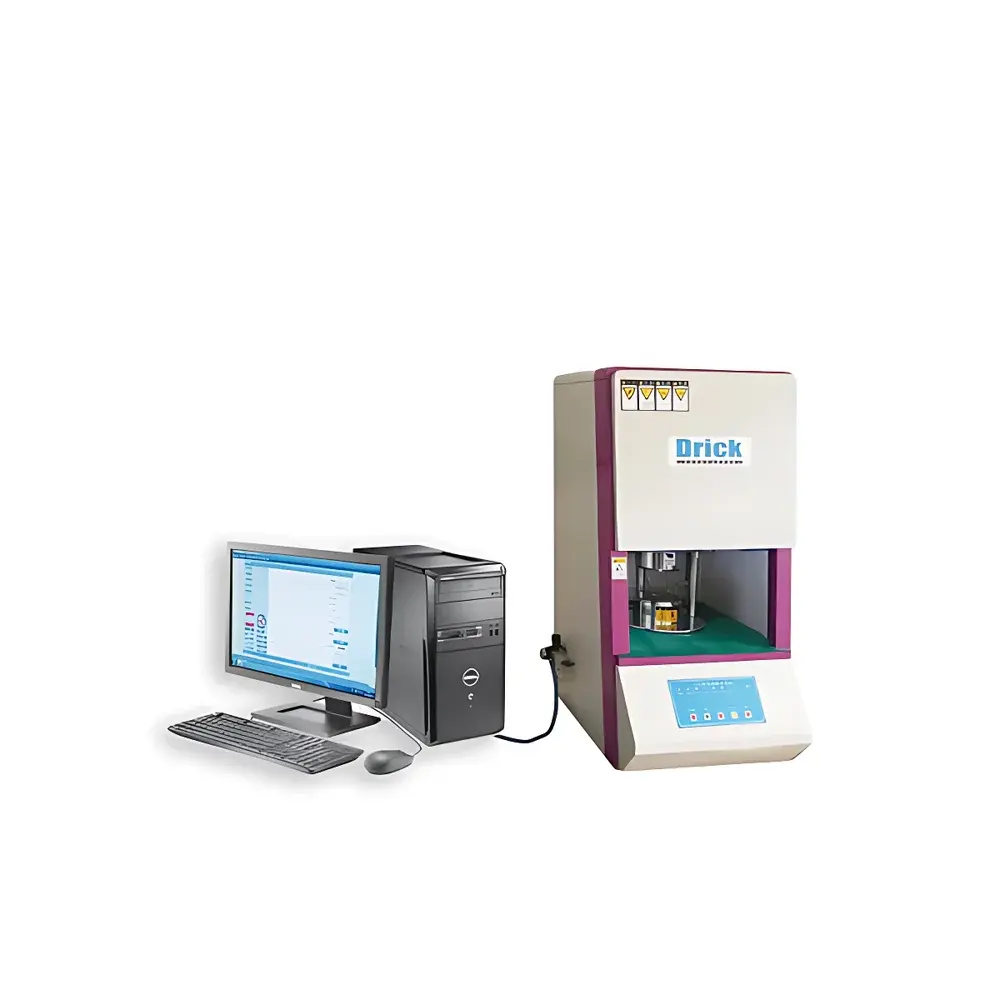
Drick MN-B Mooney Viscometer for Regenerated Rubber, Raw Rubber, and Wire & Cable Compounds
| Brand | Drick |
|---|---|
| Origin | Shandong, China |
| Manufacturer Type | Direct Producer |
| Country of Origin | China |
| Model | MN-B |
| Price | USD 7,000 (FOB) |
| Temperature Control Range | Ambient to 200 °C |
| Temperature Measurement Accuracy | ≤ ±0.3 °C |
| Temperature Control Accuracy | ≤ ±0.3 °C |
| Temperature Resolution | 0.01 °C |
| Torque Range | 0–100 Mooney Units (MU) |
| Calibration Accuracy | 100 ± 0.5 MU |
| Rotor Speed | 2.00 ± 0.02 rpm |
| Test Duration | 0–200 min (1-s resolution) |
| Ambient Operating Temperature | 0–35 °C |
| Relative Humidity | < 80 % RH |
| Test Load | 11.5 ± 0.5 kN |
| Compressed Air Supply | 0.45–0.6 MPa |
| Power Requirement | 700 W, 50 Hz, 220 V ±10 % |
| Dimensions (L×W×H) | 680 × 700 × 1300 mm |
Overview
The Drick MN-B Mooney Viscometer is a precision-engineered instrument designed specifically for the rubber and wire & cable industries to determine Mooney viscosity (ML1+4 and MH) in accordance with ISO 289-6 and GB/T 3242–2005. It operates on the fundamental principle of rotational viscoelasticity: a standardized rotor rotates at 2.00 ± 0.02 rpm within a sealed, thermostatically controlled cavity filled with uncured rubber compound. The torque resistance generated by the material—expressed in Mooney Units (MU)—is measured continuously and reflects the compound’s processability, molecular weight distribution, and crosslinking potential prior to vulcanization. Unlike capillary or falling-ball methods, Mooney testing provides reproducible, industry-standard data critical for QC/QA workflows, formulation development, and incoming raw material verification across synthetic and regenerated rubber grades—including SBR, NR, EPDM, CR, and halogenated elastomers used in insulated cables.
Key Features
- High-stability temperature control system featuring Pt100 platinum resistance sensors, digital PID regulation, and real-time grid-voltage compensation—ensuring thermal accuracy ≤ ±0.3 °C over 0–200 °C range with 0.01 °C resolution.
- Monolithic, CNC-machined die cavity fabricated from high-grade tool steel; eliminates dimensional drift and thermal interface errors common in bolted or assembled cavities.
- Slow-wire EDM-finished square-section rotor shaft with sub-micron geometric tolerance—guarantees consistent rotor alignment and minimizes mechanical hysteresis during prolonged testing cycles.
- Dual-stage pneumatic loading mechanism delivering precise, repeatable 11.5 ± 0.5 kN test force—fully compliant with ISO 289-1 requirements for cavity closure integrity and pressure uniformity.
- Industrial-grade switching power supply with wide-input voltage tolerance (220 V ±10 %, 50 Hz), enabling stable operation under fluctuating utility conditions typical in manufacturing environments.
- Programmable timer with 1-second resolution and user-configurable test duration (0–200 minutes), supporting both standard ML1+4 and extended scorch or relaxation protocols.
Sample Compatibility & Compliance
The MN-B accommodates standard 45 g rubber specimens in accordance with ISO 289-1 and GB/T 3242–2005, including crumb rubber, reclaimed rubber, masterbatches, and compounded elastomer stocks for wire insulation and sheathing applications. Its cavity geometry and rotor design conform to ISO-defined dimensions (Ø38.1 mm cavity, Ø30.48 mm rotor, 5.53 mm gap), ensuring data comparability across global laboratories. The instrument meets essential electrical safety (IEC 61010-1) and electromagnetic compatibility (IEC 61326-1) requirements. While not inherently 21 CFR Part 11-compliant, its analog torque signal output and time-stamped measurement logs support integration into validated LIMS environments under GLP/GMP frameworks when paired with qualified data acquisition software.
Software & Data Management
The MN-B outputs analog torque (0–10 V) and temperature (4–20 mA) signals compatible with third-party DAQ systems (e.g., National Instruments, Keysight, or LabVIEW-based platforms). Optional Drick-supplied PC software enables real-time curve plotting, automatic ML/ML1+4/MH/MV extraction, and CSV export for statistical process control (SPC). All test records include embedded timestamps, operator ID fields, and calibration metadata—facilitating traceability per ISO/IEC 17025 clause 7.8. Audit trails are configurable to meet internal QA documentation standards, though electronic signature and user-role management require external validation.
Applications
- Quality control of natural and synthetic rubber batches prior to mixing and extrusion.
- Scorch time estimation (t5, t35) for accelerator package optimization in tire tread compounds.
- Consistency verification of reclaimed rubber feedstock in cost-sensitive cable jacket formulations.
- Correlation studies between Mooney viscosity and downstream processing parameters—e.g., calendering roll separation force, extrudate swell ratio, and injection molding cycle time.
- Supporting ASTM D1646 and ISO 289-2 compliance for technical data sheets submitted to OEMs and regulatory bodies.
FAQ
What international standards does the MN-B comply with?
It conforms to ISO 289-1:2010 (general requirements), ISO 289-2:2010 (test methods), and GB/T 3242–2005 (Chinese national standard for rubber Mooney viscosity determination).
Is the rotor interchangeable with other Mooney viscometers?
Yes—the MN-B uses ISO-standardized rotors (Type L or Type N), enabling direct comparison with legacy instruments from Alpha, Wallace, or Toyo Seiki.
Can it measure viscosity at elevated temperatures beyond 100 °C?
Yes—its calibrated operating range extends to 200 °C, suitable for high-temperature curing studies and thermoplastic elastomer characterization.
How often must the torque transducer be recalibrated?
Drick recommends annual calibration using traceable NIST-equivalent reference weights and certified torque standards, documented per ISO/IEC 17025.
Does the instrument support automated sample loading?
No—it requires manual specimen placement and cavity closure; however, its pneumatic actuation ensures consistent load application without operator-dependent variability.






