
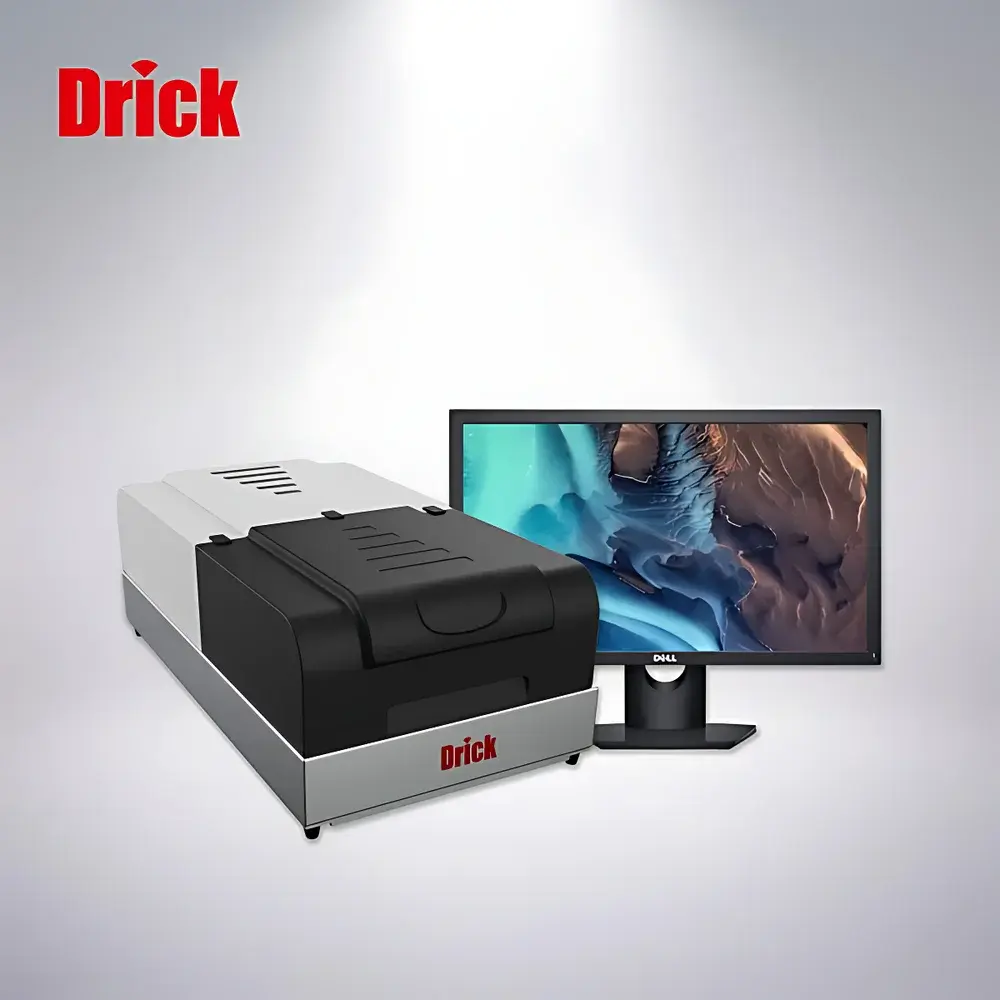
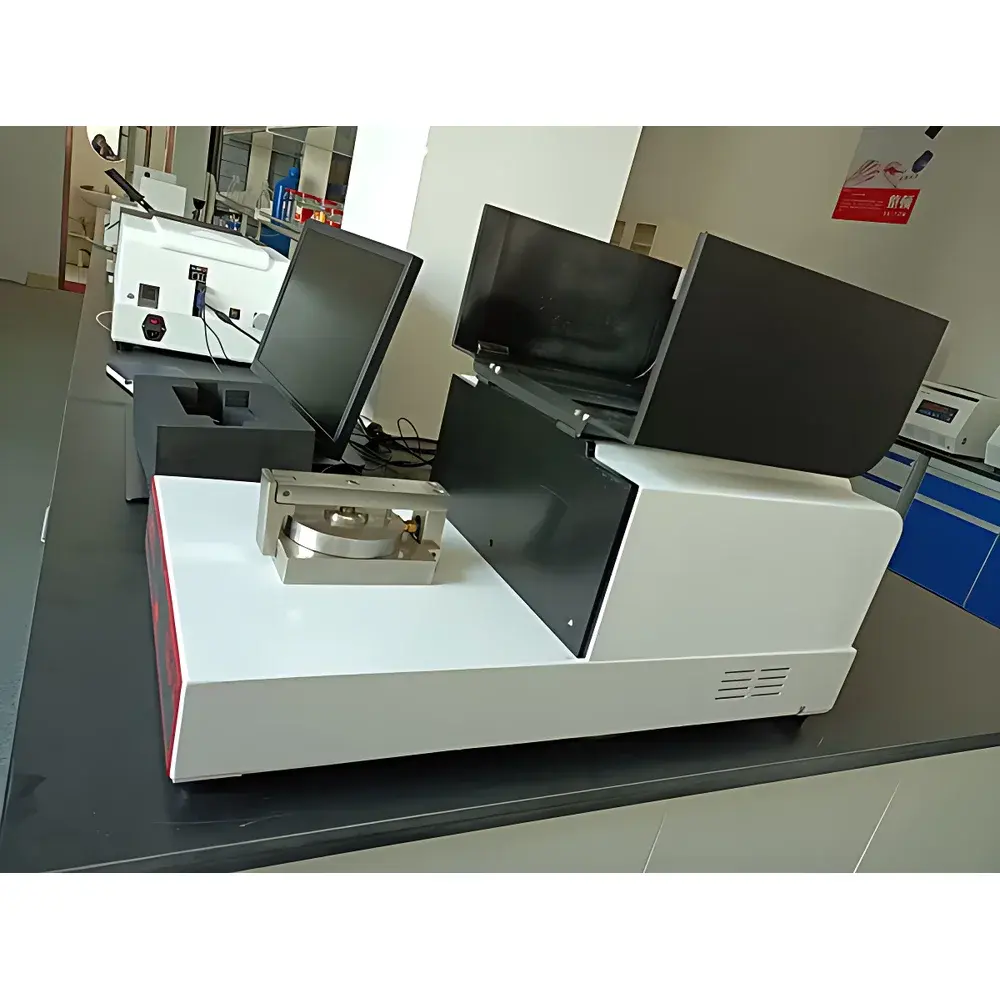
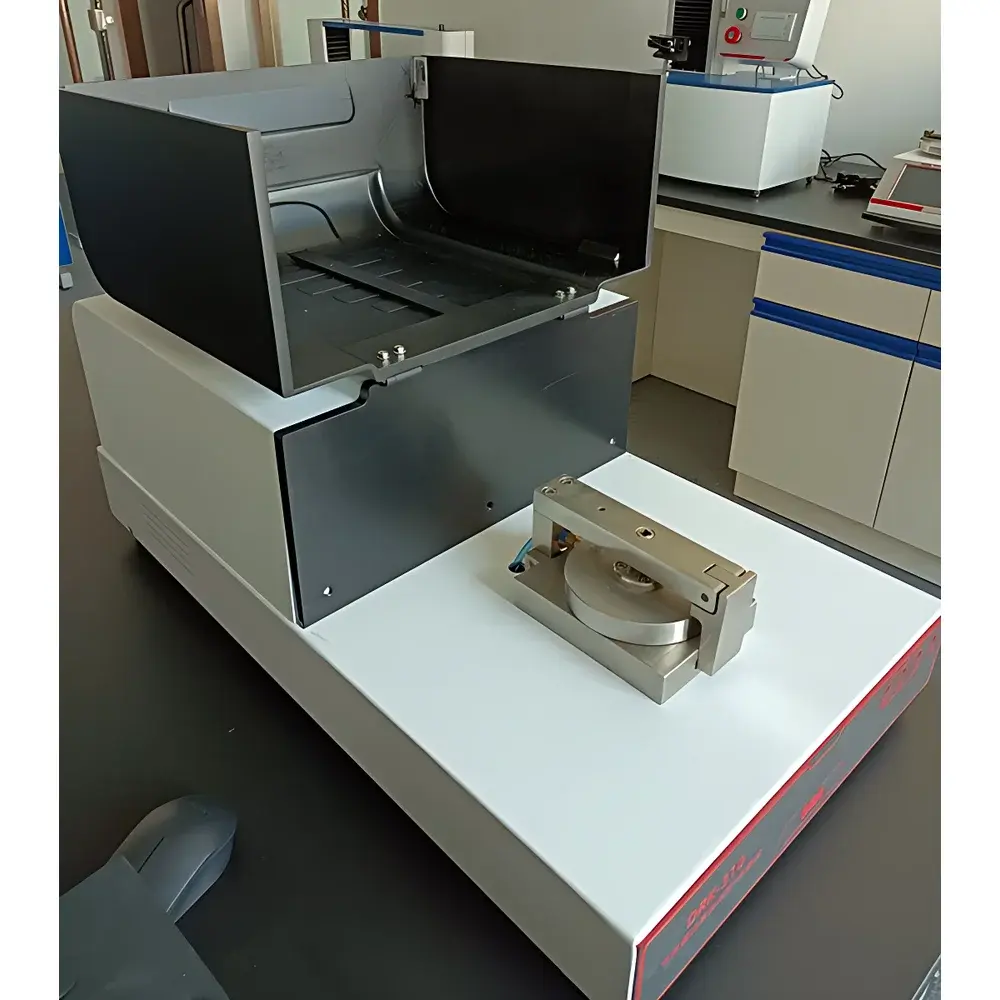
Drick DRK310 Single-Chamber Differential Pressure Gas Permeation Analyzer (YBB 00082003 Compliant)
| Brand | Drick |
|---|---|
| Origin | Shandong, China |
| Manufacturer Type | Direct Manufacturer |
| Origin Category | Domestic (China) |
| Model | DRK310 |
| Price Range | USD 28,000 – 42,500 |
| Measurement Principle | Differential Pressure (Manometric) Method |
| Test Gases | O₂, N₂, CO₂, and other non-toxic gases |
| Measurement Range | 0.1–50,000 cm³/(m²·day·0.1 MPa) |
| Test Error | ±0.01 cm³/(m²·day·0.1 MPa) |
| Vacuum Accuracy | ±0.1 Pa |
| Vacuum Range | 0–1333.3 Pa |
| Ultimate Vacuum | <20 Pa |
| Vacuum Attainment Time | ≤20 min to <27 Pa |
| Temperature Control Range | 15–50 °C |
| Temperature Stability | ±0.1 °C |
| Sample Thickness Limit | ≤3 mm |
| Test Area | 45.34 cm² (circular) |
| Test Pressure Differential | 0.05–0.15 MPa |
| Gas Inlet Port | Ø6 mm |
| Supply Pressure | 0.5–0.8 MPa |
| Power Supply | AC 220 V, 50 Hz |
| Power Consumption | <1500 W |
| Dimensions (L×W×H) | 680×380×270 mm |
| Weight | 50 kg |
| Calibration | Certified Standard Film |
| Compliance | YBB 00082003, GB/T 1038, ASTM D1434, ISO 2556, ISO 15105-1, JIS K7126-A |
Overview
The Drick DRK310 Single-Chamber Differential Pressure Gas Permeation Analyzer is an engineered solution for precise, repeatable quantification of gas transmission rates (GTR) through flexible barrier materials under controlled pressure differentials. It operates on the manometric differential pressure principle—defined in ISO 15105-1 and ASTM D1434—where a test specimen separates two sealed chambers: a high-pressure test gas chamber and a low-pressure measurement chamber. Following vacuum preconditioning of both chambers, the low-pressure side is isolated while the high-pressure side is charged with the target gas (O₂, N₂, CO₂, or other non-toxic gases). The resulting permeation-driven pressure rise in the low-pressure chamber is monitored via a high-stability vacuum transducer; GTR is calculated from the linear slope of pressure vs. time, normalized to test area, thickness (if applicable), and pressure differential. This method eliminates reliance on carrier gas flow or detection chemistry, delivering intrinsic material property data traceable to SI units. Designed specifically for packaging R&D, quality control, and regulatory validation, the DRK310 meets the stringent metrological requirements of YBB 00082003—the Chinese Pharmacopoeia standard governing gas barrier performance of pharmaceutical packaging materials.
Key Features
- High-accuracy dual-sensor architecture: Imported ultra-low-drift vacuum and absolute pressure transducers (±0.1 Pa resolution) ensure long-term baseline stability and minimize system leakage contribution.
- Dual-mode temperature control: A parallel-flow thermostatic bath provides rapid thermal equilibration and ±0.1 °C uniformity across the test chamber—critical for eliminating thermal drift during extended measurements (e.g., low-permeability films).
- Leak-tight fluidic design: Precision-machined stainless-steel valves, PTFE-sealed fittings, and optimized vacuum path geometry achieve <20 Pa ultimate vacuum in ≤20 minutes and suppress adsorption/desorption artifacts.
- Anti-lateral-leak sample clamping: Patented radial compression mechanism ensures uniform gasket contact pressure over the full 45.34 cm² circular test area, eliminating edge bypass even for thin (<50 µm) or non-planar substrates.
- Dynamic pressure regulation: Proportional-integral (PI) controlled gas dosing maintains stable differential pressure (0.05–0.15 MPa) independent of permeation rate—enabling valid comparison across high- and low-barrier materials.
- Integrated baseline compensation: Automated zero-offset correction removes system-specific virtual leakage, enabling accurate measurement down to 0.1 cm³/(m²·day·0.1 MPa) without manual intervention.
- Fully autonomous operation: Self-diagnostic startup sequence verifies sensor health, valve actuation, and vacuum integrity prior to test initiation; one-button execution includes vacuum purge, pressurization, data acquisition, and report generation.
Sample Compatibility & Compliance
The DRK310 accommodates rigid and flexible planar specimens up to 3 mm thick—including monolayer polymers (e.g., PET, PP), coextruded structures, AlOx/SiOx-coated films, metallized foils, elastomeric sheets, and laminated pharmaceutical blister materials. Its single-chamber configuration supports standardized test protocols requiring strict adherence to specimen conditioning (per ISO 2556 Annex A), edge sealing (using supplied high-adhesion silicone grease), and environmental stabilization. Regulatory alignment includes full conformance with YBB 00082003 (Chinese Pharmacopoeia Chapter 0008), GB/T 1038 (China national standard), ASTM D1434 (Class I, Method A), ISO 2556 (differential pressure variant), ISO 15105-1 (gas transmission calculation model), and JIS K7126-A (Japanese industrial standard). Optional humidity control module enables modified testing per ISO 15105-2 for water vapor–influenced gas permeation studies.
Software & Data Management
The embedded Windows-based analysis platform records all raw sensor outputs—pressure, temperature, time, valve status—at ≥1 Hz sampling rate. Real-time graphical display shows pressure ramp, steady-state slope, and residual deviation. All data are stored in encrypted SQLite databases with immutable timestamps and operator ID tagging. Audit trail functionality—activated via optional GMP Computerized System module—complies with FDA 21 CFR Part 11 and EU Annex 11 requirements: user role-based access (Admin, Analyst, Reviewer), electronic signatures, change history logging, and export-locking for PDF/CSV archival. Data integrity is preserved during power interruption via onboard UPS-backed RAM caching; no measurement point is lost.
Applications
- Pharmaceutical packaging qualification: Validation of blister lidding foils, cold-forming aluminum sheets, and child-resistant pouches against YBB 00082003 O₂ transmission limits for sterile products.
- Food packaging development: Comparative assessment of barrier coatings (SiOₓ, AlOₓ) on PET or PP films for shelf-life modeling of oxygen-sensitive products (e.g., roasted coffee, nuts).
- Medical device packaging: Verification of Tyvek®/polyethylene pouches and thermoformed trays per ASTM F1929 and ISO 11607-1.
- Automotive interior materials: Quantification of CO₂ permeation through polyurethane foams and PVC composites used in cabin air filtration systems.
- Academic research: Fundamental study of structure–property relationships in nanocomposite barrier films, including graphene- or cellulose nanocrystal-reinforced systems.
FAQ
What gases can be tested on the DRK310?
O₂, N₂, CO₂, and any other non-toxic, non-condensable gases compatible with stainless-steel wetted parts and standard pressure regulators.
Is calibration traceable to national standards?
Yes—certified reference films with NIST-traceable permeability values (e.g., certified Mylar® standards) are supplied for routine verification; calibration certificates include uncertainty budgets per ISO/IEC 17025.
Can the system operate unattended overnight?
Yes—fully automated test sequences, battery-backed real-time clock, and uninterruptible data logging support multi-day low-flux measurements (e.g., EVOH barrier films) without operator presence.
Does it support container testing?
Container testing is available as an optional add-on using the dedicated container test fixture kit, enabling direct measurement of whole-package O₂ ingress per ASTM F2622.
How is system leakage distinguished from true permeation?
The instrument performs automatic baseline drift correction using pre-test vacuum hold periods and applies mathematical filtering to isolate the linear permeation component from transient system effects.
Related Products






