
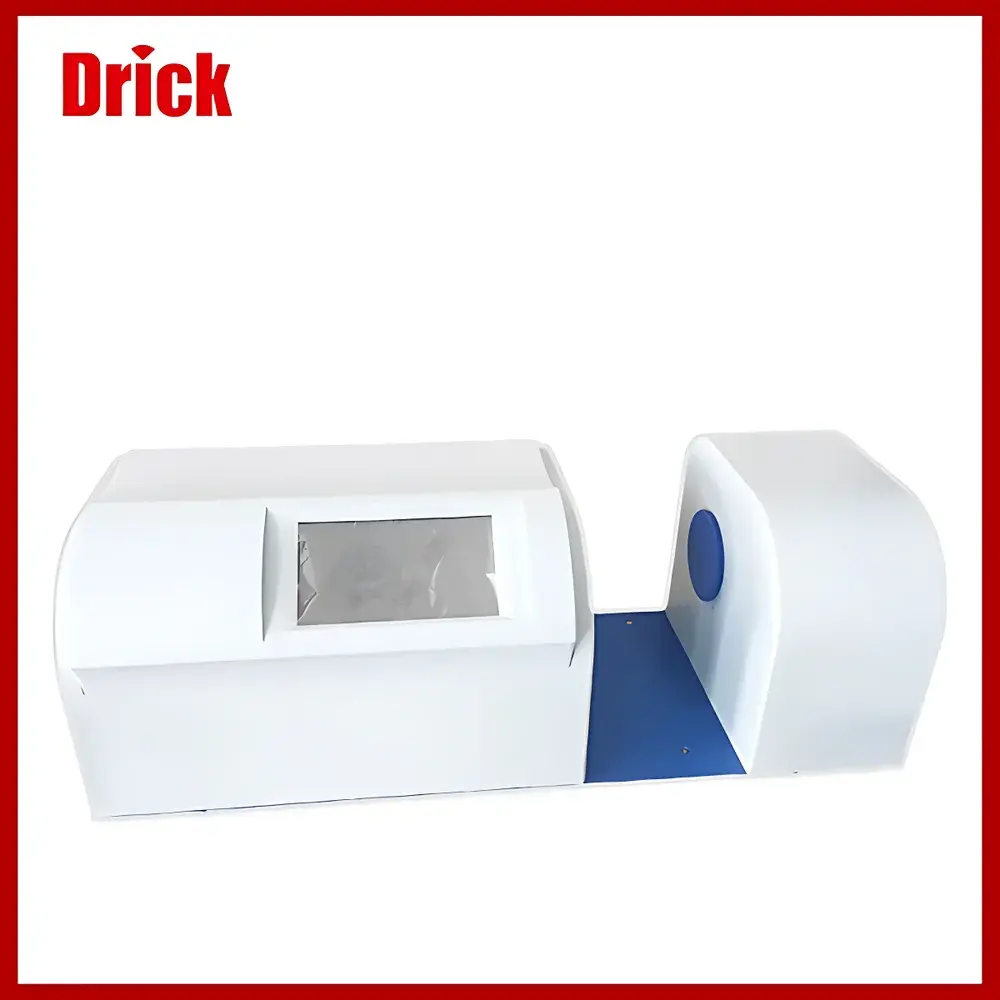
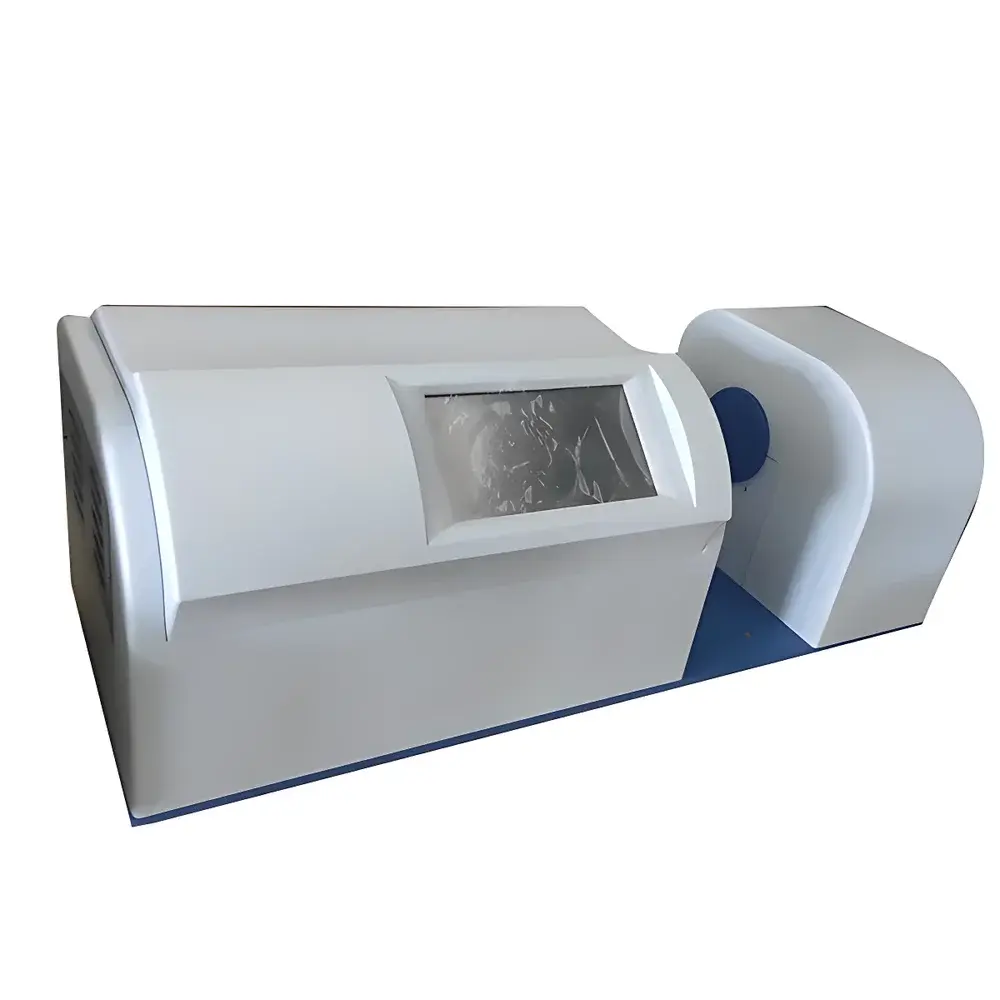
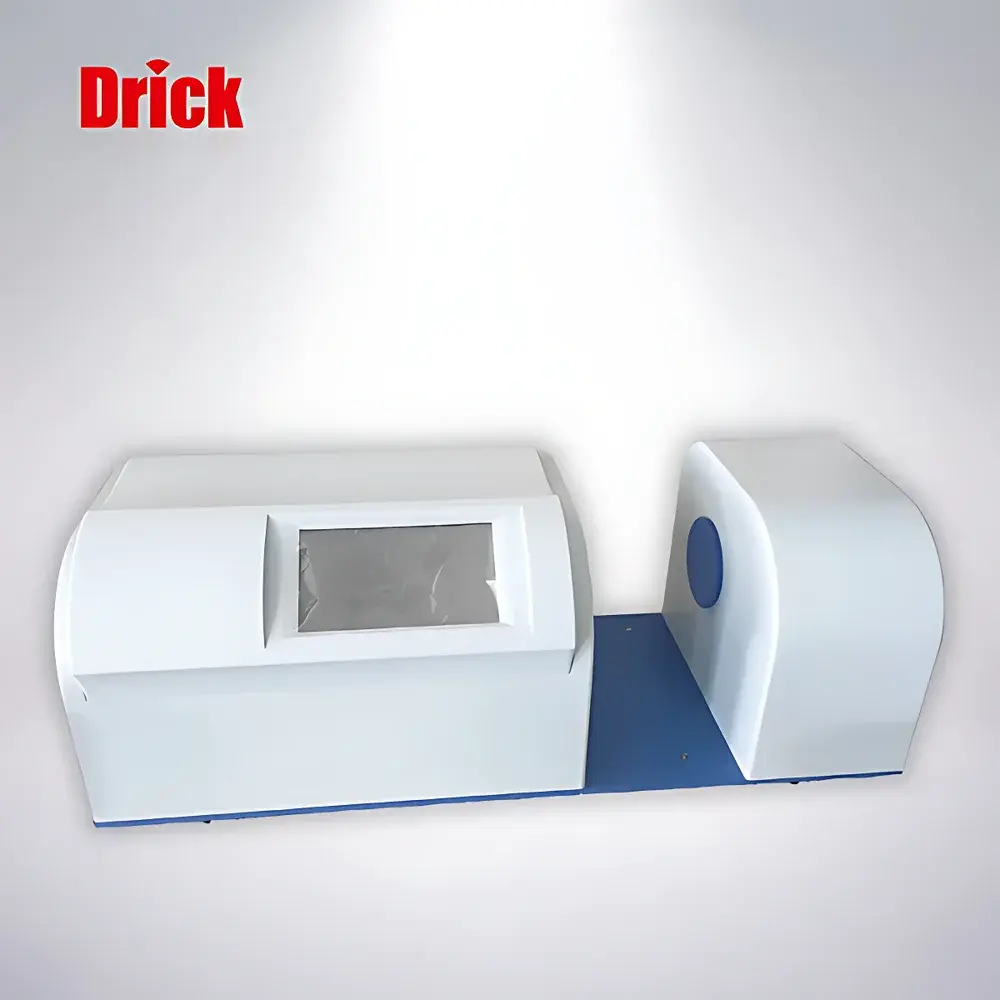
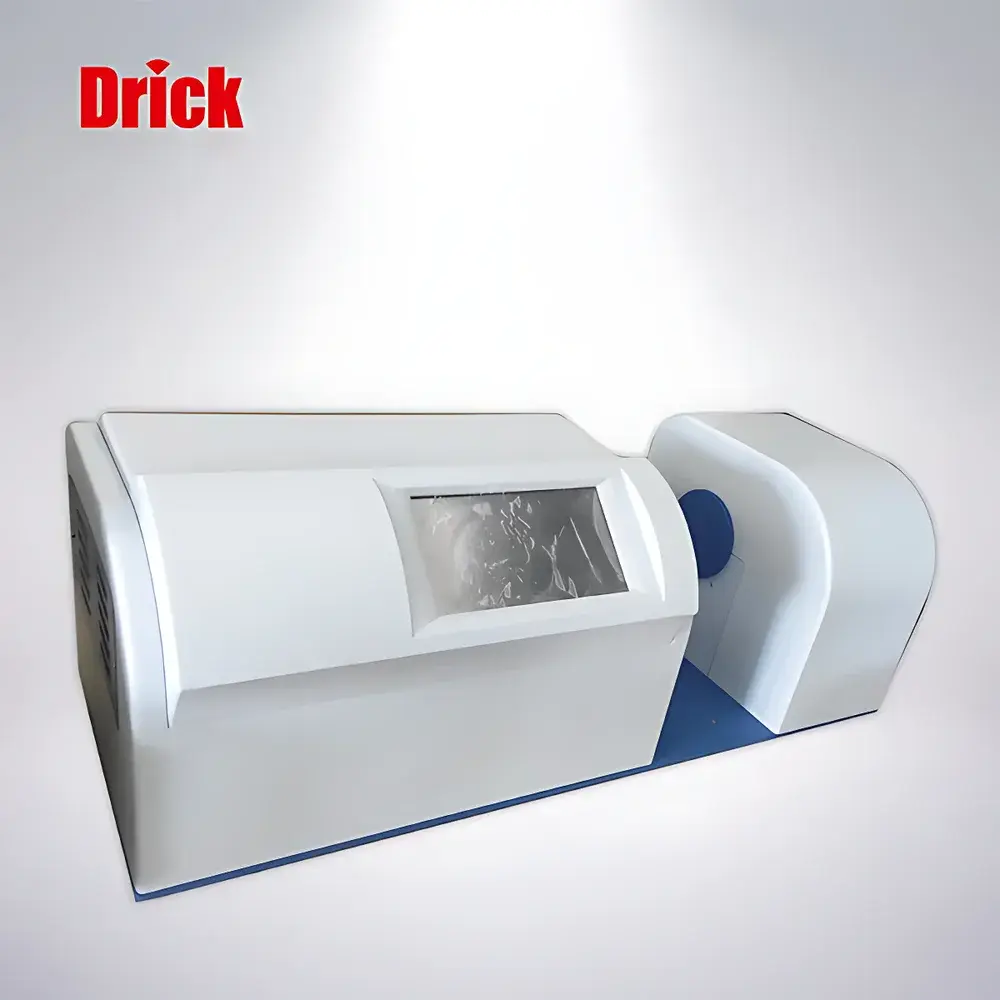
DRK122 Automatic Haze and Luminous Transmittance Meter
| Brand | Drick |
|---|---|
| Model | DRK122 |
| Measurement Principle | Integrating Sphere with C-Illuminant (6774 K) |
| Compliance | GB 2410–80, ASTM D1003–07 (not D1033), JIS K7105–81 |
| Transmittance Range | 0–100.0% (resolution: 0.1%) |
| Haze Range | 0–99.00% (0–30% absolute, 30–99% relative |
| resolution | 0.01%) |
| Repeatability | ±0.5% for transmittance, ≤±0.5% (or ±0.05% for low-haze samples) for haze |
| Sample Port Aperture | 25 mm (input), 21 mm (output) |
| Specimen Size | 50 mm × 50 mm (solid), 50 mm × 50 mm × 10 mm (liquid cell) |
| Light Source | 12 V / 50 W tungsten-halogen lamp with C-illuminant color correction filter |
| Detector | Silicon photodiode with photopic luminosity function (V(λ)) correction |
| Power Supply | 220 V AC, 50 Hz |
| Operating Temperature | 10–50 °C |
| Dimensions | 740 mm × 270 mm × 300 mm |
| Weight | Approx. 18 kg |
Overview
The DRK122 Automatic Haze and Luminous Transmittance Meter is a precision optical instrument engineered for quantitative evaluation of light transmission and scattering characteristics in transparent and translucent planar materials. It operates on the integrating sphere principle—employing a C-illuminant (6774 K) source and a V(λ)-corrected silicon photodiode detector—to comply strictly with internationally recognized standards including GB 2410–80, ASTM D1003–07 (Standard Test Method for Haze and Luminous Transmittance of Transparent Plastics), and JIS K7105–81. Unlike simplified photometric devices, the DRK122 implements true hemispherical diffuse reception geometry, enabling accurate separation of direct transmittance from scattered components to calculate both total luminous transmittance (%) and haze (%) as defined by ASTM D1003. Its microprocessor-controlled architecture eliminates manual calibration drift and ensures traceable, repeatable measurements across diverse industrial and quality control environments—from polymer sheet manufacturing to pharmaceutical packaging validation.
Key Features
- Integrating sphere optical design with parallel beam illumination and 2π solid-angle diffuse collection, optimized for compliance with ASTM D1003’s geometric requirements.
- Stable C-illuminant source (12 V / 50 W halogen lamp + chromaticity correction filter) maintained at 6774 K color temperature, ensuring spectral consistency aligned with CIE standard illuminants.
- V(λ)-weighted detection system using a calibrated silicon photodiode and photopic luminosity correction filter, meeting CIE 1931 standard observer specifications.
- Zero-drift electronics with auto-zero compensation and real-time signal averaging; transmittance resolution: 0.1%, haze resolution: 0.01%.
- Hinged sample port with 25 mm input / 21 mm output apertures—accommodates specimens up to 50 mm × 50 mm without mechanical repositioning or alignment fixtures.
- Integrated magnetic film holder and standardized liquid cuvette (50 mm × 50 mm × 10 mm) for rapid transition between solid and liquid sample modes.
- RS-232 serial interface compliant with industry-standard printer protocols; supports GLP-compliant hardcopy output with timestamped measurement records.
Sample Compatibility & Compliance
The DRK122 accepts rigid and flexible planar specimens—including acrylic sheets, polycarbonate films, PETG panels, tempered glass substrates, and laminated safety glazing—as well as homogeneous liquids such as purified water, ophthalmic solutions, parenteral formulations, edible oils, and dyed beverage concentrates. All measurements adhere to the geometric and photometric definitions established in ASTM D1003–07, which specifies that haze is calculated as the ratio of diffusely transmitted flux to total transmitted flux, expressed as a percentage. The instrument satisfies prerequisite conditions for ISO 13468–1 (Plastics — Determination of luminous transmittance) and provides data suitable for internal QC reporting, supplier qualification audits, and regulatory submissions requiring documented optical performance (e.g., USP , ISO 11607–1 packaging validation). Its design excludes stray-light artifacts common in non-integrating instruments, thereby supporting GMP-aligned measurement uncertainty budgets.
Software & Data Management
While the DRK122 operates as a standalone embedded system with front-panel LCD display and push-button navigation, its RS-232 interface enables bidirectional communication with external PCs running custom or third-party data acquisition software. Measurement logs include date/time stamps, operator ID fields (via optional keyboard input), and sequential run identifiers—facilitating audit-ready recordkeeping under FDA 21 CFR Part 11 (when paired with validated software). Raw analog-to-digital conversion values are accessible via protocol command set, permitting integration into MES or LIMS platforms. Firmware supports user-defined averaging cycles (1–9 measurements per test), automatic pass/fail flagging against configurable upper/lower limits, and CSV-formatted export for statistical process control (SPC) charting.
Applications
- Quality assurance of optical-grade polymers used in automotive lighting lenses, display cover glasses, and medical device housings.
- Batch release testing of pharmaceutical blister packaging films where moisture barrier integrity correlates with haze shift.
- Evaluation of anti-fog coating efficacy on greenhouse films and food packaging membranes.
- Turbidity assessment of sterile injectables and ophthalmic suspensions per USP light-scattering principles (calibrated via NIST-traceable haze standards).
- R&D screening of nanoparticle-dispersed composites, where haze serves as an indirect proxy for particle size distribution and interfacial refractive index mismatch.
- Validation of cleaning efficacy on optical surfaces—measuring residual film-induced scatter post-wipe protocols.
FAQ
Does the DRK122 comply with current ASTM D1003 editions?
Yes—the instrument conforms to ASTM D1003–07 (reapproved 2013), the latest active revision governing haze and transmittance measurement methodology.
Can it measure curved or non-planar samples?
No—per ASTM D1003, only flat, parallel-faced specimens are valid; curvature introduces angular deviation beyond the specified ±0.1° tolerance.
Is NIST-traceable calibration available?
Drick provides factory calibration certificates referencing certified haze standards (e.g., PMMA reference plates with assigned values traceable to NIST SRM 1979); on-site recalibration services are offered annually.
What is the minimum measurable haze value?
The instrument achieves a detection limit of 0.05% haze (absolute) with repeatability ≤0.05% for values below 0.5%, verified per ISO 5725–2 precision criteria.
How is liquid sample handling implemented?
A dedicated 10-mm pathlength quartz cuvette (50 mm × 50 mm footprint) ensures consistent beam geometry and minimizes meniscus-related scatter errors during turbidity-mode operation.




