
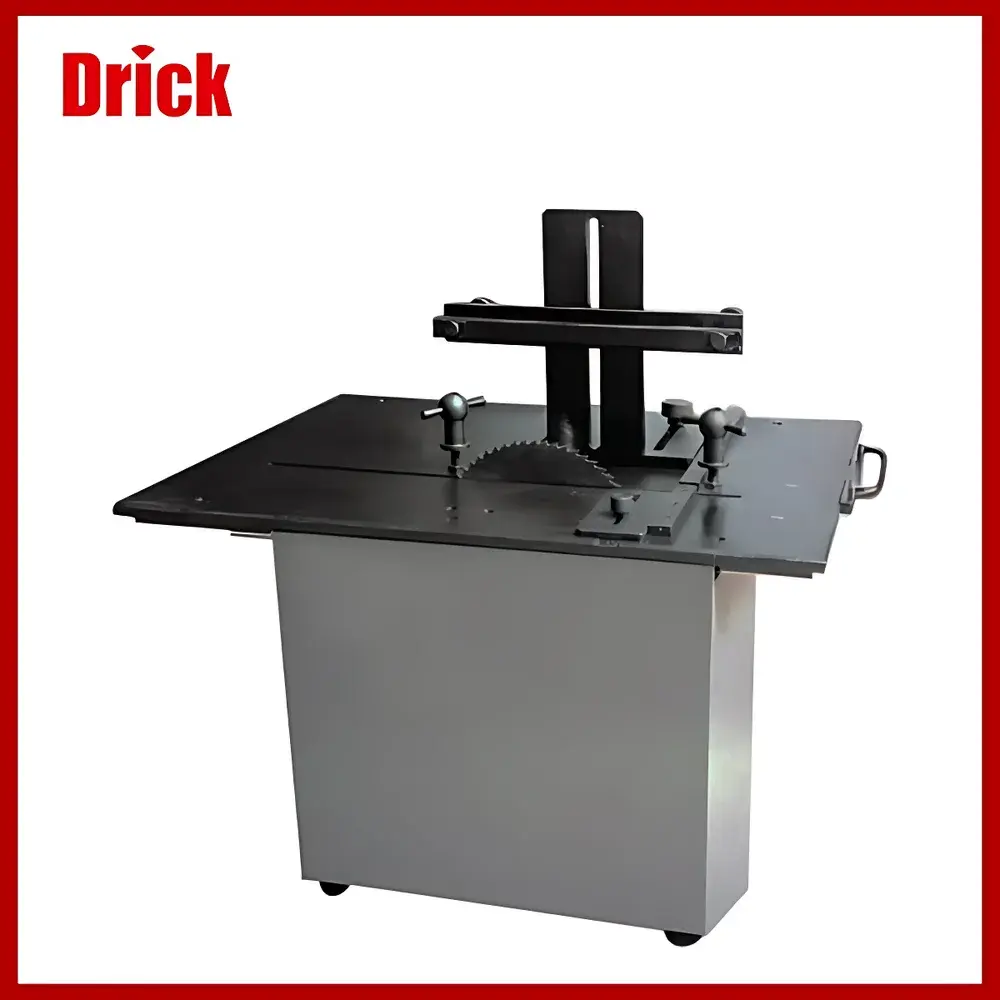
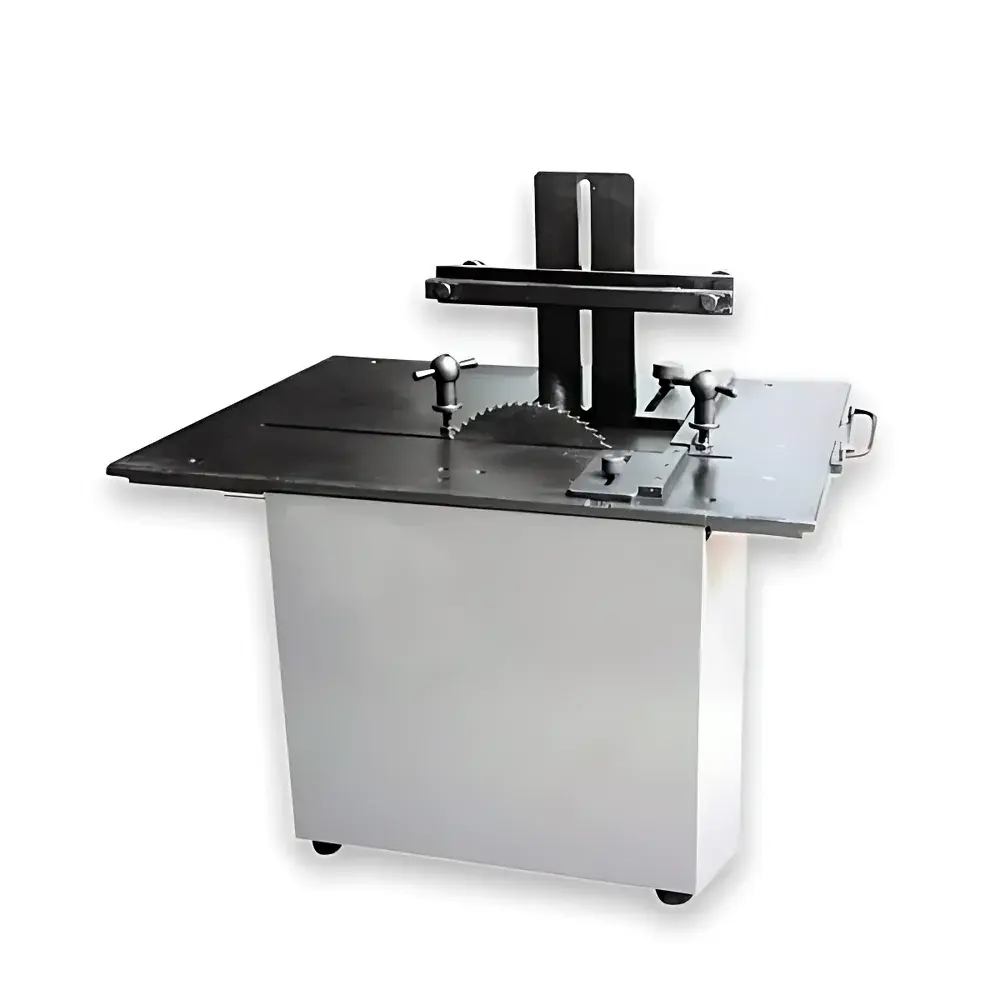
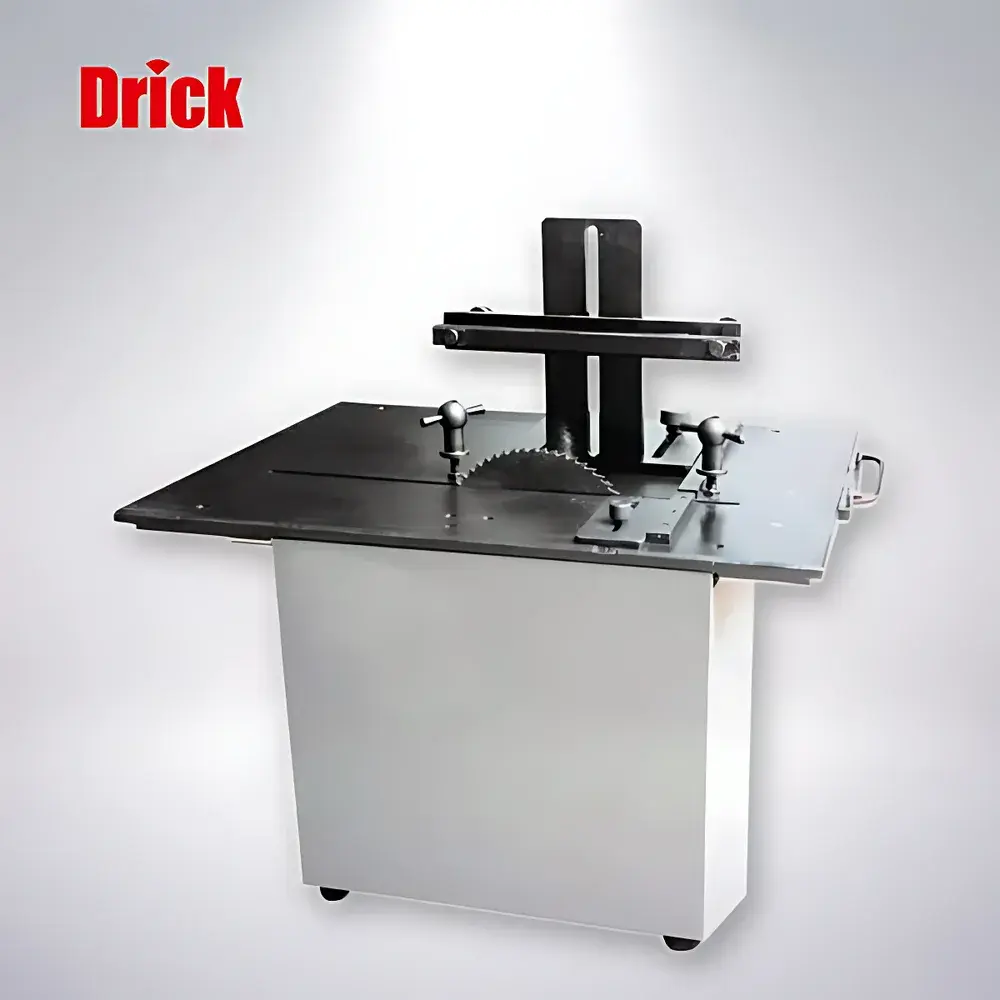
Drick DRK-I Precision Cutting Machine
| Brand | Drick |
|---|---|
| Origin | Shandong, China |
| Manufacturer Type | Direct Manufacturer |
| Country of Origin | China |
| Model | DRK-I |
| Instrument Type | Precision Cutting Machine |
| Max. Plate Thickness | 30 mm |
| Max. Plate Length | 160 mm |
| Max. Plate Width | 155 mm |
| Max. Pipe Diameter | Φ315 mm |
| Table Travel | 300 mm |
| Motor Power | 370 W, 3-Phase 380 V, 2800 rpm |
| Dimensions (L×W×H) | 590 × 440 × 480 mm |
| Net Weight | 80 kg |
Overview
The Drick DRK-I Precision Cutting Machine is an engineered solution for controlled, repeatable sample sectioning of non-metallic materials in laboratory and quality control environments. Designed around a rigid cast-iron base and guided linear motion system, it employs a high-torque, brushless three-phase induction motor to drive a precision-ground circular blade—enabling clean, burr-free cuts with minimal thermal distortion. Its operational principle relies on mechanical shear cutting under fixed feed rate and adjustable depth-of-cut, optimized for thermoplastics (e.g., PMMA, ABS, PVC), nylon, phenolic resins, and composite laminates. Unlike abrasive or thermal methods, this cold-cutting approach preserves intrinsic material structure and surface integrity—critical for subsequent tensile testing (ASTM D638), impact evaluation (ISO 179), or microscopy analysis. The machine is not intended for metallic substrates or fiber-reinforced composites exceeding 30 mm thickness, nor for continuous production-line integration.
Key Features
- Rigid structural frame with vibration-damped base plate ensures dimensional stability during extended operation.
- Adjustable vertical blade travel (0–30 mm) with micrometer-scale depth control for precise slice thickness repeatability.
- Manually indexed X-Y translation stage with engraved scale markings (0.1 mm resolution) and locking clamps for accurate positioning of plates and pipes.
- Integrated blade guard, emergency stop button, and interlocked safety cover meeting IEC 60204-1 requirements for electrical equipment of machines.
- Tool-free blade replacement system compatible with standard 250 mm diameter, 32 mm bore circular saw blades (recommended: carbide-tipped, 60–80 teeth).
- Front-access chip collection tray with anti-static lining to minimize dust dispersion during polymer cutting.
Sample Compatibility & Compliance
The DRK-I accommodates flat sheet specimens up to 160 mm × 155 mm × 30 mm and tubular samples with outer diameters up to Φ315 mm and wall thickness ≤25 mm. It supports standardized specimen preparation per ASTM D3043 (for reinforced plastics), ISO 293 (compression molding of thermoplastics), and GB/T 1040.1 (tensile testing of plastics). All mechanical and electrical components conform to CE marking directives (2006/42/EC Machinery Directive and 2014/30/EU EMC Directive). Documentation includes Factory Calibration Certificate (traceable to CNAS-accredited labs), RoHS Declaration of Conformity, and full electrical schematic diagrams for GLP audit readiness.
Software & Data Management
The DRK-I operates as a manually controlled, stand-alone instrument without embedded firmware or digital interface. All operational parameters—including cut sequence, feed direction, and depth settings—are recorded manually in laboratory notebooks or LIMS-compatible templates (e.g., CSV export from Excel-based SOP logs). For traceability, users are advised to implement dual-signature verification for setup validation and include photographic documentation of each cut edge prior to downstream testing. While no proprietary software is supplied, the device is fully compatible with electronic lab notebook (ELN) platforms supporting manual entry of instrument metadata (model, serial number, maintenance date) and operator ID.
Applications
- Preparation of dog-bone specimens for uniaxial tensile testing (ASTM D638, ISO 527-2).
- Cutting of pipe segments for ring crush testing (ASTM D2412) or hydrostatic pressure evaluation (ISO 1167).
- Sectioning of molded plaques for FTIR transmission cell fabrication or DSC sample encapsulation.
- Dimensional trimming of 3D-printed polymer parts prior to CT scanning or surface roughness measurement (ISO 4287).
- Controlled dissection of multilayer packaging films for peel strength substrate isolation (ASTM F904).
FAQ
Is the DRK-I suitable for cutting carbon-fiber reinforced polymer (CFRP) laminates?
No. The DRK-I is specifically engineered for non-reinforced and short-fiber thermoplastics. CFRP requires diamond-coated abrasive wheels and coolant delivery systems not supported by this platform.
Can the machine be operated on single-phase 220 V power?
No. The 370 W three-phase motor requires stable 380 V ±10%, 50 Hz supply. A phase converter or VFD-rated transformer is mandatory for regions without industrial three-phase infrastructure.
What blade specifications are recommended for optimal acrylic (PMMA) cutting?
A 250 mm diameter, 32 mm bore, 80-tooth carbide-tipped blade with 10° positive rake angle and laser-welded tips is recommended to minimize chipping and maintain edge clarity.
Does Drick provide calibration services or certified reference materials?
Yes. Annual recalibration—including table parallelism verification, blade runout measurement (<0.05 mm TIR), and depth-of-cut linearity check—is available through Drick’s CNAS-accredited service center (certificate issued per ISO/IEC 17025).
How is compliance with FDA 21 CFR Part 11 addressed for regulated labs?
As a non-computerized instrument, the DRK-I falls outside Part 11 scope. However, its use in GMP environments requires documented SOPs, operator training records, and maintenance logs—all maintained externally in validated ELN or QMS systems.



