
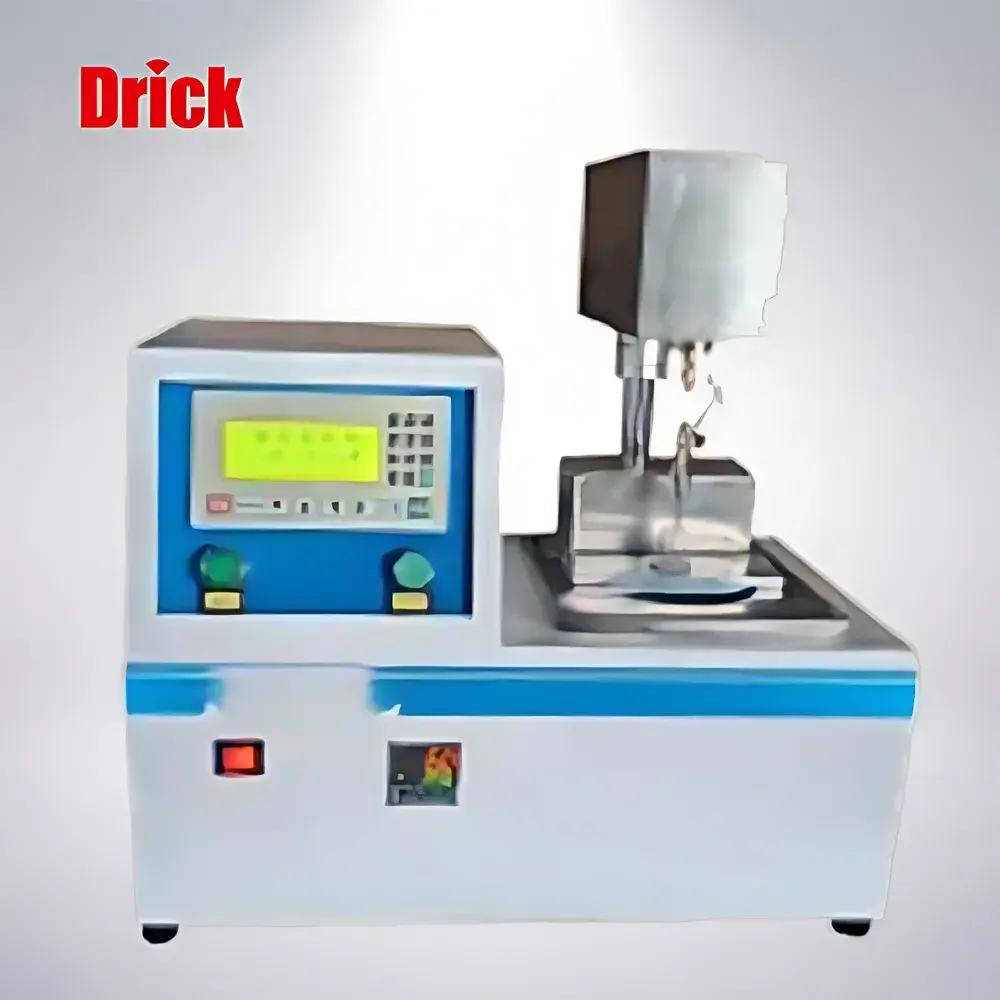
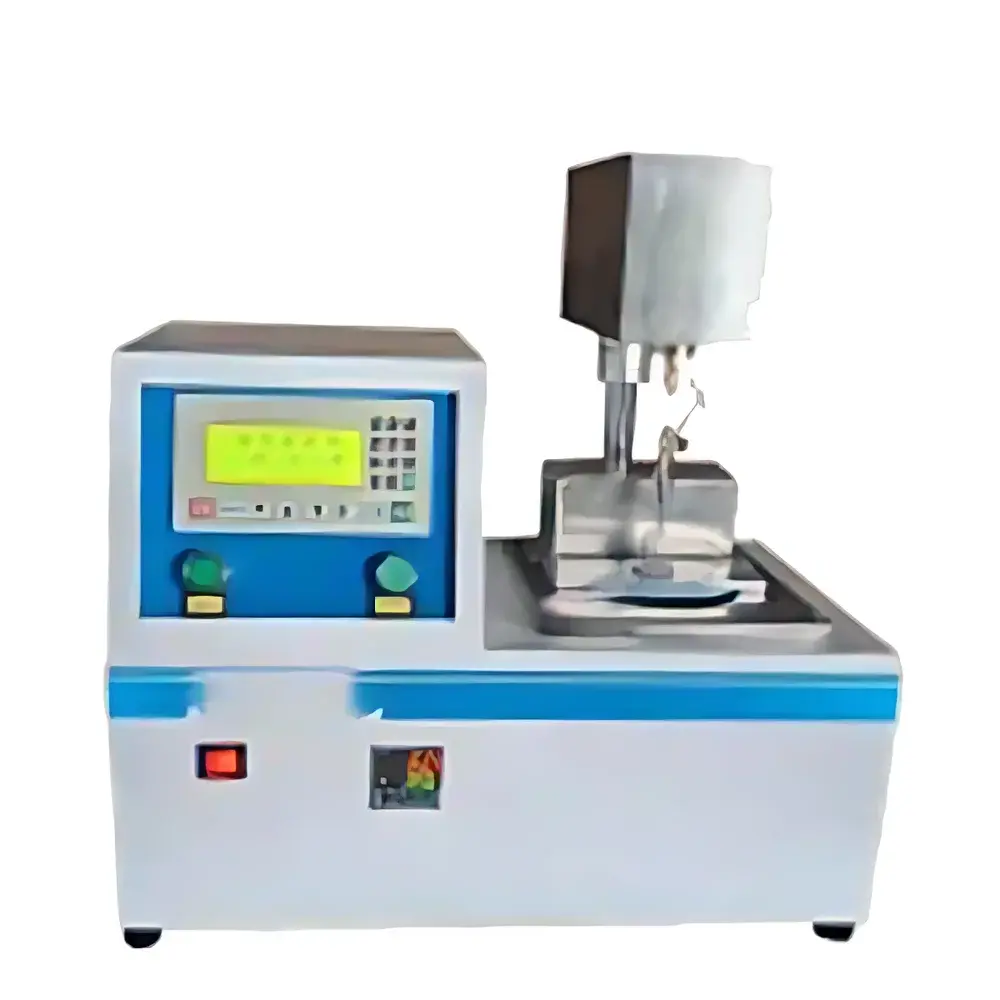
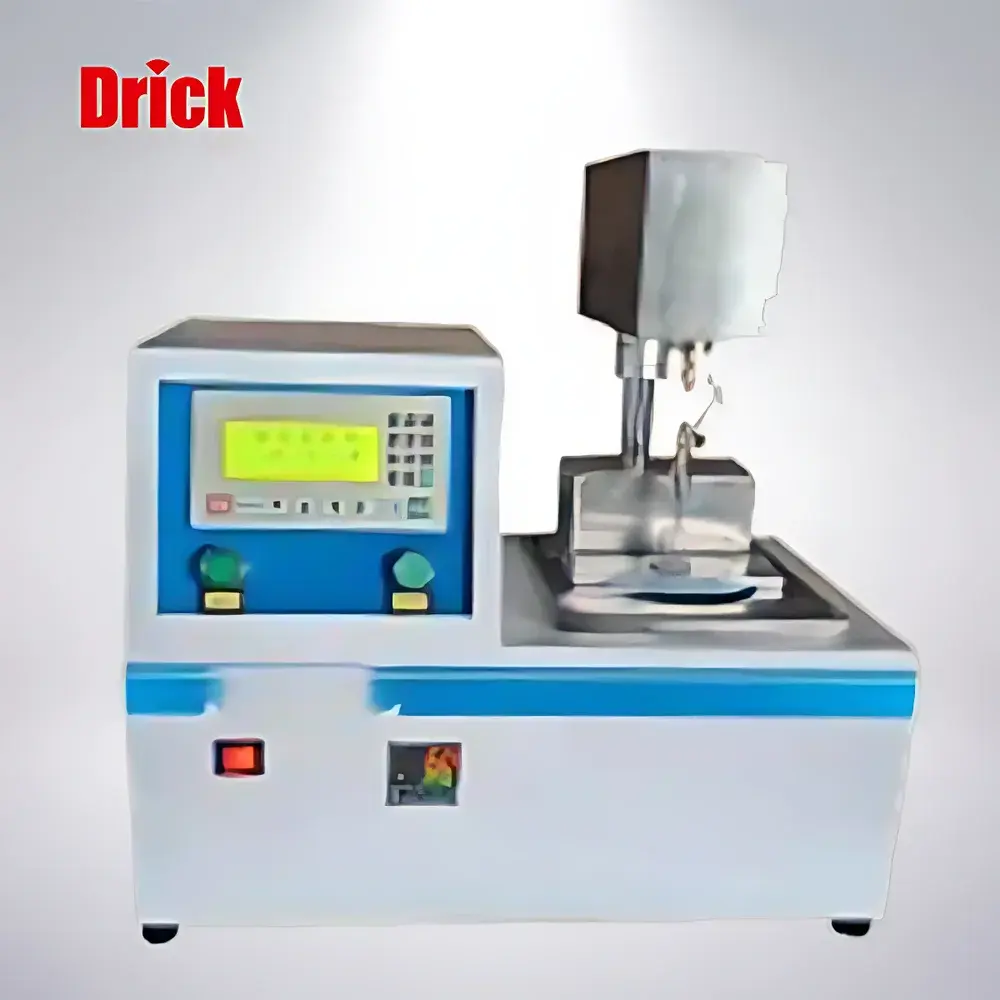
Drick DRK-GT6 Automatic Gel Time Tester
| Brand | Drick |
|---|---|
| Model | DRK-GT6 |
| Origin | Shandong, China |
| Manufacturer Type | Direct Manufacturer |
| Country of Origin | China |
| Stirring Speed | 5 rpm |
| Temperature Resolution (Bath) | 0.1 °C |
| Operating Temperature Range | 20–300 °C (medium-dependent) |
| Bath Dimensions | 180 × 120 × 160 mm |
| Timer Range | 0–999.9 s or 0–99.99 min |
| Stirring Rod | Glass, 6 × 200 mm |
| Test Tube | Glass, 18 × 180 mm |
| Power Supply | 220 V, 50 Hz, 400 W, Single-phase |
Overview
The Drick DRK-GT6 Automatic Gel Time Tester is a precision laboratory instrument engineered for the quantitative determination of gelation onset in thermosetting resins—primarily unsaturated polyester and epoxy systems—under controlled thermal conditions. It operates on the fundamental rheological principle that gelation corresponds to the critical point at which a liquid resin transitions from Newtonian or pseudoplastic behavior to a viscoelastic solid network, manifested as a measurable increase in torque resistance against constant-speed mechanical agitation. The DRK-GT6 implements this principle via a motor-driven glass stirrer rotating at a fixed speed of 5 rpm inside a temperature-regulated bath; real-time detection of the abrupt rise in rotational resistance triggers automatic timer termination and visual indication at the gel point. This method aligns with ASTM D2471 and ISO 2535 standards for gel time assessment in reactive polymer systems, offering traceable, operator-independent results essential for QC/QA workflows in composites manufacturing, adhesive formulation, and coating R&D.
Key Features
- Automated gel point detection based on torque threshold sensing—eliminates subjective endpoint judgment and ensures measurement repeatability within ±1% CV (coefficient of variation) across replicate runs.
- Integrated digital temperature-controlled bath with 0.1 °C resolution and stable setpoint maintenance across the full 20–300 °C operating range (dependent on heat-transfer medium such as silicone oil or ethylene glycol).
- Dual-range high-resolution timer: selectable display modes covering 0–999.9 seconds (0.1 s resolution) or 0–99.99 minutes (0.01 min resolution), supporting both rapid-cure and slow-cure resin characterization.
- Optimized mechanical design featuring borosilicate glass stirring rods (6 mm Ø × 200 mm L) and standardized test tubes (18 mm Ø × 180 mm L), ensuring consistent shear geometry and minimizing wall effects during testing.
- Self-terminating measurement protocol: system automatically halts timing and activates visual indicator (LED or LCD prompt) precisely at detected gel point—preventing overestimation due to post-gel viscosity drift.
- Robust single-phase power architecture (220 V, 50 Hz, 400 W) with thermal overload protection, suitable for continuous operation in ISO/IEC 17025-accredited laboratories.
Sample Compatibility & Compliance
The DRK-GT6 is validated for use with low-to-medium viscosity thermoset precursors including epoxy resins, vinyl ester, unsaturated polyester, phenolic prepolymers, and certain polyurethane systems. Its open-bath configuration allows direct insertion of standard glassware without sample encapsulation, enabling rapid turnaround between tests and compatibility with volatile or moisture-sensitive formulations. All wetted components are chemically inert borosilicate glass, minimizing catalytic interference or surface adsorption artifacts. The instrument meets general requirements for laboratory equipment under IEC 61010-1 (Safety Requirements for Electrical Equipment for Measurement, Control, and Laboratory Use). While not certified for GLP or FDA 21 CFR Part 11 compliance out-of-the-box, its deterministic endpoint logic and non-volatile timer memory support audit-ready documentation when integrated into validated SOPs aligned with ISO 9001 or ISO 13485 quality management systems.
Software & Data Management
The DRK-GT6 operates as a standalone hardware platform with embedded microcontroller-based firmware—no external PC or proprietary software is required for basic operation. All timing and temperature data are retained in non-volatile memory and displayed locally on an integrated LCD interface with backlighting for ambient readability. For laboratories requiring electronic record retention, optional RS-232 or USB-to-serial interface modules (available as accessories) enable ASCII-formatted timestamped output (e.g., “GEL_TIME=42.78_min|TEMP_SET=120.0_C|DATE=2024-06-15”) compatible with LIMS or ELN platforms. Audit trail functionality—including operator ID tagging and parameter change logging—is implementable via external middleware when connected to compliant enterprise systems.
Applications
- Quality control of incoming resin batches against supplier specifications (e.g., verifying shelf-life stability or catalyst activity consistency).
- Formulation development for curatives, accelerators, and inhibitors—quantifying kinetic impact of additive concentration changes.
- Process validation of cure cycles in composite layup, filament winding, or RTM molding operations.
- Accelerated aging studies assessing thermal degradation effects on resin reactivity.
- Educational use in polymer science laboratories for demonstrating sol-gel transition theory and Arrhenius-based activation energy modeling.
FAQ
What resin types are compatible with the DRK-GT6?
The instrument is optimized for thermosetting resins exhibiting measurable viscosity rise during cure—including epoxies, unsaturated polyesters, vinyl esters, and phenolics. It is not intended for thermoplastics, elastomers, or highly filled systems where particle interference may distort torque response.
Can the DRK-GT6 be used with non-aqueous heating media?
Yes—its bath is designed for immersion in silicone oil, glycerol, or ethylene glycol up to 300 °C. Users must select media with appropriate flash point, thermal stability, and viscosity to ensure uniform heat transfer and stirrer mobility.
Is calibration traceable to national standards?
Temperature calibration is performed using NIST-traceable RTD probes; timebase accuracy is derived from quartz-crystal oscillator circuits with ±10 ppm stability. Full calibration certificates (including uncertainty budgets) are available upon request with optional service contracts.
Does the system support multi-sample sequential testing?
While the DRK-GT6 is a single-station unit, its rapid cooldown capability (<15 min from 200 °C to 40 °C with air assist) and plug-and-play tube/stirrer exchange enable high-throughput batch testing when paired with standardized lab protocols.





