
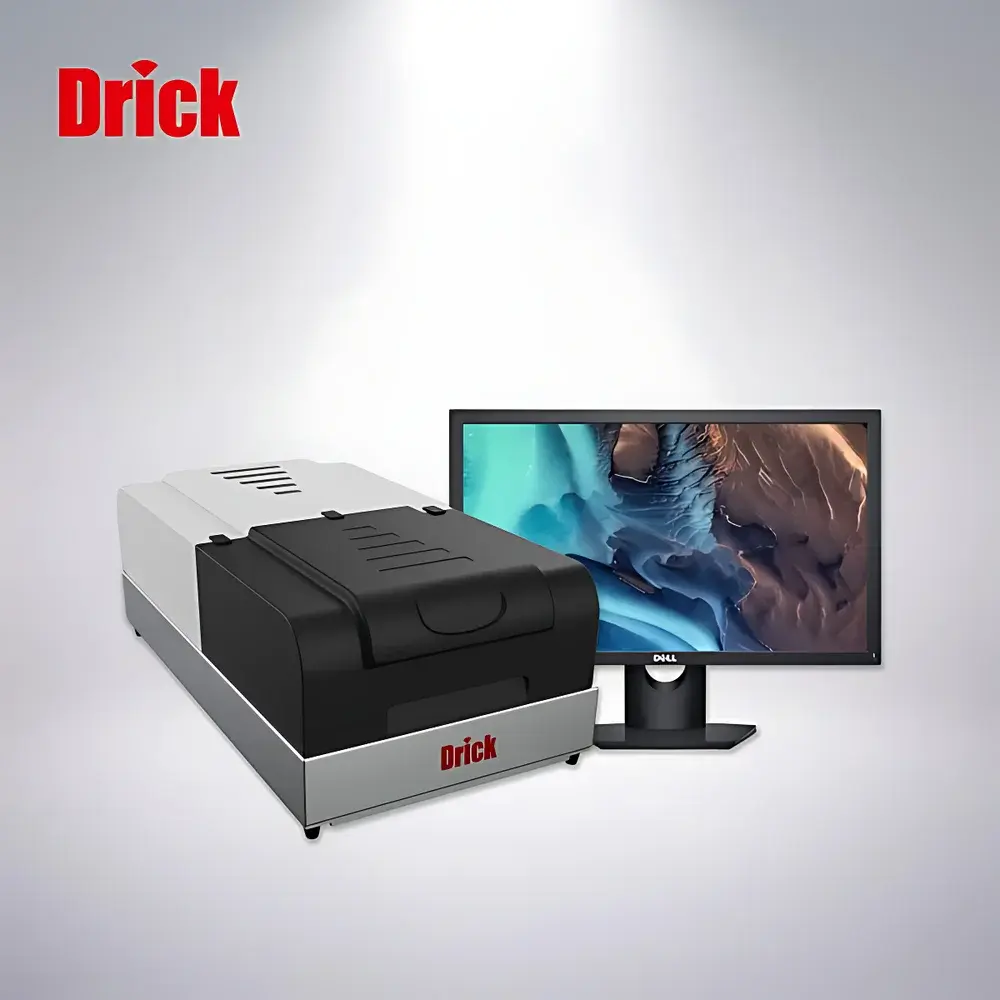
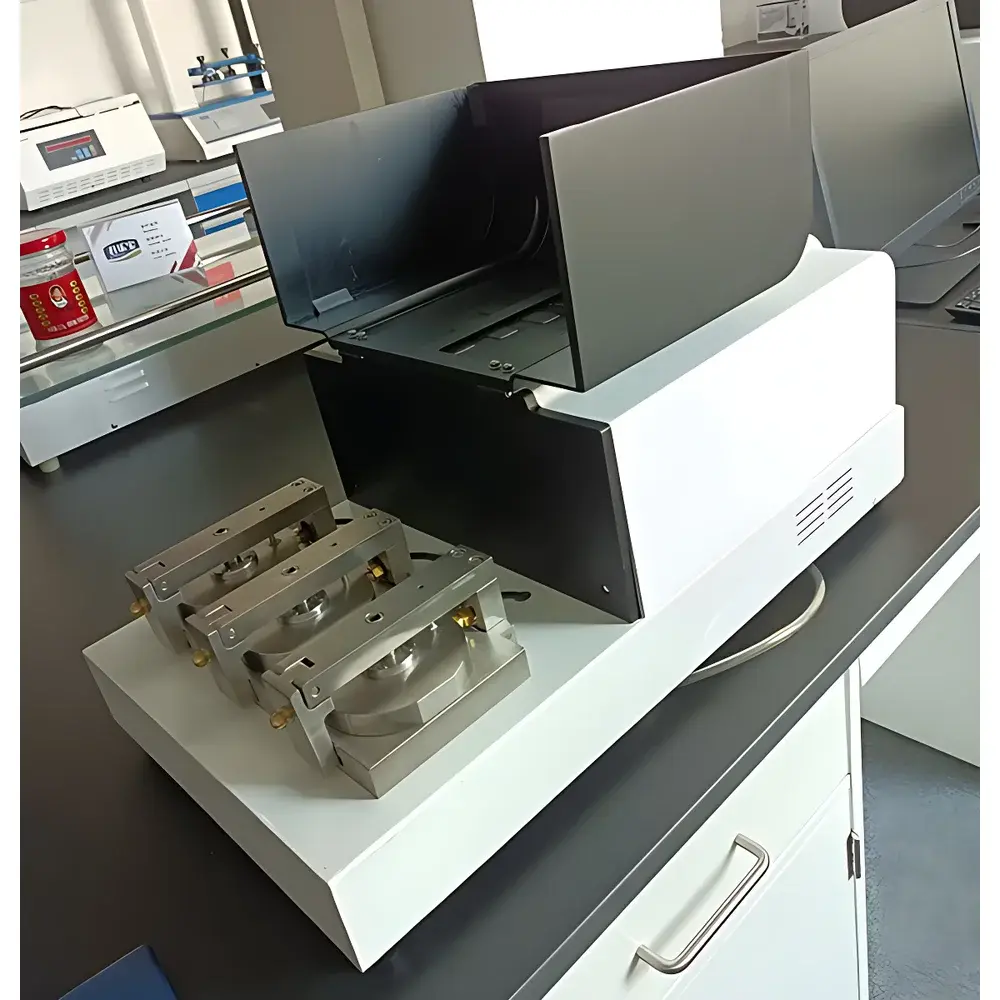
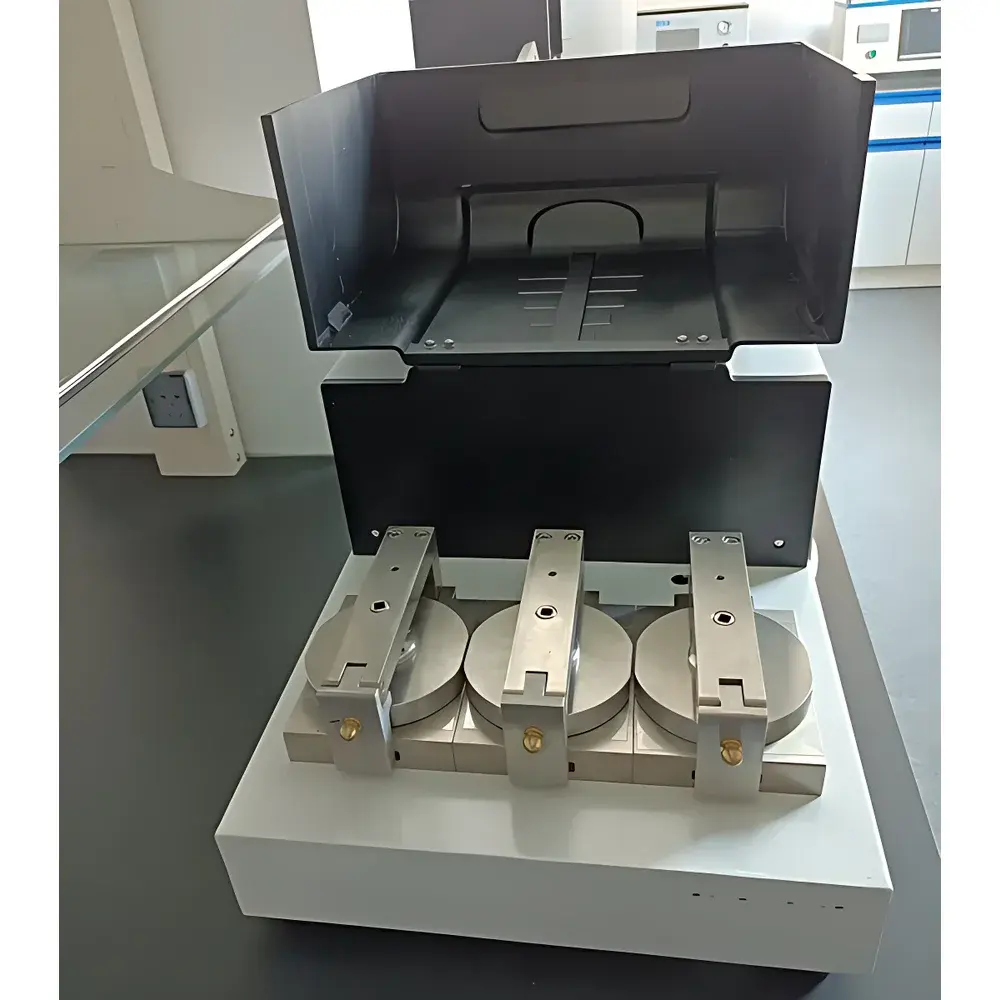
Drick DRK310 Triple-Chamber Differential-Pressure Gas Permeability Analyzer (Compliant with GB/T 1038)
| Brand | Drick |
|---|---|
| Origin | Shandong, China |
| Manufacturer Type | Direct Manufacturer |
| Region of Origin | Domestic (China) |
| Model | DRK 310 |
| Pricing | Upon Request |
| Measurement Range | 0.005–10,000 cm³/m²·day·0.1 MPa |
| Measurement Uncertainty | ±0.005 cm³/m²·day·0.1 MPa |
| Specimen Quantity | 3 independent test chambers |
| Vacuum Sensor Count | 1 |
| Vacuum Accuracy | ±0.1 Pa |
| Vacuum Range | 0–1333 Pa |
| Ultimate Vacuum Level | <20 Pa |
| Vacuum Pumping Time | ≤10 min to <27 Pa |
| Max. Specimen Thickness | ≤3 mm |
| Test Area per Chamber | 45.34 cm² (circular) |
| Calibration Method | Certified Reference Film |
| Compatible Test Gases | O₂, N₂, CO₂, and other non-corrosive or low-toxicity gases |
| Test Pressure Range | 0.005–0.15 MPa |
| Gas Inlet Port | Ø6 mm |
| Supply Gas Pressure | 0.5–0.8 MPa |
| Power Supply | AC 220 V, 50 Hz |
| Power Consumption | <1500 W |
| Dimensions (L×W×H) | 680 × 380 × 270 mm |
| Net Weight | 60 kg |
Overview
The Drick DRK310 Triple-Chamber Differential-Pressure Gas Permeability Analyzer is an engineered solution for precise, reproducible determination of gas transmission rates (GTR) through polymeric films, laminates, foils, rubber sheets, and high-barrier packaging materials. It operates on the differential-pressure (manometric) principle in strict accordance with GB/T 1038—China’s national standard for plastic film and sheet gas permeability testing—and is fully compatible with international protocols including ASTM D1434, ISO 2556, ISO 15105-1, JIS K7126-A, and YBB 00082003. The instrument establishes a controlled pressure gradient across a conditioned specimen sealed between high- and low-pressure chambers. As gas permeates from the high-pressure side to the evacuated low-pressure side, the progressive rise in low-chamber pressure is monitored via a high-stability vacuum transducer. This real-time pressure increase—corrected for system volume, temperature, and leakage—is mathematically integrated to calculate the steady-state gas transmission rate (in cm³/m²·day·0.1 MPa), enabling quantitative comparison of barrier performance across material batches and formulations.
Key Features
- Triple independent test chambers enable simultaneous, parallel evaluation of three specimens—significantly improving throughput and statistical robustness for QC laboratories.
- High-accuracy vacuum sensing (±0.1 Pa) and dynamic leakage compensation algorithm eliminate baseline drift caused by mechanical seal relaxation or adsorption/desorption artifacts.
- Bidirectional thermostatic control of integrated constant-temperature bath ensures thermal stability within ±0.1 °C—critical for minimizing vapor-phase interference and maintaining measurement repeatability without requiring external HVAC infrastructure.
- Dedicated toxic-gas exhaust pathway with passive venting and flow-limiting valves mitigates operator exposure risk during O₂, CO₂, or N₂ testing—fully compliant with OSHA 29 CFR 1910.1200 and IEC 61000-6-4 electromagnetic compatibility standards.
- Automated pressure regulation system maintains stable differential pressure (0.005–0.15 MPa) across the full test range using proportional solenoid valves and closed-loop feedback control.
- Integrated computing platform includes embedded industrial PC, 21.5″ display, and pre-installed permeability analysis software—no external workstation required.
- Self-diagnostic boot sequence verifies sensor integrity, valve actuation, vacuum integrity, and thermal calibration prior to test initiation.
Sample Compatibility & Compliance
The DRK310 accommodates rigid and flexible planar specimens up to 3 mm thick and 45.34 cm² in circular test area (Ø76 mm). It supports standardized formats for plastic films, metallized PET/PE laminates, aluminum foil composites, ethylene-vinyl alcohol (EVOH) barriers, silicone-coated papers, and vulcanized rubber sheets. All test procedures adhere to GLP-aligned documentation practices. Optional GMP-compliant software module provides role-based user access control, electronic signatures, audit trail generation (per FDA 21 CFR Part 11), and immutable data archiving—validated for use in pharmaceutical primary packaging qualification (e.g., blister foil, cold-form foil, sachet films) and medical device packaging validation per ISO 11607-1.
Software & Data Management
The proprietary PermeaSoft™ v4.2 platform delivers full-cycle test automation: parameter definition, chamber evacuation, gas pressurization, real-time pressure logging, automatic endpoint detection, and ASTM/ISO-compliant report generation. All raw pressure-time datasets are stored in encrypted SQLite databases with timestamped metadata (operator ID, environmental log, calibration certificate ID). Graphical overlays allow comparative visualization of multiple runs; export options include CSV, PDF, and XML formats compatible with LIMS integration. Audit trails record every data modification—including deletion attempts—with IP address, timestamp, and user credentials. Backup is performed automatically to internal SSD and optionally to network-attached storage (NAS) via configurable SMB protocol.
Applications
- Quality control of food packaging films (e.g., MAP trays, vacuum pouches, snack bags) to verify shelf-life modeling assumptions.
- R&D screening of novel barrier coatings (SiOₓ, AlOₓ, graphene oxide dispersions) applied via PVD, CVD, or slot-die coating.
- Regulatory submission support for pharmaceutical packaging dossiers (e.g., USP , Ph. Eur. 3.2.1) requiring OTR/CO₂TR data under defined T/RH conditions.
- Accelerated aging correlation studies linking accelerated permeability tests at elevated temperature to real-time stability data.
- Supplier qualification audits where batch-to-batch consistency of multilayer extrusions must be verified against contractual GTR limits.
FAQ
What gases can be tested on the DRK310?
O₂, N₂, CO₂, and other non-corrosive gases are supported. For low-toxicity gases (e.g., SO₂, H₂S), optional exhaust filtration and local ventilation integration are recommended.
Is humidity control built-in?
No—humidity conditioning is not integrated; however, optional external RH control units (DRK-HU100) can be coupled via serial interface to maintain defined relative humidity on the test gas side per ISO 15105-2.
Can the DRK310 perform tests per ASTM F1927?
No—ASTM F1927 specifies MOCON-type coulometric sensors for O₂ only; the DRK310 uses manometric detection and complies with ASTM D1434 (differential-pressure method) instead.
How is calibration traceability maintained?
Each unit ships with NIST-traceable certified reference films (CRF) for O₂ and N₂, accompanied by calibration certificates valid for 12 months. Internal verification routines run at startup and after each test cycle.
What maintenance is required?
Vacuum pump oil replacement every 500 hours; O-ring inspection and greasing every 6 months; annual sensor recalibration by authorized service center.






