
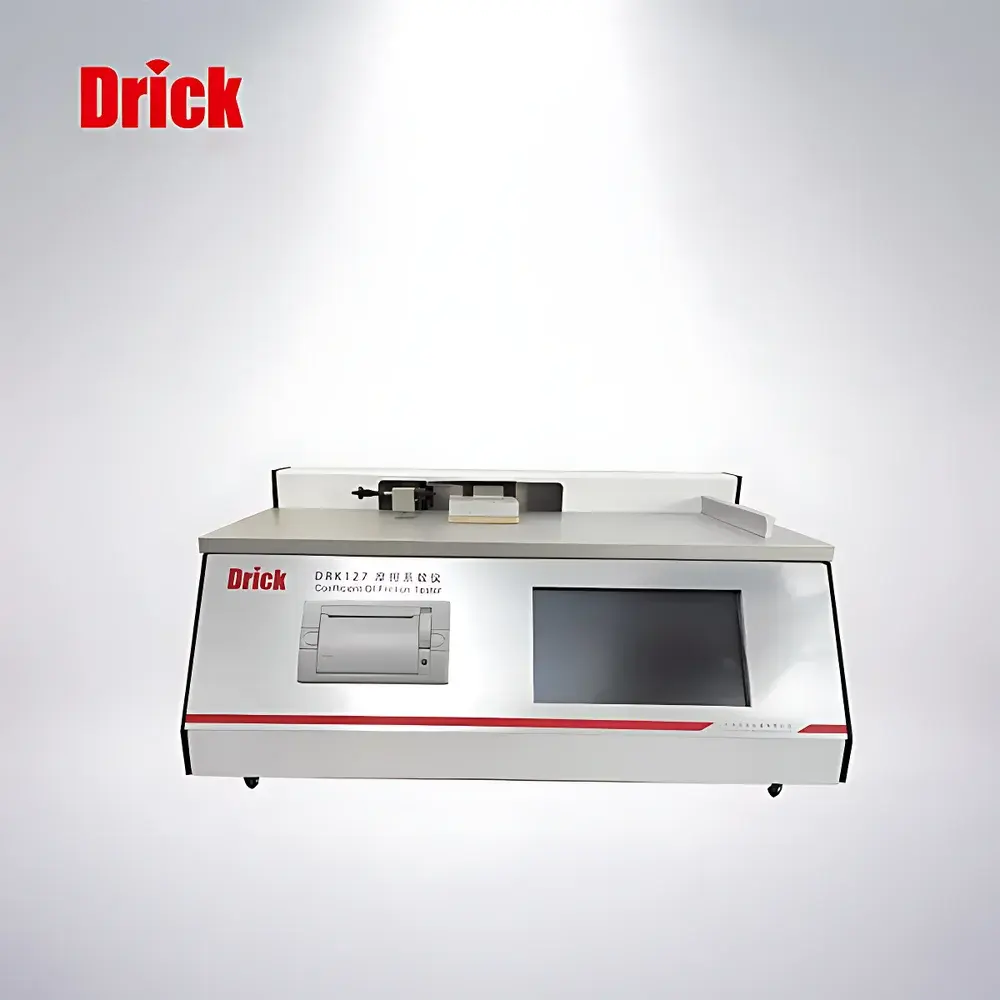
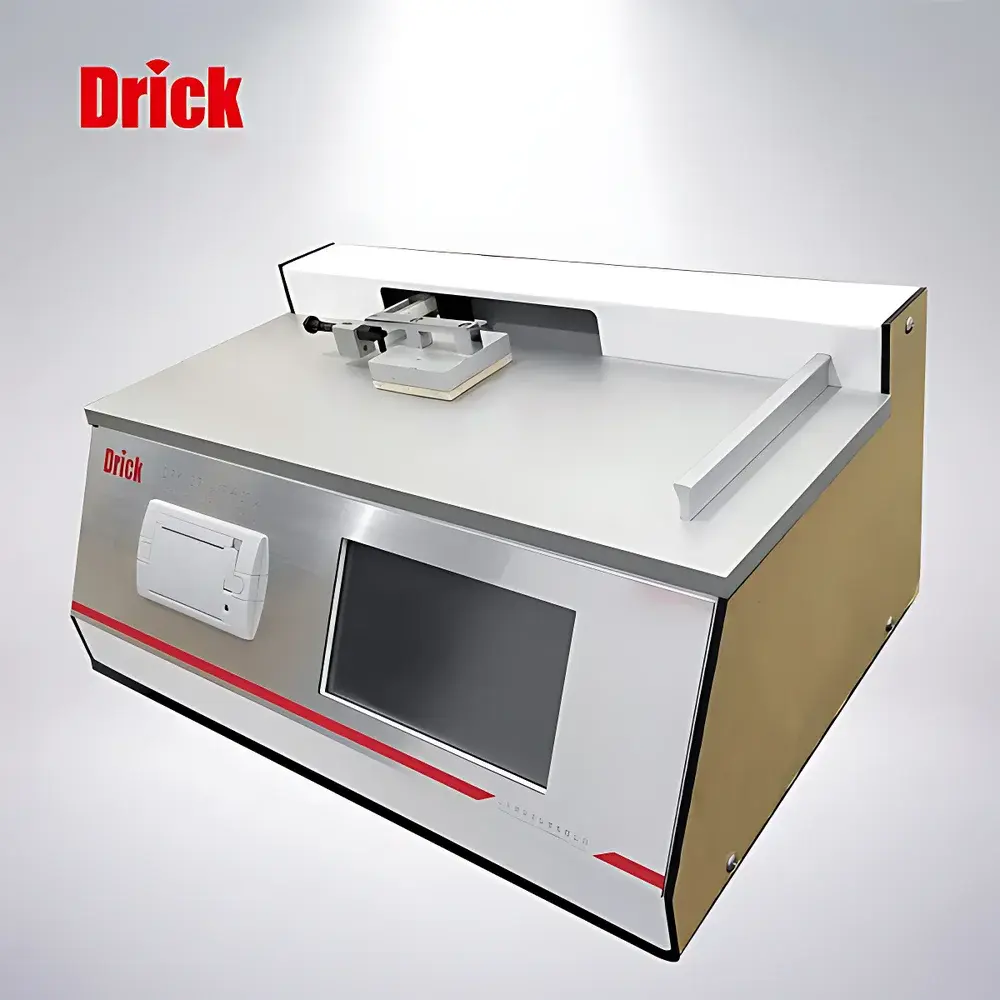
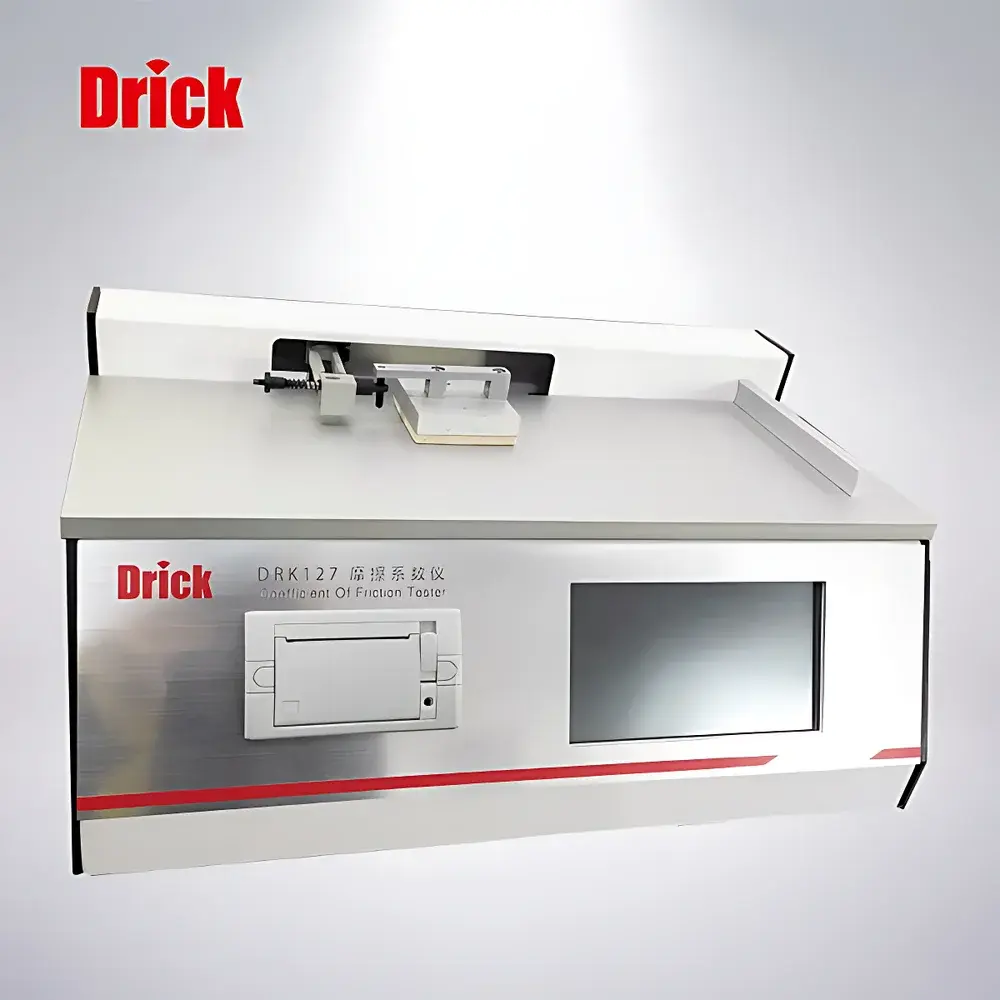
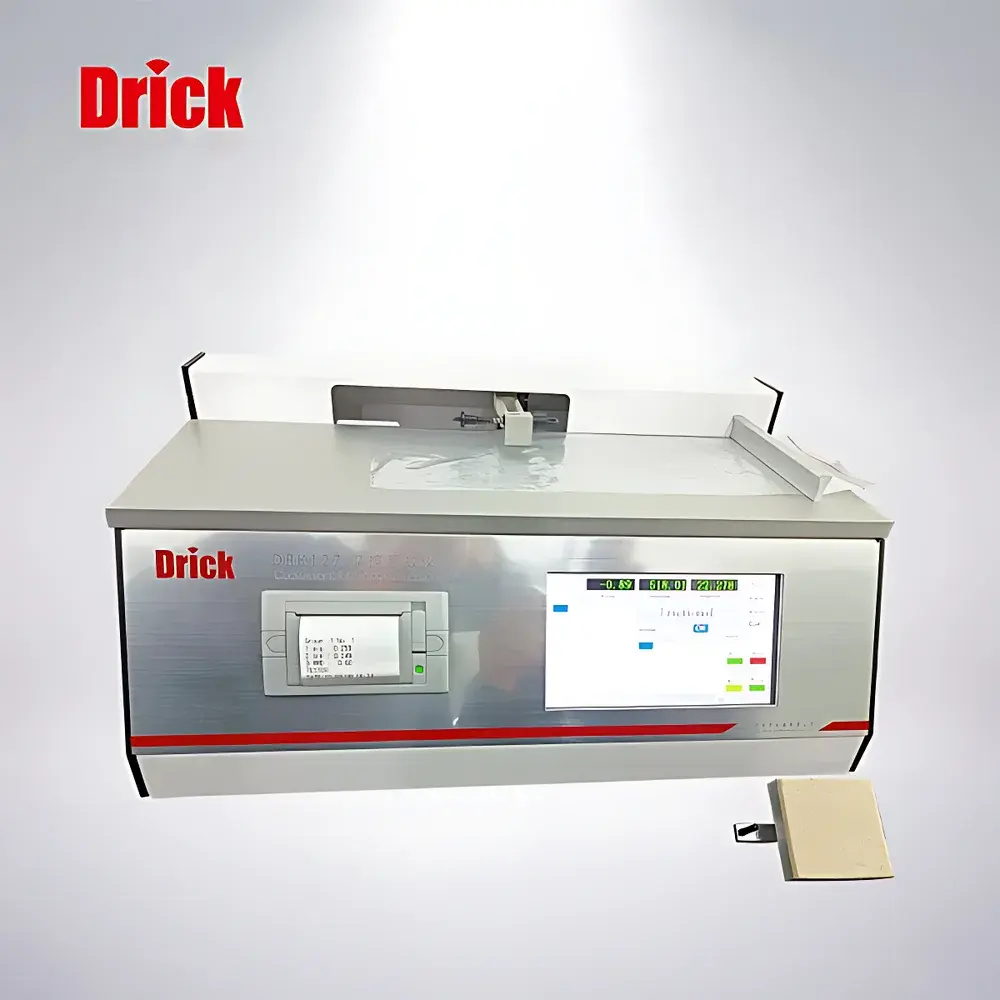
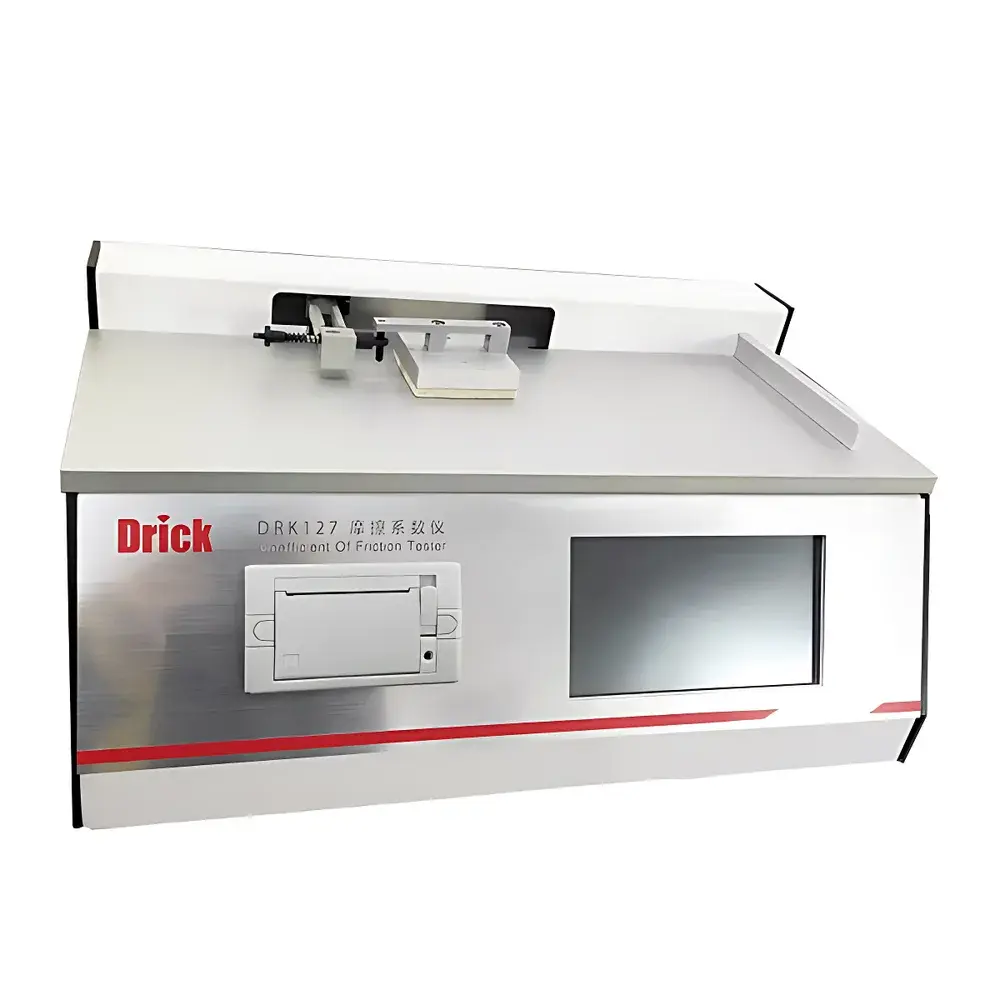
Drick DRK127 High-Precision Intelligent Coefficient of Friction Tester
| Key | Brand: Drick |
|---|---|
| Origin | Shandong, China |
| Manufacturer Type | Manufacturer |
| Country of Origin | China |
| Model | DRK 127 |
| Load Range | 0–5 N |
| Accuracy Class | 0.5 |
| Travel Distance | 70 mm or 140 mm |
| Slider Mass | 200 g (standard, customizable) |
| Test Speed | 150 mm/min |
| Operating Temperature | 15–30 °C |
| Relative Humidity | 20–80 % RH |
| Dimensions (L×W×H) | 470 × 300 × 190 mm |
| Net Weight | 20 kg |
| Power Supply | Standard AC input (included) |
| Compliance | GB 10006, GB/T 17200, ISO 8295, ASTM D1894, TAPPI T816 |
Overview
The Drick DRK127 High-Precision Intelligent Coefficient of Friction Tester is a microprocessor-controlled instrument engineered for accurate and repeatable measurement of static (μs) and kinetic (μk) coefficients of friction between two solid surfaces—primarily used in packaging material evaluation. It operates on the fundamental principle of horizontal pull testing: a standardized slider is placed atop a stationary test specimen and drawn at a constant linear velocity while force transducers record the peak (static) and sustained (kinetic) resistance forces. These values are automatically normalized against the normal load to compute dimensionless friction coefficients per internationally recognized mechanical test protocols. Designed for laboratory- and QC-floor deployment, the DRK127 integrates precision electromechanical actuation with real-time digital signal acquisition and onboard arithmetic processing—ensuring traceable, operator-independent results compliant with standard-defined test geometries and boundary conditions.
Key Features
- Microcontroller-based architecture with embedded firmware supporting automatic zero calibration, load compensation, and real-time force sampling at ≥1 kHz
- Dual-range load cell (0–5 N) certified to accuracy class 0.5 per ISO 376, enabling high-resolution detection of sub-mN-level friction transitions
- Programmable travel distance (70 mm or 140 mm) to accommodate both short-stroke validation tests and extended sliding assessments per ASTM D1894 Annex A1
- Fixed-speed drive system delivering stable 150 mm/min translation—mechanically synchronized to minimize velocity ripple (< ±0.5 %) and ensure adherence to ISO 8295 Clause 6.3
- Modular slider platform accepting standardized 200 g mass (ISO-compliant) with optional 500 g configuration for elevated normal load studies
- Integrated thermal and humidity monitoring sensors (15–30 °C / 20–80 % RH) with data logging capability to support environmental correlation in GLP-compliant reporting
- Front-panel LCD interface with menu-driven navigation, parameter recall, and on-device result display—including μs, μk, and coefficient deviation statistics
Sample Compatibility & Compliance
The DRK127 accommodates flat, flexible, and semi-rigid packaging substrates including polyethylene (PE), polypropylene (PP), polyester (PET), aluminum foil laminates, coated paperboard, and printed film composites. Specimen dimensions must conform to minimum 60 mm × 100 mm footprint requirements as stipulated in GB 10006 and ISO 8295. All mechanical and procedural parameters—including slider geometry (63 mm × 63 mm contact area), surface finish (Ra ≤ 0.8 µm), and preload application method—are aligned with harmonized test standards. Instrument validation documentation includes factory calibration certificates traceable to national metrology institutes, and full compliance evidence for GB/T 17200 (tensile and friction testing machines), ASTM D1894 (plastic film and sheeting), and TAPPI T816 (paper and board friction). The system supports audit-ready operation under ISO/IEC 17025-accredited laboratories and satisfies baseline requirements for FDA-regulated packaging qualification per 21 CFR Part 11 when paired with secure data export workflows.
Software & Data Management
While the DRK127 operates autonomously via its embedded controller, optional PC connectivity (RS-232 or USB) enables raw force/time data streaming and post-test analysis using Drick’s proprietary CoFStudio software. This Windows-based application provides curve visualization, statistical summary (mean, SD, CV%), pass/fail threshold assignment per specification limits, and PDF report generation with embedded metadata (operator ID, timestamp, environmental logs, calibration status). All exported datasets retain full audit trail integrity—including modification history, user login records, and electronic signatures—meeting foundational expectations for 21 CFR Part 11 compliance in regulated environments. Data files are stored in open CSV format for third-party integration with LIMS or ERP platforms.
Applications
- Quality control of roll-to-roll converted films during extrusion, coating, and metallization processes
- Development and validation of anti-block additives and slip agents in polymer formulations
- Comparative assessment of surface treatment efficacy (e.g., corona, plasma, flame) on film coefficient stability
- Regulatory submission support for pharmaceutical blister packaging per USP and ISO 15378
- Root-cause analysis of packaging line jamming, misfeeds, or stacking instability linked to interfacial friction anomalies
- Supplier qualification testing against contractual CoF specifications in automotive interior trim or consumer electronics packaging
FAQ
Does the DRK127 comply with ASTM D1894 Section 7 for static and kinetic friction reporting?
Yes—the instrument implements the exact slider geometry, pull speed, and data acquisition criteria defined in ASTM D1894 Sections 7.1–7.4, including mandatory 150 mm/min velocity and peak-hold logic for μs determination.
Can test data be exported in a format compatible with laboratory information management systems (LIMS)?
Yes—CSV export is supported via serial/USB interface; all fields align with ASTM E1461 and ISO/IEC 17025 Annex A.3 data structure requirements.
Is calibration verification performed before shipment?
Each unit ships with a NIST-traceable calibration certificate covering load cell linearity, travel distance accuracy, and velocity stability—valid for 12 months under normal operating conditions.
What environmental controls are recommended during testing?
Testing must occur in a conditioned environment (15–30 °C, 20–80 % RH) per ISO 291; the DRK127’s integrated sensors log ambient readings alongside each test record to support environmental correlation analysis.
Are custom sliders beyond 200 g and 500 g available?
Yes—Drick offers OEM slider fabrication (aluminum or stainless steel) for masses ranging from 100 g to 1000 g, with machined contact surfaces meeting Ra ≤ 0.4 µm per ISO 4287.





