
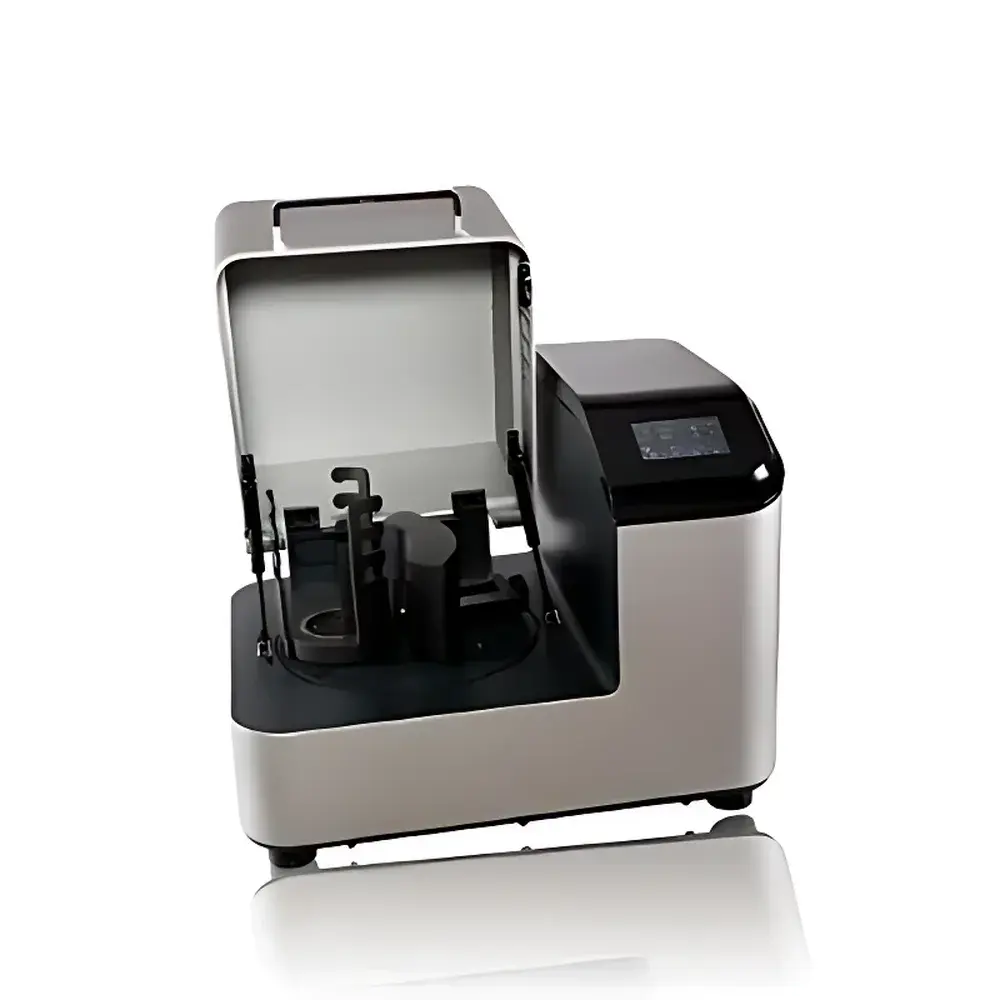
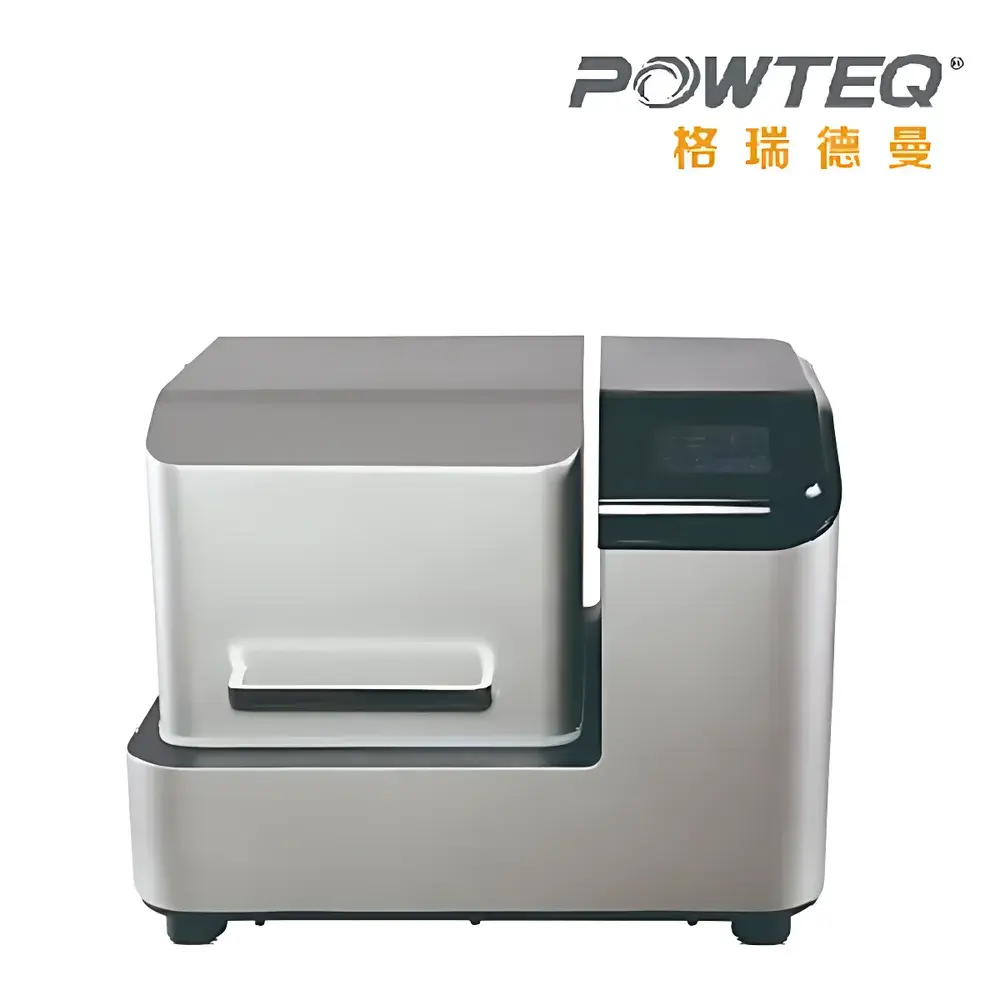
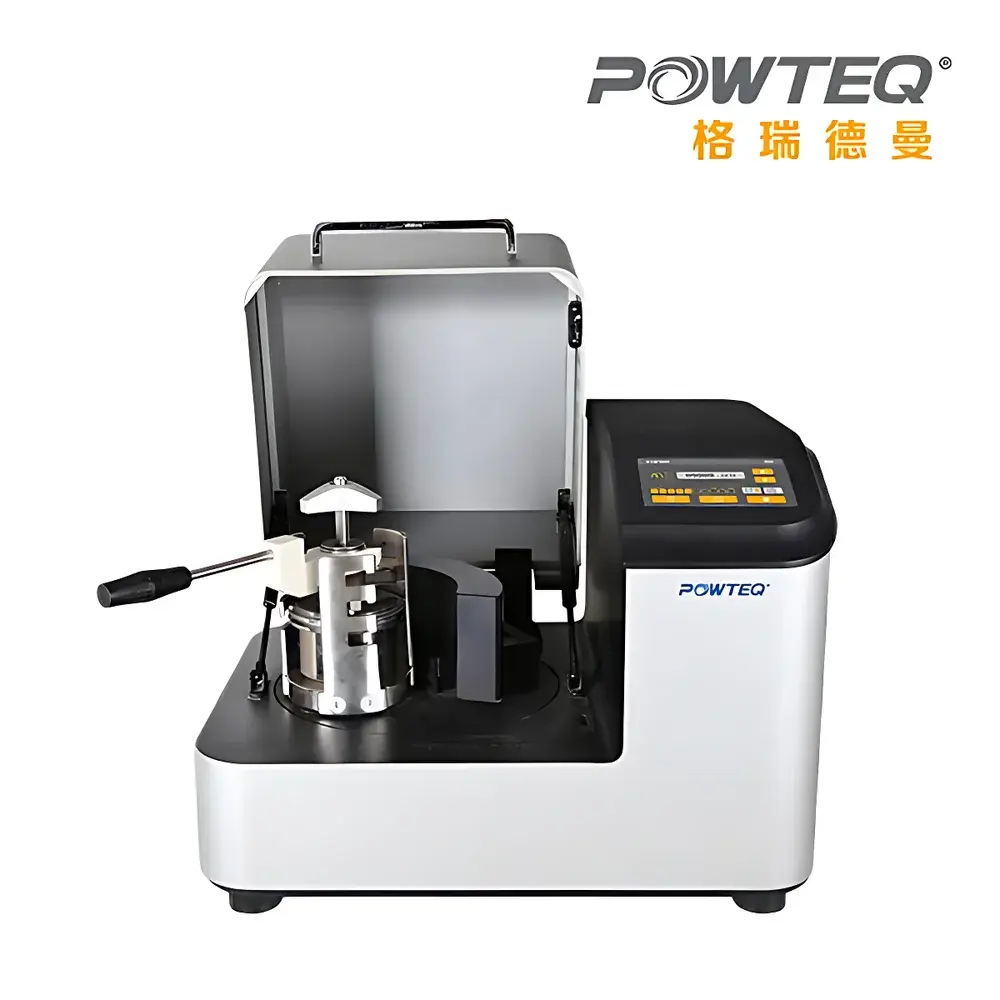
Grindemann BM6Pro Planetary Ball Mill
| Brand | Grindemann |
|---|---|
| Origin | Beijing, China |
| Manufacturer Type | Direct Manufacturer |
| Product Category | Domestic |
| Model | BM6Pro |
| Price Range | USD 7,000 – 14,000 |
| Instrument Type | Planetary Ball Mill |
| Sample Suitability | Soft to moderately hard materials |
| Feed Size | ≤ 10 mm |
| Final Particle Size | < 0.1 µm |
| Batch Capacity | 300 mL |
| Grinding Chamber Ventilation | Automatic |
| Jar Options | 5 volume variants (e.g., 25–500 mL), 6 material types (stainless steel, tungsten carbide, agate, zirconia, PTFE, polyurethane) |
| Rotation Direction | Programmable forward/reverse switching |
| Control Interface | Touch-enabled intelligent LCD panel |
| Maximum Rotational Speed | Up to 800 rpm (sun wheel) |
| Drive System | High-torque synchronous motor with precision gear train |
| Compliance | Designed per ISO 13320 (particle size analysis by laser diffraction) sample preparation requirements |
Overview
The Grindemann BM6Pro Planetary Ball Mill is an engineered solution for high-energy, controlled-size reduction of laboratory-scale powder samples. Operating on the principle of planetary motion—where grinding jars rotate on their own axes while simultaneously revolving around a central sun wheel—the BM6Pro generates intense centrifugal and Coriolis forces that enable efficient impact, shear, and friction-based comminution. This mechanism facilitates reproducible particle size reduction down to sub-100 nm levels, making it suitable for applications demanding ultrafine powders in materials science, ceramics, pharmaceuticals, and advanced battery research. Unlike conventional vibratory or attrition mills, the BM6Pro’s dual-axis kinematics ensure uniform energy distribution across the entire sample mass, minimizing thermal gradients and localized over-grinding.
Key Features
- Automated grinding chamber ventilation system prevents pressure buildup and volatile condensation during extended operation—critical for heat-sensitive or hygroscopic samples.
- Modular jar configuration: supports five standard internal volumes (25, 50, 125, 250, and 500 mL) and six jar liner materials—including stainless steel (for general-purpose milling), tungsten carbide (for high-hardness abrasion resistance), agate (for contamination-free mineral analysis), zirconia (for inert, high-density grinding), PTFE (for acid-resistant, low-wear processing), and polyurethane (for gentle, low-noise soft-material milling).
- Programmable bidirectional rotation sequence mitigates sample agglomeration and jar wall adhesion—particularly beneficial when processing cohesive polymers or sticky biological matrices.
- Intelligent touch interface with real-time parameter monitoring (speed, time, direction, pause/resume status) and user-defined protocol storage (up to 99 programs). All settings are retained after power cycling.
- Robust cast-aluminum frame with vibration-damping feet and integrated safety interlock ensures stable operation at speeds up to 800 rpm (sun wheel), corresponding to effective grinding energies exceeding 50 J/g per minute under optimal loading conditions.
Sample Compatibility & Compliance
The BM6Pro accommodates soft to semi-hard materials—including organic compounds, pharmaceutical excipients, clays, graphite, polymers, and dried plant tissues—with feed sizes up to 10 mm. Its sub-100 nm final particle size capability meets preparatory requirements for XRD, SEM-EDS, BET surface area analysis, and laser diffraction particle sizing per ISO 13320. The instrument is designed to support Good Laboratory Practice (GLP) workflows: all operational parameters are timestamped and logged internally, and optional USB data export enables traceable audit trails. While not certified as FDA 21 CFR Part 11 compliant out-of-the-box, its programmable logic and immutable event logging provide a foundation for validation under GMP-regulated environments when paired with documented SOPs and electronic signature protocols.
Software & Data Management
The BM6Pro operates without external PC dependency; however, its embedded firmware supports structured data export via USB flash drive in CSV format. Each log file includes start/stop timestamps, rotational speed profile, directional sequence, total active grinding time, and cycle count. No proprietary software installation is required—data files are natively readable in Excel, MATLAB, or statistical analysis platforms. Firmware updates are delivered via signed binary packages distributed through Grindemann’s secure technical portal, ensuring version control and integrity verification.
Applications
- Preparation of homogeneous nanocomposite precursors for solid-state electrolytes in Li-ion battery R&D.
- Size reduction of API intermediates prior to dissolution testing per USP <711>.
- Homogenization of geological reference materials for multi-element ICP-MS calibration.
- Mechanochemical synthesis of metal–organic frameworks (MOFs) without solvent mediation.
- Particle size standardization of pigment dispersions for optical property benchmarking.
FAQ
What is the maximum continuous run time for the BM6Pro?
The BM6Pro supports uninterrupted operation for up to 99 hours and 59 minutes per program, with automatic cooldown intervals configurable between cycles.
Can the BM6Pro be used under inert atmosphere?
Yes—optional gas-purged jar lids with Schrader valve ports are available for operation under N₂ or Ar, enabling air-sensitive milling of reactive metals or organometallics.
Is jar balancing required before each run?
No—precision-machined jar carriers and dynamic load compensation algorithms eliminate manual balancing; symmetric dual-jar configurations are recommended for optimal stability at >600 rpm.
Does the BM6Pro meet CE or UL safety standards?
The BM6Pro complies with IEC 61000-6-2 (EMC immunity) and IEC 61000-6-4 (EMC emissions); full CE marking applies to EU-distributed units with accompanying Declaration of Conformity and technical documentation.
How is maintenance performed on the drive mechanism?
The planetary gear train is sealed and lifetime-lubricated; routine maintenance is limited to periodic inspection of jar clamps, ventilation filter cleaning, and torque verification of mounting bolts per Grindemann’s Maintenance Schedule v3.2.



