
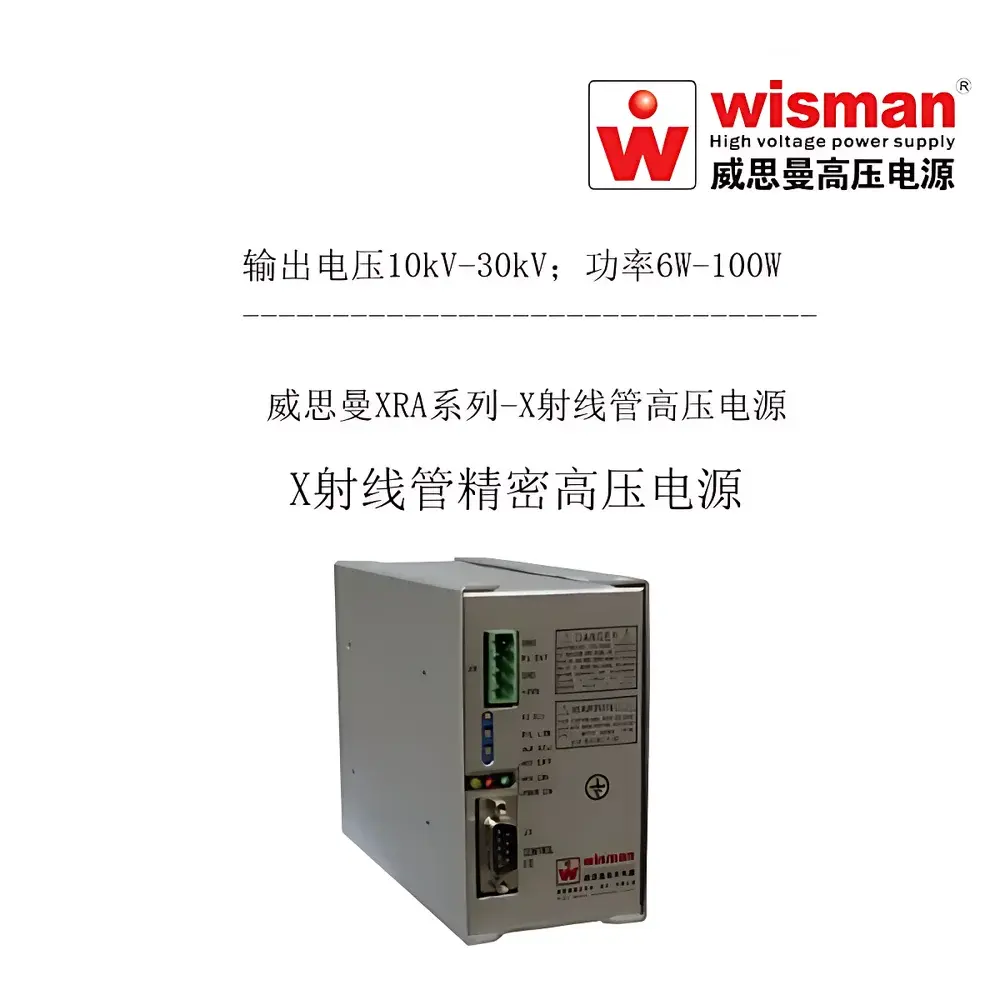
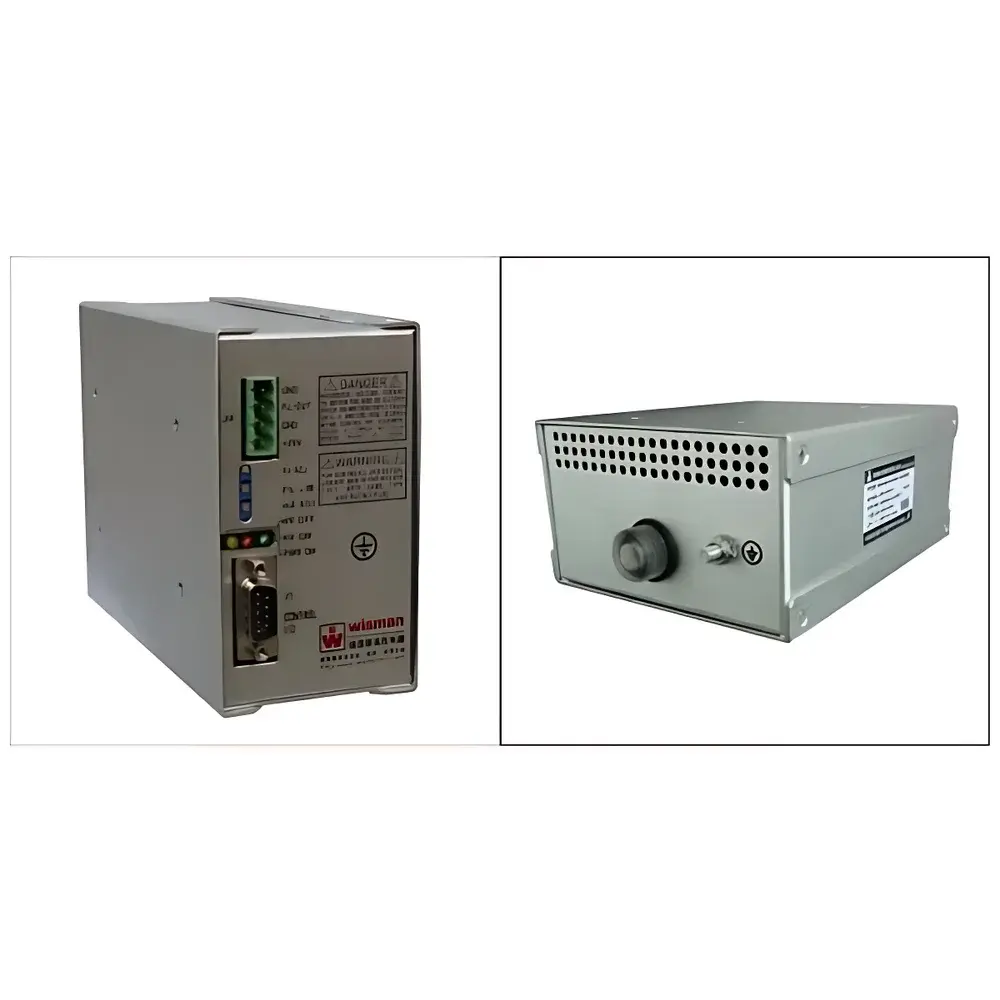
Wiseman XRA Series 30 kV / 100 W X-ray Tube High-Voltage Power Supply
| Brand | Wiseman |
|---|---|
| Output Voltage | 30 kV |
| Output Power | 100 W |
| Filament Supply | 0–5.5 V / 0–3.5 A DC |
| Ripple | 0.001% p-p (LR10 option) |
| Stability | ≤10 ppm/hour |
| Temperature Coefficient | ≤10 ppm/°C (LR10) |
| Input | 24 V ±10% DC, 3.0 A |
| Dimensions | 65 × 115 × 150 mm |
| Weight | 1.55 kg |
| Interface Options | USB 2.0, RS-232, RS-422 |
| Protection | Overvoltage, Short-Circuit, Interlock |
| Compliance | Designed for integration into ISO/IEC 17025-compliant analytical instrumentation and FDA 21 CFR Part 11-ready systems |
Overview
The Wiseman XRA Series is a compact, high-precision high-voltage (HV) power supply engineered specifically for driving grounded-cathode X-ray tubes in analytical and industrial X-ray systems. Based on zero-current resonant (ZCS) topology and advanced high-voltage insulation design, the XRA delivers regulated DC output up to 30 kV at 100 W with exceptional long-term stability and ultra-low ripple—critical for consistent X-ray photon flux and spectral resolution in energy-dispersive X-ray fluorescence (EDXRF), X-ray transmission densitometry, and real-time process monitoring applications. Its modular architecture supports both benchtop and OEM embedded integration, meeting stringent requirements for reproducibility in GLP- and GMP-aligned laboratories where traceable voltage control, thermal drift minimization, and electromagnetic compatibility are non-negotiable.
Key Features
- DC/DC conversion architecture delivering stable HV output from 10 kV to 30 kV (8 standard voltage grades) and power levels from 6 W to 100 W (6 selectable ratings)
- Integrated, independently adjustable filament supply (0–5.5 V / 0–3.5 A DC) with fine-resolution current regulation for precise thermionic emission control
- Ultra-low output ripple: down to 0.001% p-p (LR10 configuration), enabling high signal-to-noise ratio in low-intensity X-ray detection scenarios
- Long-term stability of ≤10 ppm/hour (after 1-hour warm-up) and temperature coefficient as low as 10 ppm/°C—validated under continuous operation per IEC 61000-4-30
- Dual-mode control interface: local multi-turn potentiometer adjustment + remote analog (0–10 V) or digital (USB 2.0, RS-232, RS-422) command protocol
- Comprehensive safety architecture including hardware-enforced overvoltage cutoff, short-circuit foldback, and configurable interlock circuitry compliant with IEC 61010-1
- Compact form factor (65 × 115 × 150 mm) optimized for space-constrained X-ray modules; aluminum chassis with conformal coating for humidity resistance (20–85% RH, non-condensing)
Sample Compatibility & Compliance
The XRA series is validated for use with grounded-cathode X-ray tubes from Kevex, Oxford Instruments (including TF-series sealed-tube modules: TF1001, TF1002, TF1003, TF1005, TF1010, TF1015, TF3001–TF3005), RTW, Superior, Varian, Trufocus, and major domestic Chinese manufacturers. It satisfies electrical interface specifications defined in ASTM E1316 (Standard Terminology for Nondestructive Examinations) and supports system-level compliance with ISO/IEC 17025 for calibration traceability. When integrated into EDXRF or X-ray transmission analyzers, the XRA’s analog/digital control architecture enables full audit trail capability—supporting 21 CFR Part 11 electronic record requirements when paired with validated host software.
Software & Data Management
Digital communication interfaces (USB 2.0, RS-232, RS-422) support bidirectional command-response protocols compliant with Modbus RTU and proprietary SCPI-like syntax. Host systems can read real-time HV voltage/current status via 0–5 V analog monitor outputs (±1% accuracy), log operational parameters (e.g., filament current drift, temperature-compensated output deviation), and trigger fault events for automated shutdown sequences. Firmware supports configurable ramp rates, soft-start profiles, and interlock state polling—enabling seamless integration into LabVIEW, Python-based instrument control frameworks, or custom PLC-driven process lines.
Applications
- Energy-dispersive X-ray fluorescence (EDXRF) spectrometers for RoHS screening, mining assay, and environmental heavy metal analysis
- In-line thickness gauging of aluminum foil, paper, polymer films, and PCB substrates using X-ray transmission attenuation
- Real-time elemental composition monitoring in continuous manufacturing (e.g., cement, glass, metallurgical feedstock)
- X-ray imaging subsystems for weld inspection, conductor alignment in multilayer PCBs, and void detection in electronic packaging
- Density and porosity measurement in composite materials, pharmaceutical tablets, and food products
- Particle size distribution analysis via small-angle X-ray scattering (SAXS) source excitation
- Research-grade X-ray spectroscopy setups requiring stable, low-noise excitation sources for synchrotron pre-alignment or lab-scale diffraction studies
FAQ
What X-ray tube configurations is the XRA compatible with?
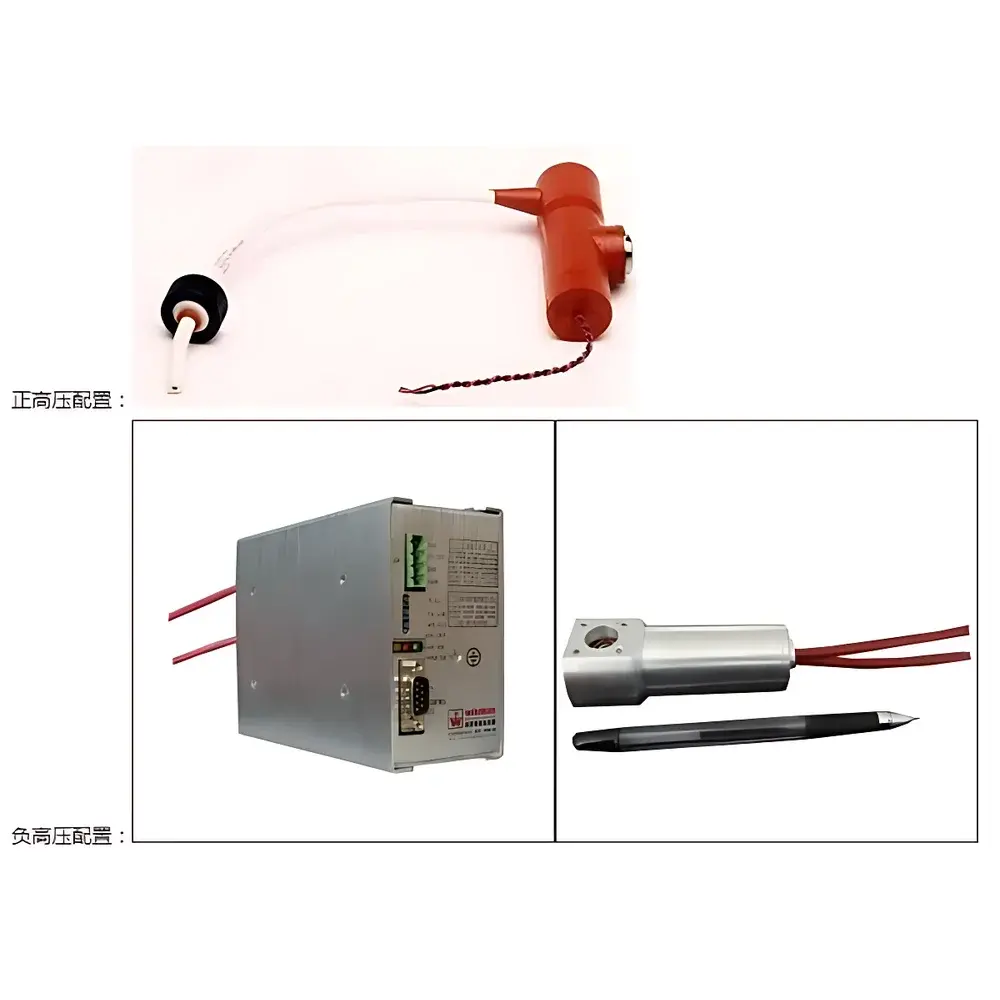
The XRA is designed exclusively for grounded-cathode X-ray tubes, including Oxford TF-series, Kevex, Varian, Trufocus, and equivalent domestic models. Anode-grounded or floating configurations require alternative HV topologies not supported by this series.
Does the XRA meet electromagnetic compatibility (EMC) standards for laboratory deployment?
Yes—the unit complies with CISPR 11 Group 1 Class B emissions limits and IEC 61000-4-2/3/4/6 immunity requirements, verified during factory burn-in and documented in the supplied Declaration of Conformity.
Can the XRA be operated in constant-power mode?
No—it operates in constant-voltage or constant-current mode only. Power delivery varies with tube load characteristics; users must select appropriate voltage/power combinations based on tube datasheet specifications.
Is firmware update capability available via USB interface?
Firmware updates are performed exclusively through RS-232 using Wiseman’s certified utility software; USB is reserved for real-time parameter streaming and control.
What is the recommended warm-up time before achieving specified stability?
A minimum 60-minute thermal stabilization period is required to achieve ≤10 ppm/hour stability and full LR10 specification compliance.



