
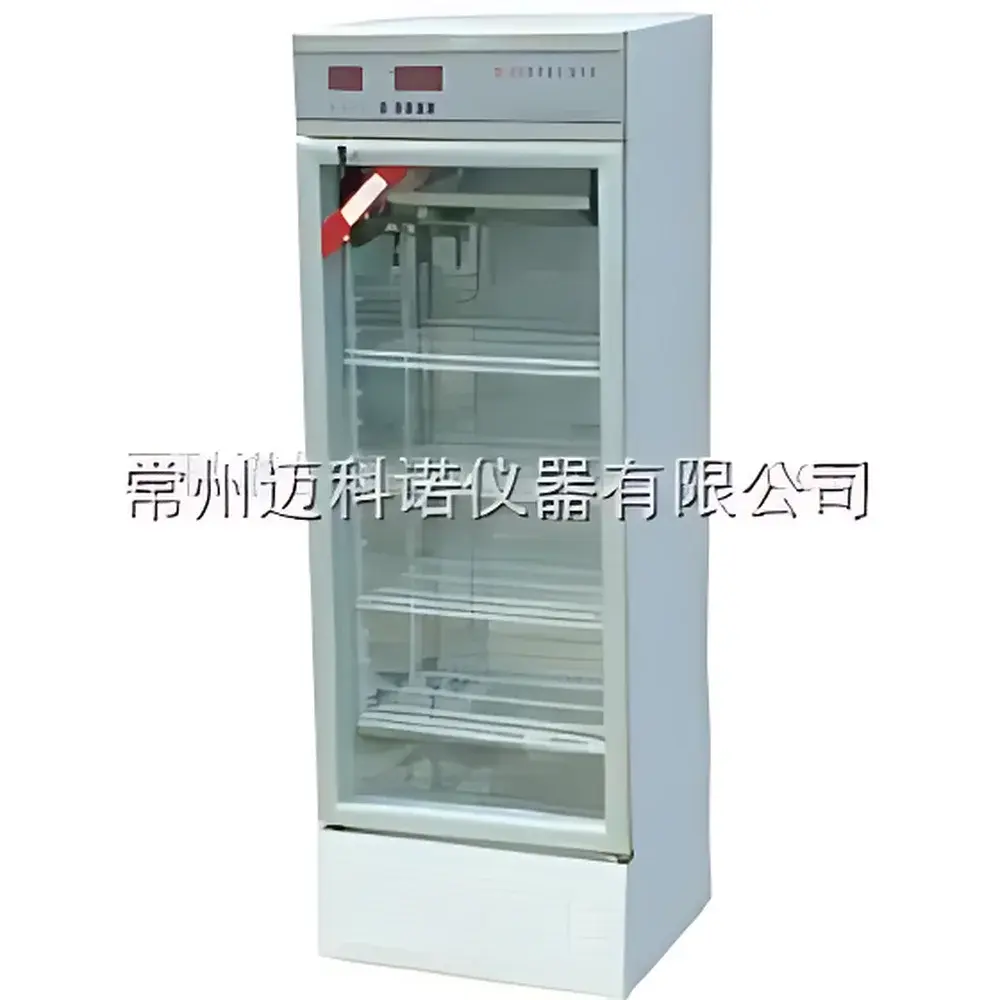
MKN 150A Biochemical Incubator
| Brand | MKN |
|---|---|
| Model | 150A |
| Capacity | 150 L |
| Temperature Range | 5–50 °C |
| Control Accuracy | ±1 °C |
| Temperature Uniformity | ±1 °C |
| Power Supply | AC 220 V ±10%, 50 Hz ±2% |
| Rated Power | ≤500 W |
| Operating Environment | 0–40 °C, RH ≤85% |
| Construction | Exterior – Powder-coated carbon steel |
| Fan System | Top-mounted micro-circulation fan |
| Display | LED digital display |
| Protection Features | Compressor delay start, power interruption protection |
| Compliance | Designed for GLP-compliant labs |
Overview
The MKN 150A Biochemical Incubator is a precision-controlled, dual-mode (heating and cooling) environmental chamber engineered for stable, reproducible temperature maintenance in life science laboratories. It operates on a thermoelectric and compressor-based hybrid thermal regulation system—optimized for energy efficiency and long-term operational reliability. Unlike basic heated-only incubators, the 150A integrates active refrigeration to enable sub-ambient temperature control down to 5 °C, making it suitable for applications requiring low-temperature microbial cultivation, enzyme stability studies, or cold-adapted cell line maintenance. Its 150-liter internal volume provides sufficient space for standard-sized culture flasks, Petri dishes, multi-well plates, and small bioreactors while maintaining uniform thermal distribution across the chamber. The unit is designed for continuous operation under ambient conditions up to 40 °C and relative humidity below 85%, ensuring consistent performance in diverse laboratory environments.
Key Features
- Microprocessor-based PID temperature controller with LED digital display for real-time monitoring and intuitive setpoint adjustment
- Dual-mode thermal regulation: Peltier-assisted pre-cooling combined with a sealed refrigeration compressor for precise 5–50 °C range control
- Stainless steel (AISI 304) interior chamber with seamless welding and rounded corners for ease of cleaning and contamination resistance
- High-density polyurethane foam insulation (≥60 mm thickness) minimizing thermal leakage and improving energy efficiency
- Top-mounted micro-circulation fan enabling uniform airflow and minimizing thermal gradients (<±1 °C deviation across working volume)
- Integrated safety architecture including compressor delay start (3-minute post-power-on), over-temperature cut-off, and voltage fluctuation tolerance (±10% AC input)
- Internal LED lighting with switchable operation, supporting visual inspection without opening the door and minimizing thermal disturbance
Sample Compatibility & Compliance
The MKN 150A accommodates common life science sample formats including Erlenmeyer flasks (up to 2 L), stacked Petri dishes, T-flasks (T-75, T-175), 96-well microplates, and small-volume bioreactor vessels. Its stainless steel interior resists corrosion from routine disinfectants (e.g., 70% ethanol, 0.5% sodium hypochlorite) and supports decontamination protocols required in biosafety Level 1 (BSL-1) and limited BSL-2 workflows. While not certified for medical device manufacturing, the incubator’s design aligns with general Good Laboratory Practice (GLP) expectations for environmental monitoring traceability. Its temperature control system satisfies baseline calibration requirements referenced in ISO/IEC 17025:2017 (clause 6.4.10) for equipment used in testing laboratories. It is not intended for use in FDA-regulated GMP production environments without additional validation per 21 CFR Part 11 and Annex 11 requirements.
Software & Data Management
The MKN 150A operates as a standalone instrument with no built-in data logging or network interface. All operational parameters—including setpoint, real-time chamber temperature, and status indicators—are displayed locally via the front-panel LED interface. For laboratories requiring audit-ready records, external USB or RS-232 data loggers (e.g., Omega OM-DAQPRO-5300 or Testo 176 T4) may be connected using standard analog output adapters (0–5 V or 4–20 mA). Users performing method validation or regulatory submissions should implement periodic manual calibration verification using NIST-traceable reference thermometers (e.g., Fluke 1523 or Hart 1550) at three defined points (10 °C, 25 °C, 45 °C) per ASTM E2875–18 guidelines for incubator qualification.
Applications
- Bacterial and fungal cultivation (e.g., E. coli, Saccharomyces cerevisiae, Aspergillus niger) under controlled low-temperature conditions
- Enzyme activity assays requiring stabilization at 10–20 °C to prevent thermal denaturation
- Seed germination and plant tissue culture experiments where diurnal temperature cycling is not required but steady-state chilling is critical
- Environmental simulation studies in ecotoxicology and wastewater microbiology (e.g., nitrifying bacteria enrichment at 15 °C)
- Long-term storage of temperature-sensitive reagents, standards, or clinical specimens prior to analysis
- Supporting QC/QA procedures in academic and contract research organizations conducting non-GMP stability testing per ICH Q1A(R2)
FAQ
What is the minimum operating temperature of the MKN 150A?
The unit achieves a stable setpoint of 5 °C under standard ambient conditions (25 °C, 50% RH). Performance at lower setpoints is not guaranteed and may result in extended stabilization time or reduced uniformity.
Does the incubator support programmable temperature ramps or multi-step profiles?
No—the MKN 150A features fixed-point temperature control only. It does not include time-based programming or ramp/soak functionality.
Is the stainless steel interior electropolished or passivated?
The chamber uses standard AISI 304 stainless steel with mechanical polishing; electropolishing is not included but may be added as a custom option upon request.
Can this unit be validated for ISO 13485 or GMP compliance?
As supplied, it lacks factory-installed IQ/OQ documentation, Ethernet connectivity, or electronic audit trail capability. Validation must be performed in-house or by a qualified third party using user-defined protocols aligned with EU GMP Annex 15 or ASME BPE-2022.
What maintenance intervals are recommended for the refrigeration system?
Compressor oil and refrigerant levels do not require servicing within the first 36 months of operation under normal use. Annual inspection of condenser coil cleanliness and door gasket integrity is advised.



