
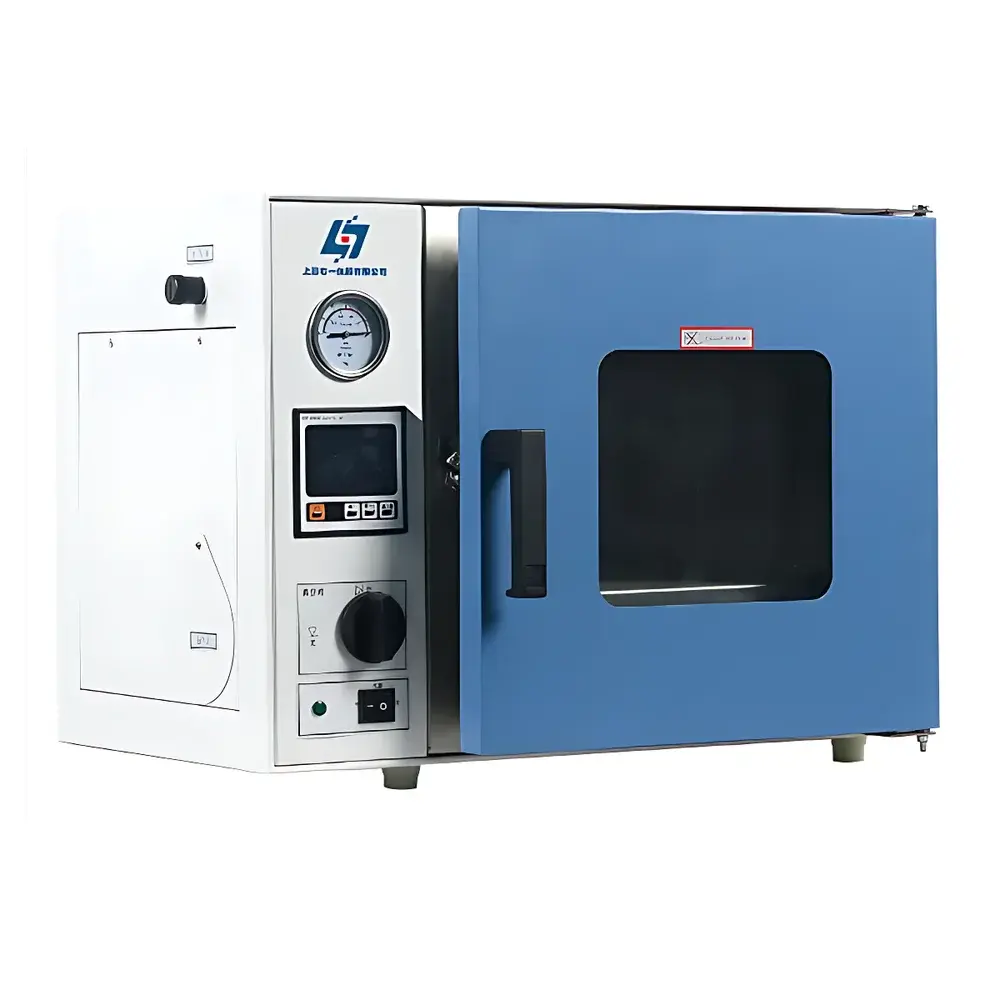
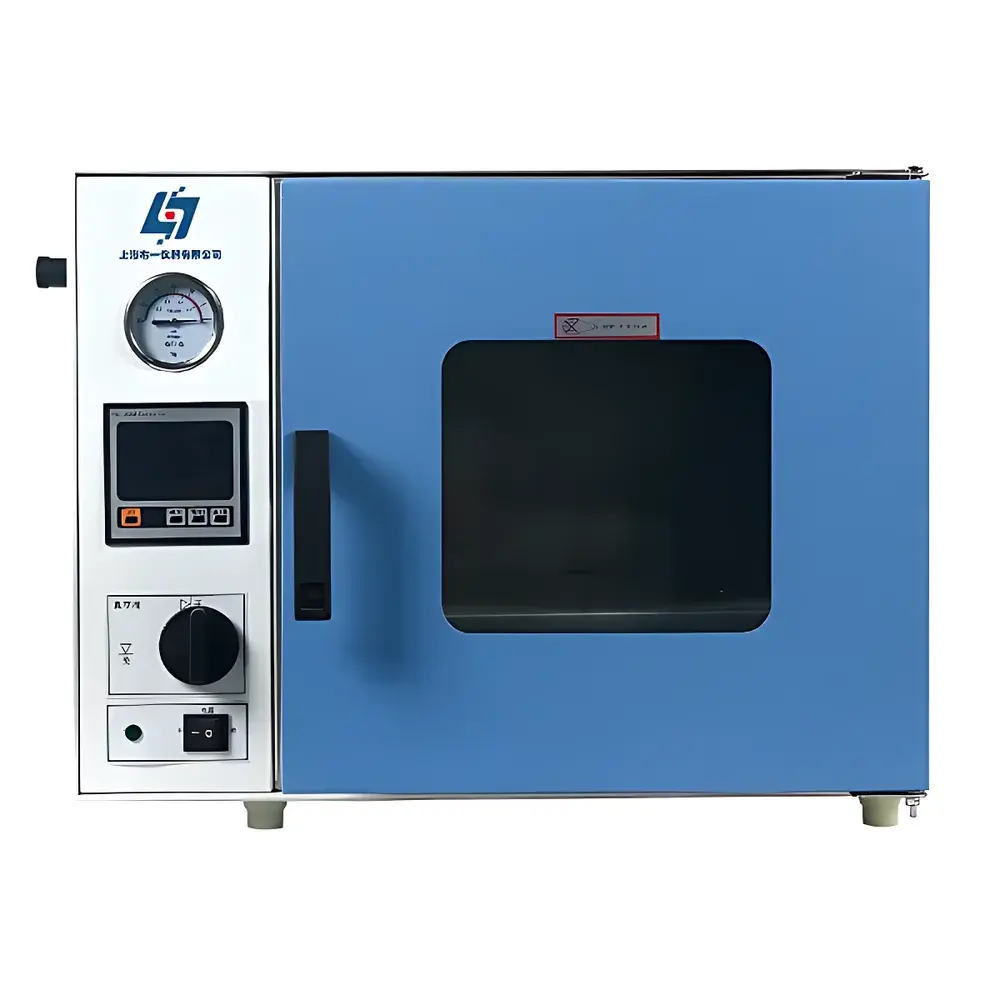
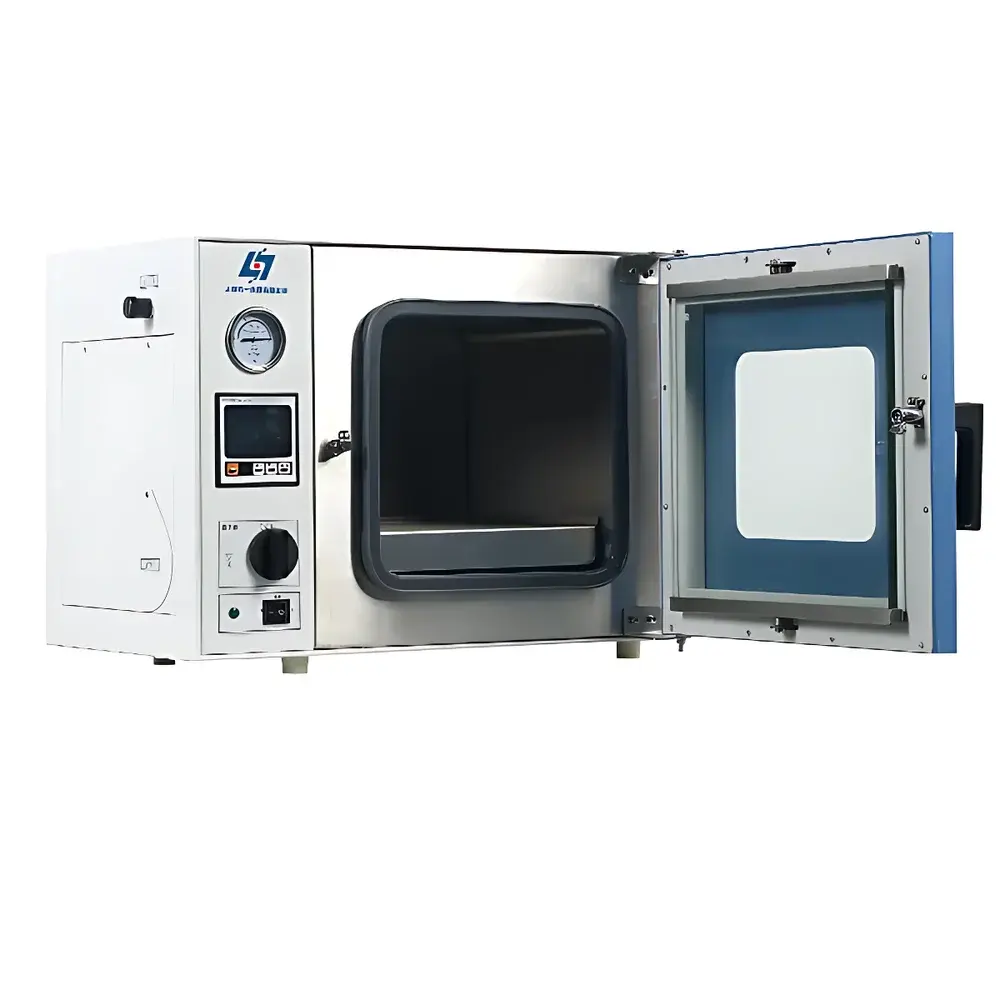
Yoyilab DZF-6051 Vacuum Drying Oven
| Brand | Yoyilab |
|---|---|
| Origin | Shanghai, China |
| Manufacturer Type | Direct Manufacturer |
| Product Category | Domestic |
| Model | DZF-6051 |
| Instrument Type | Vacuum Oven |
| Temperature Range | RT+10°C to 250°C |
| Temperature Uniformity | ±1°C |
| External Dimensions | 830 × 640 × 540 mm |
| Internal Chamber Dimensions | 415 × 370 × 345 mm |
| Temperature Resolution | 0.1°C |
| Interior Material | Cold-Rolled Steel |
| Heating Method | Electric Internal Heating |
| Ultimate Vacuum Level | ≤133 Pa |
Overview
The Yoyilab DZF-6051 Vacuum Drying Oven is an engineered solution for controlled thermal processing under reduced-pressure conditions. Operating on the principle of vacuum-assisted moisture removal—where lowered ambient pressure reduces the boiling point of solvents and volatile components—the unit enables gentle, efficient drying of thermally sensitive, oxidation-prone, or chemically unstable samples. Unlike conventional convection ovens, this system eliminates atmospheric oxygen during operation, thereby preventing oxidative degradation, polymerization, or decomposition of labile compounds. It is widely deployed in pharmaceutical stability studies, lyophilization pre-treatment, catalyst activation, powder conditioning, sterilization of glassware, and residual solvent removal from coated substrates. Its design conforms to fundamental laboratory safety and process integrity requirements for non-ambient thermal treatment.
Key Features
- Microprocessor-based PID temperature controller with 0.1°C resolution and ±1°C uniformity across the chamber, ensuring reproducible thermal profiles.
- Robust chamber construction: interior lined with cold-rolled steel (electropolished finish optional), exterior housing fabricated from cold-rolled steel with electrostatic epoxy coating for corrosion resistance.
- Double-layer tempered glass observation door with silicone gasket seal, enabling real-time visual monitoring while maintaining vacuum integrity up to ≤133 Pa.
- Internally mounted heating elements provide rapid, uniform heat distribution; aluminum-alloy shelves (special-stamped, oxidation-resistant) enhance thermal conductivity and minimize energy loss.
- Power-fail recovery function preserves set parameters—including target temperature, vacuum hold time, and timer status—enabling automatic resumption after unexpected interruption.
- User-adjustable door tension mechanism and integrally molded silicone door seal ensure consistent vacuum retention across repeated operational cycles.
- Front-panel LCD display presents simultaneous readouts of setpoint, actual chamber temperature, elapsed time, and vacuum status (via analog gauge).
Sample Compatibility & Compliance
The DZF-6051 accommodates a broad range of sample formats including Petri dishes, weighing boats, crucibles, vials, and standard laboratory glassware (e.g., volumetric flasks, beakers). Its inert atmosphere capability—enabled by optional inert gas inlet valve (N₂ or Ar)—supports applications requiring oxygen exclusion per ISO 8573-1 (compressed air purity) and ASTM D3175 (moisture determination in coal and coke). While not certified to IEC 61010-1 or UL 61010B out-of-the-box, the unit meets baseline electrical safety and thermal insulation requirements for Class II laboratory equipment. For regulated environments (e.g., GLP/GMP labs), validation documentation—including IQ/OQ protocols, temperature mapping reports, and vacuum decay test procedures—can be developed in alignment with FDA 21 CFR Part 11 data integrity expectations when paired with compliant logging software.
Software & Data Management
The base configuration includes local parameter storage (up to 99 user-defined programs) and non-volatile memory for runtime logs. Optional multi-segment programmable controller (sold separately) extends functionality to ramp-soak-hold profiles with up to 30 segments, supporting complex thermal protocols required in material curing or desorption kinetics studies. Data export is achieved via RS-232 interface (standard) or USB-to-serial adapter (optional), enabling integration with LIMS or ELN platforms. Audit trail generation—including operator ID, timestamped parameter changes, and alarm events—is supported when used with validated third-party acquisition software compliant with ALCOA+ principles.
Applications
- Pharmaceutical R&D: Residual solvent removal from active pharmaceutical ingredients (APIs) per ICH Q5C guidelines.
- Materials Science: Pre-drying of battery electrode slurries, ceramic precursors, and MOF frameworks prior to calcination.
- Environmental Testing: Moisture content analysis in soil/sediment samples per EPA Method 5035A.
- Food & Agriculture: Low-temperature dehydration of enzyme-rich botanical extracts without denaturation.
- Quality Control Labs: Standardized drying of filter papers, pipette tips, and calibration standards before gravimetric analysis.
- Metrology Support: Conditioning of reference weights and precision gauges in humidity-controlled inert environments.
FAQ
What vacuum level does the DZF-6051 achieve, and how is it measured?
The unit achieves a base vacuum of ≤133 Pa (1 Torr) using an external mechanical vacuum pump; vacuum level is monitored via an analog Bourdon-tube gauge calibrated to ISO 2859-1 tolerance limits.
Can the chamber temperature be ramped programmatically?
Yes—when equipped with the optional multi-segment temperature controller, users can define up to 30 independent ramp/soak steps with dwell times ranging from 1 minute to 9999 minutes.
Is the internal chamber suitable for acidic or halogenated solvent exposure?
The standard cold-rolled steel interior is not resistant to aggressive solvents; for such applications, stainless steel (304 or 316L) chamber lining and fluoropolymer-coated seals are available as custom modifications.
Does the unit comply with electromagnetic compatibility (EMC) standards?
It meets EN 61326-1:2013 for laboratory equipment in industrial environments, with conducted and radiated emission testing performed at accredited third-party laboratories.
What maintenance intervals are recommended for long-term reliability?
Vacuum gauge calibration annually; door gasket inspection every 6 months; heating element continuity check during routine preventive maintenance (PM) every 12 months.



