
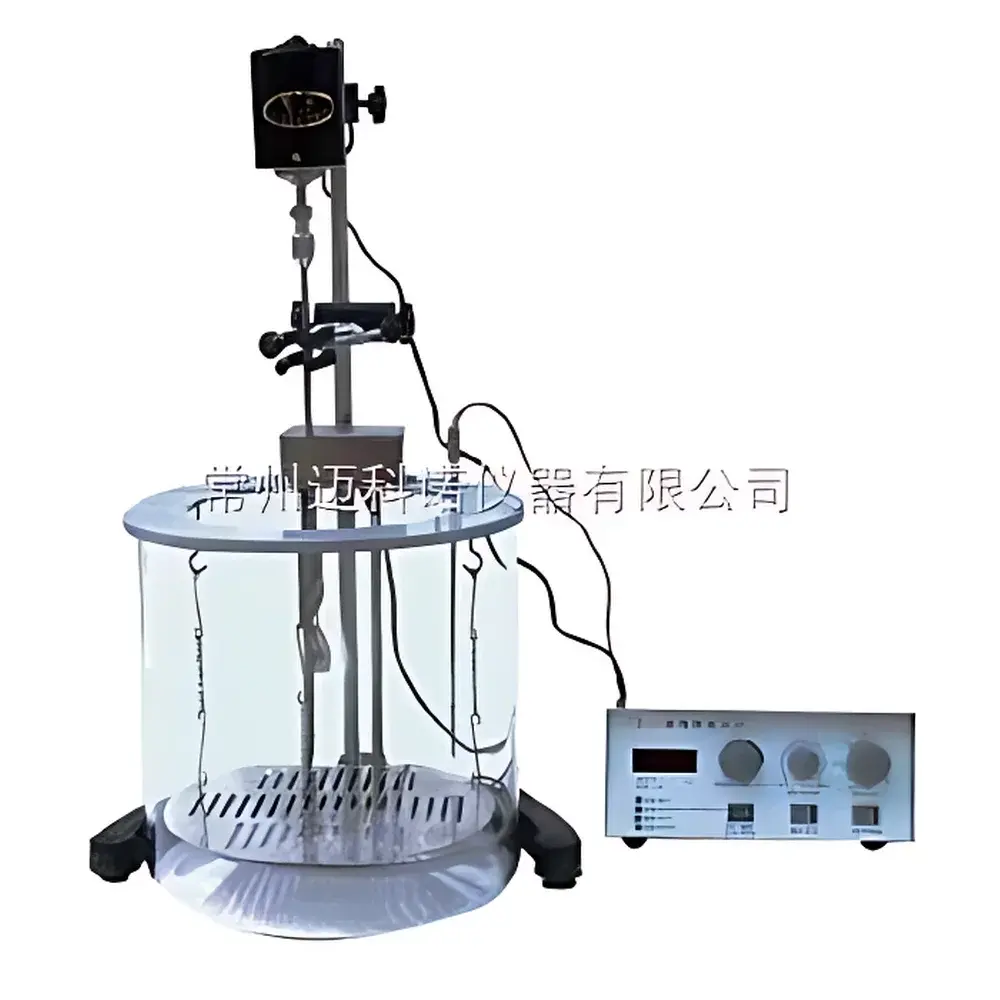
Jintan 76-1A Digital Display Glass Water Bath with Built-in Stirrer
| Origin | Zhejiang, China |
|---|---|
| Manufacturer Type | Distributor |
| Product Origin | Domestic (China) |
| Model | 76-1A |
| Price | USD 280 (FOB) |
| Instrument Type | Constant-Temperature Water Bath |
| Circulation Function | Non-circulating |
| Power Supply | 220 V ±10%, 50 Hz |
| Heating Power | 1000 W |
| Stirrer Motor Power | 60 W |
| Temperature Range | Ambient to 100 °C (digital PID control) |
| Speed Control | Stepless, 0–2000 rpm |
| Glass Chamber Dimensions | Ø300 × 300 mm (ID × H) |
Overview
The Jintan 76-1A Digital Display Glass Water Bath with Built-in Stirrer is a benchtop thermostatic immersion system engineered for precise temperature maintenance and mechanical agitation in routine laboratory workflows. Unlike circulating water baths, this unit operates on a static bath principle—heat is transferred directly from the immersed heating element to the water medium, while a vertically mounted stirrer ensures homogeneous thermal distribution and minimizes local temperature gradients. Its transparent borosilicate glass chamber enables real-time visual monitoring of samples and reaction progress, making it especially suitable for applications requiring optical access or manual intervention during incubation, dissolution, or enzymatic assays. Designed for reliability under continuous operation, the 76-1A integrates a digital PID temperature controller with ±0.5 °C accuracy across its full 0–100 °C range, eliminating analog scale parallax errors common in legacy analog thermostats.
Key Features
- Digital LED display with real-time temperature readout and setpoint adjustment via front-panel keypad
- Integrated DC motor-driven stirrer with stepless speed regulation (0–2000 rpm), enabling optimization of mixing intensity without mechanical gear shifts
- Borosilicate glass tank (Ø300 × 300 mm internal dimensions) offering chemical resistance to mild acids, bases, and organic solvents commonly used in sample preparation
- Independent dual-indicator system: green LED signals active heating; red LED indicates thermal equilibrium and standby mode
- Over-temperature cut-off protection circuit prevents dry-run damage and enhances operational safety
- Compact monoblock housing design reduces footprint and simplifies integration into fume hoods or shared lab benches
Sample Compatibility & Compliance
The 76-1A accommodates standard laboratory glassware—including beakers (up to 1000 mL), Erlenmeyer flasks, and digestion tubes—within its open-top chamber. Its non-circulating architecture avoids cross-contamination risks associated with shared fluid loops, aligning with GLP-compliant sample handling requirements where traceability and isolation are critical. While not certified to ISO/IEC 17025 or ASTM E2214 for metrological validation, the unit meets general-purpose laboratory equipment specifications outlined in GB/T 28001 (Chinese occupational health and safety standards) and complies with CE-marked electrical safety directives (EN 61010-1) when supplied with appropriate regional power cords. It is routinely deployed in academic teaching labs, environmental testing facilities, and QC laboratories performing USP compounding support tasks where stable thermal environments—not fluid dynamics—are the primary performance criterion.
Software & Data Management
This model operates as a standalone analog-digital hybrid instrument without embedded data logging or PC connectivity. Temperature and stirring parameters are manually set and monitored locally. For laboratories requiring audit-ready records, external USB data loggers (e.g., Omega OM-DAQPRO-5300 series) may be interfaced via PT100 probe ports (optional accessory). The unit supports basic traceability through handwritten lab notebook entries referencing batch numbers, calibration dates, and observed thermal stability profiles. No firmware updates or cybersecurity protocols apply, consistent with Class I non-networked laboratory hardware per IEC 62304 classification.
Applications
- Controlled-temperature sample incubation prior to spectrophotometric or chromatographic analysis
- Standardization of viscosity measurements using capillary viscometers (ASTM D445)
- Enzyme activity assays requiring sustained thermal activation at 37 °C or 60 °C
- Dissolution testing of pharmaceutical tablets under USP Apparatus I/II conditions
- Pre-heating reagents and buffers in molecular biology workflows
- Calibration of liquid-in-glass thermometers against NIST-traceable references
FAQ
Does the 76-1A support external temperature probes for remote monitoring?
No—temperature sensing is internal only, using a fixed RTD embedded near the heater base. External probe integration requires third-party adapters and is not supported out-of-the-box.
Can this bath be used with oil instead of water?
Yes, provided the thermal fluid has a flash point above 100 °C and is chemically inert toward borosilicate glass (e.g., silicone oil). Maximum operating temperature remains limited to 100 °C per design specification.
Is the stirrer speed calibrated or traceable to a standard?
Stirrer RPM is indicated via tachometer feedback but not independently calibrated; users should verify rotational speed with a handheld optical tachometer if quantitative mixing energy is critical.
What maintenance intervals are recommended?
Annual inspection of heater insulation resistance (>2 MΩ) and stirrer shaft seal integrity is advised. Deionized water usage reduces mineral scaling and extends service life.



