
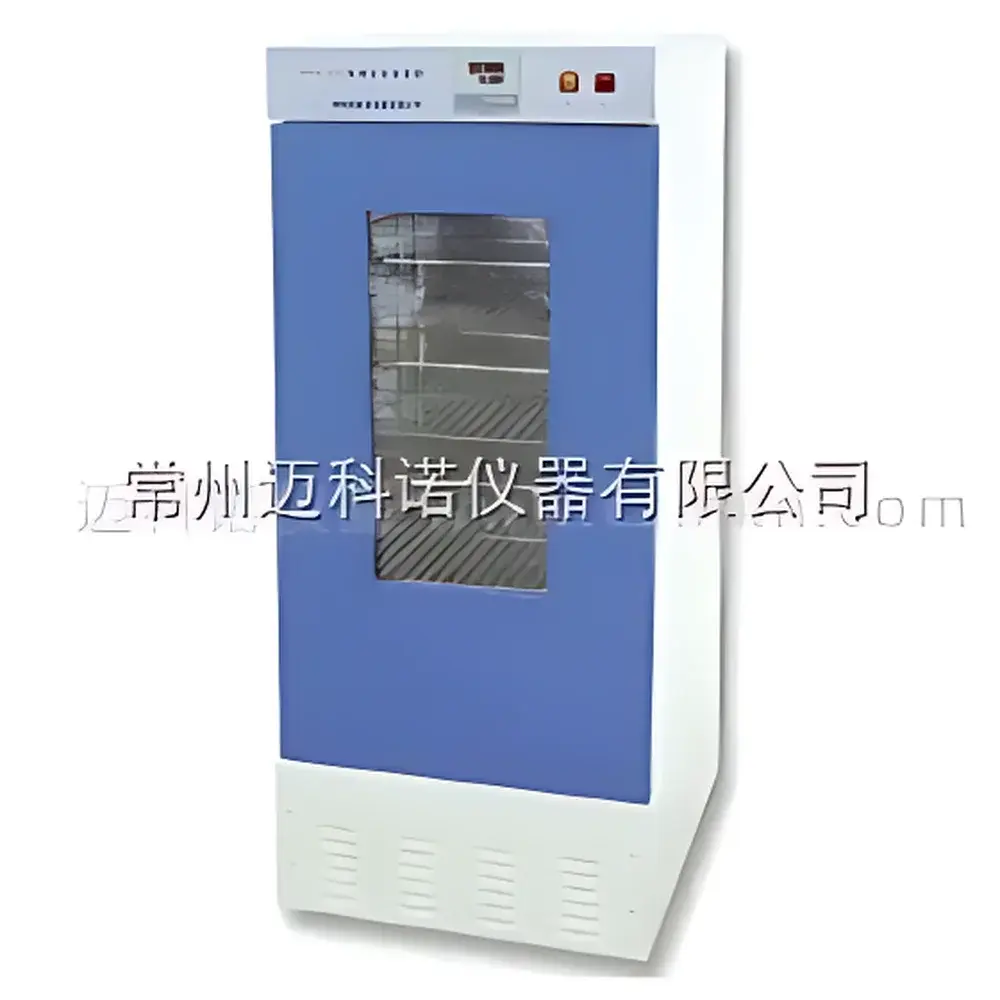
MKN SPX-150 Biochemical Incubator
| Brand | MKN |
|---|---|
| Model | SPX-150 |
| Capacity | 150 L |
| Temperature Range | 5–50 °C |
| Temperature Control Accuracy | ±0.5 °C |
| Temperature Uniformity | ±0.5 °C |
| Power Supply | AC 220 V ±10%, 50 Hz ±2% |
| Rated Power | ≤500 W |
| Operating Ambient Temperature | 0–40 °C |
| Relative Humidity | ≤85% RH |
| Construction | Exterior – Powder-coated carbon steel |
| Insulation | Polyurethane foam |
| Display | LED digital display (optional LCD upgrade available) |
| Cooling/Heating | Dual-mode thermoelectric + compressor-based system |
| Air Circulation | Forced-air convection with optimized airflow path |
| Safety Features | Compressor delay protection, over-temperature alarm, power failure recovery logic |
Overview
The MKN SPX-150 Biochemical Incubator is a precision-controlled, dual-mode (heating and refrigeration) environmental chamber engineered for stable, reproducible temperature management in life science laboratories. It operates on a forced-air convection principle, utilizing a low-vibration compressor-based cooling system coupled with PTC heating elements to maintain setpoint stability across the full operating range of 5–50 °C. Designed for continuous operation under GLP-compliant workflows, the unit meets fundamental requirements for microbial growth studies, enzyme activity assays, cell culture pre-incubation, biochemical reaction kinetics, and environmental simulation testing. Its stainless-steel interior (AISI 304), seamless welded corners, and high-density polyurethane insulation (≥50 mm thickness) ensure contamination resistance, thermal efficiency, and long-term dimensional stability—critical attributes for ISO/IEC 17025-accredited labs conducting routine or method-developed incubation protocols.
Key Features
- Microprocessor-based PID temperature controller with real-time feedback loop, delivering ±0.5 °C control accuracy and ±0.5 °C chamber uniformity (measured per ASTM E2797–21 at three-point load distribution)
- Forced-air circulation system with asymmetric air duct design to minimize thermal stratification and eliminate cold/hot spots—validated by internal mapping per ISO 14644-3 Class 5 cleanroom airflow guidelines
- Dual-stage safety architecture: hardware-level over-temperature cutoff (independent of main controller) plus software-driven compressor delay (≥3 min restart interval) to prevent mechanical stress and extend service life
- Electro-optical LED display with intuitive keypad interface; optional upgrade path to backlit monochrome LCD with parameter logging capability (timestamped setpoint, actual temp, runtime)
- Double-layer tempered glass door with anti-fog coating and magnetic seal—enabling non-intrusive observation without compromising thermal integrity or sterility maintenance
- Energy-optimized design: rated power ≤500 W at nominal load, compliant with IEC 62304 Class B software safety standards for embedded control systems
Sample Compatibility & Compliance
The SPX-150 accommodates standard laboratory vessels including Petri dishes (up to 150 mm), multi-well plates (6–96-well), culture flasks (T25–T175), and Erlenmeyer shake flasks (up to 1 L). Its 150 L working volume supports stacked shelving (three adjustable stainless-steel trays, load-rated to 15 kg per shelf). The unit complies with essential electromagnetic compatibility (EMC) requirements per EN 61326-1:2013 and electrical safety standards per EN 61010-1:2010. While not certified to FDA 21 CFR Part 11 out-of-the-box, its firmware architecture supports audit trail configuration when integrated with validated third-party LIMS or ELN platforms. Documentation includes factory calibration certificate (traceable to NIM China), CE-conformity declaration, and RoHS 2011/65/EU compliance statement.
Software & Data Management
The embedded controller stores up to 10 user-defined programs (each with up to 8 segments), supporting ramp-hold profiles for temperature cycling applications. Data output is limited to local display and manual recording in default configuration; however, an RS-232 serial port (DB9 connector) enables connection to external data loggers or PC-based acquisition software (e.g., LabVIEW™, MATLAB® via custom ASCII protocol). Firmware revision v2.3+ introduces time-stamped event logging (power-on, setpoint change, alarm trigger) accessible via terminal emulation—facilitating retrospective review during internal quality audits. For regulated environments requiring electronic records, integration with compliant middleware (e.g., Thermo Fisher SampleManager, LabWare LIMS) is achievable using MODBUS RTU protocol adapters.
Applications
- Bacterial and fungal cultivation under defined thermal conditions (e.g., Escherichia coli at 37 °C, Aspergillus niger at 28 °C) per ISO 8573-7 and USP
- Enzyme stability profiling across temperature gradients (e.g., amylase, protease, lipase activity assays per AOAC 990.12)
- Environmental stress testing of biodegradable polymers and biosensors per ASTM D5338
- Pre-incubation of diagnostic reagents and immunoassay kits prior to clinical validation studies
- Long-term storage of temperature-sensitive reference standards (e.g., CRM 8417, NIST SRM 2392) within certified stability envelopes
- Teaching laboratory use in undergraduate microbiology, biochemistry, and pharmacology curricula aligned with ABET EC2020 learning outcomes
FAQ
What is the minimum ambient temperature required for reliable compressor operation?
The unit requires an ambient temperature ≥10 °C for consistent refrigeration performance below 20 °C setpoints. Operation below this threshold may result in extended cooldown times and reduced thermal stability.
Can the incubator be used for CO₂-independent cell culture applications?
Yes—provided humidity is externally controlled (e.g., via desiccant trays or saturated salt solutions), the SPX-150 supports short-term maintenance of adherent and suspension cultures requiring only thermal regulation.
Is the stainless-steel interior electropolished?
No—the interior uses standard mill-finish AISI 304 stainless steel, suitable for routine disinfection with 70% ethanol or 0.5% sodium hypochlorite. Electropolishing is available as a custom order option (lead time +12 weeks).
Does the device support remote monitoring via Ethernet or Wi-Fi?
Not natively. Remote access requires external hardware integration (e.g., industrial IoT gateway with Modbus TCP conversion) and is subject to network security policies per ISO/IEC 27001 Annex A.8.2.
What documentation is provided for IQ/OQ validation?
Factory test reports, dimensional drawings, electrical schematics, and calibration certificates are included. Full qualification protocol templates (IQ/OQ/PQ) are available upon request for GMP-regulated users under NDA.



