
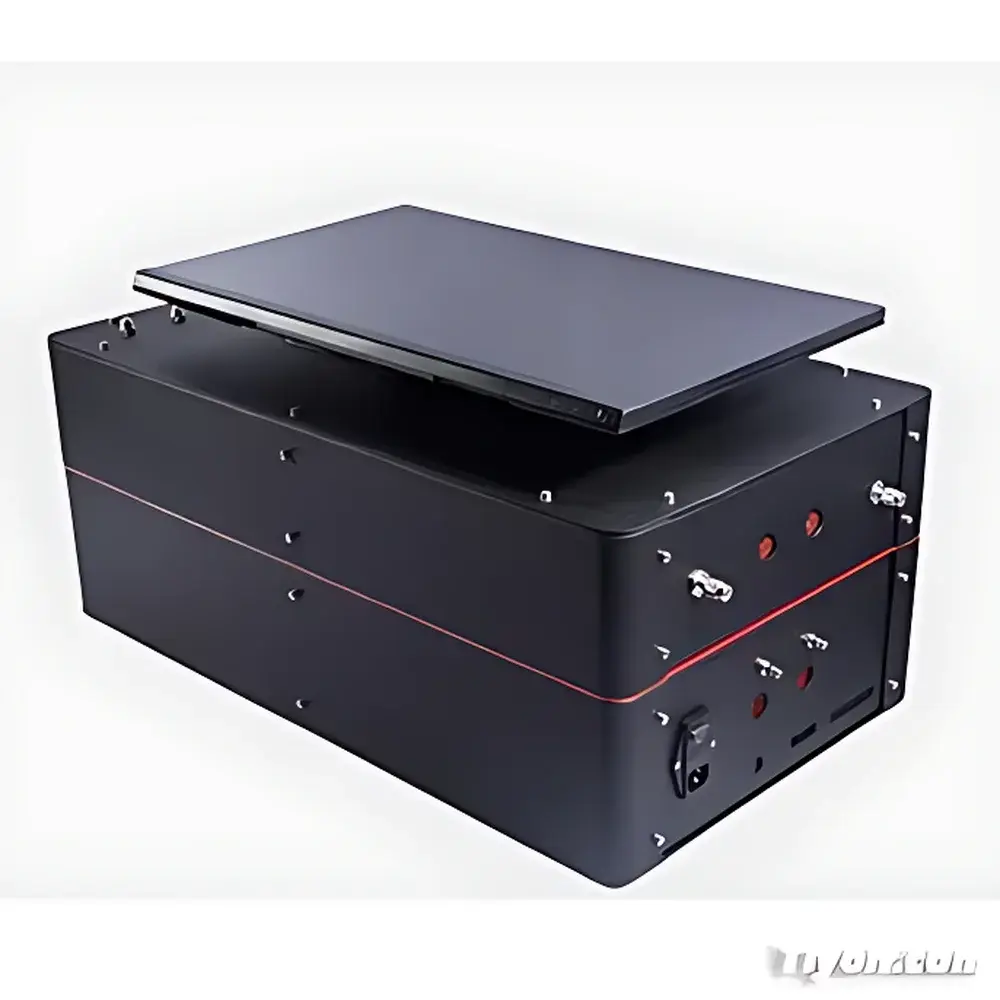
MaSa DAIMS Six-Channel Ion Mobility Spectrometer
| Brand | MaSa |
|---|---|
| Origin | Slovakia |
| Model | DAIMS |
| Sampling Methods | On-site, Direct, Headspace |
| Sensitivity | pg-level |
| Library | VOCs, Toxic Gases, Explosives |
| Channel Count | 6 independent inlet ports (up to 50 m cable length per port) |
| Polarity Mode | Simultaneous positive/negative ion operation |
| Operating Environment | Ambient temperature & pressure (no radioactive source) |
| Ionization Source | Corona discharge (non-radioactive) |
| Compliance | Designed for continuous unattended operation in industrial and building safety monitoring applications |
Overview
The MaSa DAIMS Six-Channel Ion Mobility Spectrometer is an advanced, non-radioactive real-time trace gas analyzer engineered for continuous, multi-point environmental and industrial air quality surveillance. Unlike conventional IMS systems relying on 63Ni or UV photoionization, DAIMS employs a proprietary corona discharge ionization source—enabling stable, high-efficiency ion generation across variable ambient conditions, including elevated temperatures and reduced atmospheric pressure. Its core measurement principle is time-resolved ion mobility separation: gaseous analytes are ionized, injected into a drift tube under controlled electric field and buffer gas flow, and separated based on their collision cross-section (CCS) and charge state—yielding characteristic arrival time distributions (ATDs) with sub-millisecond resolution. This architecture supports simultaneous dual-polarity operation, where both proton-transfer (H+(H2O)n) and electron-capture/charge-exchange (O2−) reaction ions are generated and sustained concurrently—eliminating polarity-switching delays and enhancing detection selectivity for complementary compound classes.
Key Features
- Simultaneous dual-polarity ionization: Real-time parallel acquisition in both positive and negative modes without mechanical or electrical switching—improving duty cycle, detection confidence, and spectral coverage for VOCs, acidic compounds, nitroaromatics, and peroxides.
- Six independently configurable sampling channels: Integrated manifold with six sealed, pressure-regulated inlet ports; each supports up to 50 m of inert tubing (e.g., PFA or SilcoNert), enabling distributed monitoring across large facilities (e.g., smart buildings, chemical plants, underground parking structures).
- Zero-consumable operation: No radioactive sources, carrier gases, or catalytic scrubbers required; powered solely by standard AC supply and ambient air—validated for >8,760 hours/year unattended deployment.
- Intelligent peak tracking & library matching: Proprietary software applies CCS-normalized peak alignment, deconvolutes overlapping ATDs via iterative fitting, and cross-references retention times and reduced mobility (K0) values against a curated spectral library covering >1,200 compounds—including regulated VOCs (e.g., benzene, formaldehyde), toxic industrial chemicals (e.g., HCN, Cl2, PH3), and explosives precursors (e.g., TATP, PETN).
- Robust environmental tolerance: Operational range: −10 °C to +50 °C ambient temperature; 50–105 kPa pressure; relative humidity ≤95% non-condensing—designed for installation in HVAC ducts, ceiling plenums, or outdoor enclosures without climate control.
Sample Compatibility & Compliance
DAIMS is validated for direct analysis of ambient air, headspace vapors, and process stream effluents without preconcentration or derivatization. It complies with ISO 16000-29 (indoor air—determination of VOCs by IMS), ASTM D7489 (standard practice for real-time airborne contaminant detection), and supports GLP/GMP data integrity requirements through audit-trail-enabled software (21 CFR Part 11-compliant user authentication, electronic signatures, and immutable raw data archiving). All hardware components meet IEC 61000-6-2 (EMC immunity) and IEC 60529 IP54 enclosure rating.
Software & Data Management
The DAIMS Control Suite (v4.2+) provides centralized configuration of channel scheduling, dwell time allocation, alarm thresholds (ppq–ppb), and automated report generation (PDF/CSV). Data streams from all six channels are timestamp-synchronized and stored in HDF5 format with embedded metadata (temperature, pressure, flow rate, calibration status). Integration options include OPC UA server, MQTT broker publishing, and RESTful API endpoints—enabling seamless ingestion into SCADA, BMS (e.g., Siemens Desigo, Honeywell EBI), or cloud platforms (AWS IoT Core, Azure IoT Hub). Raw ATD files retain full spectral fidelity for retrospective reprocessing using updated libraries or custom algorithms.
Applications
- Indoor Air Quality (IAQ) Monitoring: Continuous detection of formaldehyde, acetaldehyde, terpenes, and ozone byproducts in office buildings, schools, and hospitals—supporting ASHRAE 62.1 compliance reporting.
- Hazardous Structure Surveillance: Early warning of off-gassing from fire-damaged concrete, mold-contaminated drywall, or degraded insulation materials in post-disaster assessment scenarios.
- Industrial Process Safety: Leak detection at flange points, valve stems, and reactor vents for chlorine, ammonia, hydrogen sulfide, and volatile organics—integrated with plant-wide emergency shutdown logic.
- Odor Nuisance Investigation: Quantitative mapping of skatole, indole, mercaptans, and short-chain fatty acids near wastewater treatment plants or livestock facilities—correlating with human sensory panel data.
- Trace Gas Verification in Cleanrooms: Sub-ppb monitoring of siloxanes, amines, and aldehydes in semiconductor fab environments—aligned with ISO 14644-8 Annex C protocols.
FAQ
Does DAIMS require radioactive materials or external calibration gases?
No. DAIMS uses a solid-state corona discharge source and ambient air as the drift gas—eliminating regulatory licensing, disposal costs, and consumable dependencies.
How is data synchronization handled across six remote sampling points?
Each inlet channel is equipped with a dedicated microcontroller and GPS-synchronized timestamp generator; latency compensation algorithms correct for signal propagation delay over long tubing runs.
Can the system detect isomeric compounds with identical nominal mass?
Yes—ion mobility separation resolves structural isomers (e.g., ortho-/para-xylene) and conformers based on differences in collision cross-section, independent of mass spectrometry.
What maintenance intervals are recommended for unattended operation?
Annual verification of ion optics cleanliness and drift voltage stability; no routine replacement parts—validated mean time between failures (MTBF) exceeds 35,000 hours.
Is the spectral library expandable by end users?
Yes—users may import custom ATD reference spectra with associated K0 values, retention indices, and compound metadata via the Library Manager module.
Related Products





