Tlyon Tlyon-1023 Portable Photosynthesis and Transpiration System
| Brand | Tlyon |
|---|---|
| Model | Tlyon-1023 |
| Origin | Sichuan, China |
| Air Temperature Range | –20–80 °C (±0.2 °C accuracy, 0.1 °C resolution) |
| Leaf Temperature Range | –20–60 °C (±0.2 °C accuracy, 0.1 °C resolution) |
| Relative Humidity Range | 0–100% RH (±3% RH accuracy, 0.1% RH resolution) |
| PAR Range | 0–3000 μmol·m⁻²·s⁻¹ (<5 μmol·m⁻²·s⁻¹ uncertainty) |
| Flow Measurement | Glass Rotameter |
| Chamber Dimensions | Standard 55 × 20 mm (customizable) |
| Operating Environment | 20–50 °C, 0–90% RH (non-condensing) |
| Power | DC 7.4 V Li-ion battery (10 h continuous operation) |
| Data Storage | 2 GB microSD card |
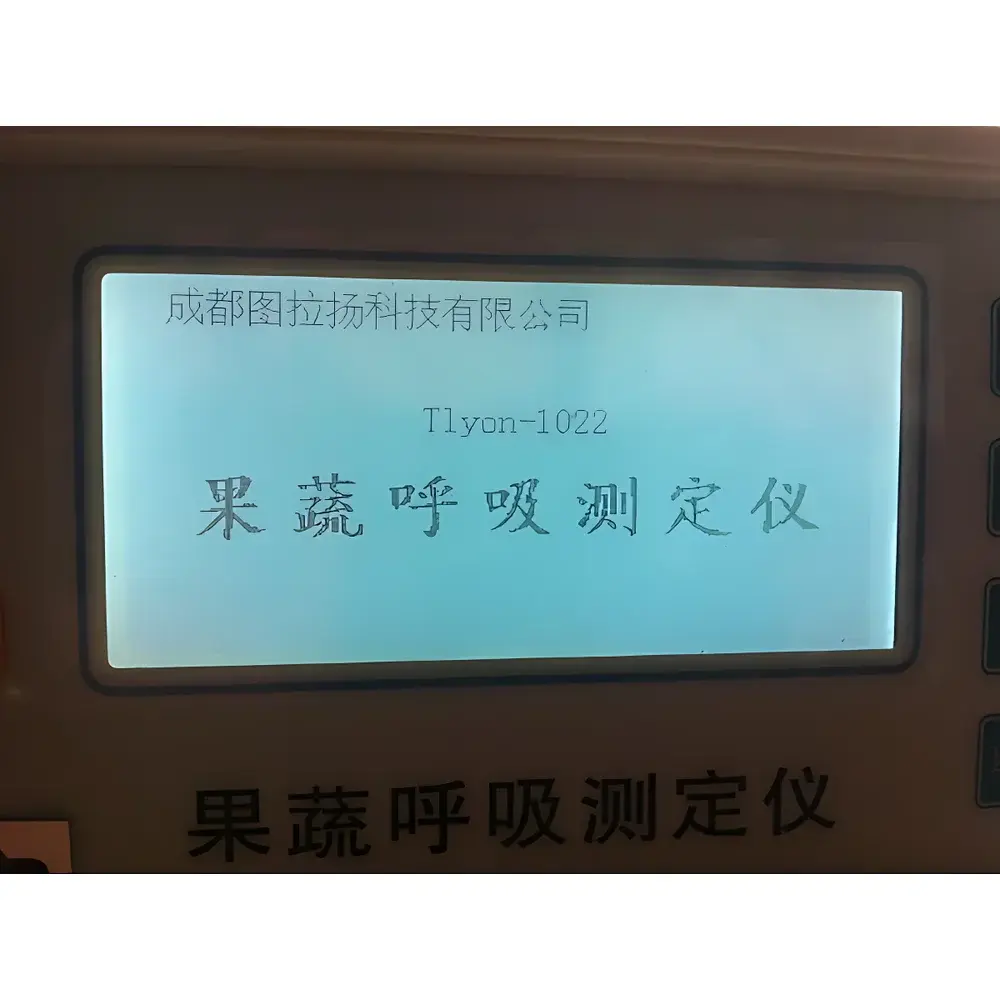
| Display | 320 × 160 pixel monochrome LCD with Chinese UI |
| Dimensions | 260 × 260 × 130 mm |
| Weight | 3.25 kg (host only) |
Overview
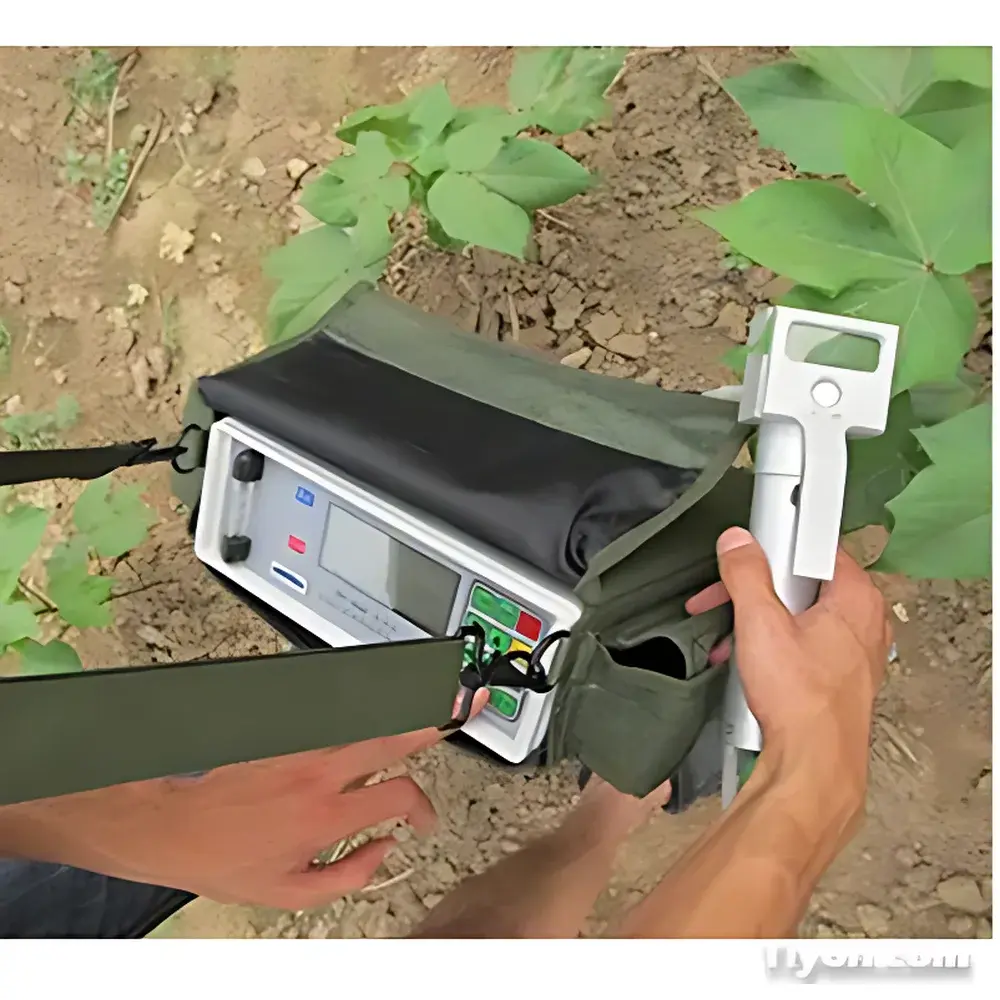
The Tlyon Tlyon-1023 Portable Photosynthesis and Transpiration System is a field-deployable, open-system gas exchange instrument engineered for quantitative assessment of plant physiological responses under ambient or controlled conditions. It operates on the principle of steady-state infrared gas analysis (IRGA)-independent leaf chamber methodology, utilizing high-precision environmental sensors to measure key biophysical parameters—including air temperature, leaf temperature, relative humidity, and photosynthetically active radiation (PAR)—and computes stomatal conductance (gs) and transpiration rate (E) via established physical models rooted in Fick’s law of diffusion and energy balance theory. Unlike closed-loop systems requiring CO2 analyzers, the Tlyon-1023 relies on direct microclimate monitoring within a standardized leaf chamber to derive transpiration flux per unit leaf area (mmol·m⁻²·s⁻¹) and stomatal conductance (mol·m⁻²·s⁻¹), making it particularly suited for longitudinal field studies where portability, rapid deployment, and operational simplicity are prioritized over simultaneous net photosynthesis quantification.
Key Features
- Integrated multi-sensor architecture: Swiss-made digital temperature and humidity sensors ensure traceable metrological performance across wide environmental ranges.
- Leaf temperature measurement via calibrated Pt100 platinum resistance thermometer, enabling accurate calculation of leaf-to-air vapor pressure deficit (VPD), a critical driver of transpiration kinetics.
- PAR sensor equipped with optical correction filters and cosine response compensation, delivering spectrally weighted irradiance data aligned with ISO 17166:2019 standards for plant photobiology applications.
- Modular leaf chamber design with standard 55 × 20 mm aperture; optional custom chambers available for broadleaf, needle, or succulent morphologies—supporting reproducible gasket-sealed measurements across diverse species.
- Embedded real-time data acquisition engine with timestamped logging to removable 2 GB microSD card, supporting post-hoc analysis in CSV-compatible formats without proprietary software dependency.
- Low-power DC 7.4 V lithium-ion battery system enabling >10 hours of continuous operation in field settings, with battery level indicator and low-voltage warning protocol.
Sample Compatibility & Compliance
The Tlyon-1023 accommodates intact, attached leaves from herbaceous crops (e.g., maize, wheat, tomato), woody perennials (e.g., apple, poplar), and forage species (e.g., alfalfa, ryegrass). Chamber sealing integrity is validated using standardized leak-check procedures per ASTM E283-21 for air permeability testing. While not certified to IEC 61000-6-3 for electromagnetic compatibility or ISO/IEC 17025 for accredited calibration, its sensor specifications align with common laboratory validation protocols used in academic and agricultural research environments. All temperature and humidity sensors carry manufacturer calibration certificates traceable to NIST-equivalent national standards. The device meets general safety requirements for portable electronic instrumentation per IEC 61010-1:2010, including protection against ingress (IP20-rated enclosure).
Software & Data Management
Data output is stored in plain-text CSV format with column headers including timestamp (YYYY-MM-DD HH:MM:SS), air temperature (°C), leaf temperature (°C), relative humidity (% RH), PAR (μmol·m⁻²·s⁻¹), calculated transpiration rate (mmol·m⁻²·s⁻¹), and stomatal conductance (mol·m⁻²·s⁻¹). No proprietary software is required for data retrieval or visualization; files are directly readable in Excel, R, Python (Pandas), or MATLAB. The onboard display supports real-time parameter monitoring, manual zero-point verification, and user-configurable averaging intervals (1–60 s). Audit trail functionality is limited to timestamped storage logs; full 21 CFR Part 11 compliance—including electronic signatures and immutable audit trails—is not implemented, consistent with its classification as a non-GxP research-grade instrument.
Applications
- Field-based drought stress phenotyping: Quantifying dynamic stomatal responses to soil moisture gradients in breeding trials.
- Ecophysiological studies of canopy gas exchange across diurnal cycles in agroforestry systems.
- Evaluation of antitranspirant efficacy in horticultural production and postharvest physiology.
- Validation of leaf energy balance models in micrometeorological flux networks.
- Undergraduate and graduate teaching laboratories for plant water relations and environmental physiology modules.
- Long-term monitoring of vegetation water use efficiency (WUE) in ecological restoration projects.
FAQ
Does the Tlyon-1023 measure net photosynthesis (An)?
No. It does not incorporate CO2 or H2O infrared gas analyzers; it estimates transpiration and conductance solely from microclimate parameters and chamber flow dynamics.
Can the instrument be used at night or under low-light conditions?
Yes. PAR measurement remains functional down to 0 μmol·m⁻²·s⁻¹; however, stomatal conductance and transpiration values will reflect nocturnal closure patterns typical of most C3 and C4 species.
Is calibration required before each use?
Zero-point verification for temperature and humidity sensors is recommended prior to critical measurements, though factory calibration remains stable for ≥12 months under normal field use.
What is the minimum leaf area that can be reliably measured?
With the standard chamber, effective measurement requires ≥2.5 cm² of uniform, turgid leaf tissue fully covering the aperture; smaller leaves may necessitate custom chamber fabrication.
Does the system support external GPS or environmental dataloggers?
No native integration exists; geotagging must be performed manually or via post-synchronization with external GNSS loggers.