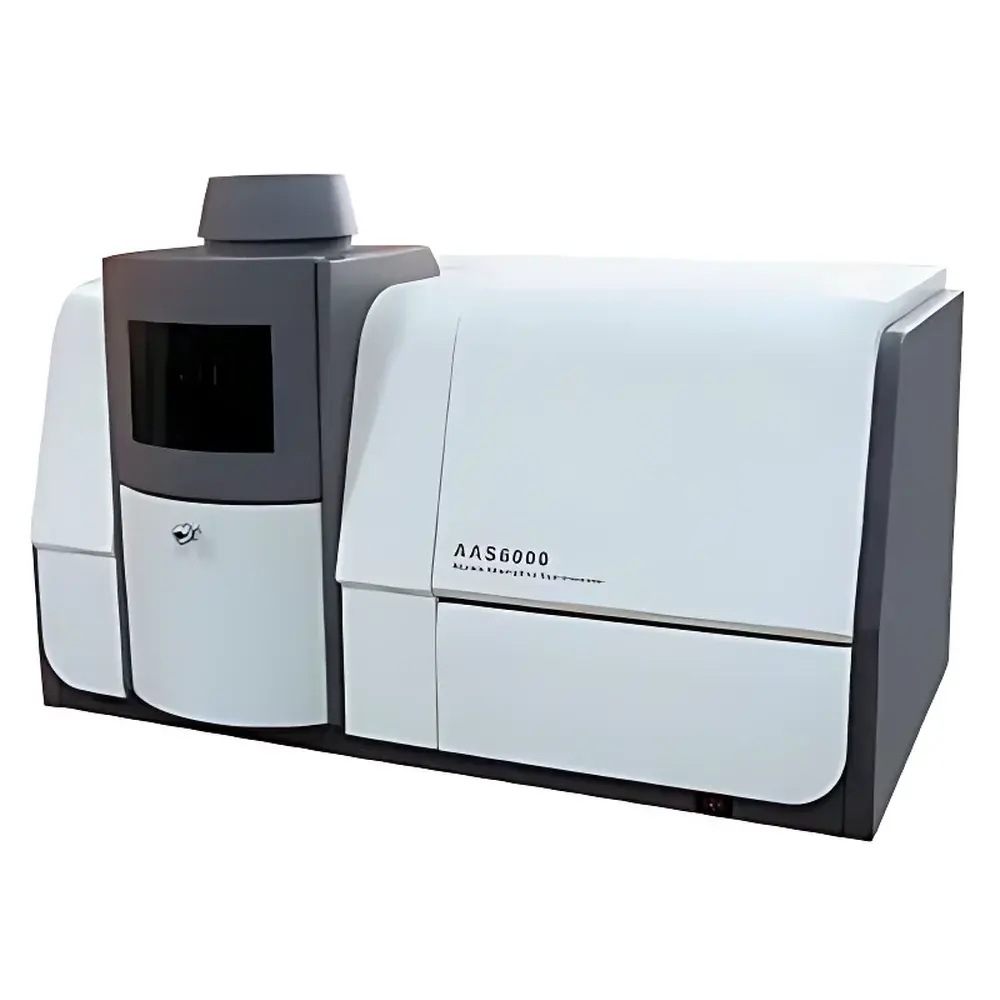
ZHONGKEHUIFEN AAS6000 Atomic Absorption Spectrometer
| Brand | ZHONGKEHUIFEN |
|---|---|
| Origin | Jiangsu, China |
| Manufacturer Type | Authorized Distributor |
| Country of Manufacture | China |
| Model | AAS6000 |
| Price | Upon Request |
| Wavelength Range | 190–900 nm |
| Monochromator Type | Czerny-Turner |
| Spectral Bandwidth | 0.1 / 0.2 / 0.4 / 0.7 / 1.4 nm (5-step auto-switching) |
| Grating Blaze Wavelength | 230 nm |
| Grating Line Density | 1800 lines/mm |
| Wavelength Accuracy | ±0.25 nm |
| Wavelength Repeatability | <0.10 nm |
| Optical Resolution | <0.3 nm |
| Characteristic Concentration (Cu) | <0.025 µg/mL per 1% absorption |
| Detection Limit (Cu) | <0.006 µg/mL |
| Precision (Cu) | <0.8% RSD |
| Baseline Stability | 0.003 Abs (static), 0.004 Abs (dynamic) |
| Background Correction | D₂ Lamp + Self-Reversal Method |
| Atomization System | Titanium Nebulizer Chamber & Burner Head |
| Nebulizer | Custom Wirsching-type Glass Nebulizer |
| Fuel Control | Continuously Adjustable Acetylene Flow with Real-time Monitoring |
| Communication Interface | USB 2.0 |
| Software Interface | Windows-based, Bilingual (EN/CN), Fully Automated Qualitative & Quantitative Analysis |
Overview
The ZHONGKEHUIFEN AAS6000 Atomic Absorption Spectrometer is a flame-based analytical instrument engineered for precise elemental quantification in liquid samples via atomic absorption spectroscopy (AAS). It operates on the fundamental principle that ground-state free atoms in a flame or graphite furnace absorb light at element-specific wavelengths. The AAS6000 employs a hollow cathode lamp (HCL) as the line-source radiation source and measures absorbance after atomization in an air-acetylene flame. Its optical architecture features a concave mirror instead of a conventional convex lens for collimation and focusing—eliminating chromatic aberration across the 190–900 nm spectral range and improving photon throughput and signal-to-noise ratio. Designed for routine laboratory use in environmental testing, food safety, pharmaceutical QC, metallurgy, and geological analysis, the system meets core performance requirements aligned with ISO 8288, ASTM E1019, and USP for atomic spectroscopic methods.
Key Features
- Optical design optimized with a high-efficiency concave mirror to minimize wavelength-dependent focal shift—enhancing spectral fidelity and long-term photometric stability.
- Full PC-based automation: All operational parameters—including lamp selection, wavelength scanning, slit width adjustment, gas flow control, and background correction mode—are managed through embedded firmware and coordinated by dedicated Windows software.
- USB 2.0 digital interface ensures robust, high-speed data transfer and full compatibility with modern 64-bit Windows OS platforms—replacing legacy RS-232 connections with improved noise immunity and plug-and-play functionality.
- Corrosion-resistant titanium nebulizer chamber and burner head withstand aggressive acidic sample matrices (e.g., HNO₃, HCl digests), extending service life and reducing maintenance frequency.
- Proprietary Wirsching-style glass nebulizer delivers high aerosol generation efficiency (>10% uptake efficiency typical) and consistent droplet size distribution—critical for method reproducibility across diverse sample viscosities and dissolved solids content.
- Microprocessor-controlled acetylene pressure regulation with continuous flow monitoring and dynamic feedback—enabling precise stoichiometric flame optimization and automatic shutdown upon deviation beyond preset thresholds.
- Comprehensive hardware-level safety interlocks: real-time detection of acetylene leakage, fuel/oxidant pressure anomalies, flame extinction, explosion-proof switch status, and burner head temperature—fully compliant with EN 61010-1 and OSHA 1910.101 standards.
Sample Compatibility & Compliance
The AAS6000 supports aqueous and dilute acid-digested samples (up to 20% v/v HNO₃ or HCl) with typical matrix concentrations ≤5% total dissolved solids. It accommodates standard 16-mm borosilicate glass sample tubes and integrates seamlessly into GLP/GMP workflows via audit-trail-enabled software logging (user actions, method parameters, calibration history, and raw absorbance data). Background correction combines deuterium (D₂) continuum lamp subtraction and self-reversal techniques—validating compliance with ICH Q2(R2) specificity requirements for trace metal analysis. Instrument qualification documentation aligns with ASTM E2648 for spectrophotometer verification and supports FDA 21 CFR Part 11 readiness when deployed with electronic signature-capable software configurations.
Software & Data Management
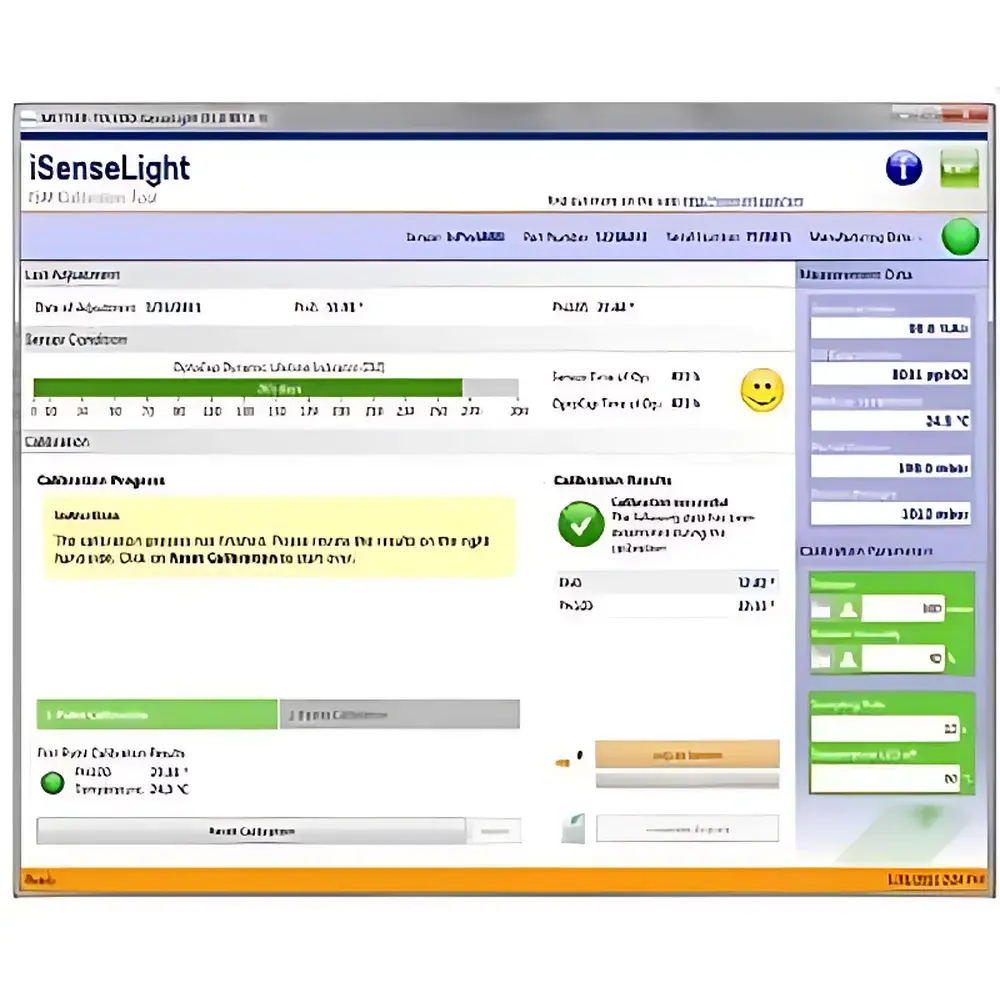
The bundled AASControl Suite provides bilingual (English/Chinese) GUI navigation, automated multi-point calibration curve generation (linear, quadratic, or forced-zero), QC check sample scheduling, and customizable report templates exportable in PDF, CSV, and XML formats. All measurement data—including time-stamped absorbance traces, peak area integrals, and baseline-corrected values—are stored in an encrypted local database with version-controlled method files. Raw spectral scans (wavelength vs. absorbance) can be exported for third-party chemometric processing. Software update logs, user access permissions, and electronic signature fields support regulated environments requiring ALCOA+ data integrity principles.
Applications
- Environmental monitoring: Pb, Cd, Cr, Ni, Zn, and Cu in wastewater, soil extracts, and drinking water per EPA Method 7000B.
- Food and feed analysis: Na, K, Ca, Mg, Fe, Mn, and Zn in dairy products, cereals, and infant formula per AOAC 985.27 and ISO 6497.
- Pharmaceutical excipient testing: Catalyst residue screening (e.g., Pd, Pt, Rh) in active pharmaceutical ingredients per ICH Q3D guidelines.
- Metallurgical process control: Al, Si, Ti, and V in aluminum alloys and steel digests per ASTM E352 and ISO 11885.
- Geochemical prospecting: Rare earth elements (La, Ce, Nd) and base metals in rock leachates using standardized HF-HNO₃ digestion protocols.
FAQ
What atomization system does the AAS6000 use?
It employs a premix-type air-acetylene flame atomizer with a titanium combustion head and custom Wirsching nebulizer—optimized for sensitivity and long-term stability in routine flame-AAS applications.
Is graphite furnace capability available?
No—the AAS6000 is a dedicated flame-AAS platform. For electrothermal atomization, ZHONGKEHUIFEN offers the AAS8000 series as a separate configuration.
How is background correction implemented?
Dual-mode correction: deuterium arc lamp for broadband background and self-reversal (SR) technique for structured background near resonance lines—both selectable per element method.
Does the system support regulatory-compliant data archiving?
Yes—when configured with audit-trail enabled software, all raw data, processing steps, and user metadata are retained with immutable timestamps and operator identification per 21 CFR Part 11 Annex 11 expectations.
What maintenance intervals are recommended?
Nebulizer cleaning every 8–10 hours of operation; burner head inspection weekly; optical alignment verification quarterly; annual wavelength calibration using holmium oxide reference filter.