
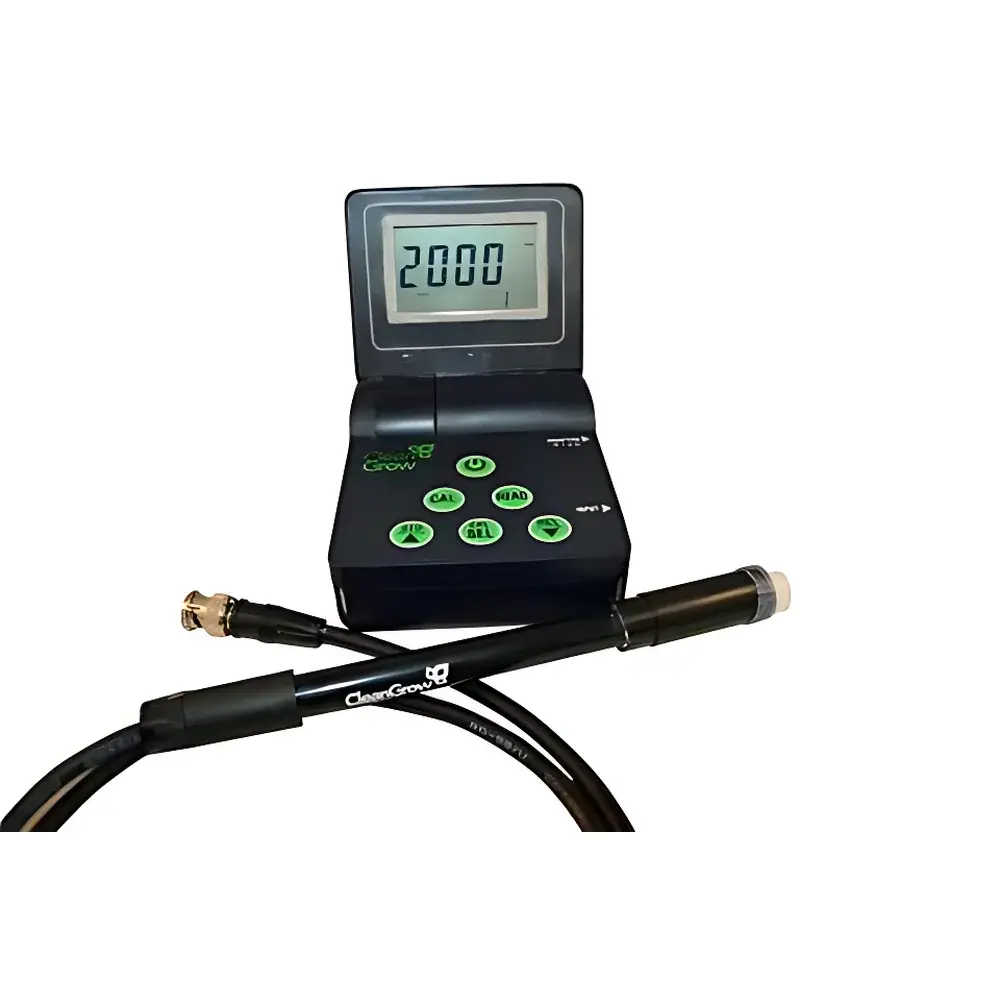
NH3 Portable Ammonium Ion Selective Electrode Analyzer
| Origin | UK |
|---|---|
| Manufacturer Type | Authorized Distributor |
| Origin Category | Imported |
| Model | NH3 |
| Instrument Type | Portable |
| Measurement Range | 0.05–9000 ppm |
| Detection Limit | 0.05 ppm |
| Response Time | ≤5 s |
| Accuracy | ±1% of reading |
| Operating Temperature | 0–50 °C |
| pH Range | 3.5–11 |
| Connector | BNC |
| Housing Material | Anodized Aluminum |
| Cable Length | 1 m |
Overview
The NH3 Portable Ammonium Ion Selective Electrode Analyzer is an electrochemical sensing system engineered for rapid, field-deployable quantification of ammonium ions (NH₄⁺) in aqueous environmental samples. It operates on the principle of potentiometric ion-selective electrode (ISE) measurement, where a solid-state, membrane-based ammonium-selective sensor generates a Nernstian potential shift proportional to the logarithm of NH₄⁺ activity in solution. Unlike colorimetric or enzymatic methods, this ISE approach delivers direct, reagent-free measurement without sample digestion or derivatization—enabling real-time analysis in wastewater effluents, surface water, aquaculture systems, and soil leachates. The analyzer integrates a ruggedized, single-body electrode assembly with built-in temperature compensation and automatic calibration recognition, ensuring metrological traceability across variable field conditions.
Key Features
- Integrated solid-contact ammonium-selective electrode with polymeric ionophore membrane—optimized for high selectivity against common interferents including K⁺, Na⁺, Ca²⁺, and NH₃(g)
- Automatic temperature compensation (ATC) via integrated Pt1000 thermistor, compliant with ISO 10523 and ASTM D1293 for pH-coupled ionic measurements
- BNC-compatible interface with low-noise analog signal conditioning circuitry, supporting connection to standard portable meters, data loggers, or PC-based acquisition systems
- Anodized aluminum housing rated IP67 for dust and immersion resistance—validated for continuous operation in humid, outdoor, or splash-prone environments
- Calibration-ready architecture: supports two-point (low/high) or multi-point calibration routines; stores up to 10 calibration profiles with timestamped metadata
- Stable baseline drift <0.2 mV/h over 8-hour continuous operation—verified per IUPAC recommendations for ion-selective sensor stability assessment
Sample Compatibility & Compliance
The NH3 analyzer is validated for use with natural waters (freshwater, estuarine, treated wastewater), nutrient solutions, fermentation broths, and soil pore water extracts. Sample pH must be maintained between 3.5 and 11.0 to ensure NH₄⁺ remains the dominant ammonium species and minimize interference from volatile NH₃. Total dissolved solids (TDS) up to 10 g/L are supported without dilution. The device conforms to EN ISO/IEC 17025:2017 requirements for measurement uncertainty estimation and supports GLP-compliant data integrity through audit-trail-enabled software logging. All calibration standards and reference materials are traceable to NIST SRM 3194 (Ammonium Nitrate Solution) and certified by UKAS-accredited laboratories.
Software & Data Management
The included CleanGrow Data Manager v3.2 is a Windows-based desktop application compliant with FDA 21 CFR Part 11 for electronic records and signatures. It provides automated calibration curve generation, real-time graphing, batch export to CSV/Excel, and configurable report templates aligned with ISO 5667-3 (water sampling) and EPA Method 350.1 (ammonia in water). Raw mV readings, temperature-corrected concentration values, and QC flags (e.g., slope deviation >5%, response time exceedance) are stored with immutable timestamps and user authentication logs. Exported datasets include metadata fields for sampling location, operator ID, instrument serial number, and calibration certificate reference.
Applications
- Regulatory compliance monitoring under EU Water Framework Directive (WFD) Annex V and US EPA NPDES permit limits for total ammonia nitrogen (TAN)
- Process control in municipal and industrial wastewater treatment plants—especially in nitrification/denitrification basins and sidestream deammonification units
- Real-time nutrient management in hydroponic and aquaponic facilities, where NH₄⁺ accumulation indicates microbial imbalance or feed overload
- Field screening of agricultural runoff and manure lagoon discharges prior to land application, per USDA NRCS Code 590
- Research-grade ammonium profiling in limnological studies, sediment-water interface investigations, and biogeochemical cycling experiments
FAQ
What is the difference between ammonium (NH₄⁺) and ammonia (NH₃) measurement with this instrument?
This analyzer measures total ammonium ion activity (NH₄⁺) directly. At pH 90% of total ammonia exists as NH₄⁺; above that, volatile NH₃ dominates and requires gas-diffusion correction. The device does not measure gaseous NH₃.
Can the electrode be used in seawater or high-salinity samples?
Yes—valid for salinities up to 35 ppt (seawater strength) when calibrated in matrix-matched standards. Ionic strength effects are compensated via the built-in activity coefficient algorithm.
How often does the electrode require recalibration during extended field deployment?
For routine monitoring, recalibration is recommended every 8 hours or after 20 measurements. In stable matrices (e.g., effluent streams), 24-hour calibration intervals are supported with documented slope verification.
Is the instrument suitable for regulatory reporting under ISO or EPA methods?
While not a standalone certified method, it meets performance criteria specified in ISO 14911 (ion chromatography reference) and EPA 350.1 for field screening. Data may be used for trend analysis, process control, and pre-screening prior to lab confirmation.
Does the system support wireless data transmission?
No—data transfer occurs via USB 2.0. However, the BNC analog output enables integration with third-party telemetry systems (e.g., Campbell Scientific dataloggers) using standard voltage-input modules.







