
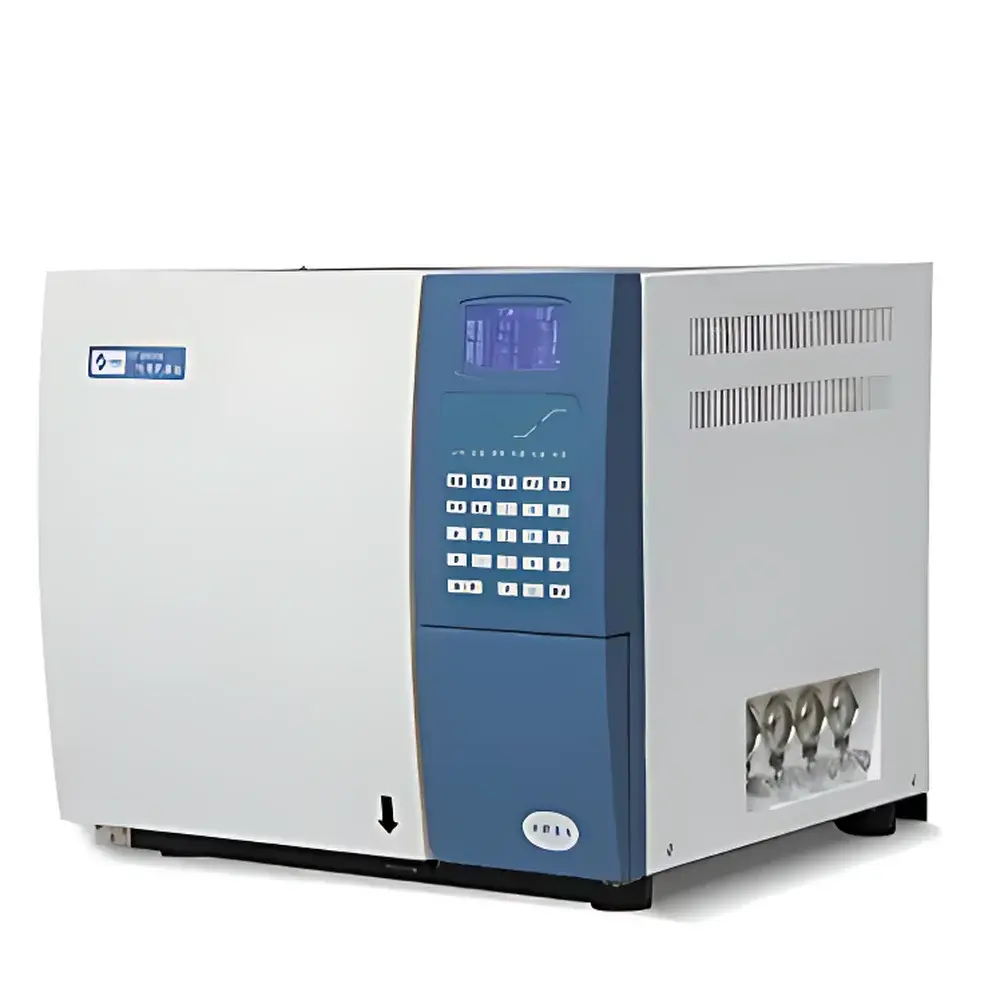
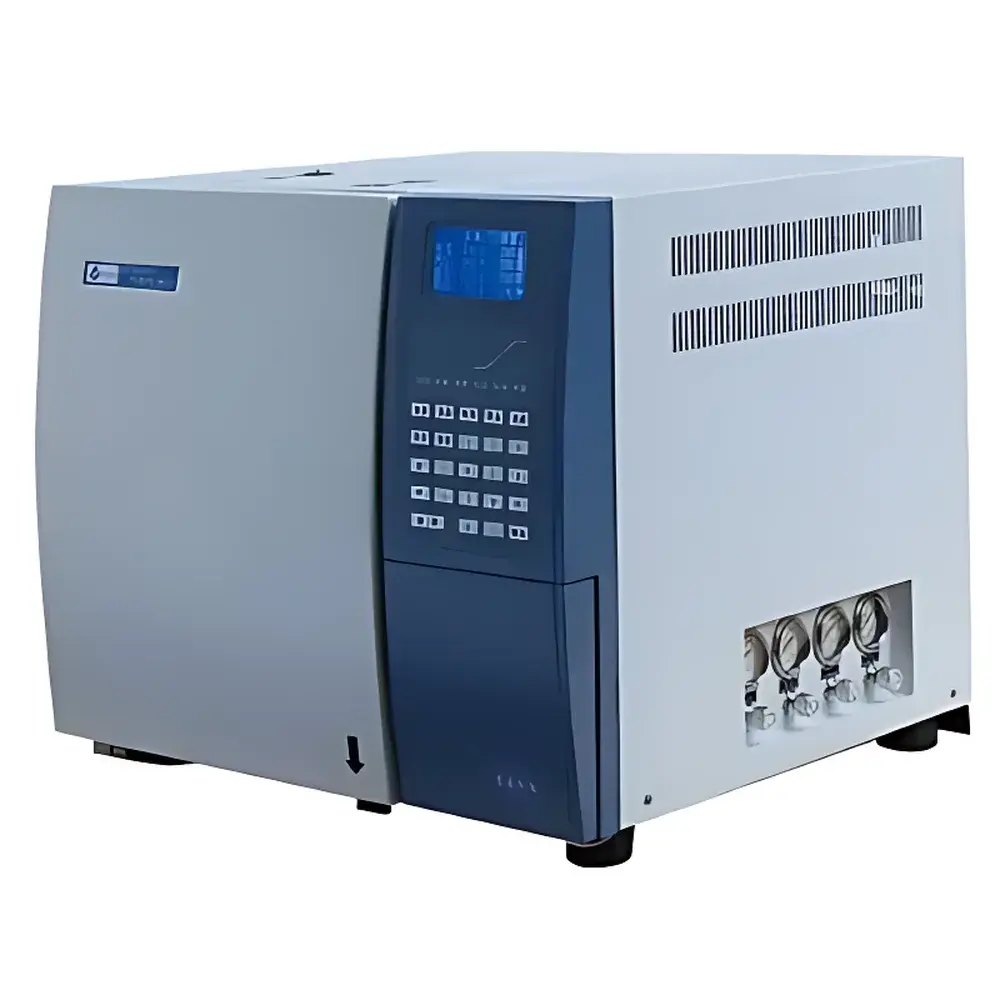
ZHONGKEHUIFEN GC-6890A Mine-Specific Gas Chromatograph
| Brand | ZHONGKEHUIFEN |
|---|---|
| Origin | Beijing, China |
| Model | GC-6890A Mine-Specific Gas Chromatograph |
| Instrument Type | Laboratory Gas Chromatograph |
| Application Domain | Coal Mining Industry |
| Detection Configuration | TCD + Dual FID + Methane Converter |
| Sample Introduction | Automated 10-Port Valve with Manual/Ball-Bag Sampling Option |
| Column System | Dedicated Packed Columns with Triple Pre-cut Traps |
| Analysis Time | 4–8 min per injection |
| Minimum Detectable Concentration | CO & C₂H₂ ≤ 0.5 ppm |
| Temperature Control Range | Oven, Detector, and Converter up to 400 °C |
| Power Supply | AC 220 V ±10%, 50 Hz, ≤2500 W |
| TCD Sensitivity | ≥5000 mV·mL/mg |
| FID Detection Limit | ≤1.0×10⁻¹¹ g/s |
| System Precision | ≤1% RSD |
Overview
The ZHONGKEHUIFEN GC-6890A Mine-Specific Gas Chromatograph is a purpose-engineered analytical system designed for comprehensive, high-reliability gas composition analysis in underground coal mine environments. It operates on the principle of packed-column gas chromatography coupled with selective detection—employing thermal conductivity detection (TCD) for permanent gases (O₂, N₂) and dual flame ionization detection (FID) for hydrocarbons and carbon oxides following catalytic methanation. The integrated methane converter (Ni catalyst, 360 °C) quantitatively transforms CO and CO₂ into CH₄, enabling sensitive and linear FID response where conventional FID would otherwise yield no signal. This configuration satisfies the critical requirement for simultaneous, trace-level quantification of explosion-prone (CH₄, C₂H₂, C₂H₄, C₂H₆) and asphyxiation/toxicity indicators (CO, O₂ depletion) within a single 4–8 minute run—fully aligned with China’s AQ 1013–2005 and MT/T 752–1997 standards for mine fire early warning and ventilation safety monitoring.
Key Features
- Dedicated hardware architecture: Triple pre-cut packed column traps prevent contamination of analytical columns, ensuring >12 months of uninterrupted operation under continuous field deployment.
- Automated 10-port valve sampling system with seamless manual (ball-bag) / automatic mode switching—enabling rapid response during emergency sampling without instrument reconfiguration.
- Intelligent sensitivity modulation: FID gain dynamically adjusts based on real-time peak elution, optimizing signal-to-noise for both major (CH₄, CO₂) and trace-level (C₂H₄ at ≤0.1 ppm) components in a single chromatogram.
- Multi-detector signal routing: Independent TCD, FID-I (methanated gases), and FID-II (native hydrocarbons) output channels support concurrent data acquisition and cross-validation per IEC 61511 functional safety guidelines.
- Ruggedized thermal management: All heated zones (oven, detectors, converter) maintain ±0.1 °C stability from ambient to 400 °C, certified per ISO/IEC 17025 temperature uniformity requirements for quantitative GC.
Sample Compatibility & Compliance
The GC-6890A accepts direct gas samples collected via stainless-steel ball bags or integrated multi-channel automatic mine air samplers (optional). It is validated for analysis of undiluted mine atmosphere containing O₂ (15–21%), N₂ (75–80%), CH₄ (0.1–10%), CO (0.5–1000 ppm), CO₂ (0.01–5%), and C₁–C₂ hydrocarbons. Method performance meets ASTM D1945 (analysis of natural gas) and GB/T 13610–2014 (gas chromatographic analysis of light hydrocarbons) for precision and linearity. Full audit trail, electronic signature, and parameter lockout capabilities support compliance with GLP and GMP documentation practices in regulated safety-critical applications.
Software & Data Management
Controlled via embedded industrial PC with Chinese/English bilingual GUI, the system records all acquisition parameters, valve actuation timestamps, detector baselines, and calibration history in a tamper-evident SQLite database. Raw chromatograms are stored in ANDI/NetCDF format for third-party review. Export modules generate PDF reports compliant with MSHA Form 7000-1 and provincial coal safety bureau submission templates—including auto-calculated explosion triangle coordinates (CH₄/O₂/C₂H₄ ratios) and spontaneous combustion index (C₂H₄/C₂H₆ + C₂H₂/C₂H₄). Data export supports CSV, XML, and OPC UA for integration into mine-wide SCADA systems.
Applications
- Real-time monitoring of spontaneous combustion precursors (C₂H₄, C₂H₂, C₂H₆) in goaf zones and sealed areas.
- Quantitative assessment of ventilation efficiency via O₂/N₂ ratio deviation and CO accumulation trends.
- Post-ignition forensic analysis of explosion residue gases per NFPA 921 Chapter 18 protocols.
- Calibration verification of fixed-point electrochemical and IR-based mine gas sensors.
- Regulatory reporting for State Administration of Mine Safety Inspection (SAMSI) annual gas hazard assessments.
FAQ
What gases does the GC-6890A quantify in a single run?
O₂, N₂, CH₄, CO, CO₂, C₂H₄, C₂H₆, and C₂H₂—covering all Class I explosion hazard gases and spontaneous combustion markers defined in GB 50160.
Is hydrogen (H₂) detectable?
No—H₂ is not resolved by the standard packed column/TCD/FID configuration. Optional TCD column reconfiguration or addition of a molecular sieve capillary column is required for H₂ separation.
Can the system operate unattended for extended periods?
Yes—when paired with the optional 16-channel automatic sampler and UPS backup, it supports 72-hour无人值守 operation with automated calibration every 8 hours.
Does the instrument comply with international electrical safety standards?
It conforms to GB/T 18268.1–2010 (equivalent to IEC 61326-1) for electromagnetic compatibility and explosion-proof auxiliary interfaces (Ex ib IIB T4).
What maintenance intervals are recommended for field deployment?
Column trap replacement every 6 months; Ni converter catalyst refresh every 12 months; FID jet cleaning quarterly; full system performance verification per ISO/IEC 17025 every 6 months.
Related Products




