
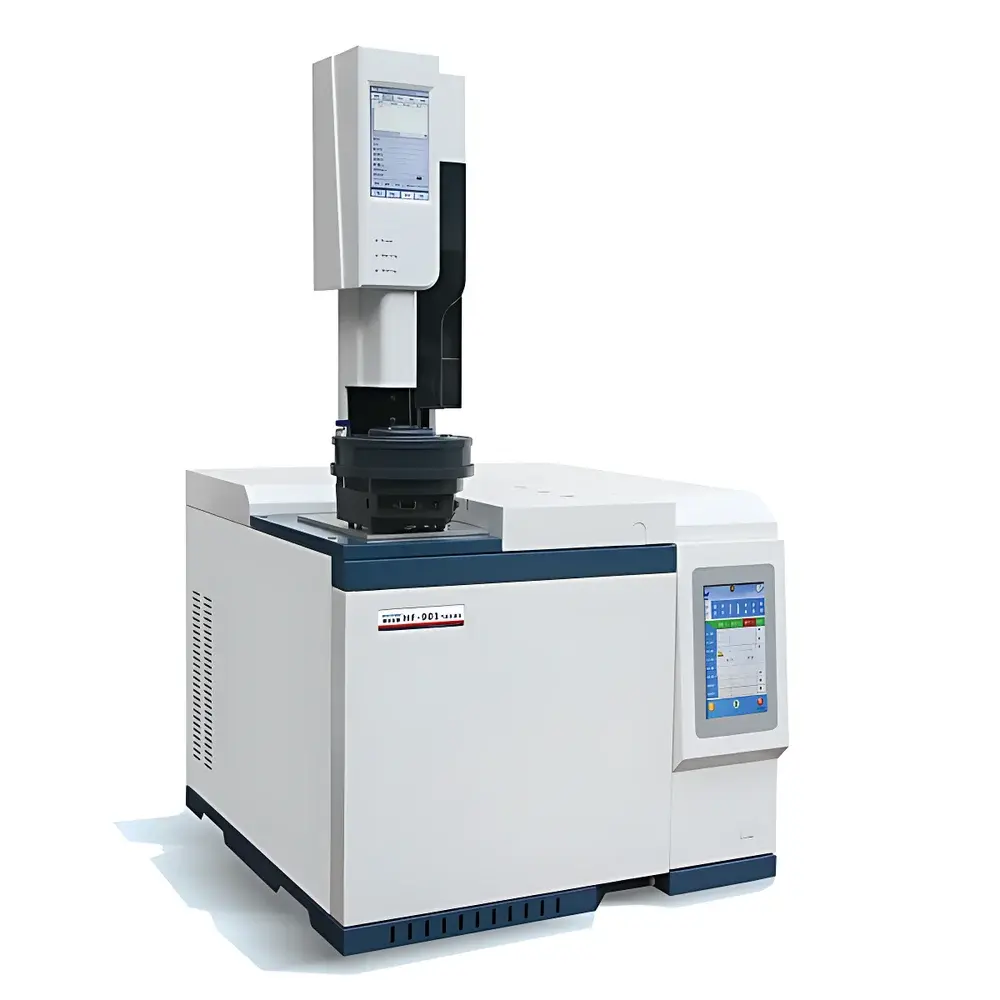
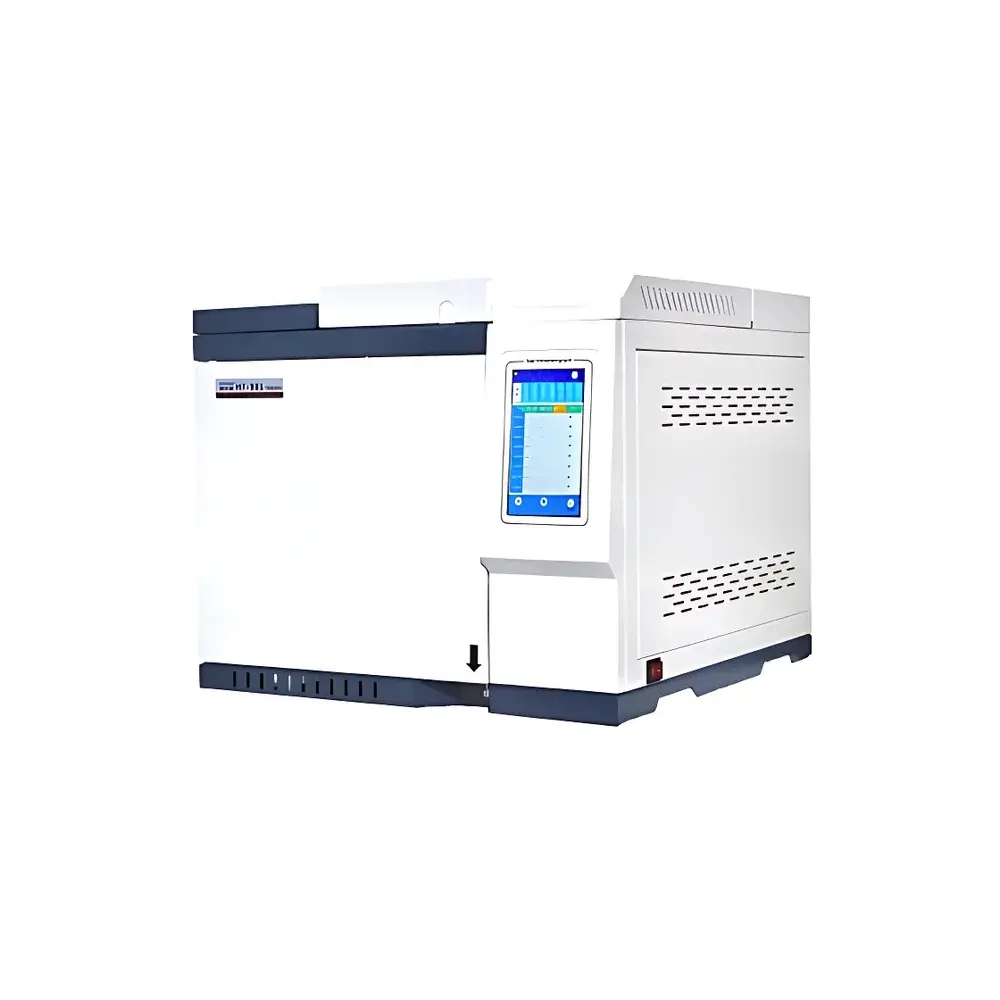
ZHONGKEHUIFEN HF-901 Gasoline PONA Analysis Gas Chromatograph
| Brand | ZHONGKEHUIFEN |
|---|---|
| Origin | Beijing, China |
| Manufacturer Type | Authorized Distributor |
| Product Origin | Domestic (China) |
| Model | HF-901 Gasoline PONA Analysis |
| Instrument Type | Laboratory Gas Chromatograph |
| Application Scope | General-Purpose Hydrocarbon Group-Type Analysis |
| Oven Temperature Range | Ambient + 3 °C to 450 °C |
| Oven Ramp Rate | 0.1–40 °C/min |
| Oven Cool-Down Time | ~8 min (450 °C → 50 °C) |
| Carrier Gas Flow Range & Control | 0–1200 mL/min (EPC) |
| Carrier Gas Pressure Range & Control | 0–970 kPa (EPC) |
| Injector Maximum Operating Temperature | 450 °C |
| Injector Pressure Setting Range | 0–970 kPa (EPC) |
| Injector Total Flow Setting Range | 0–1200 mL/min (EPC) |
Overview
The ZHONGKEHUIFEN HF-901 Gasoline PONA Analysis Gas Chromatograph is a dedicated laboratory-scale GC system engineered for precise hydrocarbon group-type analysis of gasoline and related refinery streams. It implements a validated ASTM D5134 / D6730-compliant methodology to quantify Paraffins (P), Olefins (O), Naphthenes (N), and Aromatics (A) — collectively referred to as PONA — while simultaneously resolving individual hydrocarbon components (e.g., n-heptane, methylcyclohexane, toluene, styrene). The instrument employs high-resolution capillary column separation coupled with flame ionization detection (FID), supported by retention index-based compound identification using n-alkane calibration standards. Its thermal management architecture ensures stable temperature programming across wide ramp rates and rapid equilibration between runs, critical for high-throughput refinery QC and R&D laboratories.
Key Features
- Modular, field-upgradable hardware platform supporting multiple detector configurations: FID (standard), TCD, ECD, FPD, and NPD — enabling method flexibility beyond PONA into sulfur speciation, oxygenates, or trace contaminants.
- Electronic Pressure Control (EPC) across all gas channels — eliminating mechanical pressure regulators and analog flow meters; delivering ±0.01 kPa pressure stability and <0.1% relative flow repeatability.
- 7-inch full-color resistive touchscreen LCD with bilingual (English/Chinese) UI; intuitive workflow navigation optimized for routine lab operators without advanced GC expertise.
- Integrated 10/100M Ethernet interface with embedded TCP/IP stack; supports remote monitoring, method transfer, and real-time data streaming to LIMS or centralized data servers.
- Auto-protection logic: automatic flame-out detection, re-ignition sequence, carrier gas shutoff on fault, and cold-start initialization — minimizing operator intervention and enhancing operational safety.
- Programmable timed injection cycles compatible with liquid autosamplers or gas-tight syringe modules, facilitating unattended batch analysis of gasoline cuts, reformate, or FCC naphtha.
Sample Compatibility & Compliance
The HF-901 is validated for direct injection of neat gasoline, hydrotreated naphthas, alkylates, and oxygenated blends (e.g., MTBE-, ethanol-containing fuels). Sample introduction utilizes split/splitless injectors with inert quartz liners and low-bleed septa to preserve chromatographic fidelity. All PONA quantification workflows align with ASTM D5134 (Standard Test Method for Determination of Hydrocarbon Types in Gasoline by Gas Chromatography) and D6730 (Standard Test Method for Determination of Individual Hydrocarbon Components in Spark Ignition Engine Fuels by Gas Chromatography). System suitability criteria—including resolution between critical pairs (e.g., methylcyclohexane/toluene), retention time drift (<0.02 min over 24 h), and peak area RSD (<1.5%)—are fully documented and support GLP/GMP audit readiness. Optional 21 CFR Part 11-compliant user access control and electronic signature modules are available via IBrainChrom software licensing.
Software & Data Management
IBrainChrom workstation software serves as the central analytical engine, supporting up to 253 concurrent GC systems on a single network segment. Its PONA3000 module implements retention index normalization using internal n-alkane standards (C5–C12), generating instrument-specific reference libraries that eliminate inter-system transfer variability. Overlay visualization places sample chromatograms directly beneath standardized reference traces on identical x/y axes — enabling immediate visual alignment of P, O, N, and A zones. Quantitative reports include group-type mass percentages, individual hydrocarbon concentrations (ppm–wt%), olefin saturation indices, and aromatic substitution patterns. Raw data (.cdf) and processed results export natively to CSV, PDF, and XML formats; Modbus RTU server integration permits seamless forwarding of summary metrics (e.g., total aromatics %, olefin content) to DCS or MES platforms without middleware.
Applications
- Refinery process optimization: Monitoring catalytic reformer, FCC, and hydrotreater outputs for PONA balance shifts indicative of catalyst deactivation or feedstock variation.
- Fuel specification compliance: Verifying ASTM D4814, EN 228, or GB 17930 requirements for aromatic and olefin limits in finished gasoline.
- Alternative fuel characterization: Assessing bio-blendstock compatibility (e.g., isobutanol, ETBE) via changes in paraffin/olefin ratios and ring saturation profiles.
- Research-grade hydrocarbon mapping: Supporting kinetic modeling of isomerization, cracking, and aromatization reactions through time-resolved PONA profiling.
- Quality assurance in fuel additives: Detecting unintended hydrocarbon co-elutions or degradation products interfering with detergent or antioxidant efficacy.
FAQ
What detection methods are supported for PONA analysis on the HF-901?
FID is the primary detector specified for ASTM D5134/D6730 compliance; however, TCD may be used for bulk hydrocarbon screening, and FPD/ECD configurations enable concurrent sulfur or halogenated compound detection.
Can the HF-901 perform ASTM D6729 (Simulated Distillation) alongside PONA?
Yes — with appropriate column selection (e.g., 100% dimethylpolysiloxane), temperature program modification, and SimDis calibration in IBrainChrom, the same platform supports both PONA and simulated distillation workflows.
Is method validation documentation provided with the system?
Yes — each shipment includes a Factory Acceptance Test (FAT) report, system suitability protocol, and pre-validated PONA3000 method templates compliant with ISO/IEC 17025 traceability requirements.
How is data integrity ensured during long-term deployment?
IBrainChrom supports audit trail logging (user actions, parameter changes, result modifications), electronic signatures, and role-based permissions — configurable to meet FDA 21 CFR Part 11 and EU Annex 11 expectations.
What maintenance intervals are recommended for optimal PONA accuracy?
Injector liner replacement every 200 injections; column trimming every 500 runs; FID jet cleaning quarterly; EPC transducer calibration annually — all tracked via built-in maintenance scheduler in the workstation.





