
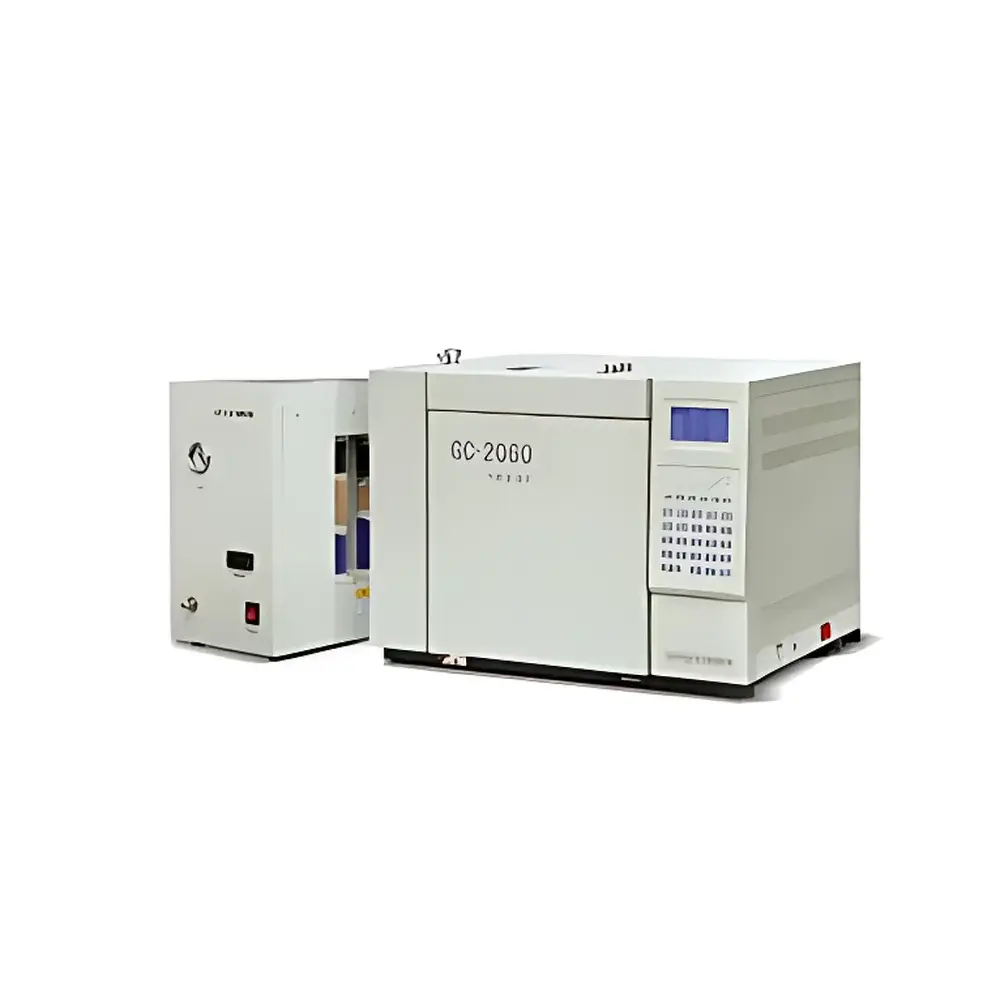
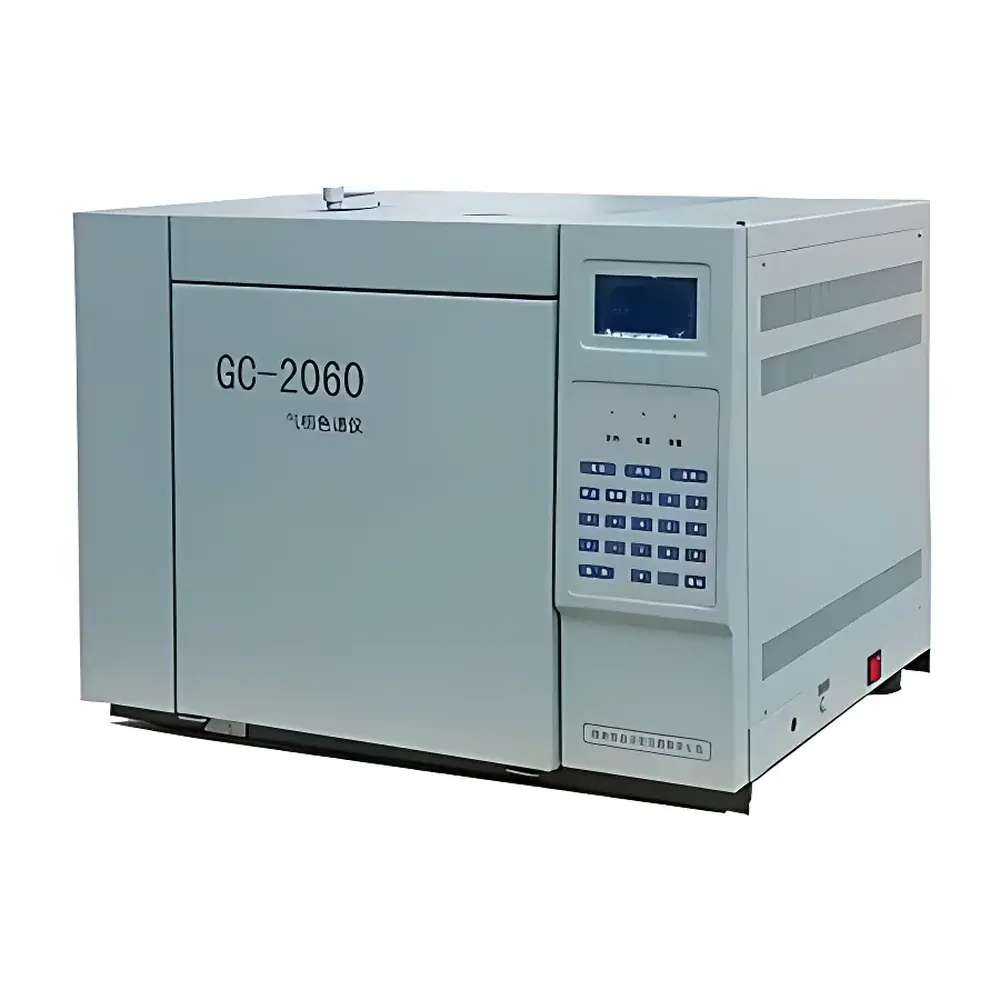
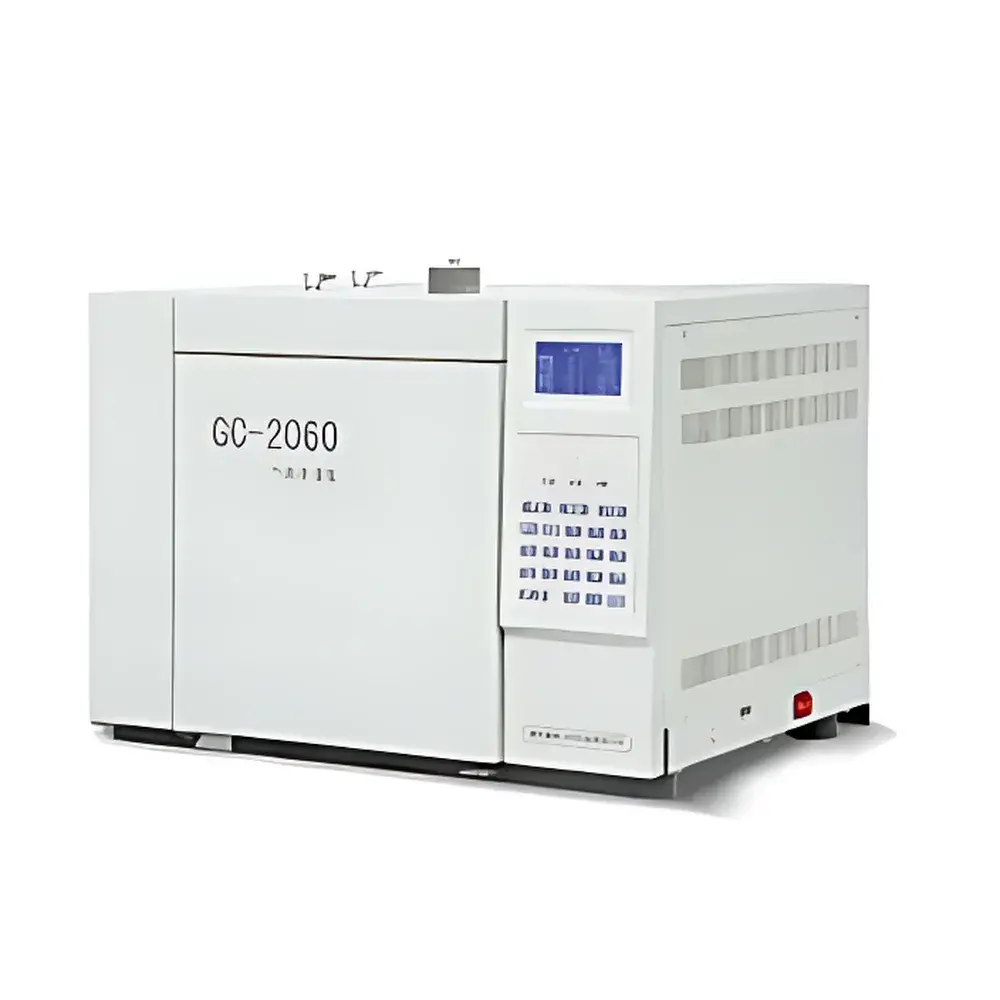
ZHONGKEHUIFEN GC-2060 Total Hydrocarbons and Non-Methane Hydrocarbons (NMHC) Gas Chromatograph
| Brand | ZHONGKEHUIFEN |
|---|---|
| Origin | Beijing, China |
| Model | GC-2060 |
| Instrument Type | Laboratory Gas Chromatograph |
| Application Field | Petrochemical Industry-Specific |
| Temperature Control Range | Ambient + 3°C to 450°C |
| Oven Ramp Rate | 0.1–40°C/min |
| Cool-down Time | ~8 min (450°C → 50°C) |
| Carrier Gas Flow Range & Control | 0–1200 mL/min |
| Carrier Gas Pressure Range & Control | 0–970 kPa |
| Injector Maximum Operating Temperature | 450°C |
| Injector Pressure Setting Range | 0–970 kPa |
| Injector Total Flow Setting Range | 0–1200 mL/min |
Overview
The ZHONGKEHUIFEN GC-2060 is a dedicated laboratory gas chromatograph engineered for precise quantification of total hydrocarbons (THC) and non-methane hydrocarbons (NMHC) in emission and ambient air samples. It operates on the principle of separation by partitioning analytes between a mobile phase (high-purity carrier gas, typically nitrogen or helium) and a stationary phase coated inside fused-silica capillary columns, followed by detection via dual hydrogen flame ionization detectors (FIDs). The instrument implements a validated dual-quantitative loop configuration—enabling simultaneous determination of methane and residual hydrocarbons in a single injection—thereby eliminating manual re-injection and minimizing analytical uncertainty. Designed specifically for compliance with Chinese environmental monitoring standards—including HJ 604–2011 (for ambient air THC) and HJ/T 38–1999 (for stationary source NMHC)—the GC-2060 delivers method-validated performance without requiring post-acquisition computational subtraction of methane.
Key Features
- Dual quantitative loop system with selectable manual or automated gas sampling valves for direct, interference-free analysis of THC and NMHC in one run.
- Two independent FID detectors with matched micro-current amplifiers and dual-channel analog/digital output, ensuring parallel signal acquisition and enhanced data integrity.
- High-stability temperature control architecture: oven, injector, and detector zones each maintain ±0.1°C precision across full operating range (ambient +3°C to 450°C).
- Optimized inlet design mitigates sample discrimination during gas-phase introduction; dual-column compensation functionality actively corrects baseline drift induced by programmed temperature ramping.
- Large-volume column oven accommodates two 80 m capillary columns simultaneously—supporting method redundancy, column backflushing, or parallel validation protocols.
- Thermal insulation engineering reduces external surface temperature to ≤40°C even when internal zones operate at 300°C—enhancing operator safety and lab environmental stability.
- Intelligent rear-door cooling system accelerates thermal equilibration after temperature programming, reducing cycle time between consecutive analyses.
Sample Compatibility & Compliance
The GC-2060 is validated for gaseous matrices including stack emissions, fugitive emissions, ambient air, and industrial process vents. It accepts standard 0.5–10 mL gas volumes via stainless-steel or fused-silica sampling loops and supports both on-line and off-line sampling configurations. The system meets essential requirements for regulatory reporting under China’s Ministry of Ecology and Environment (MEE) frameworks. While not pre-certified to ASTM D6348 or ISO 12913, its hardware architecture—including pressure/flow-controlled carrier delivery, high-fidelity FID response linearity (R² ≥ 0.999 over 10⁵ dynamic range), and trace-level methane detection limit (≤0.02 µL/L)—is fully compatible with adaptation to international protocols upon user-configured method validation. Data acquisition supports audit-ready metadata logging aligned with GLP principles.
Software & Data Management
The GC-2060 employs embedded firmware with full keyboard-based navigation and a large-character LCD interface supporting bilingual prompts (Chinese/English). All method parameters—including oven program steps, detector settings, valve timing, and flow/pressure profiles—are stored as editable methods with version timestamping. Raw chromatograms and processed peak tables are exportable in CSV and native binary formats. While the base system does not include 21 CFR Part 11-compliant electronic signature modules, its deterministic I/O architecture allows integration with third-party LIMS platforms via RS-232 or optional Ethernet interface for centralized data archiving and review.
Applications
- Regulatory monitoring of NMHC from petrochemical refineries, chemical manufacturing facilities, and coating operations per HJ/T 38–1999.
- Ambient air quality assessment for THC in urban, industrial, and background sites per HJ 604–2011.
- Method development and validation for VOC speciation where NMHC serves as a surrogate parameter.
- QA/QC verification of continuous emission monitoring systems (CEMS) using reference gas standards.
- Process optimization support in catalyst testing, combustion efficiency studies, and landfill gas characterization.
FAQ
What is the minimum detectable concentration for methane?
The instrument achieves a methane detection limit of ≤0.02 µL/L (v/v) under standard operating conditions using a 1 mL gas loop and optimized FID settings.
Can the GC-2060 analyze liquid samples directly?
No—it is configured exclusively for gaseous sample introduction. Liquid samples require prior headspace or purge-and-trap derivatization using external accessories.
Is dual-column analysis mandatory for NMHC measurement?
Not mandatory, but recommended: one column separates methane; the second resolves C₂–C₁₀ hydrocarbons. The dual-compensation algorithm requires synchronized operation of both columns.
Does the system support unattended overnight operation?
Yes—the oven cooling rate, thermal stability, and power-loss recovery logic enable reliable multi-sample sequences without manual intervention.
What carrier gases are compatible?
Nitrogen (recommended for optimal sensitivity and cost-efficiency) and helium (for faster analysis or higher resolution); hydrogen is not supported due to FID safety constraints.





