
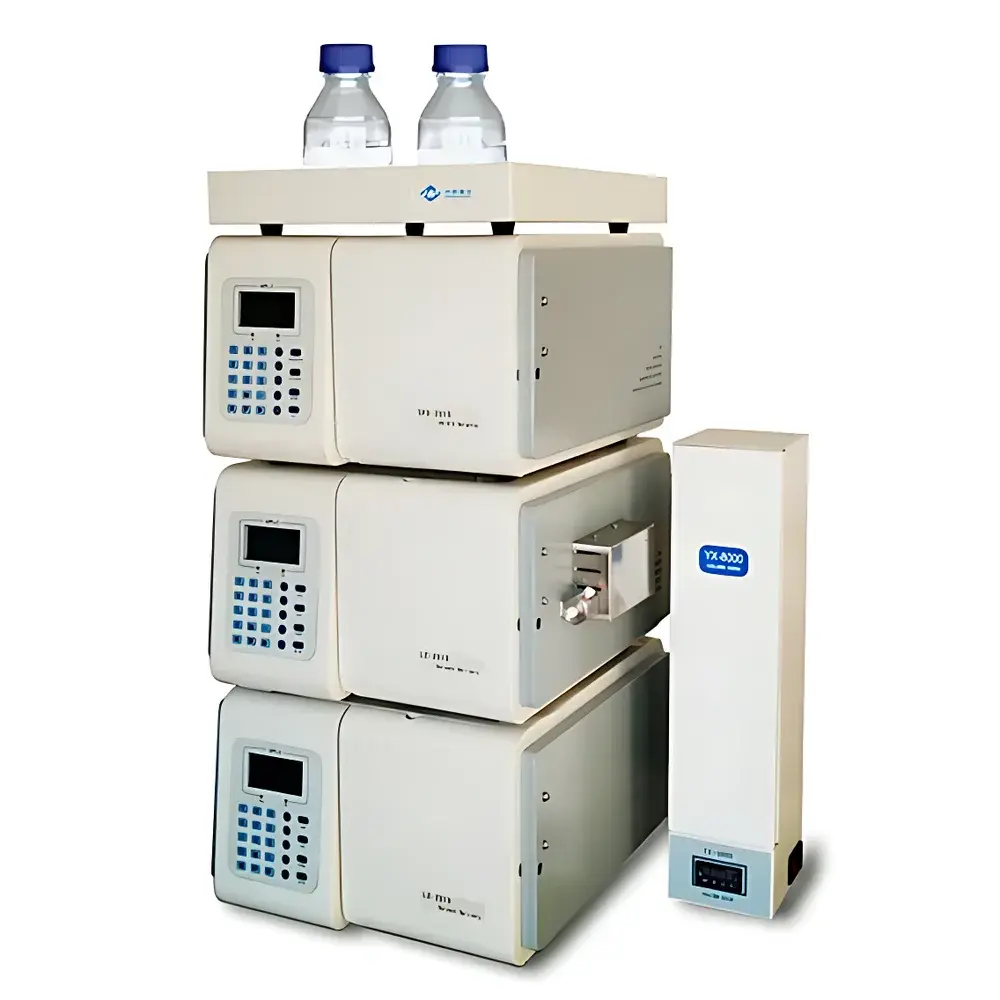
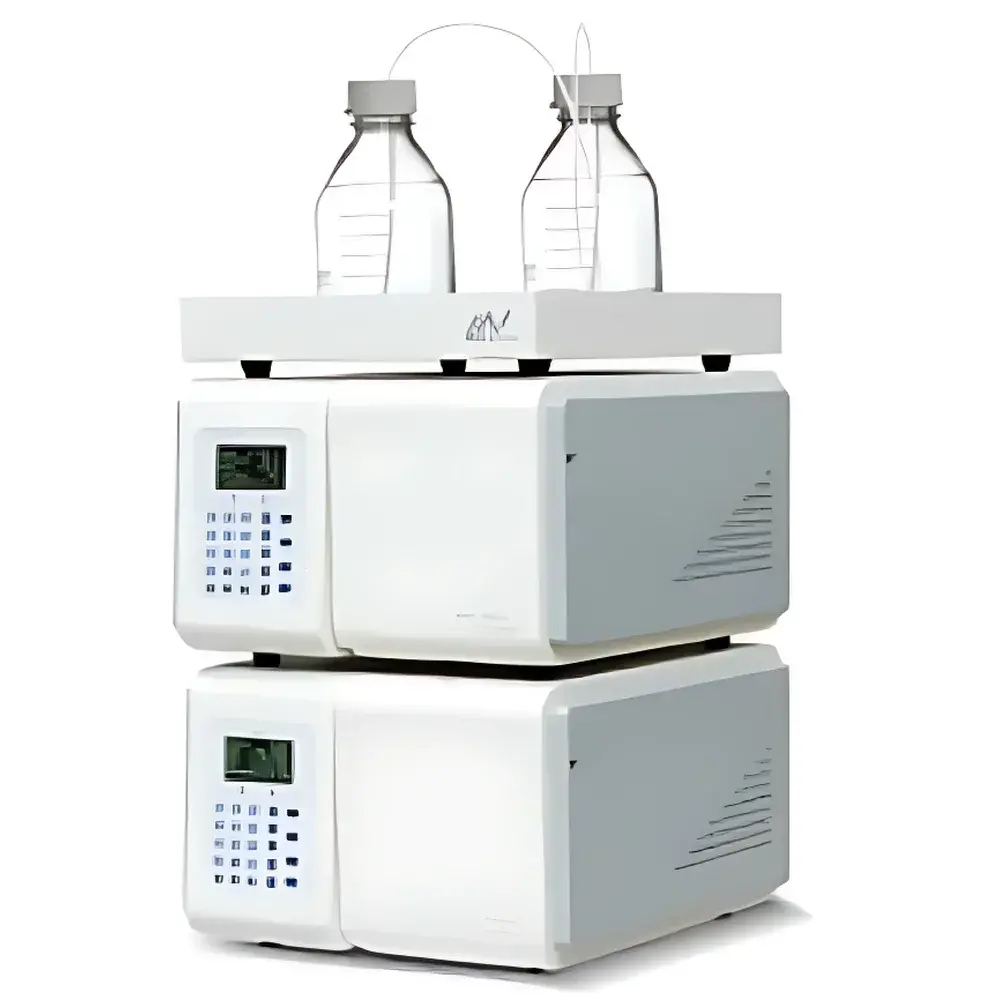
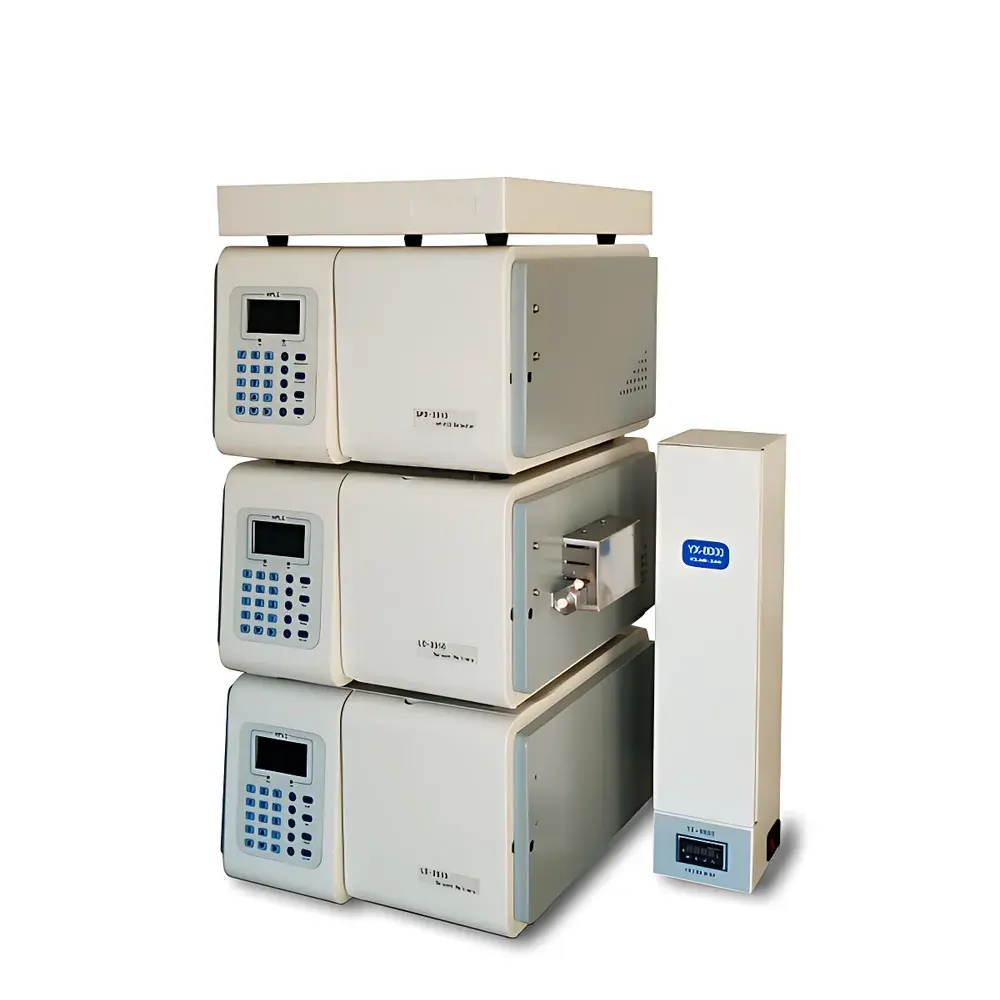
ZHONGKEHUIFEN LC-2212 High-Performance Liquid Chromatograph
| Brand | ZHONGKEHUIFEN |
|---|---|
| Origin | Beijing, China |
| Manufacturer Type | Authorized Distributor |
| Regional Classification | Domestic (PRC) |
| Model | LC-2212 |
| Instrument Category | Conventional HPLC System |
| Flow Rate Range | 0.001–9.999 mL/min |
| Maximum Pressure | 40 MPa |
| Autosampler Capacity | 50 positions |
| Injection Volume Range | 1–50 µL |
| Column Oven Temperature Range | (Ambient + 10)°C to 60°C |
| UV-Vis Wavelength Range | 190–700 nm |
| Data Acquisition Rate | 10 Hz |
Overview
The ZHONGKEHUIFEN LC-2212 is a modular, high-reliability high-performance liquid chromatograph engineered for routine analytical laboratories requiring robust separation performance, long-term operational stability, and compliance-ready data integrity. Based on classical reversed-phase and normal-phase HPLC principles, the system employs isocratic or gradient elution via dual-piston reciprocating pumps, delivering precise solvent delivery under pressures up to 40 MPa. Its detection architecture integrates a dual-beam UV-Vis absorbance detector with holographic concave grating optics, enabling high-fidelity spectral acquisition across the full 190–700 nm range—critical for method development in pharmaceutical QC, environmental residue analysis, food additive quantification, and natural product profiling.
Key Features
- Self-flushing pump head design eliminates manual solvent priming and reduces downtime during method switching or maintenance.
- Patented floating plunger seal technology extends seal service life to ≥5,000 operational hours without leakage under continuous high-pressure operation.
- Programmable solvent compressibility compensation ensures accurate flow delivery across diverse mobile phase compositions (e.g., water/acetonitrile, water/methanol).
- Modular pump configuration supports analytical, semi-preparative, and preparative applications through interchangeable pump heads and flow cell options.
- Dual-beam optical path with holographic concave grating delivers superior baseline stability (≤2 × 10⁻⁵ AU at 254 nm, methanol, 1 mL/min) and low drift (≤4 × 10⁻⁴ AU/hr).
- Rheodyne 7725i manual injector (or optional autosampler with 50-position capacity) guarantees injection reproducibility (RSD ≤ 0.3% for 10 µL injections).
- Column oven with precise Peltier-based temperature control (ambient +10°C to 60°C, ±0.3°C accuracy) enhances retention time repeatability and method transferability.
- Microcontroller-based system management enables full parameter storage with power-loss protection, automatic deuterium lamp usage tracking, and real-time pressure/flow diagnostics.
Sample Compatibility & Compliance
The LC-2212 accommodates standard 4.6 mm ID analytical columns (up to 250 mm length) and is compatible with C18, C8, phenyl-hexyl, HILIC, and ion-exchange stationary phases. It supports aqueous and organic mobile phases including phosphate buffers, trifluoroacetic acid modifiers, and high-purity acetonitrile/methanol. The system meets core requirements of ISO/IEC 17025 for testing laboratory competence and aligns with instrument qualification elements referenced in USP , ICH Q2(R2), and ASTM E260/E1692. While not inherently 21 CFR Part 11-compliant out-of-the-box, its digital I/O interface and audit-trail-capable software (via optional PC-based acquisition module) support integration into validated environments when deployed with appropriate procedural controls and electronic signature workflows.
Software & Data Management
Data acquisition and processing are managed through a Windows-based chromatography data system (CDS) supporting peak integration, calibration curve generation (linear, quadratic, weighted), system suitability assessment (theoretical plates, tailing factor, resolution), and report export in PDF, CSV, and XML formats. Raw data files include embedded metadata (instrument ID, operator, date/time stamp, method parameters, lamp usage history). The system supports timestamped event logging, user-access-level configuration (admin/operator), and configurable data backup intervals. Optional modules enable LIMS connectivity via ASTM E1394 or HL7 interfaces and support for GLP/GMP audit trails when paired with networked file servers and role-based authentication.
Applications
- Pharmaceutical quality control: Assay and impurity profiling per USP monographs (e.g., paracetamol, metformin, ciprofloxacin).
- Environmental monitoring: Quantification of PAHs, organochlorine pesticides, and pharmaceutical residues in wastewater using EPA Method 8330B-compatible protocols.
- Food safety: Detection of synthetic dyes (e.g., Allura Red AC), preservatives (sorbic acid, benzoic acid), and mycotoxins (aflatoxin B1) in compliance with GB 5009 series standards.
- Academic research: Separation and characterization of flavonoids, alkaloids, and saponins from plant extracts using gradient elution and diode-array detection.
- Chemical manufacturing: Batch release testing of intermediates and final APIs where RSD ≤ 0.5% and retention time stability ≤ 0.2% over 24 h are required.
FAQ
What is the maximum operating pressure and flow accuracy specification?
The LC-2212 operates up to 40 MPa with flow accuracy ≤ ±1% at 1.000 mL/min (water, 8.5 MPa, 25°C) and flow precision (RSD) ≤ 0.25% under identical conditions.
Can the system be upgraded to gradient capability?
Yes—the modular architecture allows seamless integration of a low-dead-volume gradient mixer and dual-pump configuration without replacing the base chassis or detector.
Is the UV-Vis detector capable of spectral scanning?
No—the detector is fixed-wavelength or programmable single-wavelength; it does not support full-spectrum scanning or photodiode array functionality.
What column oven specifications are supported?
The integrated oven maintains temperature from ambient +10°C to 60°C with ±0.3°C setpoint accuracy and ≤0.2°C zone uniformity across a standard 15 cm column.
Does the system support electronic signatures for regulated environments?
Electronic signature functionality requires deployment of the optional CDS with 21 CFR Part 11-compliant configuration—including audit trail activation, password complexity enforcement, and operator identity binding to all acquisition and processing events.
Related Products





