
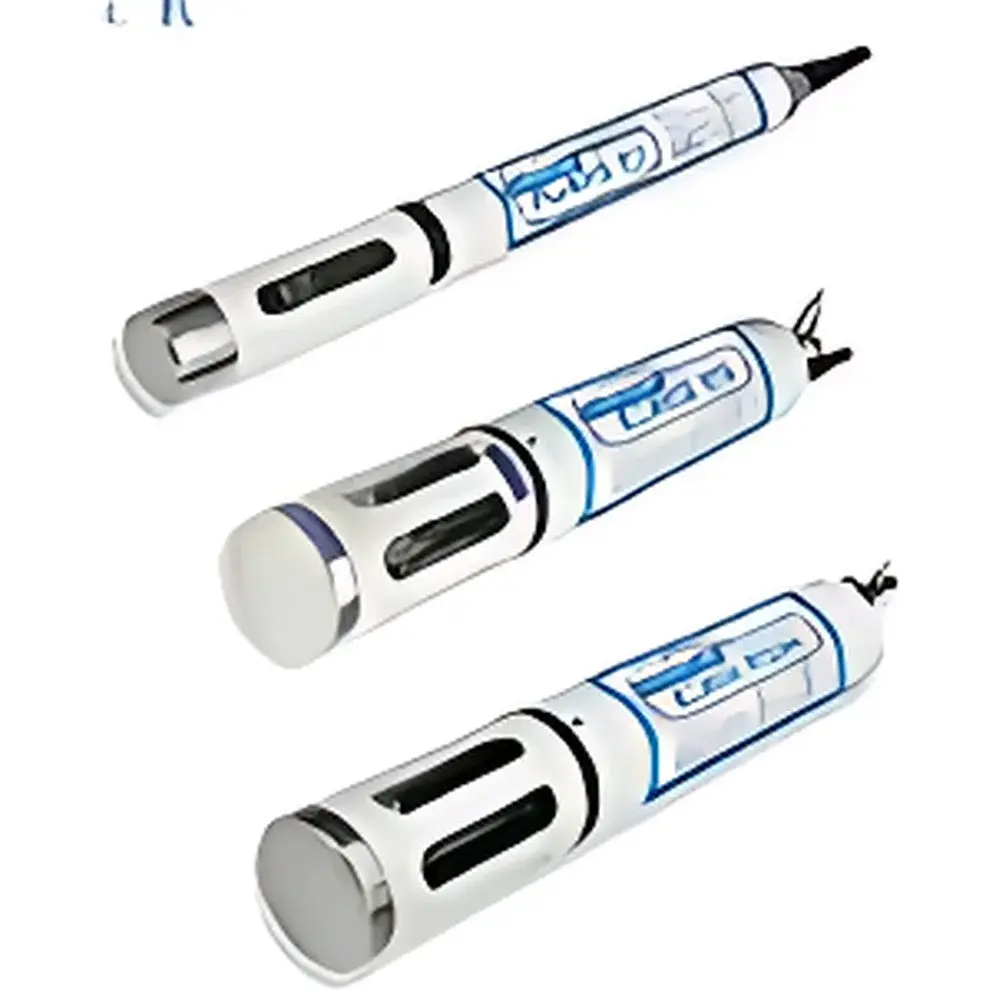
Hach Hydrolab DS5X / MS5 Multiparameter Water Quality Monitor
| Origin | USA |
|---|---|
| Manufacturer Type | Authorized Distributor |
| Origin Category | Imported |
| Model | Hydrolab DS5X / MS5 |
| Price Range | USD 6,800 – 13,600 |
| Instrument Type | Online & Field-Portable Multiparameter Water Quality Analyzer |
Overview
The Hach Hydrolab DS5X and MS5 are rugged, field-deployable multiparameter water quality monitoring platforms engineered for high-reliability continuous or spot measurements in diverse aquatic environments—including rivers, lakes, reservoirs, groundwater wells, drinking water distribution systems, wastewater outfalls, and coastal marine zones. These instruments operate on a modular sensor architecture, enabling simultaneous real-time quantification of up to fifteen physicochemical and biological parameters via calibrated optical, electrochemical, and thermistor-based sensing elements. Core measurement principles include Clark-type amperometric detection for dissolved oxygen (DO), glass electrode potentiometry for pH and ORP, four-electrode conductivity cell technology for conductivity, salinity, TDS, and resistivity, and in-situ fluorometric excitation-emission spectroscopy for chlorophyll-a, phycocyanin (as a proxy for cyanobacteria), rhodamine WT, and environmental light. The system’s design prioritizes long-term stability in variable flow, biofouling-prone, and sediment-laden conditions—critical for unattended deployment in remote or regulatory-compliant monitoring networks.
Key Features
- Modular, hot-swappable sensor cartridges with factory calibration traceable to NIST standards and documented uncertainty budgets
- Dual-platform flexibility: DS5X (8.9 cm OD × 58.4 cm L) optimized for fixed-station buoy or profiler deployments; MS5 (4.4 cm OD × 74.9 cm L with battery housing) designed for handheld, dive-ready, or low-profile vertical profiling
- In-situ chlorophyll-a detection via LED excitation at 460 nm and photodiode collection at 685 nm, with selectable sensitivity ranges (0–5 μg/L, 0–50 μg/L, 0–500 μg/L) and LOD of 0.03 μg/L
- Cyanobacteria (phycocyanin) quantification using 590 nm excitation / 650 nm emission fluorescence, supporting early-bloom warning at concentrations as low as 100 cells/mL
- Integrated environmental light sensor measuring photosynthetically active radiation (PAR) across 400–700 nm, reporting photon flux density (μmol photons·m⁻²·s⁻¹) with ±5% accuracy or ±1 μmol·m⁻²·s⁻¹ absolute error
- Simultaneous measurement of DO, pH, ORP, conductivity, salinity, TDS, resistivity, temperature, depth, turbidity, chlorophyll-a, phycocyanin, rhodamine WT, ammonium, nitrate, chloride, and total dissolved gas
- IP68-rated housing with titanium or PVC construction options; operational depth rating up to 100 m (DS5X) or 30 m (MS5)
Sample Compatibility & Compliance
The Hydrolab DS5X/MS5 is validated for use in natural freshwater, brackish estuaries, seawater, treated drinking water, and municipal effluents. Sensor modules comply with ASTM D888 (DO), ASTM D1293 (pH), ASTM D5391 (conductivity), and ISO 7888 (electrical conductivity of water). Fluorometric sensors adhere to EPA Method 445.0 (chlorophyll-a) and USGS TWRI Book 4, Chapter A4 (cyanobacteria monitoring). Data logging and configuration workflows support audit-trail requirements under GLP and GMP frameworks. Firmware and data export formats are compatible with EPA STORET, WQX, and ISO 19115 metadata standards. Optional cellular or satellite telemetry modules enable secure, encrypted transmission compliant with NIST SP 800-53 Rev. 4 controls.
Software & Data Management
Instrument configuration, real-time telemetry, and historical data analysis are managed through Hach’s HydroView™ desktop application and cloud-enabled HydroLink™ platform. HydroView supports sensor validation reports, drift correction protocols, and multi-point calibration verification logs. All raw sensor outputs are timestamped with GPS georeferencing (when equipped) and stored in open CSV or NetCDF format. Audit trails record user actions, calibration events, firmware updates, and sensor swaps—meeting FDA 21 CFR Part 11 electronic record/electronic signature requirements when configured with role-based access control and digital certificate authentication. Data exports integrate natively with GIS platforms (ArcGIS, QGIS) and statistical environments (R, Python pandas).
Applications
- Drinking water source protection: Early detection of cyanobacterial blooms and associated toxin risk via phycocyanin + chlorophyll-a + environmental light correlation
- Reservoir and intake management: PAR profiling to assess photic zone depth and macrophyte viability; DO stratification mapping for hypolimnetic aeration planning
- Wastewater compliance monitoring: Simultaneous ammonium/nitrate/chloride tracking at discharge points per NPDES permit requirements
- Ecological research: High-temporal-resolution studies of phytoplankton dynamics, benthic-pelagic coupling, and climate-driven shifts in thermal and oxygen regimes
- Regulatory ambient monitoring: Long-term deployment in USGS NWIS, Environment Canada HYDAT, or EU WISE water framework directive networks
- Industrial process water surveillance: Corrosion potential assessment via ORP-conductivity-temperature triad in cooling towers and boiler feed systems
FAQ
What distinguishes the DS5X from the MS5 platform?
The DS5X features a larger-diameter housing (8.9 cm) optimized for mooring, buoy integration, or deep-water profiling up to 100 m; the MS5 is a compact, lightweight (4.4 cm OD) version with integrated battery compartment, designed for manual deployment, shallow profiling, or space-constrained installations.
Can the instrument be calibrated in the field without returning to a lab?
Yes—each sensor module supports field calibration using certified standard solutions and dry-air zeroing for DO; calibration coefficients and verification logs are retained onboard and synchronized with HydroView.
Is the environmental light sensor spectrally weighted to Photosynthetically Active Radiation (PAR)?
Yes—the sensor uses a cosine-corrected silicon photodiode with spectral response matched to the CIE PAR action curve (400–700 nm), reporting irradiance in μmol photons·m⁻²·s⁻¹.
How is biofouling mitigated on optical sensors during extended deployments?
Hydrolab offers optional mechanical wipers and copper-alloy anti-fouling housings; all fluorometers incorporate pulsed LED operation and dark-current compensation algorithms to minimize signal drift from surface film accumulation.
Does the system support third-party data ingestion or API integration?
Yes—HydroLink provides RESTful APIs for programmatic access to real-time sensor streams, device status, and historical datasets; JSON and XML payloads conform to OGC SensorThings API Part 1 standards.







