
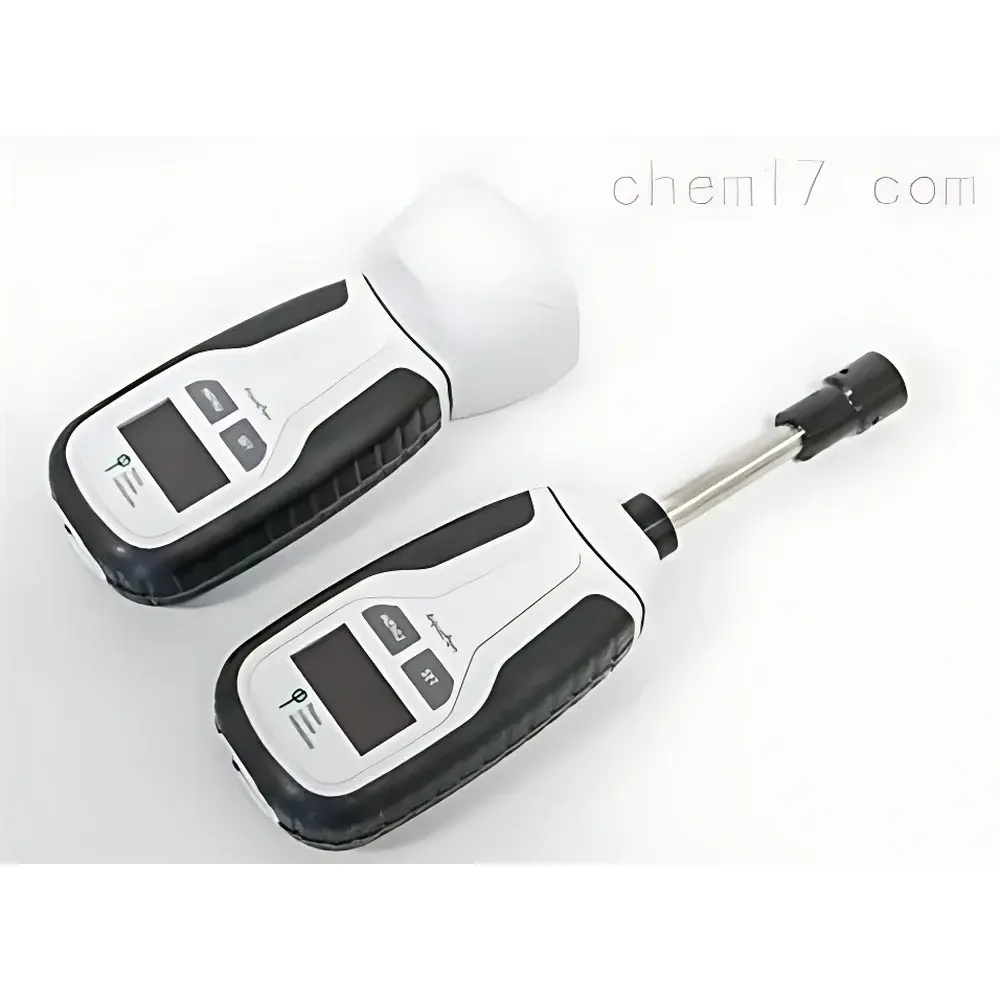
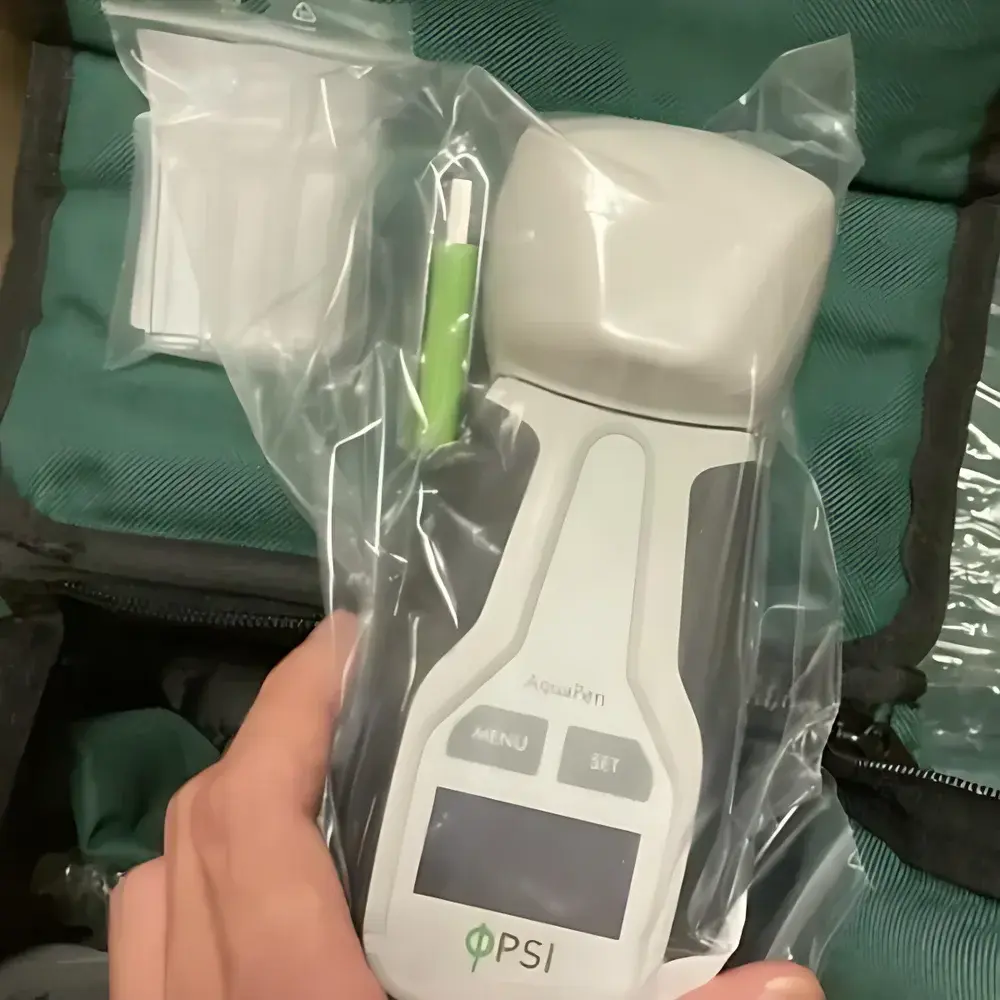
Photon Systems Instruments AquaPen AP110 Portable Algal Chlorophyll Fluorescence Analyzer
| Brand | PSI / Photon Systems Instruments |
|---|---|
| Origin | Czech Republic |
| Model | AquaPen AP110 |
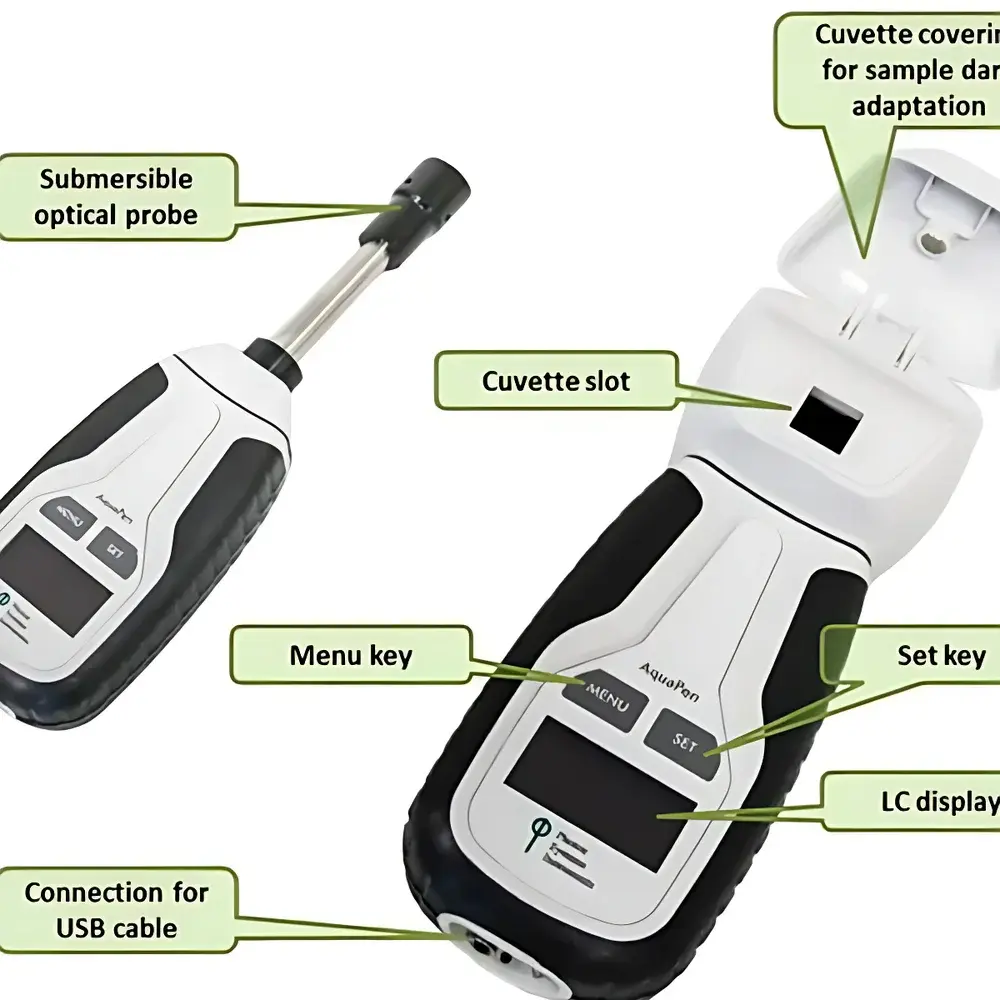
| Probe Types | AP110-C (cuvette-based) & AP110-P (submersible probe) |
| Excitation Wavelengths | 455 nm (blue) and 620 nm (red) LEDs |
| Emission Detection | 680 nm & 720 nm optical density + chlorophyll fluorescence (F₀, Fₘ, Fᵥ, Fᵥ/Fₘ, ΦPSII, NPQ, qP, Rfd, OJIP kinetics, etc.) |
| Minimum Detectable Chlorophyll | 0.5 µg Chl/L |
| Temporal Resolution | up to 100,000 measurements per second |
| Compliance | Designed for GLP-compliant field and lab use |
| Software | FluorPen v4.x with remote control, real-time plotting, batch analysis, and audit-trail-enabled data logging |
Overview
The Photon Systems Instruments AquaPen AP110 Portable Algal Chlorophyll Fluorescence Analyzer is a field-deployable, microprocessor-controlled instrument engineered for high-sensitivity, non-invasive assessment of photosynthetic performance in phytoplankton, cyanobacteria, and macroalgae. It operates on the principle of pulse-amplitude modulated (PAM) fluorometry combined with dual-wavelength absorbance detection, enabling simultaneous quantification of chlorophyll a fluorescence kinetics and optical density at 680 nm (chlorophyll absorption peak) and 720 nm (baseline reference). The device implements standardized photochemical quenching theory (Krause & Weis, 1991) and JIP-test formalism (Strasser et al., 2004), delivering rigorously defined biophysical parameters—including Fv/Fm, ΦPSII, NPQ, qP, Rfd, and 26 OJIP-derived indices—without requiring sample extraction or destructive processing. Its compact architecture (180 g, smartphone-sized footprint) integrates excitation optics, photodetector array, signal conditioning circuitry, and embedded firmware into a single handheld unit, making it suitable for both rapid screening in natural water bodies and controlled experiments under laboratory conditions.
Key Features
- Two interchangeable probe configurations: AP110-C cuvette module for standardized suspension assays (e.g., filtered water samples, algal cultures in quartz cuvettes) and AP110-P submersible probe for in situ immersion measurements in lakes, reservoirs, aquaculture tanks, or benthic algal mats.
- Dual excitation source: High-stability 455 nm blue LED (optimized for PSII excitation) and 620 nm red LED (enhancing sensitivity in low-chlorophyll or turbid samples), both independently controllable for multi-parameter protocols.
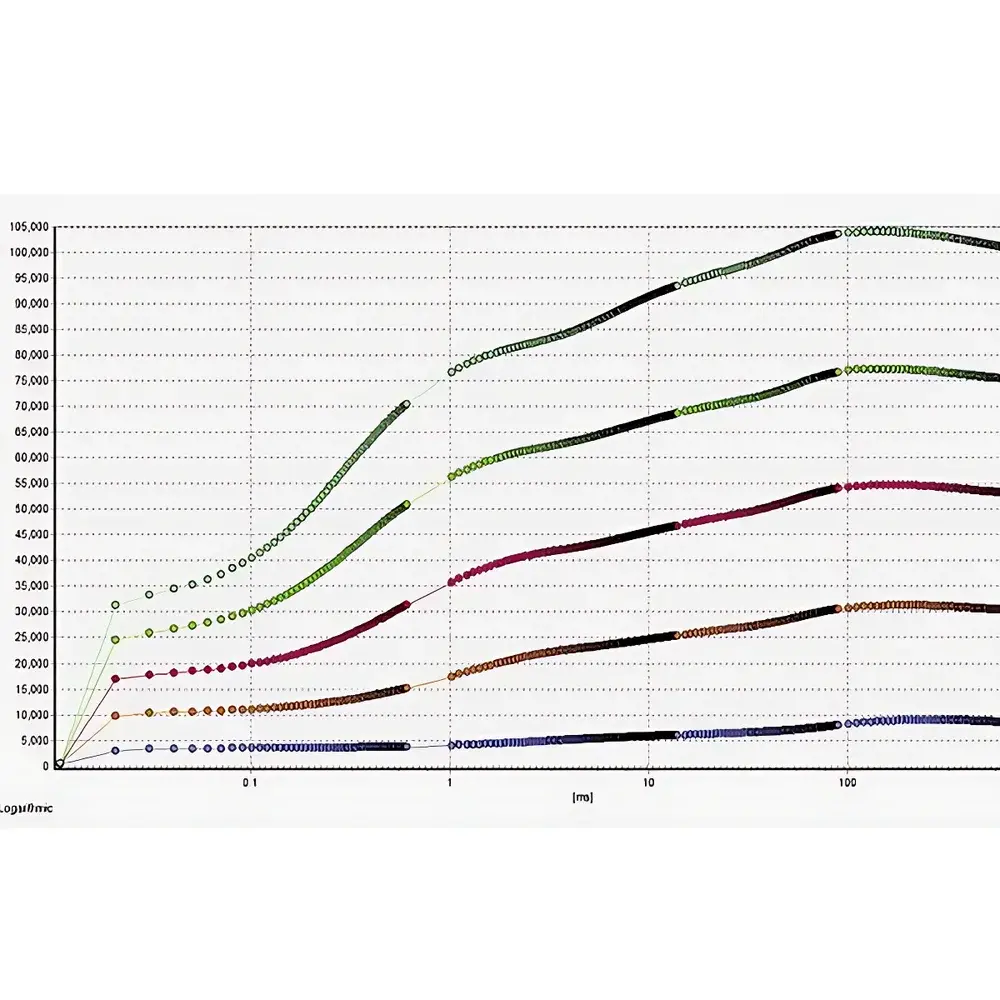
- Ultra-high temporal resolution: Capable of acquiring >100,000 fluorescence intensity points per second, enabling precise reconstruction of the OJIP transient (O–J–I–P rise kinetics) with sub-millisecond fidelity.
- Integrated absorbance measurement: Simultaneous detection at 680 nm (Chl a peak) and 720 nm (non-absorbing reference) allows real-time correction for scattering effects and estimation of relative biomass concentration.
- Preloaded standardized protocols: Includes two fluorescence quenching analysis routines (light-adapted and dark-adapted), three light-response curve (LC) generators (stepwise, ramp, saturating pulse), and full OJIP-test implementation compliant with IUPAC-recommended terminology.
- Robust environmental rating: IP65-rated enclosure ensures reliable operation under variable humidity, temperature (5–40°C), and ambient light conditions typical of freshwater and marine fieldwork.
Sample Compatibility & Compliance
The AquaPen AP110 accommodates diverse biological matrices without modification: planktonic suspensions (0.2–200 µm particle size range), intact filamentous cyanobacteria (e.g., Microcystis, Anabaena), benthic diatom films, and macroalgal thalli (e.g., Ulva, Enteromorpha). Sample volumes required are minimal: 1.5 mL for AP110-C cuvette mode; no volume constraint for AP110-P immersion mode. All fluorescence parameters adhere to the Minimal Reporting Standards for Chlorophyll Fluorescence Measurements (MRS-CFM v2.1, 2022), and raw data files include metadata tags for instrument ID, operator, GPS coordinates (when paired with external GNSS), date/time stamp, and protocol version. The system supports audit-trail generation and electronic signature functionality when used with FluorPen software under FDA 21 CFR Part 11–compliant configurations.
Software & Data Management
FluorPen v4.x is a Windows-based application providing bidirectional communication with the AquaPen AP110 via USB or Bluetooth. It enables real-time visualization of fluorescence transients, overlay comparison of multiple OJIP curves, batch processing of field-collected datasets, and automated calculation of derived indices (e.g., ABS/RC, TR0/RC, ET0/RC, DI0/RC). Data export formats include CSV (for Excel/Python/R integration), PDF reports (with customizable templates), and native .FPX files preserving full metadata and calibration history. The software includes built-in statistical tools for ANOVA, regression analysis, and PCA—facilitating multivariate interpretation across treatment groups or time-series monitoring campaigns. All measurement sessions are timestamped and logged with user-defined project IDs, satisfying ISO/IEC 17025 documentation requirements for accredited testing laboratories.
Applications
- Ecophysiological profiling of phytoplankton communities in eutrophic and oligotrophic freshwater systems, estuaries, and coastal zones.
- Rapid detection of cyanobacterial bloom onset and toxicity potential via early deviations in Fv/Fm and OJIP shape parameters (e.g., L-band amplitude, K-step presence).
- High-throughput phenotyping of algal mutants or transgenic lines under controlled stress regimes (e.g., UV-B exposure, nutrient limitation, heavy metal contamination).
- Monitoring photosynthetic efficiency in commercial microalgae cultivation (e.g., Chlorella, Nannochloropsis) for biofuel or nutraceutical production.
- Assessment of herbicide mode-of-action studies targeting Photosystem II (e.g., DCMU, atrazine) through dose-dependent quenching kinetics.
- Long-term ecological monitoring programs requiring unattended deployment: AP110 supports scheduled autonomous measurements (up to 72 h battery life) with SD-card data storage and optional GSM telemetry integration.
FAQ
What is the minimum detectable chlorophyll concentration?
The AquaPen AP110 achieves a limit of detection of 0.5 µg Chl a/L in clear water matrices using the AP110-C cuvette configuration.
Can the instrument distinguish between different algal taxa based on fluorescence signatures?
While not a taxonomic classifier, the OJIP transient shape, relative amplitudes of J- and I-steps, and NPQ induction kinetics provide robust physiological fingerprints correlated with taxon-specific photosynthetic architecture (e.g., phycobilisome vs. fucoxanthin-chlorophyll proteins).
Is calibration required before each measurement session?
Factory-calibrated detectors eliminate daily recalibration; however, users should perform a dark-adapted F0 baseline check using distilled water or blank medium prior to biological sampling.
How does the AP110-P submersible probe handle biofouling during extended deployments?
The probe tip features a hydrophobic coating and optional wiper mechanism (accessory); field protocols recommend weekly cleaning with ethanol and soft brush to maintain optical clarity.
Does the system support GLP or GMP compliance in regulated environments?
Yes—FluorPen software offers configurable audit trails, electronic signatures, and data integrity controls aligned with OECD GLP Principles and USP environmental monitoring guidelines.




