
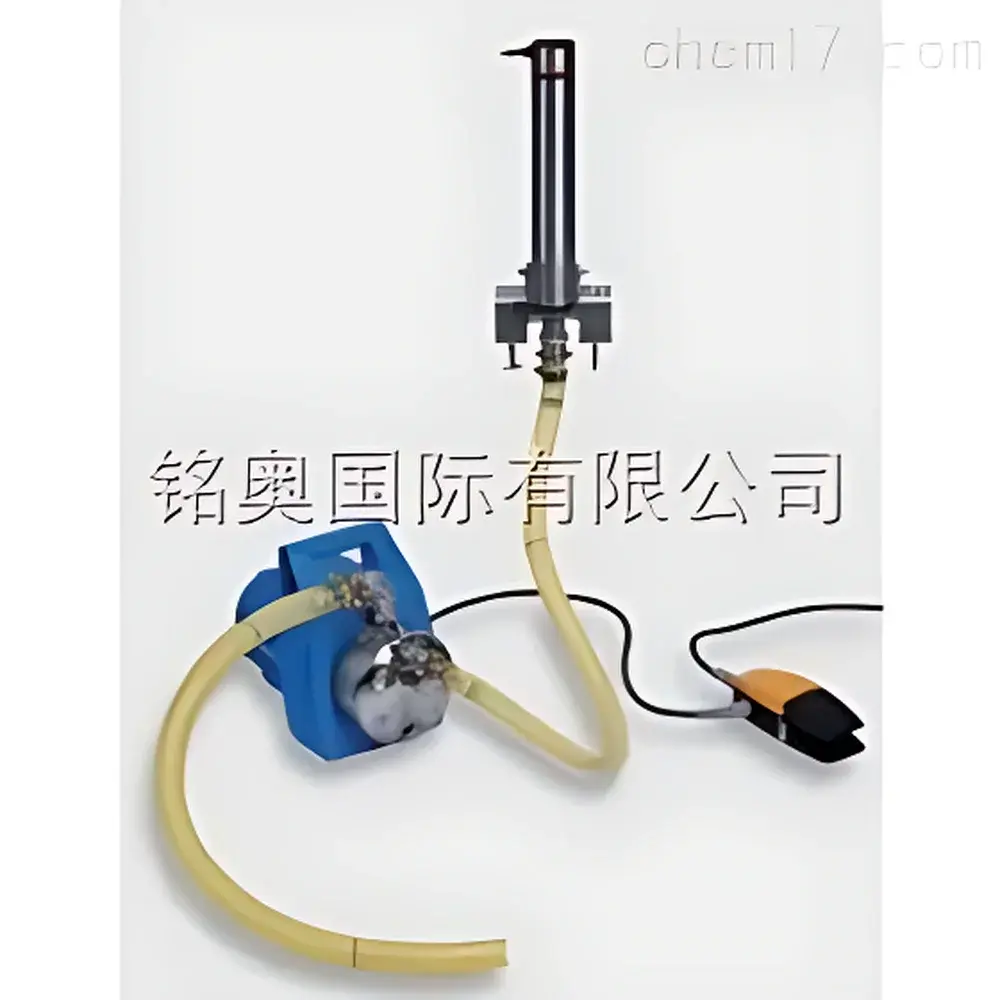
Gerber SEDILAB-E Milk Sediment Analyzer
| Origin | Germany |
|---|---|
| Manufacturer Type | Authorized Distributor |
| Origin Category | Imported |
| Model | SEDILAB-E |
| Detection Target | Particulate Contaminants in Raw and Processed Milk |
| Automation Level | Fully Automatic |
| Throughput | 800 samples per hour |
| Sample Volume per Test | 500 mL |
| Filter Membrane Diameter | 32 mm |
Overview
The Gerber SEDILAB-E Milk Sediment Analyzer is a fully automated, high-throughput instrument engineered for the standardized quantitative assessment of visible particulate contaminants in raw milk, pasteurized milk, and reconstituted dairy products. Based on the principle of vacuum-assisted membrane filtration—aligned with internationally recognized methods including ISO 707:2019 (Milk and milk products — Guidance on sampling) and IDF 106:2001 (Determination of sediment in milk)—the SEDILAB-E draws a precisely metered 500 mL milk sample through a standardized 32 mm diameter cellulose ester or mixed ester membrane under controlled vacuum pressure. Particulates retained on the membrane surface are visually evaluated using calibrated illumination and a standardized sediment rating scale (e.g., Gerber Sediment Scale), enabling objective classification from Class 0 (no detectable particles) to Class 4 (heavy contamination). Designed and manufactured in Germany to stringent DIN EN ISO 9001-certified quality management standards, the system delivers high reproducibility across shifts and operators, fulfilling core requirements for routine quality control in dairy processing plants, regulatory laboratories, and third-party testing facilities.
Key Features
- Fully automated operation: Integrated peristaltic pumping, vacuum control, membrane handling, and post-filtration rinse sequence minimize manual intervention and operator variability.
- High-throughput capability: Processes up to 800 samples per 8-hour shift—enabling comprehensive lot-level screening without bottlenecks in high-volume dairies.
- Precision volumetric delivery: Each test consistently aspirates exactly 500 mL of milk via gravimetrically verified fluid path calibration, ensuring compliance with ISO and IDF volumetric specifications.
- Standardized 32 mm filter support: Accommodates certified 32 mm diameter membranes (pore size 1.5 µm or 5 µm, depending on application), compatible with Gerber-recommended membrane types for optimal particle retention and clarity.
- Robust industrial-grade construction: Stainless steel housing, corrosion-resistant fluid pathways, and IP54-rated electronics ensure durability in humid, temperature-variable dairy lab environments.
- Integrated safety interlocks: Automatic vacuum shutoff upon membrane rupture or lid misalignment prevents cross-contamination and protects system integrity.
Sample Compatibility & Compliance
The SEDILAB-E is validated for use with bovine, ovine, and caprine raw milk; standardized, homogenized, and UHT-treated milk; and reconstituted skim or whole milk powders (after proper rehydration per IDF 87:2017). It supports both chilled (4–7 °C) and ambient-temperature samples, with optional pre-chill module integration for thermally sensitive batches. The analyzer conforms to critical regulatory frameworks: its methodology aligns with EU Regulation (EC) No 853/2004 Annex III Section IX for milk hygiene controls; supports traceability under ISO/IEC 17025:2017 for accredited labs; and provides audit-ready documentation required for BRCGS Dairy Version 9, FSSC 22000 v5.1, and USDA-FSIS dairy inspection protocols. All filter membranes used are non-pyrogenic, low-binding, and supplied with CoA documentation meeting USP and EU Pharmacopoeia 2.6.1 material specifications.
Software & Data Management
Controlled via Gerber’s proprietary SedimentControl v3.2 software (Windows 10/11 compatible), the SEDILAB-E enables full method configuration, user access levels (admin/operator/auditor), and electronic batch records compliant with FDA 21 CFR Part 11 requirements—including digital signatures, time-stamped audit trails, and immutable data archiving. Results are exportable in CSV, PDF, and LIMS-compatible ASTM E1384 formats. Optional integration with SAP QM, LabVantage, or Thermo Fisher SampleManager supports automated QC release workflows. All calibration logs, maintenance alerts, and membrane lot traceability data are stored locally and synchronized to network drives per GLP/GMP data integrity principles (ALCOA+).
Applications
- Routine incoming raw milk acceptance testing at dairy cooperatives and receiving stations.
- In-process monitoring during clarification, standardization, and homogenization stages.
- Finished product release testing for commercial pasteurized and ESL milk lines.
- Root cause analysis of sediment spikes linked to milking equipment hygiene, barn environment, or transport tank cleaning efficacy.
- Contract laboratory services supporting certification programs (e.g., Organic, Grass-Fed, A2-certified).
- Research applications assessing filtration efficiency of new separator designs or cleaning-in-place (CIP) chemistries.
FAQ
What standards does the SEDILAB-E comply with for sediment testing?
It implements methodologies consistent with ISO 707:2019, IDF 106:2001, and national standards such as DIN 10172 (Germany) and GOST R 52054-2003 (Russia), with documented equivalence assessments available upon request.
Can the system handle viscous or high-fat milk samples without clogging?
Yes—the integrated peristaltic pump and optimized flow path accommodate milk up to 6.5% fat content; optional pre-filtration modules are available for colostrum or mastitic milk screening.
Is membrane lot traceability supported?
Each test record includes embedded barcode-scanned membrane lot ID, expiration date, and pore size—fully auditable within the electronic batch record.
Does the instrument require external compressed air or water supply?
No—it operates solely on standard 230 V / 50 Hz power and built-in vacuum generation; no ancillary utilities are needed for basic operation.
How often must the system be calibrated?
Volumetric calibration is recommended every 6 months or after 10,000 cycles; full performance verification using NIST-traceable sediment reference standards is advised quarterly.
Related Products




