
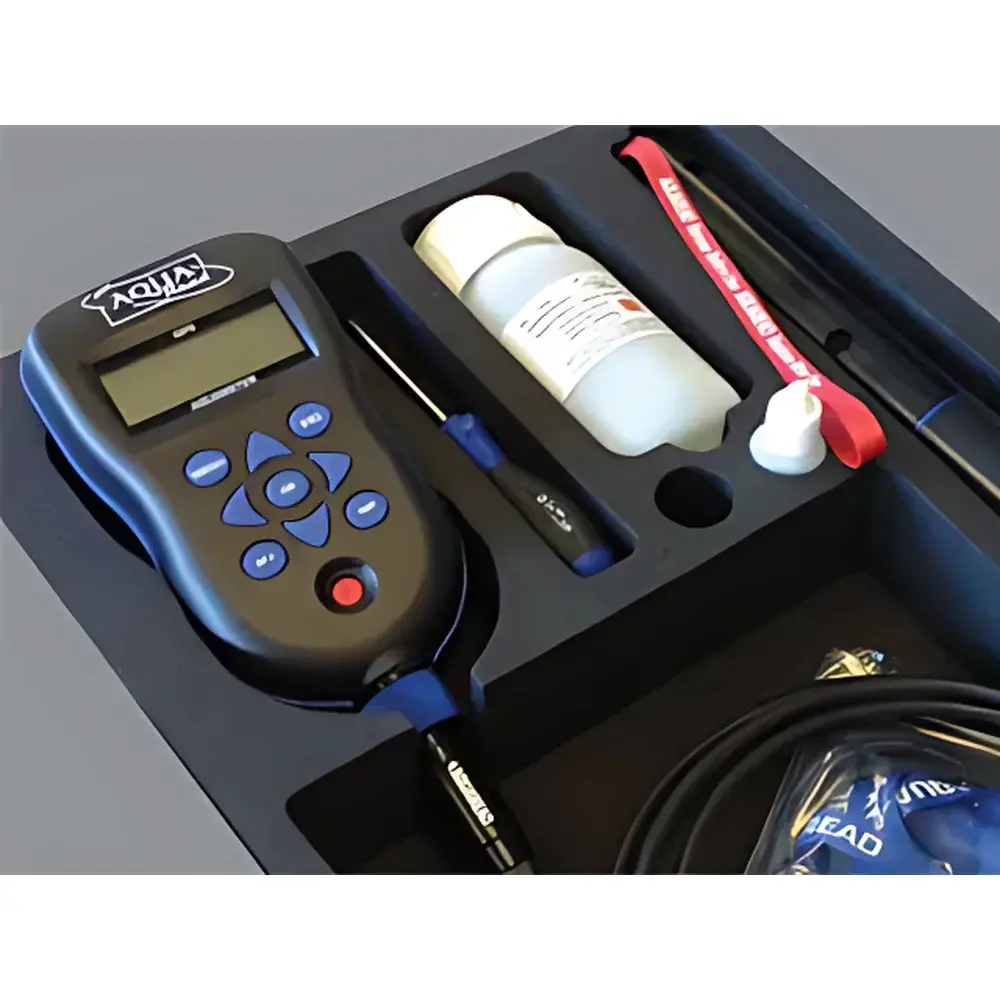
AP-LITE-CPHYLL Portable Chlorophyll-a and Algal Pigment Fluorometer
| Origin | Canada |
|---|---|
| Manufacturer Type | Authorized Distributor |
| Origin Category | Imported |
| Model | AP-LITE-CPHYLL |
| Sample Compatibility | Chlorophyll-a, Phycocyanin (Cyanobacteria), Turbidity, Dissolved Oxygen (Optical), Rhodamine WT, Fluorescent Tracers, Hydrocarbon Oil |
| Detection Principle | In-situ Excitation-Emission Fluorescence Spectroscopy |
| Power Supply | 5×AA Alkaline or Ni-MH Rechargeable Batteries |
| Operating Temperature | −20 °C to +70 °C |
| GPS | Integrated 12-channel Receiver with Geotagging Capability |
| Data Storage | 1900 Records |
| Display | Backlit 80-character LCD |
| Communication | RS-485, USB |
| Pressure Range | 150–1150 mbar (±1 mbar) |
| DO Range | 0–500% saturation / 0–50.00 mg/L (±1% of reading up to 200%, ±10% above) |
| Chlorophyll-a Range | 0–500 µg/L (±2% of reading) |
| Cyanobacteria (Freshwater) | 0–300,000 cells/mL (±2%) |
| Cyanobacteria (Seawater) | 0–200,000 cells/mL (±2%) |
| Turbidity | 0–3000 NTU (dual-range auto-scaling |
| Rhodamine WT & Fluorescent Dyes | 0–500 µg/L (±5%) |
| Hydrocarbon Oil | 0–10,000 µg/L (±2%) |
Overview
The AP-LITE-CPHYLL Portable Chlorophyll-a and Algal Pigment Fluorometer is an integrated, field-deployable multiparameter water quality analyzer engineered for high-fidelity in situ fluorescence detection. It operates on the principle of excitation-emission fluorometry—utilizing narrow-band LED light sources to selectively excite chlorophyll-a (at ~470 nm), phycocyanin (a proxy for cyanobacterial biomass at ~620 nm), rhodamine WT, fluorescent dyes, and hydrocarbon compounds, followed by precise optical detection of emitted fluorescence signals across calibrated photodiode channels. Unlike extractive laboratory methods (e.g., acetone extraction + spectrophotometry per EPA 445.1 or ISO 10260), this instrument delivers real-time, non-destructive quantification directly in ambient water matrices—enabling rapid assessment of phytoplankton dynamics, harmful algal bloom (HAB) risk, tracer studies, and oil contamination events. Its ruggedized design supports deployment in diverse aquatic environments including rivers, lakes, reservoirs, estuaries, and coastal zones, with built-in temperature compensation and pressure-corrected depth referencing.
Key Features
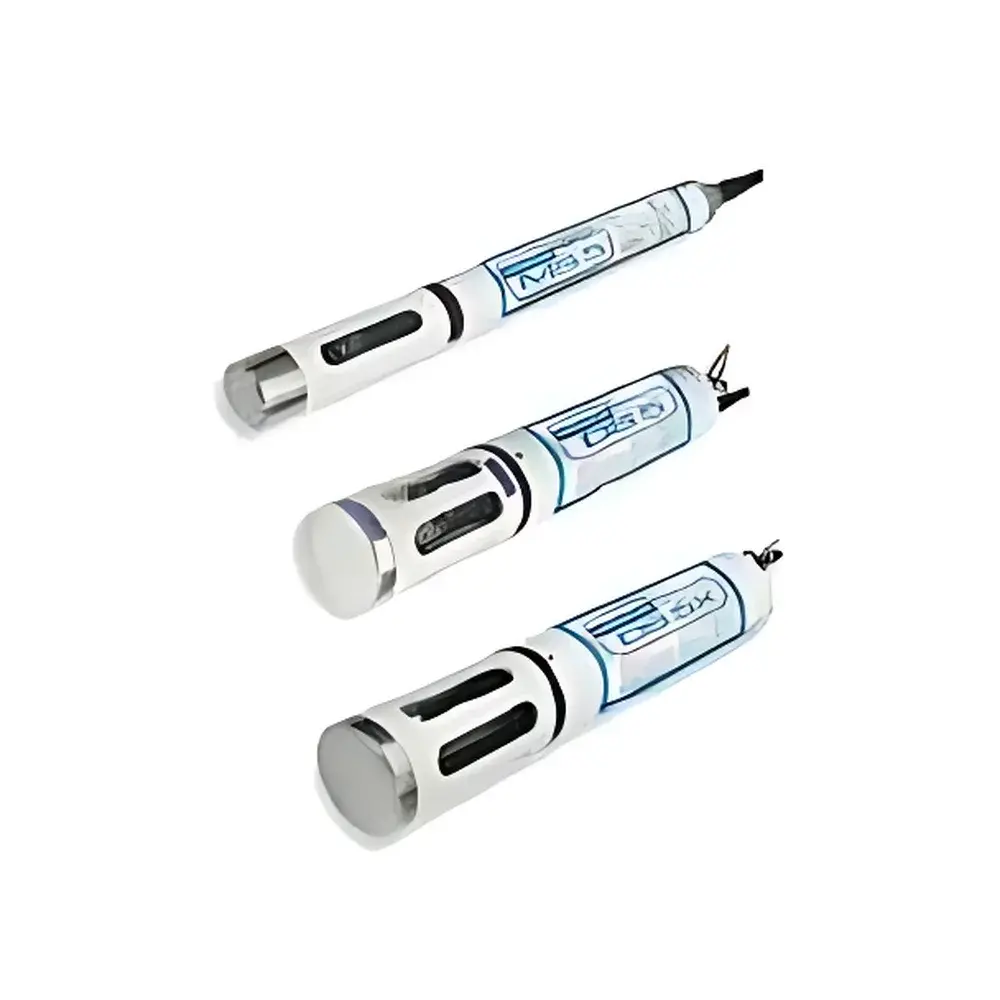
- Modular sensor interface supporting interchangeable optical probes: LITE-CPHYLL (chlorophyll-a), LITE-CYAN (phycocyanin), LITE-TURB (turbidity), LITE-OIL (hydrocarbon fluorescence), LITE-RHO (rhodamine WT), and LITE-DO (optical dissolved oxygen)
- Integrated 12-channel GPS receiver with internal antenna—enables automatic geotagging of every measurement; coordinates exportable as GPX or KML for GIS integration and Google Earth mapping
- Onboard backlit 80-character LCD display with intuitive menu navigation—provides immediate visualization of all active parameters, battery status, pressure, and GPS lock indicators
- RS-485 digital output compliant with Modbus RTU protocol—facilitates seamless integration into SCADA systems, telemetry gateways, and multi-parameter monitoring stations
- Internal memory stores up to 1900 timestamped records with full metadata (GPS position, pressure, temperature, sensor ID, calibration flags)
- Wide operating temperature range (−20 °C to +70 °C) and IP67-rated enclosure—validated for use in sub-zero freshwater ice-edge sampling and tropical marine deployments
- USB interface for direct data download and firmware updates; compatible with Windows-based configuration software included on supplied CD
Sample Compatibility & Compliance
The AP-LITE-CPHYLL is validated for use in natural and treated waters—including freshwater, brackish, and seawater matrices—with minimal interferences from colored dissolved organic matter (CDOM) or suspended solids, owing to dual-wavelength compensation algorithms embedded in its firmware. Sensor calibrations are traceable to NIST-certified standards where applicable (e.g., rhodamine WT solutions certified per ASTM D7217). The system supports GLP-compliant workflows through audit-ready data logging, user-accessible calibration history, and timestamped metadata. While not FDA 21 CFR Part 11-certified out-of-the-box, its data export structure (CSV/ASCII) is compatible with validated LIMS platforms used in environmental laboratories accredited to ISO/IEC 17025. Field protocols align with EPA Method 445.1 for chlorophyll-a screening and ASTM D5257 for cyanobacterial cell enumeration via phycocyanin fluorescence.
Software & Data Management
Configuration, calibration, and data retrieval are managed via the proprietary AP-Config Suite (Windows only), distributed on included CD-ROM and downloadable from the manufacturer’s secure portal. The software enables full parameter setup—including sensor gain adjustment, zero/span calibration, GPS datum selection (WGS84 default), and unit preferences (µg/L, cells/mL, % sat, NTU). All logged measurements export as comma-separated values (CSV) with columns for UTC timestamp, latitude/longitude (decimal degrees), altitude, barometric pressure, temperature, and each measured parameter with associated uncertainty flags. Optional remote telemetry modules support MQTT or cellular LTE transmission to cloud platforms (e.g., AWS IoT Core or Azure IoT Hub) using configurable polling intervals and alarm thresholds—enabling automated alerting for exceedance events (e.g., chlorophyll-a >100 µg/L or phycocyanin >50,000 cells/mL).
Applications
- Real-time monitoring of cyanobacterial blooms in drinking water source reservoirs and recreational lakes
- Tracer dilution studies using rhodamine WT or fluorescein for hydraulic residence time and dispersion coefficient estimation
- Post-spill hydrocarbon detection in surface waters and wetland sediments
- Long-term ecological surveys tracking seasonal phytoplankton succession and eutrophication trends
- Validation of satellite-derived chlorophyll-a products (e.g., Sentinel-3 OLCI, MODIS Aqua) through ground-truthing campaigns
- Regulatory compliance monitoring under national programs such as the U.S. EPA National Lakes Assessment or EU Water Framework Directive (WFD) Article 8 reporting
FAQ
Is the AP-LITE-CPHYLL suitable for seawater applications?
Yes—the LITE-CPHYLL sensor includes salinity-compensated calibration curves, and the LITE-CYAN probe offers dedicated seawater mode with adjusted gain and spectral filtering optimized for marine Synechococcus and Prochlorococcus detection.
Can multiple sensors be connected simultaneously?
No—the AP-LITE host features a single analog/digital hybrid sensor port; however, users may hot-swap probes in the field without power cycling, and all calibration profiles are retained in non-volatile memory.
What is the recommended calibration frequency?
Field calibration is advised before each deployment series using certified standard solutions; factory recalibration is recommended annually or after 500 operational hours, whichever occurs first.
Does the system meet ATEX or IECEx certification for hazardous locations?
No—it is not intrinsically safe rated; operation in classified zones requires external explosion-proof enclosures per local regulatory requirements.
How is temperature drift corrected during extended deployments?
Each optical sensor incorporates a high-precision thermistor (±0.1 °C) co-located with the detection path; real-time thermal compensation is applied using polynomial coefficients stored in sensor EEPROM.







