
English Product Name
| Brand | Jihepu |
|---|---|
| Origin | Shandong, China |
| Model | RE-2010 |
| Capacity | 2 L |
| Ultimate Vacuum | 0.098 MPa |
| Rotational Speed | 20–195 rpm |
| Temperature Range | 0–99 °C |
| Temperature Control Accuracy | ±1 °C |
| Condenser Cooling Area | 0.11 m² |
| Power Supply | 220 V / 50 Hz (optional 110 V / 60 Hz) |
| Heating Power | 1.5 kW |
| Motor Power | 40 W |
| Evaporation Rate | 20 mL/min |
| Bath Volume | ~6.3 L |
| Condenser Dimensions | Φ85 × 430 mm |
| Overall Dimensions (L×W×H) | 550 × 400 × (780–1040) mm |
| Net Weight | 20 kg |
Overview
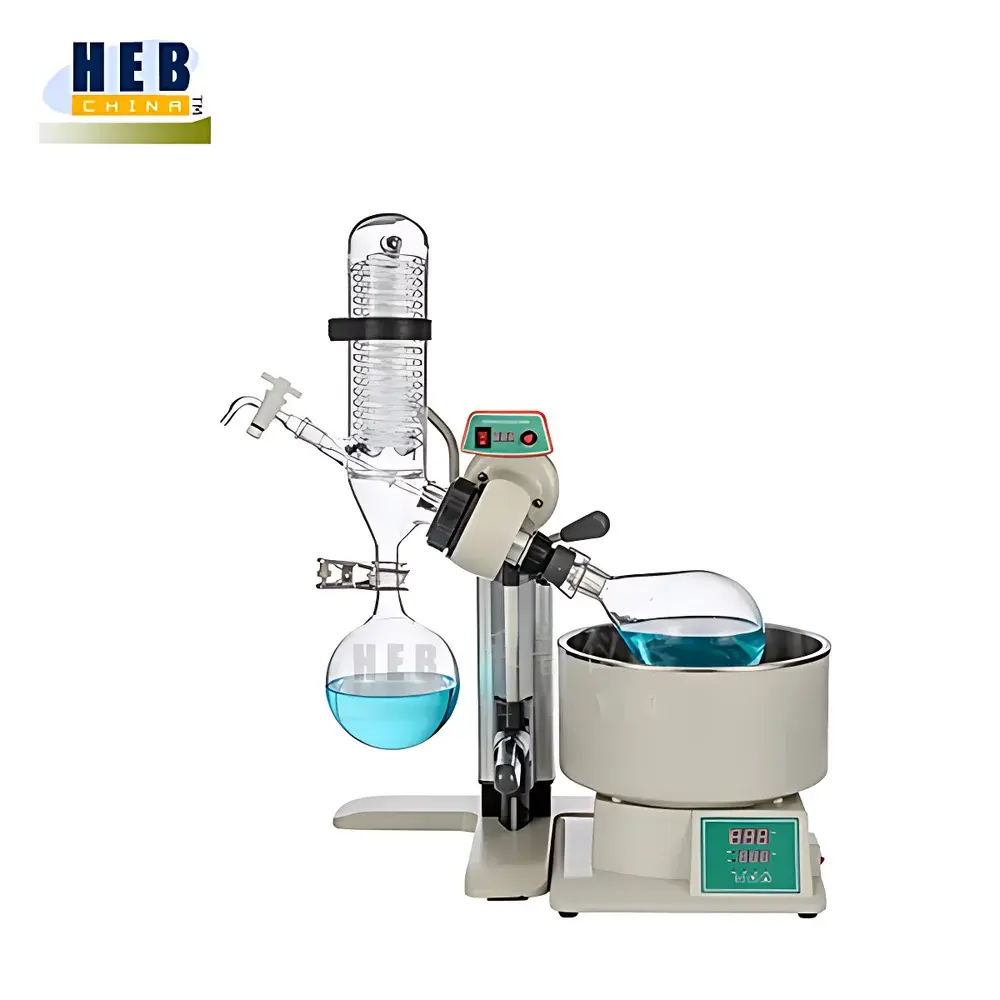
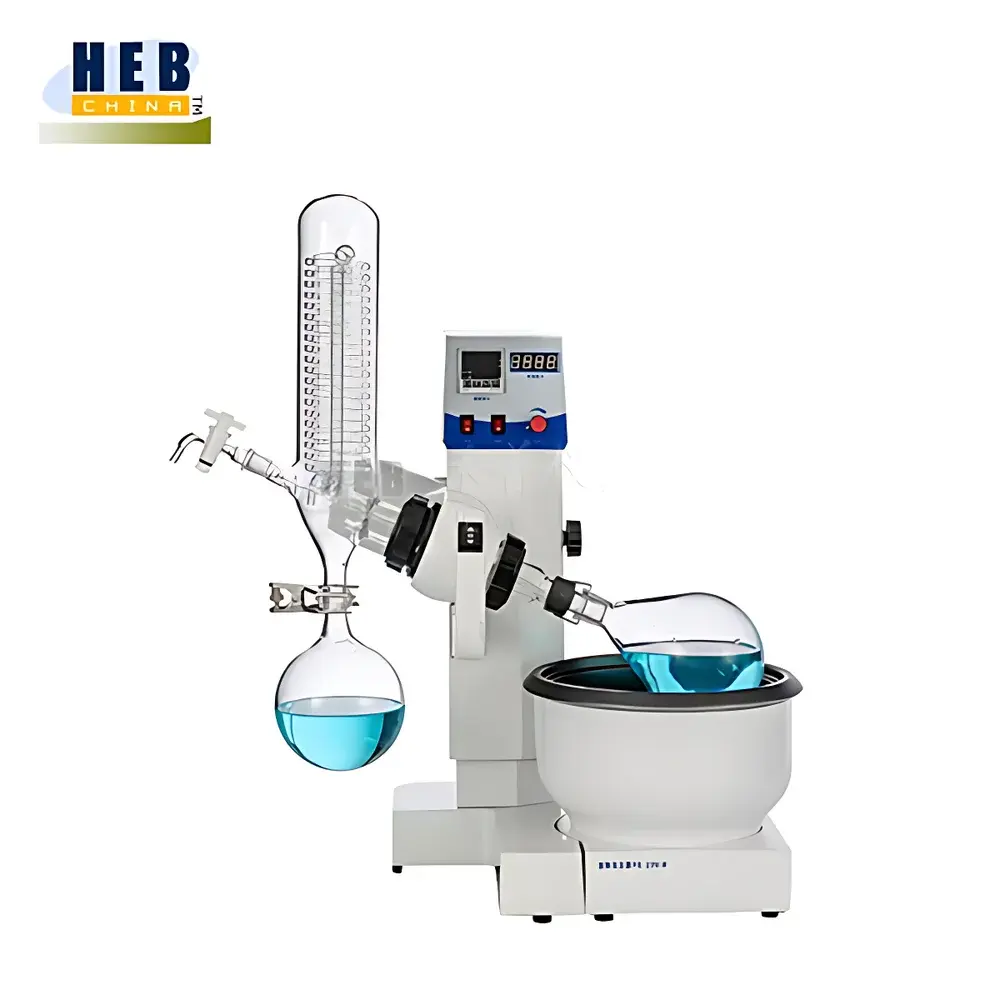
The Jihepu RE-2010 Rotary Evaporator is a precision-engineered laboratory instrument designed for efficient solvent removal, concentration, crystallization, and recovery under controlled vacuum and temperature conditions. It operates on the principle of thin-film evaporation: a rotating evaporation flask creates a uniform, high-surface-area liquid film along its inner wall; simultaneous heating via a digitally regulated water bath and reduced pressure lowers the boiling point of solvents, enabling rapid, gentle, and reproducible evaporation—particularly critical for thermally sensitive compounds such as pharmaceutical intermediates, natural product extracts, and biopolymer solutions. Constructed with full GG-17 borosilicate glass components and PTFE-sealed joints, the system ensures chemical inertness, thermal stability (−80 °C to 250 °C), and compatibility with aggressive organic solvents and aqueous media. Its modular architecture supports integration into GMP-aligned workflows where material traceability, process consistency, and operator safety are essential.
Key Features
- Aluminum alloy main frame with optimized mechanical rigidity and ergonomic manual lift mechanism (100 mm sliding + 150 mm manual elevation) for precise flask positioning.
- Dual-material sealing system: imported fluororubber gaskets combined with PTFE-faced rotary seals, maintaining stable vacuum down to 0.098 MPa without lubricant contamination.
- GG-17 high-borosilicate glass assembly—including 2 L evaporation flask (Φ131 mm, 24/40 standard taper), 1 L collection flask (35/20 spherical joint), and vertical double-layer coiled condenser (Φ85 × 430 mm) with 0.11 m² effective cooling area.
- Digital PID-controlled water bath with PT100 sensor, offering ±1 °C temperature accuracy across 0–99 °C; aluminum-PTFE composite bath pot enables uniform heat distribution and dry-run protection via auto-shutoff.
- Stepless electronic speed control (20–195 rpm) with real-time digital RPM display; motor rated at 40 W for quiet, vibration-damped rotation.
- Integrated feed valve (19/22 standard taper) with PTFE tubing connection for continuous or batch sample introduction under vacuum.
- Front-accessible fuse protection, overtemperature cutoff, and optional transparent acrylic safety shield to contain splashes and reduce thermal exposure.
Sample Compatibility & Compliance
The RE-2010 accommodates a broad range of sample types—including volatile organic solvents (e.g., acetone, ethyl acetate, dichloromethane), aqueous buffers, and viscous extracts—without degradation, thanks to its low-temperature, high-vacuum operation and absence of metal contact surfaces. All wetted parts comply with USP Class VI and ISO 10993 biocompatibility guidelines for glass and fluoropolymer materials. While not certified for regulatory submission out-of-the-box, the instrument’s design supports GLP/GMP alignment: temperature and rotation parameters are manually recorded, and its stable vacuum performance enables reproducible method transfer per ASTM E2656 (Standard Practice for Validation of Rotary Evaporators). Optional external vacuum controllers with pressure logging can facilitate 21 CFR Part 11-compliant data capture when integrated with validated LIMS or ELN platforms.
Software & Data Management
The RE-2010 operates as a standalone benchtop unit with no embedded firmware or proprietary software. All operational parameters—bath temperature, rotation speed, and vacuum level—are monitored and adjusted manually via front-panel controls. For laboratories requiring audit-ready records, the device is fully compatible with third-party data loggers connected to the PT100 output (analog 0–10 V or RTD signal) and tachometer pulse output. Vacuum gauge readings (when paired with an external analog or digital vacuum meter) and timed evaporation cycles can be documented in accordance with internal SOPs or ISO/IEC 17025 calibration protocols. No cloud connectivity, remote access, or firmware updates are provided—ensuring deterministic behavior and eliminating cybersecurity surface area.
Applications
- Solvent recovery and concentration of active pharmaceutical ingredients (APIs) during pilot-scale synthesis.
- Removal of reaction solvents post-coupling in peptide and oligonucleotide manufacturing.
- Concentration of botanical extracts, fermentation broths, and enzyme-containing fractions without denaturation.
- Preparative purification of heat-labile natural products (e.g., terpenoids, flavonoids) prior to HPLC fractionation.
- Residual solvent analysis sample preparation per ICH Q3C guidelines, ensuring consistent headspace equilibration.
- Teaching laboratories: demonstration of Raoult’s law, vapor pressure depression, and mass-transfer kinetics under reduced pressure.
FAQ
What vacuum pumps are compatible with the RE-2010?
The unit features dual 10 mm inner-diameter hose barbs (vacuum inlet and coolant loop) compatible with diaphragm pumps (e.g., KNF N810, Welch 2041), water aspirators, or oil-free scroll pumps rated for ≤0.1 MPa ultimate vacuum.
Can the RE-2010 be used with corrosive solvents like HF or fuming nitric acid?
No. While GG-17 glass resists most organics and dilute acids/bases, hydrofluoric acid, hot concentrated sulfuric acid, and fuming nitric acid will etch or stress-crack the glass. Use only with solvents listed in Corning’s GG-17 chemical resistance chart.
Is the water bath temperature calibrated to NIST-traceable standards?
The built-in PT100 sensor provides ±1 °C accuracy but requires periodic external verification using a NIST-traceable thermometer; calibration certificates are not supplied by default.
Does the RE-2010 support automated distillation endpoints?
No. Endpoint detection (e.g., via weight loss or temperature inflection) requires external instrumentation—such as a balance interfaced via RS232 or a programmable vacuum controller with pressure ramping logic.
What maintenance is required for long-term reliability?
Monthly inspection of PTFE seals for compression set, annual replacement of fluororubber gaskets, and quarterly cleaning of the condenser coil with ethanol followed by nitrogen purge to prevent residue buildup.



