
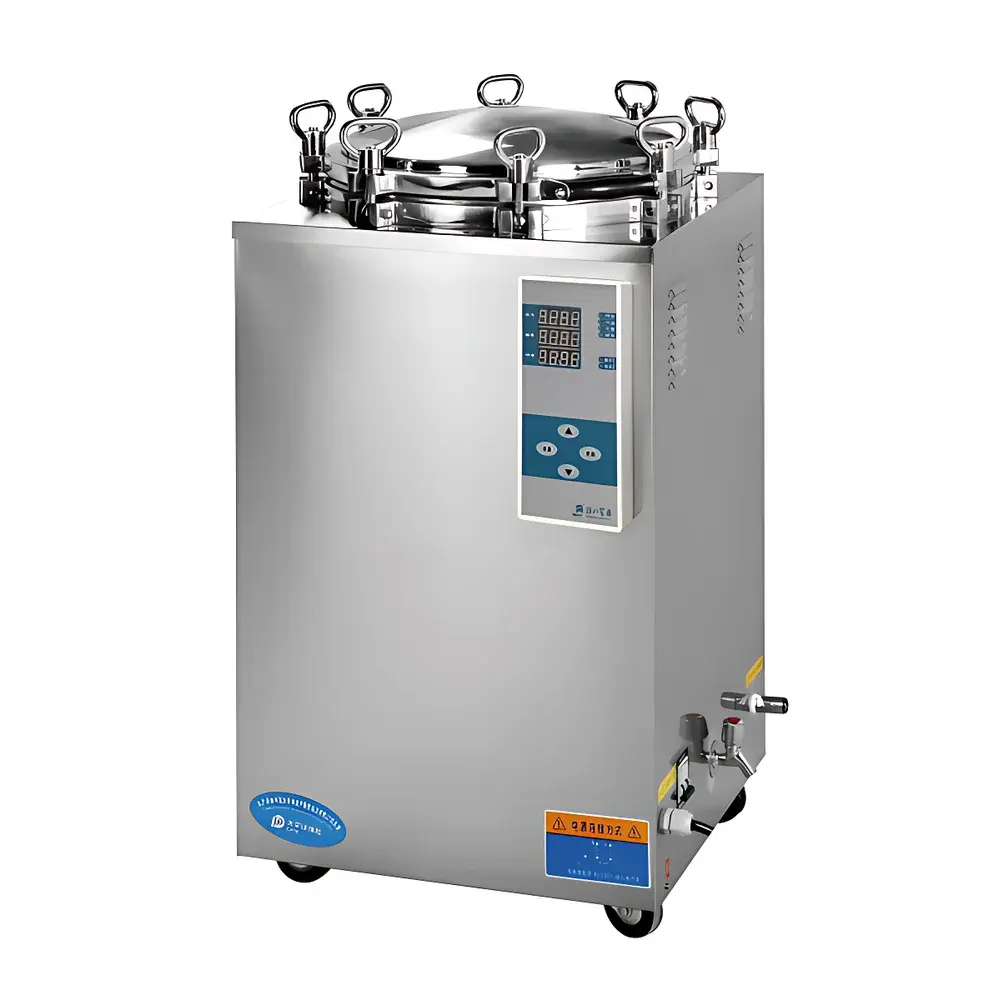
HePu LS-150LD Vertical Steam Autoclave
| Brand | HePu (Jihepu) |
|---|---|
| Origin | Shandong, China |
| Model | LS-150LD |
| Sterilization Chamber Volume | 150 L |
| Maximum Operating Temperature | 134 °C |
| Maximum Operating Pressure | 0.22 MPa |
| External Dimensions | 670 × 690 × 1130 mm |
| Power Rating | 6000 W |
| Voltage/Frequency | AC 220 V, 50 Hz |
| Temperature Uniformity | ≤ ±1 °C |
| Timer Range | 0–99 min |
| Safety Features | Dry-run overheat protection, pressure relief valve, current overload cutoff, earth leakage protection |
| Chamber Material | Premium-grade stainless steel (AISI 304) |
| Net Weight | 110 kg |
| Gross Weight | 135 kg |
Overview
The HePu LS-150LD Vertical Steam Autoclave is a fully automated, gravity-displacement and steam-purge type sterilization system engineered for reliable, repeatable thermal decontamination of heat-stable laboratory and clinical materials. It operates on the fundamental principle of saturated steam under controlled pressure—where elevated temperature (up to 134 °C at 0.22 MPa) ensures rapid microbial inactivation through protein denaturation and nucleic acid hydrolysis. Designed for compliance with internationally recognized sterilization standards—including ISO 17665-1 (sterilization of health care products), EN 285 (large steam sterilizers), and applicable sections of USP —the LS-150LD delivers validated lethality (F0 ≥ 12 min typical for wrapped instrument loads at 134 °C) while maintaining strict thermal uniformity (≤ ±1 °C across the 150 L chamber). Its vertical configuration optimizes floor space without compromising load capacity, making it suitable for medium-throughput environments such as university core labs, hospital central sterile supply departments (CSSD), and biotech QC laboratories requiring routine sterilization of surgical instruments, glassware, culture media, textiles, and porous loads.
Key Features
- Microprocessor-controlled sterilization cycles with LED digital display showing real-time temperature, pressure, and elapsed time—enabling full process visibility and traceability.
- Programmable temperature range from 103 °C to 134 °C for steam sterilization, plus auxiliary boiling mode (50–101 °C) for pre-sterilization cleaning or non-critical item processing.
- Automatic air removal via built-in gravity-assisted steam purge system, ensuring complete displacement of cold air prior to pressurization—critical for achieving uniform steam penetration and eliminating cold spots.
- Dual-stage safety architecture: mechanical spring-loaded safety valve (ASME-certified design) plus electronic overpressure cut-off and dry-run overheat protection that interrupts heating if water level falls below operational threshold.
- Integrated earth leakage circuit breaker and thermal overload relay provide redundant electrical safety per IEC 61010-1 requirements for laboratory equipment.
- Chamber and jacket constructed entirely from AISI 304 stainless steel—resistant to corrosion from repeated steam exposure, condensate, and common disinfectants; facilitates easy cleaning and long-term structural integrity.
Sample Compatibility & Compliance
The LS-150LD accommodates a broad spectrum of sterilizable items including wrapped/unwrapped surgical kits, stainless-steel instruments, rubber tubing, cotton gauze, autoclavable plastics (e.g., polypropylene containers), and liquid media (with appropriate venting protocols). Load configurations comply with ISO 11140-1 for biological indicator placement and support validation per HTM 01-01 (UK) or AAMI ST79:2017 Annex B for steam sterilizer qualification. The unit meets CE marking requirements for medical devices (Class IIa under MDR 2017/745 when used for healthcare applications) and conforms to GB 8599–2008 (Chinese national standard for large steam sterilizers). While not inherently 21 CFR Part 11 compliant out-of-the-box, its programmable logic controller supports external audit trail integration via RS-232/RS-485 interface for GMP/GLP environments requiring electronic record retention.
Software & Data Management
The onboard control system records cycle parameters—including start time, setpoint temperature/pressure, actual chamber readings, timer activation point, and end-of-cycle status—for up to 100 consecutive runs. Data export is supported via USB port (optional firmware upgrade), enabling CSV-formatted logs for quality review, internal audits, or regulatory submissions. Optional PC-based software (HePu AutoLog v3.x) provides graphical trend analysis, alarm history filtering, and customizable report generation aligned with ISO 9001 documentation practices. All user-modifiable settings require password authentication to prevent unauthorized parameter changes—a foundational requirement for laboratory quality systems.
Applications
- Routine sterilization of reusable surgical instruments and trays in teaching hospitals and outpatient clinics.
- Preparation of microbiological growth media (e.g., agar, broth) in academic and industrial research labs.
- Decontamination of biohazardous waste (e.g., pipette tips, Petri dishes) prior to disposal, per WHO biosafety guidelines.
- Validation of sterilization processes using Class 5 integrating indicators and biological indicators (e.g., Geobacillus stearothermophilus spores).
- Processing of dental handpieces and orthodontic appliances in regulated dental practices.
FAQ
What is the F0 value achievable at 134 °C in the LS-150LD?
At 134 °C and 0.22 MPa, a standard 5-minute hold yields an F0 value of approximately 15–18 minutes—sufficient for most wrapped instrument loads per EN 285 Annex C recommendations.
Can the LS-150LD sterilize liquids safely?
Yes—when operated in liquid cycle mode with slow exhaust and post-cycle cooling delay, it prevents boil-over and container rupture; maximum fill volume per bottle must not exceed 75% of capacity.
Is third-party IQ/OQ/PQ validation support available?
HePu provides protocol templates and factory calibration certificates; qualified local service partners offer on-site installation qualification (IQ), operational qualification (OQ), and performance qualification (PQ) per ISO 13485 requirements.
Does the unit include a printout function?
No built-in thermal printer; however, USB data export enables direct printing via connected PCs or integration with lab information management systems (LIMS).
What maintenance intervals are recommended?
Daily: chamber inspection, door gasket check, drain filter cleaning. Quarterly: safety valve functional test, pressure transducer calibration. Annually: full preventive maintenance by certified technician including steam trap evaluation and control board diagnostics.



