
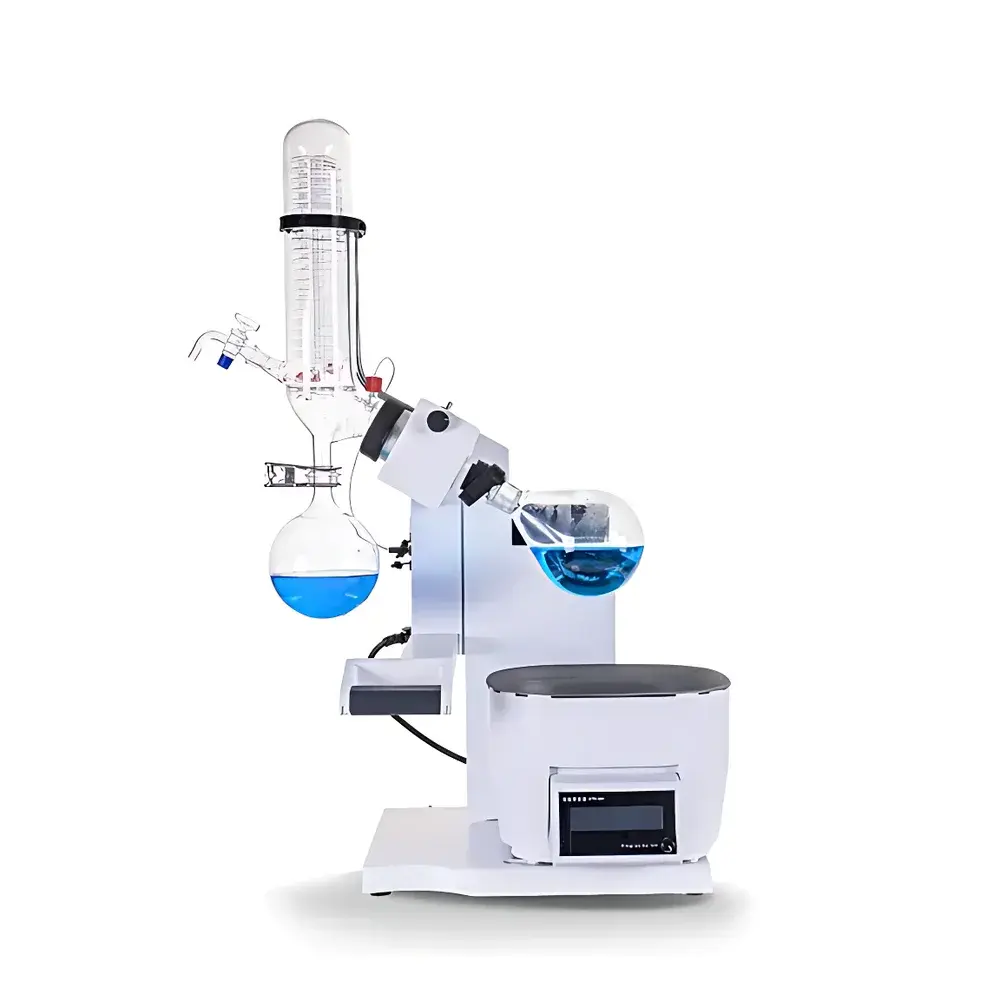
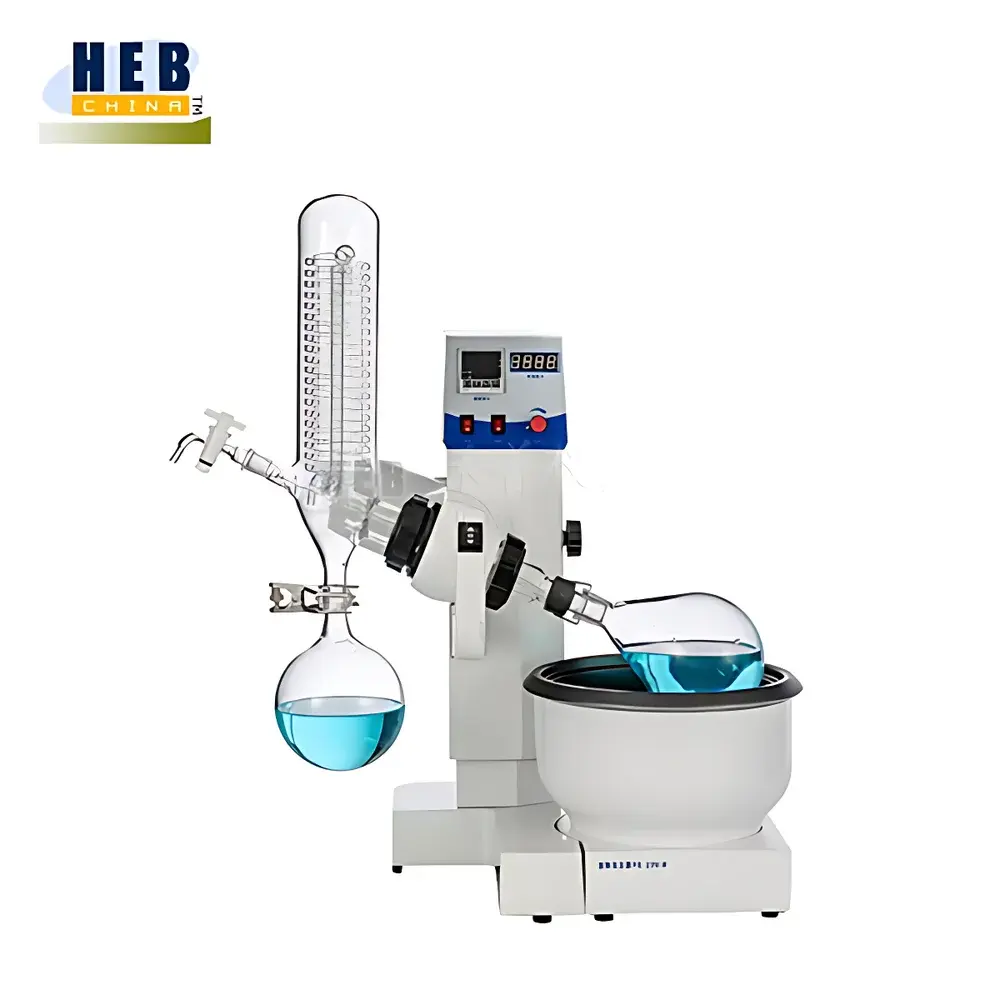
Jihepu RE-2000B Rotary Evaporator
| Brand | Jihepu |
|---|---|
| Origin | Shandong, China |
| Model | RE-2000B |
| Capacity | 2 L |
| Ultimate Vacuum | 0.098 MPa |
| Rotational Speed Range | 20–200 rpm |
| Temperature Control Range | Ambient to 99 °C |
| Temperature Accuracy | ±1 °C |
| Condenser Cooling Surface Area | 0.11 m² |
| Heating Power | 1.5 kW |
| Motor Power | 40 W |
| Lift Stroke | 0–150 mm |
| Condenser Dimensions | Φ85 × 460 mm |
| Bath Volume | ~6.3 L |
| Overall Dimensions (L×W×H) | 660 × 420 × 830 mm |
| Net Weight | 23 kg |
Overview
The Jihepu RE-2000B Rotary Evaporator is an engineered solution for efficient solvent removal, concentration, crystallization, and recovery under controlled vacuum and thermal conditions. Based on the principle of thin-film evaporation, it operates by rotating a sample-containing flask at a precisely regulated speed while maintaining uniform heating via a thermostatically controlled water bath. Under reduced pressure—achievable down to 0.098 MPa—the boiling point of solvents is significantly lowered, enabling gentle, rapid, and reproducible evaporation without thermal degradation. This makes the system especially suitable for heat-sensitive compounds common in pharmaceutical R&D, fine chemical synthesis, natural product isolation, and biopolymer processing. All wetted parts—including the rotating flask, condenser, collection flask, and vapor path—are constructed from GG-17 high-borosilicate glass (operable from –80 °C to +250 °C) and PTFE-sealed interfaces, ensuring chemical inertness, thermal stability, and long-term vacuum integrity.
Key Features
- Aluminum alloy mainframe with optimized mechanical rigidity and ergonomic layout for benchtop stability and service accessibility.
- Dual-seal system combining PTFE and imported fluorocarbon elastomer gaskets, delivering sustained high-vacuum performance and resistance to organic solvent swelling.
- Digitally controlled, brushless micro-motor drive with stepless speed regulation (20–200 rpm) and real-time digital RPM display for precise film formation control.
- Intelligent temperature regulation using PT100 platinum resistance sensors and PID algorithm, achieving ±1 °C setpoint accuracy across 0–99 °C (optional 0–400 °C upgrade available).
- Vertical double-layer coiled condenser (Φ85 × 460 mm) with 0.11 m² effective cooling surface area, maximizing condensate recovery efficiency and minimizing solvent loss.
- Stainless steel bath pot with PTFE composite lining, fully enclosed heating element, and overheat protection with dry-run auto-shutoff and thermal fuse safeguards.
- Motorized vertical lift mechanism (0–150 mm travel) for seamless flask immersion and removal, reducing manual handling and improving process repeatability.
- Standardized ground-glass joints (24/35 standard taper) and modular PTFE tubing connections (19 mm inlet valve, 10 mm vacuum/circulation ports) for interoperability with external chillers, vacuum controllers, and feed systems.
Sample Compatibility & Compliance
The RE-2000B accommodates a broad spectrum of sample matrices—including aqueous, polar aprotic, and moderately aggressive organic solvents (e.g., acetone, ethanol, ethyl acetate, dichloromethane)—without material incompatibility concerns. Its all-glass fluid path and fluoropolymer seals meet general laboratory safety requirements for Class I and II solvents per NFPA 30 and OSHA guidelines. While not certified to ISO 17025 or GLP as a standalone unit, the system supports traceable operation when integrated with validated external vacuum pumps, calibrated temperature probes, and audit-ready data loggers—enabling alignment with internal SOPs for QC/QA workflows in GMP-compliant environments. Optional accessories include insulated bath covers and vacuum pressure regulators compatible with ASTM D1310 and USP solvent recovery validation protocols.
Software & Data Management
The RE-2000B operates as a stand-alone analog-digital hybrid instrument with local parameter monitoring only (no embedded firmware or network interface). Temperature and rotation settings are manually entered and displayed via front-panel LED indicators. For laboratories requiring electronic recordkeeping, the unit features analog output signals (0–5 V or 4–20 mA optional) compatible with third-party data acquisition systems (e.g., LabVIEW, DeltaV, or custom SCADA platforms). When paired with external vacuum controllers (e.g., Vacuubrand VRD or KNF NP series), users can implement time-stamped vacuum ramping profiles and generate CSV-exportable logs compliant with FDA 21 CFR Part 11 when combined with appropriate electronic signature and audit trail modules.
Applications
- Solvent removal from reaction mixtures post-synthesis in medicinal chemistry and API manufacturing.
- Concentration of thermolabile extracts (e.g., plant alkaloids, peptides, enzyme fractions) prior to HPLC or MS analysis.
- Recovery and reuse of high-purity solvents (e.g., THF, toluene) in pilot-scale batch processes.
- Preparative-scale fractional distillation when coupled with fractional condensers or Vigreux columns.
- Dehydration of hygroscopic intermediates under mild vacuum without charring or oxidation.
- Removal of low-boiling volatiles from polymer solutions prior to film casting or rheological testing.
FAQ
What vacuum level is required for optimal performance?
The RE-2000B achieves stable operation at ≤0.098 MPa (≤20 mbar absolute); however, optimal evaporation rate and condensation efficiency are typically realized between 10–50 mbar, depending on solvent volatility and bath temperature.
Can the unit be used with corrosive solvents such as concentrated HCl or HF?
No. While GG-17 glass resists most organic solvents and dilute acids/bases, hydrofluoric acid, hot concentrated phosphoric acid, and strong oxidizers (e.g., fuming nitric acid) will etch or degrade the glass and seals. Use only with chemically compatible media per Corning® GG-17 compatibility charts.
Is the water bath temperature range field-adjustable beyond 99 °C?
Yes—custom configurations with silicone oil baths and upgraded heating elements support 0–400 °C operation; contact technical support for OEM integration specifications and thermal safety certification documentation.
Does the system comply with CE or UL safety standards?
The base model meets general electrical safety requirements per IEC 61010-1:2010 for laboratory equipment. CE marking is available upon request for EU-market configurations with full conformity documentation and EMC testing reports.
What maintenance intervals are recommended for long-term reliability?
Inspect PTFE seals and ground-glass joints monthly; lubricate with high-vacuum grease (e.g., Dow Corning HV-200) every 3 months; verify bath heater calibration annually using a NIST-traceable thermometer; replace bath fluid every 6 months if used continuously with volatile solvents.



